The State Street Energy Select Sector SPDR ETF (NYSEMKT:XLE) offers low-cost, pure energy exposure, whereas the First Trust North American Energy Infrastructure Fund (NYSEMKT:EMLP) provides a utility-heavy infrastructure play with higher fees.
Both funds provide access to North American energy assets, but they approach the space with distinct strategies. While XLE tracks the energy components of the S&P 500 to capture major oil and gas producers, EMLP targets infrastructure and utilities, including master limited partnerships and renewable energy production.
Snapshot (cost & size)
Beta measures price volatility relative to the S&P 500; beta is calculated from monthly returns over the available fund history (up to five years). The 1-yr return represents total return over the trailing 12 months. Dividend yield is the trailing-12-month distribution yield.
State Street Energy Select Sector SPDR ETF is significantly more affordable, sporting a thin expense ratio of 0.08% compared to the 0.95% fee for First Trust North American Energy Infrastructure Fund. This 0.87 percentage point cost difference represents a substantial headwind for investors in EMLP, while the trailing-12-month dividend yields remain similar with a narrow 0.11 percentage point gap.
Performance & risk comparison
What’s inside
The State Street Energy Select Sector SPDR ETF is 100% focused on the energy sector, holding 21 securities. Its largest positions include ExxonMobil at 20.19%, Chevron at 14.85%, and ConocoPhillips at 5.93%. The fund was launched in 1998. State Street Energy Select Sector SPDR ETF has paid $1.52 per share over the trailing 12 months, which on its recent ~$57.02 share price works out to a 2.60% yield.
The First Trust North American Energy Infrastructure Fund holds 65 securities, with a sector tilt of 54% utilities, 28% energy, and 8% cash and others. Its largest positions include Enterprise Products Partners (NYSE:EPD) at 7.73% and Energy Transfer (NYSE:ET) at 7.59%. The fund was launched in 2012. First Trust North American Energy Infrastructure Fund has paid $1.21 per share over the trailing 12 months, which on its recent ~$44.31 share price works out to a 2.70% yield. It also features an environmental, social, and governance (ESG) screen. For more guidance on ETF investing, check out the full guide at this link.
What this means for investors
Ask two energy investors what they own and you might get very different answers. One may hold a fund that surges when oil prices climb and stumbles when they fall. The other could hold a fund where pipelines and power lines generate steady income regardless of what happens at the pump. Both call themselves energy funds, but only one actually behaves like one.
XLE is the straightforward oil and gas play here. Exxon and Chevron alone account for roughly a third of the fund, meaning XLE rises and falls closely with crude prices. When energy demand is strong and oil is expensive, XLE rewards investors handsomely. When commodity prices fall, the losses follow.
EMLP is built for a different kind of investor. Its actively managed portfolio blends pipelines and energy infrastructure with a substantial allocation to regulated utilities, which generate steady, contract-based income regardless of where oil prices go. That defensive mix has delivered more consistent returns than XLE during volatile energy markets, but at a cost that is nearly 12 times higher.
For most long-term investors, XLE’s simplicity, massive scale, and rock-bottom cost make it the more practical energy holding. EMLP appeals to those who specifically want a defensive, income-oriented energy infrastructure fund and are comfortable paying a significant premium for active management and utility exposure.
Should you buy stock in Select Sector SPDR Trust – State Street Energy Select Sector SPDR ETF right now?
Before you buy stock in Select Sector SPDR Trust – State Street Energy Select Sector SPDR ETF, consider this:
The Motley Fool Stock Advisor analyst team just identified what they believe are the 10 best stocks for investors to buy now… and Select Sector SPDR Trust – State Street Energy Select Sector SPDR ETF wasn’t one of them. The 10 stocks that made the cut are built for long-term growth and could produce monster returns in the coming years.
Consider when Netflix made this list on December 17, 2004… if you invested $1,000 at the time of our recommendation, you’d have $371,842!* Or when Nvidia made this list on April 15, 2005… if you invested $1,000 at the time of our recommendation, you’d have $1,244,783!*
That performance is why people listen. With a track record of beating the S&P 500 by 4x, Stock Advisor offers a distinct advantage. Don’t miss the latest top 10 list, available with Stock Advisor, and join an investing community built for the long haul.
Sara Appino has no position in any of the stocks mentioned. The Motley Fool has positions in and recommends Chevron. The Motley Fool recommends ConocoPhillips and Enterprise Products Partners. The Motley Fool has a disclosure policy.
It all started with a dance challenge by a few popular K-pop artists set to the song “GG EZ” by M.Sasuke. The song, named after a gaming term, was light, electronic pop with a catchy hook and sounds that made it easy to choreograph a fun move with.
It was initially choreographed by TWS’s Kangmin, which then spread to other K-pop artists like ITZY’s Yeji, MEOVV’s Gawon and Sooin, Hearts2Heart’s Ian and Jiwoo, Kiss of Life’s Julie, Tomorrow X Together’s Yeonjun, Billlie’s Tsuki, ILLIT’s Iroha, ENHYPEN’s Sunoo, EVAN, SEVENTEEN’s Jeonghan, ATEEZ’s Yonho, Stray Kids’ Lee Know, NCT WISH’s Sion and Riku, RIIZE’s Shotaro and more were getting into it. The official song link was used over 64K times on Instagram and 74.6K times on TikTok (TWS and M.Sasuke’s tags have been combined).
It wasn’t until BTS’s Jung Kook did the dance challenge that it became globally known, with over 91.6 million views across his two social media accounts (more if one includes fan accounts and reshared videos). Jung Kook did tag TWS as the music choice for his post. After his post, the song exploded, with the Japanese artist M. Sasuke seeing growth on Spotify, now up to 741K+ monthly listeners, and landed on the Korean music charts.
Many were curious who this mystery artist, who never posts their face, was that got the attention of all these artists, including Jung Kook. Their profile photo on their streaming services is an animated person, and their Instagram shows a person with their face covered. It wasn’t until people noticed that M.Sasuke admitted they “write music with AI.” “GG EZ” and their other tracks are AI-generated, including the vocals and the music. They did state that they had written the words, arrangement, and prompts. It was also revealed that their music videos are also made using AI-generated technology.
M.Sasuke, whose real name has not been revealed, never discloses which AI music generator he uses. They stated in an Instagram post, translated from Japanese: “Please note that M.Sasuke’s music and visuals incorporate elements created using AI generation technology. While production is primarily based on text prompts, some works are developed using AI to expand upon simple tracks or rough sketches I have created myself.”
Play Puzzles & Games on Forbes
They continue to tell their followers that they are welcome to use the tracks as part of their own creations and spaces, but to consult them before re-editing the audio, creating remixes, using the music for AI training, or producing derivative works intended for commercial use. They warn readers: “Depending on how the work is used, it may be necessary to verify rights-related matters or legal implications. To avoid unnecessary issues and ensure you can use the work with peace of mind, please feel free to contact me via direct message or comments if you have any questions.
Another “AI artist” who had multiple actual music artists dance was Rym’s “10count” and “LØVE NEBULA,” choreographed originally by ANSER – again, popularized by Jung Kook. (It is important to note that Jung Kook and other artists utilized K-pop group’s ANSER’s music as their music choice.) Other K-pop artists who have danced to this include TXT, ITZY, BINI, TWS, P1Harmony, TWICE, BoyNextDoor, ENHYPEN, NCT, ALPHA DRIVE ONE, TREASURE, ZEROBASEONE, KickFlip, INI, and more. Rym, who goes by rym_88117, is entirely AI-generated, including vocals and music production. Since the trends, they now have a Spotify following of 391K.
As more AI music-generator programs pop up, more “AI artists” or “digital artists” are appearing on streaming platforms and social media. One of the leading AI music generators, Suno, even created its own “artist,” Xania Monet, who had charted on several Billboard R&B and radio charts. “AI artist” IngaRose’s “Celebrate Me” hit #1 on iTunes in the US, UK, Canada, France, and New Zealand.
Though many AI companies state their programs do not steal from real artists, it was recently exposed by 404 Media that Suno’s program in 2023 and 2024, trained its AI by scraping massive amounts of tracks, music, and lyrics from YouTube Music, Deezer, Genius, and stock music libraries Pond5, Jamendo, Freesound, the International Music Score Library Project, and podcasts via RSS feeds. Suno has stated that they no longer use that code and that the information was already disclosed on their page.
Rym has stated that they wrote their lyrics and determined their style themselves, but used Suno AI for production. After they were discovered to be an “AI artist,” they stated on their TikTok, “Moving forward, I plan to release songs composed without the use of AI.”
R&B – and human – artist Jojo recently posted about AI-generated profiles and songs after her friend told her she had to listen to an artist she found online, who turned out to be AI-generated. She calls out that the AI-generated music industry is growing faster than any other creative AI category. She says, “It’s basically auto-complete for music.”
She notes that since AI isn’t a legal person, it cannot own copyrights, collect royalties, or have its own bank account. This can create their own music artists, and therefore, the talented artists that they rip from do not get those opportunities. Nor do companies need to deal with artists’ compensation, recording time, licensing issues, and added costs. Jojo states, “It’s why music companies are choosing to use AI Music. At the end of the day, it’s just easier for them.”
It’s already started in the K-pop industry with a fully AI-generated act, GLXE, built by Suno. The group is fully AI-produced in looks, music, styles, and everything. According to DAZED, GLXE’s creator, Orion, details that AI does make everything easier, but he still needs to manage, direct, and curate it. He never addresses the AI programs that pull from other artists.
While many artists may not know who they’re dancing to or how to determine who is an AI or digital “artist,” this is causing more AI-generated music to spread and become popular. After Jung Kook’s viral post, M.Sasuke began posting stories of other artists that inspire them, including Jojo’s “In It With You” collaborator, Craig David. M.Sasuke mentions they think David was an inspiration for Jung Kook’s solo songs. There has been fan and online speculation (and in M.Sasuke’s YouTube comments section) that the voice sounds like LNGSHOT’s Ohyul, who even did to the “GG EZ” dance challenge.
M.Sasuke also posted that the “music distribution may be suspended without prior notice due to future changes in legal regulations or distribution circumstances.” Adding that in case that does happen, they “plan to upload a remade version that they have personally rearranged and produced.” They did not mention how they would produce it.
South Korea has been known as one of the biggest producers of AI slop, but the government has slowly begun taking steps to impose restrictions on AI use. The Korean Music Copyright Association (KOMCA) banned AI from earning royalties and required creators to sign a pledge stating that their track is 100% human-made.
The Recording Industry Association of America sued Suno in 2024 on behalf of several music companies, accusing it of using copyrighted songs to train its AI. While Suno admitted they used copyrighted songs, it was under “fair use.” The case is still ongoing.
Several idols have begun speaking out against the “AI artists” and the use of AI-generated music. Singer-songwriter and DJ Shin Jiyoon of XD:I recently said on a livestream that she refuses to participate in the “GG EZ” Dance Challenge (or any AI-generated songs), as she prefers real human art, saying that some people cannot distinguish what is real or not. She talks about the struggles of being an artist, since even places play AI-generated songs instead of real ones because it’s free.
As AI-generated music and “artists” continue to take over streaming and social media platforms, it has become harder to discern what is real and what is not. Many AI or digital “artists” will not reveal their use of AI in the creative process. Unless things change, songs like M.Sasuke’s “GG EZ” and Rym’s “10count” may continue to get free promotion from popular artists willing to dance to them.
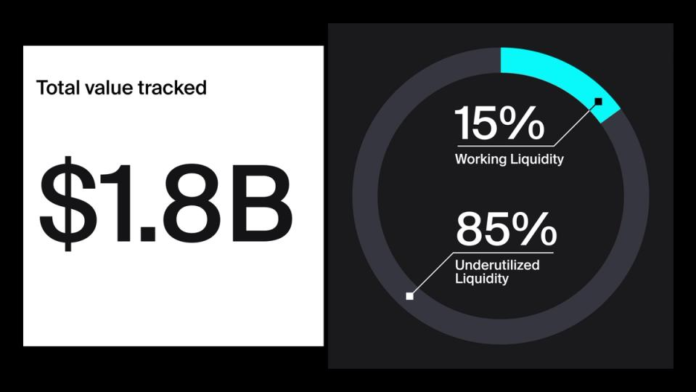
Around 54% of liquidity in positions below $1,000 was out of range, compared with 26% for positions above $1 million. Yet positions worth more than $1 million accounted for 47% of all idle capital, or roughly $260 million.
While contract-managed positions stayed within a more consistent range, individual wallets accounted for between 82% and 94% of the attributed idle capital on Uniswap v3, depending on the chain. That suggests liquidity deposited directly by users and requiring manual adjustments is more likely to go unattended and fall out of range.
Dune estimated that these out-of-range providers, that are sitting idle, could be missing roughly $150 million in fees each year, based on a blended in-range fee APR of about 35%.
Liquidity providers deposit token pairs that decentralized exchanges use to complete swaps. They earn a share of the fees paid for trades using that liquidity pool while their positions remain in the range they set.
However, the research said that the figure is not guaranteed recoverable income. Keeping positions active can add transaction costs, execution risk and exposure to unfavorable price movements.
1inch commissioned the research ahead of the planned launch of Aqua, a new liquidity protocol. Dune said it developed the methodology and reached its conclusions independently.
After rising 1.56% over the previous day, Bitcoin [BTC] was trading at $63,921.09 at the time of writing, indicating that it is beginning to recover.
However, according to a recent CoinShares report, the recovery of Bitcoin has been fueled more by shifts in the overall economy than by developments unique to the cryptocurrency space.
Sentiment has turned, and macro is the reason why
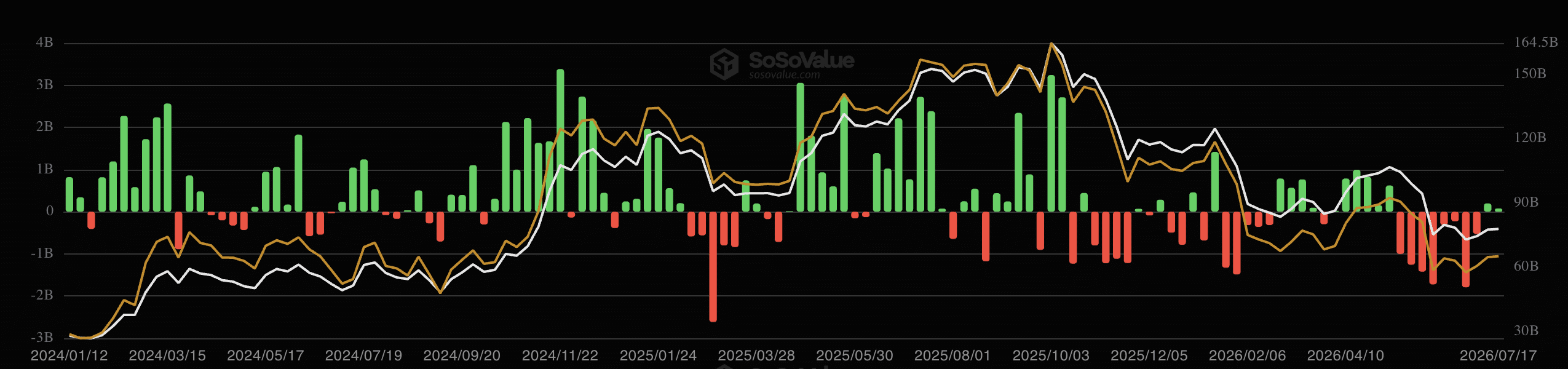
In H1 2026, concerns about inflation, high-interest rates, geopolitical tensions, and slowing economic growth had caused investors to withdraw about $8 billion from cryptocurrency investment products over the last eight weeks, the longest and largest outflow on record.
180-degree sentiment in sentiment
However, that trend has begun to reverse, and it appears that inflows will likely continue for two weeks in a row.
Interestingly, it was not any Bitcoin-specific metric that caused the sentiment shift but a reaction to lower-than-expected U.S. inflation data, which led investors to believe that the U.S. Federal Reserve might ease monetary policy.
For context, a modest Bitcoin rally and inflows of about $250 million were triggered on the 14th of July when the Consumer Price Index (CPI) reported -0.4%, below the expected -0.2%.
Expectations of easing monetary policy were further reinforced the next day when the Producer Price Index (PPI) abruptly fell -0.3% against forecasts of 0.0%.
Markets began to anticipate fewer rate hikes or even rate cuts as a result of less pressure from the Federal Reserve to maintain high-interest rates due to lower inflation.
This resulted in hundreds of millions of dollars being invested in Bitcoin investment products as a result of this increased risk appetite.
Source: SoSo Value
What lies ahead for Bitcoin?
Additionally, the report shed light on the fact that Bitcoin has probably reached its short-term bottom, but without a significant change in Federal Reserve policy, a robust bull run is unlikely.
A slightly weaker economy could provide a further boost to bitcoin as we see a rerating in interest rate expectations.
In fact, instead of exhibiting a sustained rally, Bitcoin is anticipated to trade within a relatively narrow range until there are unambiguous indications of monetary easing. The range projected was $120,000 and $60,000.
We expect range trading, with a break above US$80,000 unlikely absent a meaningful shift in monetary policy expectations.
AMBCrypto’s recent article also noted that Bitcoin is predicted to continue its downward trajectory and drop to $55,560 and $51,934 in the upcoming weeks.
Additionally, the report demonstrates that investor sentiment is still cautious. In fact, a growing number of people are becoming interested in blockchain-related stocks.
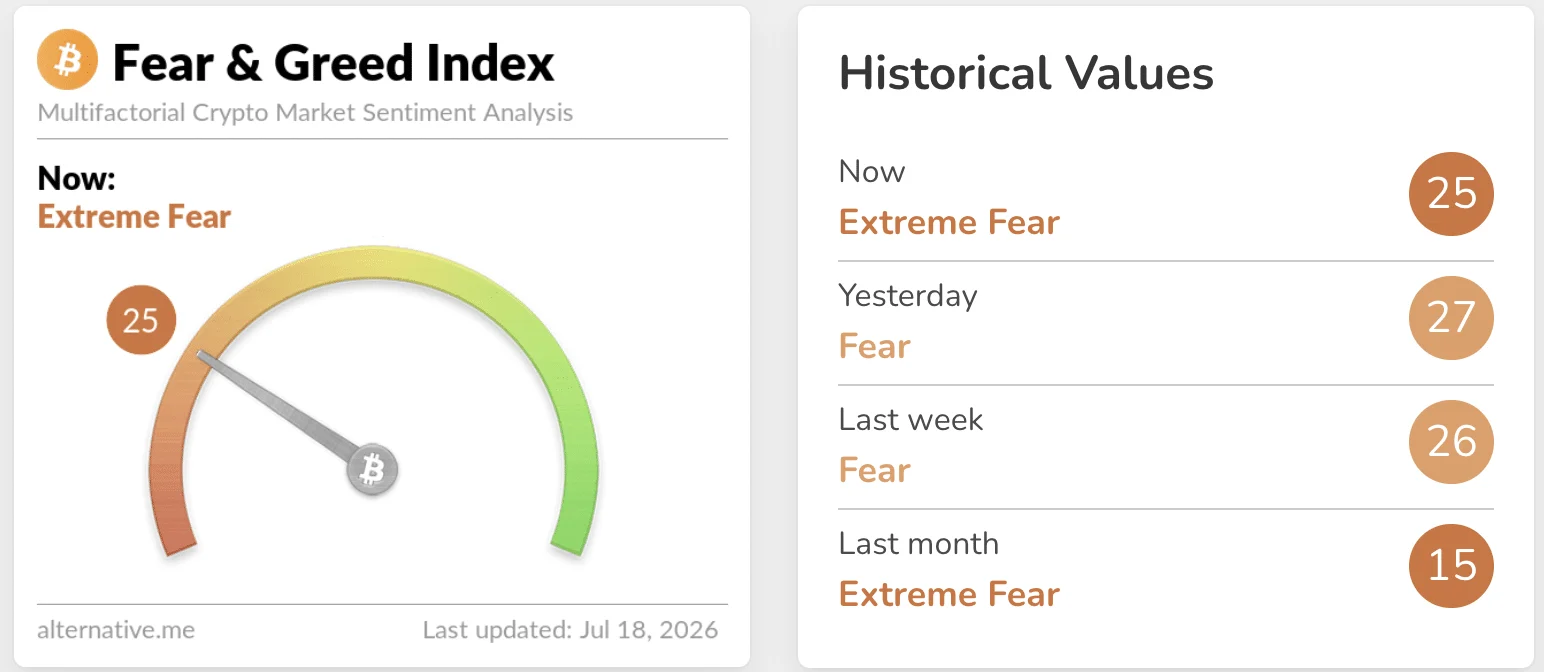
This was further confirmed by the Crypto Fear and Greed Index, which was in the “extreme fear” zone.
Source: Alternative
Final Summary
Macroeconomic factors are shaping bitcoin more than just crypto-specific metrics.
Investors are still cautious of Bitcoin and are more keen on blockchain-related stocks.
CLOZ holds mezzanine CLO tranches that reset coupons with short-term rates, delivering a 7% yield and 11% annualized returns since 2023.
Unlike AAA alternatives like JAAA, CLOZ pays meaningfully higher yield but moves with stocks in a credit event, not against them.
Rate cuts have already trimmed CLOZ monthly distributions from $0.22 to $0.17 per share, and every future Fed cut reduces the coupon further.
Are you ahead, or behind on retirement? SmartAsset’s free tool can match you with a financial advisor in minutes to help you answer that today. Each advisor has been carefully vetted, and must act in your best interests. Don’t waste another minute; learn more here.
Most bond funds spent the last three years dreading the phrase “higher for longer.” The Eldridge BBB-B CLO ETF (NYSEARCA:CLOZ) was engineered to enjoy it. CLOZ owns floating-rate mezzanine tranches of collateralized loan obligations, meaning its coupons reset with short-term rates that the Fed has parked at 3.75% since December 11, 2025.
Yalcin Sonat / Shutterstock.com
That is the fund’s entire identity. You are being paid to sit a couple of rungs down the CLO credit ladder while short rates stay elevated.
What You Are Actually Buying
A CLO is a diversified pool of senior secured business loans sliced into tranches by risk. The AAA piece at the top absorbs losses last and yields the least. The equity piece at the bottom eats losses first and, in good years, prints double-digit returns. CLOZ deliberately plants itself in the middle, targeting USD-denominated CLO tranches rated between BBB+ and B-. Institutional credit investors have favored this zone for years because the yield pickup over AAA is real and the structural protections above the equity tranche are meaningful.
The return engine has two parts. Floating-rate coupons on the underlying CLO debt reset off short-term benchmarks, so the 3-month Treasury near 3.84% flows straight into distributions. On top of that base rate sits a credit spread that widens when investors panic and tightens when they relax. Own the mezz, collect both.
_________________________________
What’s Your Number…?
Here’s a question most people 5y from retirement can’t answer: at your current savings rate, how much do you need, and how long will it actually last? A good advisor can put a date on that in a single meeting. SmartAsset’s free quiz matches you with up to three fiduciary advisors serving your area, so you can get YOUR retirement number now (sponsor)
__________________________________________
Does It Deliver
The SEC 30-day yield is roughly 7.3%, and trailing 12-month distributions total roughly $1.93 per share, paid monthly. Since its January 2023 inception, CLOZ has produced a cumulative return of about 37%, or 11% annualized. That is a genuine result for a fund that also delivered 3% year-to-date in a year where long-duration Treasuries face duration headwinds from 5% 30-year yields.
The trade against a plain AAA CLO fund like JAAA is the useful comparison. AAA products give up meaningful yield to sit above the mezz in the loss stack. CLOZ pays you more, and so far, the market has cooperated. AUM has climbed to about $761 million, which suggests retail and institutional buyers keep voting for the mezzanine trade.
What Can Go Wrong
Three real risks live inside this fund, and none of them are hypothetical.
Credit spread widening. Seeking Alpha analyst Financial Serenity flagged in October 2025 that CLOZ carries higher spread duration than AAA alternatives, so a genuine recession that pushes corporate defaults up would hit the mezz before it touched the safe tranches.
Rate cuts compress the coupon. Monthly distributions have already drifted lower from the $0.19 to $0.22 range in 2024 to $0.13 to $0.17 in 2026, tracking the Fed’s 75 basis points of easing since last summer. Every future cut trims the coupon.
The 2008 reflex. The word “CLO” still spooks people who confuse it with the mortgage products that detonated in the last crisis. Modern CLOs are diversified pools of senior secured business loans with real overcollateralization tests. Historical CLO default rates have been low, which does not mean zero.
Who It Fits
CLOZ is a yield enhancer, not a cash substitute. It suits investors who want a 5% to 10% income sleeve, understand they are being paid for credit risk rather than duration risk, and would rather collect a 7% coupon that resets with short rates than a 4% coupon locked in for a decade. The 0.50% expense ratio is defensible for active credit selection in a market retail investors cannot access directly.
Anyone treating bonds as ballast against an equity drawdown should look elsewhere. In a real credit event, CLOZ moves with stocks, not against them. If that tradeoff sounds fine, this is a fund built for exactly the rate environment we have.
If You’ve Been Thinking About Retirement, Pay Attention (sponsor)
Retirement planning doesn’t have to feel overwhelming. The key is finding expert guidance, and SmartAsset’s simple quiz makes it easier than ever for you to connect with a vetted financial advisor. Here’s how:
On Wednesday, DTCC completed its first live production trades involving tokenized securities, marking a major step toward bringing blockchain technology into traditional financial markets.
Broadridge’s findings suggest those efforts are influencing the broader industry. Sixty-eight percent of respondents said tokenization will at least partially reshape financial markets within the next three to five years, while nearly one-third plan to increase investment in tokenization projects by 26% to 50% or more over the next two years.
The survey also found firms are not preparing for an all-onchain future. Instead, 92% expect digital and traditional assets to coexist for the foreseeable future, and 69% plan to integrate tokenization into existing infrastructure rather than build separate blockchain-native systems.
That mirrors the approach taken by many large financial institutions, which have generally focused on connecting blockchain networks to existing trading, custody and settlement systems instead of replacing them.
Adoption remains uneven across the industry. Forty-four percent of capital markets firms said they already have tokenization initiatives in production or operating at scale, compared with 20% of asset managers and 9% of wealth managers.
The survey also pointed to where firms expect tokenization to gain traction first. About 80% of respondents believe tokenized mutual funds and money market funds will play a meaningful role within five years, reflecting the rapid growth of tokenized Treasury products. By comparison, only about half expect tokenized equities to achieve similar adoption over that period.
Amazon’s (AMZN) $25B bond drew $62B in demand, and at 35x interest coverage, the company keeps $102B cash free for AI and acquisitions.
Amazon’s Q1 EPS beat consensus by 61% for its fifth straight win, outpacing Microsoft (MSFT) and Alphabet (GOOGL) on operating leverage.
TTM free cash flow collapsed 95% to $1.2B as capex surged, but AWS’s $364B contractual backlog makes the spending already economically justified.
Act now: the analyst who called NVIDIA in 2010 just named his top 10 AI stocks — and Amazon didn’t make the cut. Grab the names FREE today.
I keep hitting the buy button on Amazon (NASDAQ:AMZN), and the $25 billion bond sale gave me three fresh reasons to keep going. I have owned this stock for years, and every time management pulls a lever this obvious, I add. The market treated the debt raise like a warning. I read it like a receipt.
Den Dubinko / Shutterstock.com
The Cost of Capital Arbitrage I Keep Waiting For
The 10-year Treasury sits at 4.55%, in the 94th percentile of the past 12 months. That yield looks rich in a vacuum, yet Amazon’s interest coverage ratio is 35.17x, which means the company can absorb this coupon in its sleep. Peak demand on the offering hit $62 billion, 2.48 times oversubscribed, across eight tranches maturing from 2029 to 2066. Institutional buyers effectively fought each other to hand Amazon 40-year money. That preserves the $101.82 billion of cash on the balance sheet for acquisitions, chip design, and whatever Andy Jassy sees next. Debt funds the concrete. Cash stays weaponized.
Act now: the analyst who called NVIDIA in 2010 just named his top 10 AI stocks — and Amazon didn’t make the cut. Grab the names FREE today.
The Capex Is Already Pre-Sold
This is where I get loud with friends who think Amazon is overspending. The roughly $200 billion 2026 capex plan funds physical data center capacity backed by AWS’s $364 billion commercial backlog. AWS grew 28% year over year in Q1, the fastest in 15 quarters, at a 37.7% operating margin. Anthropic is contracted for up to 5 GW of Trainium capacity. OpenAI committed roughly 2 GW starting 2027. Project Rainier is deploying 500,000-plus Trainium2 chips. The chips business already runs at a $20 billion annual revenue rate, growing triple digits. The bonds pay for buildings that are already leased in economic terms.
Peak Debt, Then the Runway Clears
Management framing this as the final debt tap of the year removes an overhang I was already discounting. Operating cash flow hit $139.51 billion in 2025 against $131.82 billion of capex. Debt-to-assets improved from 30.3% in 2022 to 18.7% in 2025 even while the asset base doubled. Once capex intensity normalizes, free cash flow snaps back and the multiple has room to breathe.
Why Amazon, Not Microsoft or Alphabet
I looked hard at Microsoft (NASDAQ:MSFT) and Alphabet (NASDAQ:GOOGL). Both are quality. Neither has the same operating leverage story from here. Amazon’s North America retail margin expanded to 7.9% from 6.3%, international operating income grew 40%, and Q1 EPS of $2.78 beat the $1.73 consensus by 60.69%. That is a fifth consecutive beat. I also passed on Walmart (NYSE:WMT) because retail alone cannot compound against a business where advertising just crossed $70 billion in trailing revenue growing 24%. Amazon pays no dividend, and that suits me. Every retained dollar funds Trainium, robotics, and Leo satellites.
The Risk I Own Openly
Free cash flow collapsed. TTM free cash flow fell 95% to $1.2 billion as property and equipment purchases jumped $59.3 billion year over year. If AWS demand ever wavers, that capex looks foolish. I keep buying because the $364 billion backlog is contractual, the Bedrock platform processed more tokens in Q1 than in all prior years combined, and interest coverage of 35x leaves room for a bad year.
Analysts carry a $314.35 average target against my $249.89 cost basis today. That gap is my margin of safety, and the bond sale just financed the growth that closes it. My buy button stays warm.
Act now: the analyst who called NVIDIA in 2010 just named his top 10 AI stocks — and Amazon didn’t make the cut. Grab the names FREE today.