Home Blog Page 233

Corning Stock Signal Hints at Upside Potential Amid Breather

0
Corning Stock Signal Hints at Upside Potential Amid Breather


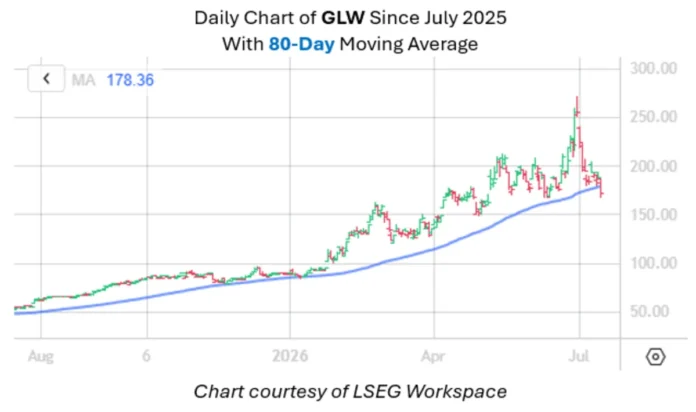
Corning IncĀ (NYSE:GLW) stock is down 7.8% at $172.92 this afternoon, part of its larger drawdown from its June 30 record peak of $271.38. Its no surprise the tech concern has fallen 36.4% since tapping its record. However, all is not lost, as the shares near a trendline with historically bullish implications.

According to Schaeffer’s Senior Quantitative Analyst Rocky White, GLW is trading within 0.75 times the 80-day moving average’s 20-day average true range (ATR), after spending at least 80% of the previous two weeks and 80% of the prior 42 trading sessions above that trendline.

This setup has appeared 19 times over the last decade, after which the stock was higher one month later 72% of the time, averaging a 4.74% gain. A similar move from the stock’s current perch would put the shares at $181.12.

glw-pb

It’s worth noting shorts have been retreating, with short interest down 13.7% during the most recent reporting period. This accounts for 2.6% of the stock’s available float, or less than two days’ worth of pent-up buying power.


Source link

Mick Jagger Says ‘Creative’ People Wouldn’t Use AI to Imitate Another

0
Mick Jagger Says 'Creative' People Wouldn't Use AI to Imitate Another


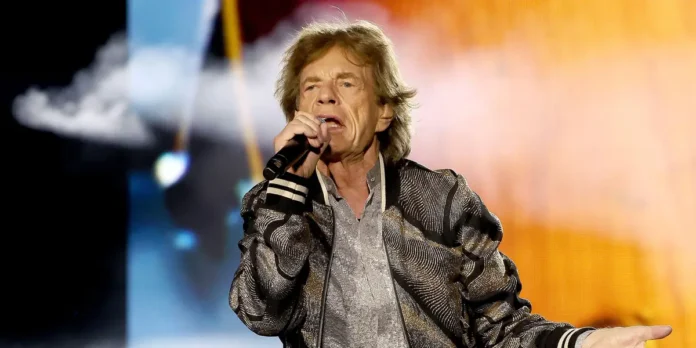
Mick Jagger says AI is another tool for making music — as long as it’s used to create something original.

In an interview with Billboard on Thursday, the Rolling Stones front man shared his thoughts on AI in music and the evolving role of technology in the studio.

“You don’t really want to be imitated by AI, obviously,” Jagger said.

“I don’t want people just putting stuff out there that can sound exactly like the Rolling Stones. I think that’s obviously wrong,” he added.

But he isn’t opposed to the use of AI in the music-making process.

“If someone wants to make music by AI, I mean, go ahead. But it has to be original, you know. It has to be you — you have to have your own input and your own thoughts,” Jagger said.

AI can be used to create great music, but it can just as easily produce something terrible, depending on the input, he said.

Jagger added he sees AI as simply the latest step in the evolution of music recording technology, one of many changes he’s witnessed over his six-decade career. Before computers entered studios in the late 1970s, mixing tracks required several people working together, he said.

“In a way, if you’re clever, you can use that technology greatly to your advantage to make things go quicker, to make boring things go quicker,” Jagger said.

But the creative process itself still has to be human, he said.

“In my opinion, you’ve got to write the songs, you have to play them, and you play them live,” he said. “Of course, you can overdub, I’ve been doing overdub since 1965, that’s not new.”

Jagger acknowledged that some people are already using AI to generate songs from scratch in the style of established artists, including the Rolling Stones.

“But I mean, if you were any kind of creative person, you wouldn’t do that,” he added.

Jagger’s comments come after the band experimented with AI to de-age themselves in the music video for their latest single, “In the Stars.” In the video, released in May, AI was used to replace the faces of the musicians portraying the band with younger versions of the Rolling Stones.

“They’re not fake people in a fake room. All those drummers that you see are all real drummers and they’re all playing in a real room,” Jagger said. “The musicians are real musicians that look a bit like The Rolling Stones in 1968. The only thing was the faces.”

Jagger joins other artists debating AI’s place in creative industries.

In 2023, Jason Derulo said he doesn’t see AI as a threat to musicians yet because lyrics written by bots lacked “soul.”

“As we progress and as technology progresses, we’ll have more and more tools,” Derulo said. “Hopefully, the creativity of the product continues to grow with the technology as opposed to using technology as a crutch.”

In May, Jack Antonoff — the lead vocalist of the rock band Bleachers and longtime Taylor Swift collaborator —wrote an open letter criticizing “bad actors” who use AI in what he called the “holy process” of making music.

“So to everyone who is gassed up about the new ways you can fake making art, by all means drive right off that cliff,” Antonoff wrote in the letter. “We’re genuinely happy to see you go.”




Source link

Crypto for Advisors: Strengthening defenses against AI fraud

0
Crypto for Advisors: Strengthening defenses against AI fraud

– Kriti Bansal, vice president finance and accounting, AlphaPoint


Ask an Expert

Q. Can advisors work with AI to ensure clients are safe against fraud?

A.Yes, but AI should support advisors and not act as autonomous decision-maker. It can flag unusual wallet behavior, suspicious contracts, phishing patterns and risky approvals before damage happens. The biggest vulnerability today is granting AI agents direct, unmitigated wallet permission and this can turn the agent itself into a massive attack vector for social engineering or bad on-chain data.

Q. What security in real time looks like in the age of AI?

A. In the age of AI the real time security needs to be predictive and proactive and not reactive. Real-time security means warnings before signing, continuous wallet monitoring, instant alerts on abnormal activity and blocking risky approvals before funds can move.

Q. How can a money manager automate a defense layer that acts as a continuous threat monitor?

A.Money managers must move away from legacy externally owned wallets and transition to programmable smart accounts such as ERC-4337 or EIP-7702. This transition allows one to write automated, programmatic security guardrails directly at the account level. They can use automated monitoring for wallets, approvals, contract risks, transaction patterns and exposure limits, with human escalation for anything unusual.


Source link

Crypto’s biggest bull signal isn’t price – It’s tokenized gold flows instead

0
Crypto's biggest bull signal isn't price - It's tokenized gold flows instead


Zoom out, and crypto’s recent move doesn’t look that impressive.

But compare capital flows across major asset classes, and a different picture starts to emerge. From a technical view, both U.S. equities and precious metals have had a weak start to Q3.

Gold is up just 0.74%. The S&P 500 and NASDAQ are in the red, with NASDAQ leading the decline, down 2.68% so far in July.Ā 

In contrast, the total crypto market cap has climbed over 8% over the same period. Put that against the current macro backdrop, and the divergence becomes even more meaningful.

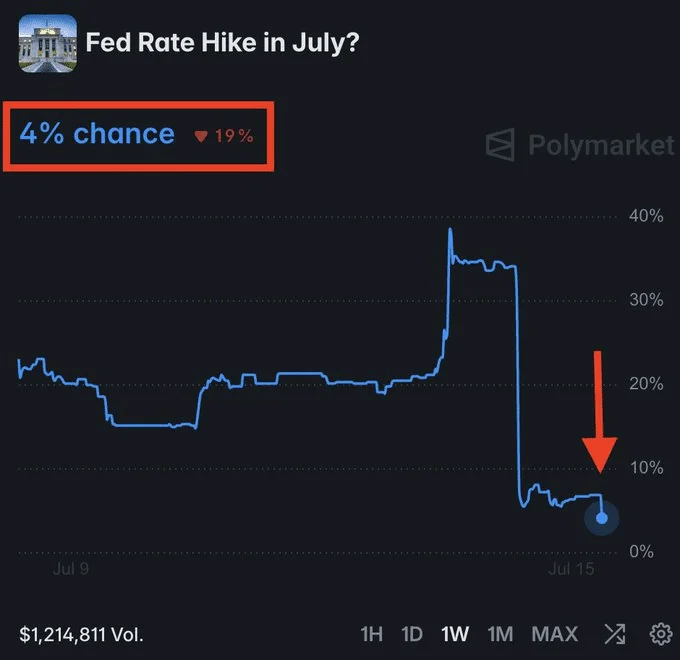
As the chart below shows, the odds of a Fed rate hike in July have dropped to a new low of 4% after US PPI inflation posted its biggest monthly decline since April 2025.

Ā 

crypto
Source: Polymarket

Historically, this kind of drop in rate hike expectations has triggered strong risk-on moves, as investors rotate out of safe assets and back into higher-risk markets.

This time, though, crypto appears to be leading the move, outperforming even the U.S. equities and pointing to a stronger risk appetite than in previous cycles.

In this backdrop, the ongoing rotation from gold to Bitcoin [BTC] may just be getting started. The BTC/XAU ratio is already up more than 8.5% in Q3, marking Bitcoin’s strongest quarterly performance against gold since Q2 2025, when the ratio gained over 22%.

However, the real signal isn’t just the technical strength.

Instead, it’s the shift in capital flows. With the macro backdrop turning more favorable, this ā€œfundamentalā€ rotation could be emerging as a leading indicator of crypto’s next leg higher.

Tokenized gold is flashing a new crypto signalĀ 

A key inverse correlation is beginning to emerge in this cycle.

As mentioned above, crypto is attracting stronger capital than precious metals, which fits the current macro backdrop of cooling inflation.

What stands out, however, is that demand for tokenized gold continues to rise. Rather than leaving gold completely, investors appear to be shifting their exposure on-chain.Ā 

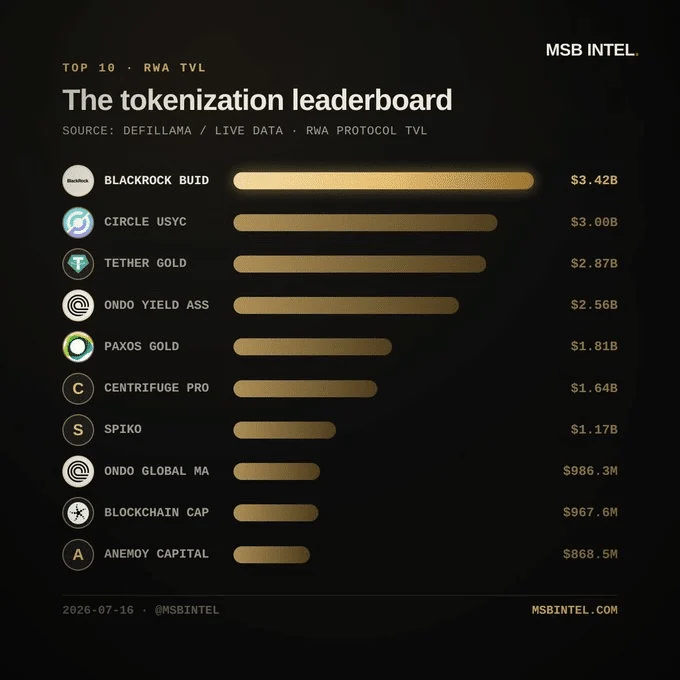
As the chart below shows, BlackRock BUIDL leads the RWA sector withĀ  $3.42 billion in TVL, followed by Circle’s USYC at $3.00 billion.

Interestingly, Tether Gold (XAUT) now ranks third at $2.87 billion, suggesting on-chain gold demand remains strong even as spot gold prices weaken.

goldgold
Source: MSB Intel

Supporting this trend, tokenized Gold XAUa has surpassed $1 million in trading volume on the XRP Ledger.Ā 

Taken together, this inverse move between falling spot gold prices and rising on-chain gold activity suggests capital rotation is beyond the BTC/XAU trade.

Instead, investors appear to be moving exposure onto blockchain rails, pointing to a ā€œbroaderā€ shift in how capital is flowing across the crypto market.

This, in turn, puts tokenized gold flows firmly in focus. If this rotation continues, it could become one of the strongest fundamental signals of crypto’s next risk-on leg, rather than just another technical indicator.


Final Summary

  • Crypto is attracting more capital than gold and stocks, showing stronger risk appetite as macro conditions improve.
  • Rising tokenized gold demand could be an early sign that more capital is moving on-chain ahead of a broader crypto rally.


Source link

IBM employees watch $400 million vanish as stock hits worst day — a reminder about holding too much company stock

0
IBM employees watch $400 million vanish as stock hits worst day — a reminder about holding too much company stock


While the SpaceX IPO turned thousands of current and former employees into millionaires (1), not every staff shareholder story has the same happy ending. Take, for example, the workers at another tech giant who are now facing collective losses of an appalling $400 million because of their company’s struggles.

IBM (IBM:NYSE) may be one of the most established names in the technology sector, but that doesn’t make it immune to the fluctuations of the ever-mercurial market. In fact, its decades-long legacy as an enterprise software giant may have indirectly had a hand in its stock price plummeting by 25% on July 14, marking the worst share day in its history (2).

Must Read

Unfortunately, with companies rushing to scale AI capabilities amid a components crisis, clients have shifted budgets into chips and associated data center hardware to a level that CEO Arvind Krishna said his team “did (3) not anticipate (3).”

In an early second-quarter earnings announcement, IBM reported $12.3 billion in revenue, which was $660 million less than projected, leading to adjusted earnings per share falling 8 cents below expectations.

The stock tumbled more than $73 as a result, spelling disaster for the 150,000 or so employees who hold company shares in their 401(k).

The losses amount to some $400 million (4) total; thankfully, it’s not a substantial portion of the $59 billion the IBM 401(k) plan is estimated to be worth, but it’s still significant. It’s also very telling of the dangers of over-investing into any one entity.

Experts speaking to (5)MarketWatch (5) on Tuesday warned against letting “corporate loyalty cloud financial judgement,” and emphasized the importance of diversifying, no matter how confident in any one investment position you may be.

Defensive investing and ensuring you are truly diversified — meaning you have, at most, 25% in any given sector, and a maximum of 5% in any given position, among other things — are essential.

Read More: Are you paying too much for car insurance? Here are 3 clever ways to slash your monthly bill

The market is excessively punishing of non-AI stocks

The instant and devastating impact that IBM’s earnings posting had on its stock price is an example of a larger recent phenomenon that Mad Money host Jim Cramer called out earlier this year.

The pundit decried the stock market’s tendency to excessively “punish” firms that can’t match the outsized momentum (real or perceived) of the AI boom when it comes to forecasts or, in this case, posted earnings.

Speaking of the fact that we are in “a market that despises anything not connected to tech and the data center,” Cramer said that investors are now “unsafe at any level.”

“We keep hearing this drumbeat that 2026 is 1999 all over again, but the difference between now and 1999 is that this market does not stop punishing the companies that disappointed … You are unsafe at any level,” he said in May.

Though IBM is in the business of tech, it is somewhat of an old era stock compared to its new era AI counterparts, who are the sole drivers of recent stock market rallies, and also some of the only ones benefitting from them.

Experts have been confounded by the monumental split between “old era” and “new era” stocks as of late, warning that, with so many S&P components “essentially failing,” the AI-fueled bull market is unsustainable.

You May Also Like

Join 250,000+ readers and get Moneywise’s best stories and exclusive interviews first — clear insights curated and delivered weekly. Subscribe now.

Article Sources

We rely only on vetted sources and credible third-party reporting. For details, see our ethics and guidelines.

Finance Yahoo (1), (3); Wsj (2); Marketwatch (4), (5)

This article originally appeared on Moneywise.com under the title: IBM employees watch $400 million vanish as stock hits worst day — a reminder about holding too much company stock

This article provides information only and should not be construed as advice. It is provided without warranty of any kind.


Source link

The Clarity Act is the most important consumer protection effort in years

0
The Clarity Act is the most important consumer protection effort in years

As a former financial regulator, I understand that no law can prevent every market failure or stop every bad actor. Fraud exists in every market, at every scale, but strong rules can mitigate the worst outcomes. They give regulators visibility, set obligations for companies before consumers engage with their products, and require firms to operate with basic and enforceable accountability. The bill is often described as crypto market structure legislation. That description is accurate, but it doesn’t capture the full scale. Market structure is the legal architecture that determines who must register with which agency, who supervises the market, what firms owe their customers, how assets are protected, what disclosures must be made, and what happens when something goes wrong.

Today, millions of Americans already use digital asset exchanges, brokers, dealers, and custodians. They open accounts, buy and sell assets, rely on platforms to execute transactions, and often trust intermediaries to hold their property. If those businesses are going to serve American consumers, they should operate under clear federal rules.

The Clarity Act would create those rules. Digital asset intermediaries would have to register, meet capital and risk-management standards, keep records, disclose material information to retail customers, monitor markets, address conflicts of interest, and follow conduct rules covering fraud, manipulation, marketing, supervision, and fair pricing. Those are basic safeguards in mature financial markets. They should apply here too.


Source link

Palvella Therapeutics (PVLA) Submits Initial Module of NDA For QTORIN

0
Palvella Therapeutics (PVLA) Submits Initial Module of NDA For QTORIN


Palvella Therapeutics Inc. (NASDAQ:PVLA) is one of the 10 affordable biotech stocks to buy right now.

On June 29, Palvella Therapeutics Inc. (NASDAQ:PVLA) disclosed that it filed the initial module of its New Drug Application with the FDA for approval of QTORIN 3.9% rapamycin anhydrous gel. QTORIN is used to treat microcystic lymphatic malformations.

VILevi/Shutterstock.com

The company plans to file the remaining modules and conclude the NDA application process during the latter half of 2026. The company highlighted that QTORIN rapamycin has attained FDA designations for Orphan Drug, Fast Track designations, and Breakthrough Therapy. The company is also speeding up U.S. launch preparation for a possible independent commercial launch in the early half of 2027, subject to approval.

Earlier on June 22, the company revealed that the FDA had provided a rolling review for QTORIN rapamycin’s New Drug Application. Palvella Founder and CEO, Wes Kaupinen, highlighted that the company plans to use the Breakthrough Therapy, the benefits of rolling review, and Fast Track designations to facilitate an efficient route toward achieving FDA approval. He further stated:

“Following the positive Phase 3 SELVA results, our focus is clear: move with urgency to advance QTORIN rapamycin as the potential first FDA-approved therapy for patients and families affected by microcystic LMs, a serious, lifelong rare disease with no approved treatment options.”

Palvella Therapeutics Inc. (NASDAQ:PVLA) is engaged in the development and marketing of innovative medical technologies and treatments for people suffering from severe and uncommon genetic skin diseases. QTORIN rapamycin, which is the company’s leading product, is currently undergoing Phase 3 trials for microcystic lymphatic malformations and Phase 2 trials for cutaneous venous malformations.

While we acknowledge the potential of PVLA as an investment, we believe certain AI stocks offer greater upside potential and carry less downside risk. If you’re looking for an extremely undervalued AI stock that also stands to benefit significantly from Trump-era tariffs and the onshoring trend, see our free report on theĀ best short-term AI stock.

READ NEXT:Ā 33 Stocks That Should Double in 3 Years and 15 Stocks That Will Make You Rich in 10 Years.

Disclosure: None. Follow Insider Monkey on Google News.


Source link