Home Blog Page 236

Why Stripe’s $53 billion PayPal bid is a high-stakes play to own the future of digital payments

0
Why Stripe’s $53 billion PayPal bid is a high-stakes play to own the future of digital payments

If Stripe owns PayPal, Bridge becomes the shared infrastructure layer under PYUSD, OpenUSD and Tempo. That’s infrastructure consolidation, not token competition, and it’s a much bigger deal than the acquisition headline suggests.”

That sort of infrastructure scale could allow Stripe to introduce lower settlement fees and checkout incentives for PYUSD, while Tempo could gradually steer users toward OUSD.

“This potentially strengthens Tempo considerably,” said Niamh Byrne, chief commercial officer at blockchain developer platform Alchemy. “If OpenUSD gains meaningful traction, it could increase the strategic importance of Tempo and position it as more than another blockchain.”

However, even if Stripe does combine multiple prominent stablecoin projects under one roof, commentators do not foresee major disruption to the stablecoin sector in the immediate future.

“Circle’s cross-chain interoperability is operationally proven at institutional scale, whereas Tempo is an unproven layer-1 still in early development,” Citi said in its note. “It is our understanding that Bridge/Tempo relies on third parties for interoperability capabilities.”

Tether’s USDT, meanwhile, holds a 60% share of the stablecoin market, dwarfing even USDC, let alone PYUSD, which is in itself something of a “mic drop” to suggestions of a threat from distant competitors. Notwithstanding that, USDT derives its prominence from the retail sector and emerging markets rather than institutions and corporates.


Source link

State Street Q2 Earnings Call Highlights

0
State Street Q2 Earnings Call Highlights


Key Points

  • Interested in State Street Corporation? Here are five stocks we like better.

  • State Street posted strong Q2 2026 results, with earnings per share of $3.65 versus $2.17 a year ago and revenue up 17% to a record $4 billion. Management highlighted record fee revenue, record net interest income, and strong performance across servicing, investment management and markets.

  • The company raised its full-year outlook, now expecting fee revenue growth of 12% to 13% and net interest income growth of 14% to 15%. It also increased expenses guidance, but still expects about 500 basis points of positive operating leverage and a pre-tax margin near 32%.

  • State Street set ambitious medium-term targets, including a 35% pre-tax margin and mid-20s return on tangible common equity over the cycle. Executives said growth will come from core businesses, alternatives, digital assets and wealth services, supported by a technology and AI-driven transformation program.

State Street (NYSE:STT) reported sharply higher second-quarter 2026 earnings and raised its full-year outlook, as executives pointed to record fee revenue, record net interest income and continued momentum across investment servicing, investment management and markets.

Chief Executive Officer Ron O’Hanley said the quarter reflected “disciplined execution, deep client engagement, and continued momentum across our businesses.” The company reported second-quarter earnings per share of $3.65, up from $2.17 in the prior-year period. Excluding prior-year notable items, earnings grew 44% year over year, according to O’Hanley.

3 Space Stocks That Could Outshine SpaceX After Its IPO

Total revenue rose 17% from a year earlier to a record $4 billion. Chief Financial Officer John Woods said fee revenue increased 16% to $3.2 billion, while net interest income rose 18% to $860 million, supported by a 17-basis-point increase in net interest margin to 113 basis points.

Expenses increased 10% year over year to $2.7 billion, excluding notable items, primarily due to higher revenue-related costs and continued strategic investments. The results lifted pre-tax margin by 470 basis points to 34%, while return on tangible common equity rose more than six percentage points to about 26%.

Servicing, Management and Markets Drive Growth

The SK Hynix IPO and 2027’s AI Memory Squeeze

State Street’s investment servicing business posted second-quarter servicing fees of $1.5 billion, up 13% year over year. Woods said the increase reflected approximately 7% organic growth from client activity, flows and net new business, with additional support from higher average market levels and currency translation.

Assets under custody and administration ended the quarter at a record $57.9 trillion, up 18% from a year earlier. Servicing fee sales totaled $87 million, with Woods citing continued demand across regions and strength in strategic growth areas, including alternatives.

These 3 Water ETFs Could be Quiet Winners From Infrastructure Spending

In investment management, fees rose 29% year over year to $772 million, supported by roughly 9% organic growth and higher average market levels. Assets under management reached a record $6.3 trillion, up 23% year over year, while net inflows totaled $114 billion. Woods said the quarter marked the fifth consecutive quarter of positive organic growth, led by $66 billion of index ETF inflows and $35 billion of cash inflows.

State Street also launched 38 new products and solutions during the quarter, including a tokenized money market solution and a stablecoin reserves fund. O’Hanley highlighted that SPYM, the company’s low-cost S&P 500 ETF, was selected by the U.S. Department of the Treasury as the exclusive default ETF for Trump Accounts.

Markets revenue also strengthened. FX trading services revenue increased 27% year over year, excluding a prior-year notable item, to $494 million, driven by record client volumes. Securities finance revenue rose 19% year over year on higher client lending balances. Software services revenue declined 14%, excluding a prior-year notable item, reflecting elevated on-premises renewal activity in the prior year, though Woods said software and data revenue rose 10%.

Outlook Raised for 2026

State Street raised its full-year outlook, excluding notable items. The company now expects fee revenue growth of 12% to 13%, up from its prior forecast of 7% to 9%. Net interest income is expected to grow 14% to 15%, compared with a previous outlook of 8% to 10%.

Woods said the improved net interest income outlook primarily reflected stronger average deposit balances. The company expects expenses to rise by roughly 8%, up from the prior 5% to 6% forecast, reflecting higher revenue-related costs and continued investment.

Based on its current outlook, State Street expects roughly 500 basis points of positive operating leverage in 2026 and a pre-tax margin of approximately 32%. The company continues to expect an effective tax rate of about 22% and a total payout ratio of roughly 80%, subject to board approval and other factors.

State Street’s capital position remained stable, with standardized CET1 and Tier 1 leverage ratios of 10.8% and 5.3%, respectively, at quarter end. The company returned $631 million to shareholders during the quarter through $400 million of share repurchases and $231 million in declared common dividends. Following the Federal Reserve’s stress test results, State Street announced a 10% increase in its quarterly common dividend to $0.92 per share beginning in the third quarter.

Company Sets Medium-Term Margin and Return Targets

Executives also outlined new medium-term financial targets, including a 35% pre-tax margin and return on tangible common equity in the mid-20s “over the cycle.” O’Hanley said the company’s next phase of growth will be driven by three strategic pillars: growth in core businesses, initiatives in alternatives, digital assets and wealth services, and a technology- and AI-enabled transformation of the operating model.

Woods said investment services is expected to contribute approximately 300 basis points of enterprise margin expansion over the medium term through organic revenue growth and productivity initiatives. Investment management is expected to contribute about 200 basis points, supported by ETFs, index investing, fixed income, wealth, alternatives and tokenization. Markets is expected to add about 100 basis points through geographic expansion, product innovation and efficiency initiatives.

The company expects its transformation program to deliver approximately $1 billion of run-rate benefits by 2029, with about 75% coming from expense productivity and 25% from revenue. Woods said the company anticipates about $500 million of one-time costs, mostly related to severance, as part of the transformation.

During the question-and-answer session, Woods said State Street expects positive operating leverage of 100 to 150 basis points on average over the medium term, which could allow the company to reach the 35% margin target toward the earlier end of its three- to five-year framework. He said the company’s net interest income is expected to rise in the low- to mid-single digits over the medium term, supported by low-single-digit balance sheet growth and net interest margin moving toward the upper end of its 110- to 115-basis-point range.

Executives Discuss Digital Assets and AI

O’Hanley described State Street’s digital asset strategy as focused on serving as infrastructure for clients moving between traditional and digital finance. He said the company is “picking our spots” based on client demand, including tokenized money market funds. Woods said State Street’s digital asset platform is designed to support wallet management and the on- and off-ramps between traditional finance and on-chain activity.

On artificial intelligence, Woods said AI will be embedded into State Street’s operating model, including the use of agentic capabilities in cross-functional teams. He also said the company expects AI tools to improve software developer productivity by 30% to 40%, with additional productivity gains across eligible employees through standardized AI tools.

O’Hanley said the company is entering its next phase “from a position of strength,” citing the scale of its custody, asset management, ETF and markets franchises. “These are the targets that we’re aiming for,” he said. “They’re ambitious, but we’re going to hit them.”

About State Street (NYSE:STT)

State Street Corporation is a global financial services company that provides a range of investment servicing, investment management and investment research and trading services to institutional investors. Its principal activities include custody and fund administration, securities lending, performance and risk analytics, trading and execution services, and foreign exchange. The company also offers investment management through State Street Global Advisors, a major provider of exchange-traded funds and institutional investment strategies.

State Street serves a broad client base of asset managers, insurance companies, pension funds, endowments, and other institutions across North America, Europe, Asia and other global markets.

This instant news alert was generated by narrative science technology and financial data from MarketBeat in order to provide readers with the fastest reporting and unbiased coverage. Please send any questions or comments about this story to contact@marketbeat.com.

The article “State Street Q2 Earnings Call Highlights” was originally published by MarketBeat.

View MarketBeat’s top stocks for July 2026.


Source link

Keyrock acquires BlockFills trading assets in institutional crypto expansion

0
Digital asset firm Keyrock plans to acquire BlockFills out of bankruptcy

Keyrock, a digital-asset services firm, acquired the trading and brokerage assets of BlockFills’ institutional digital asset business, bolstering its push into institutional crypto markets, the company said in a press release Thursday.

The completed transaction adds BlockFills’ client relationships, trading technology and derivatives expertise to Brussels-based Keyrock’s existing businesses spanning market making, over-the-counter (OTC) trading, options, credit, onchain services and asset management.

CoinDesk reported in June that Keyrock was in the process of acquiring Chicago-based crypto trading and lending firm Blockfills. According to a bankruptcy filing, Keyrock agreed to pay $3.25 million for substantially all of BlockFills’ assets, while assuming certain liabilities, equity interests, customer relationships and proprietary technology.

The acquisition broadens Keyrock’s regulatory reach through a CIMA-registered entity in the Cayman Islands and the proposed acquisition of an FCA-authorized entity in the U.K., subject to regulatory approval.

The company said the combined platform will offer institutional clients enhanced execution capabilities backed by Keyrock’s balance sheet and regulatory infrastructure.


Source link

CRCL rebounds as investors weigh OUSD competition and Coinbase talks

0
CRCL rebounds as investors weigh OUSD competition and Coinbase talks


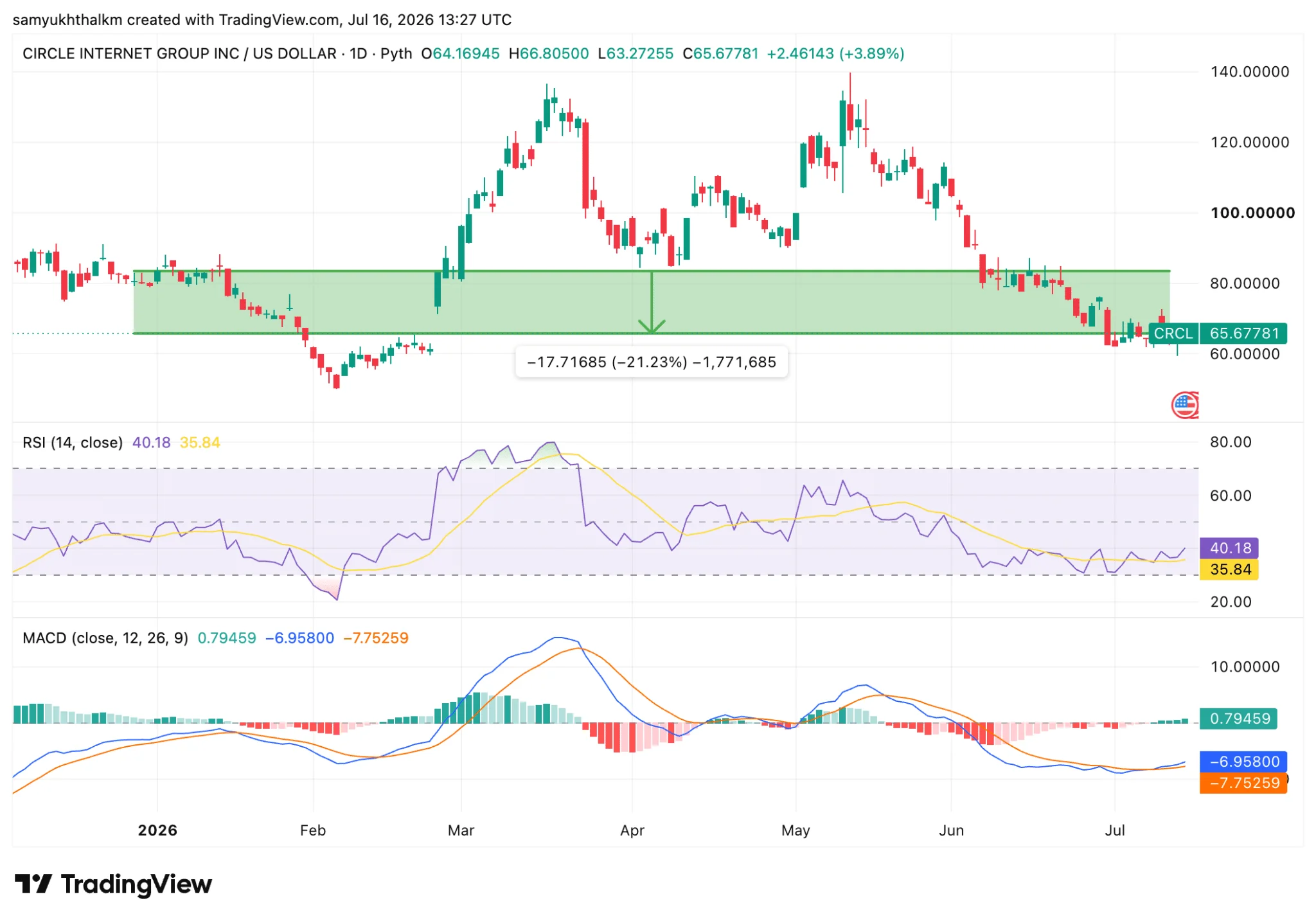
Circle Internet Group’s [CRCL] stock price is playing catch-up. Investors are reassessing USDC’s regulatory progress alongside rising competition and pressure on Circle’s distribution model.

Here’s what you need to know.

A recovery near the $65 level

At the time of writing, CRCL was at $65.68, having gained 3.89% for the session. However, 2026 hasn’t been kind to the stablecoin issuer.

The stock has fallen approx. 21% from earlier in the year, well below its March and May peaks above $130.

crcl stockcrcl stock
Source: TradingView


Source link

Schwab: Client Referrals, Hiring Lead RIA Priority List in 2026

0
Schwab: Client Referrals, Hiring Lead RIA Priority List in 2026


Nuthawut Somsuk/iStock/Getty Images Plus

You can find original article here WealthManagement. Subscribe to our free daily WealthManagement newsletters.

Client referrals and recruiting are the top two priorities for registered investment advisors custodied with Charles Schwab, according to the firm’s annual RIA survey of clients.

When asked to name their top three priorities, firms with over $250 million in assets under management most frequently identified client acquisition through new referrals as their No. 1 focus for 2026. That priority shows the continued struggle for RIAs to generate organic growth, which some industry experts have tagged at less than 2% across RIAs and indepdendent broker/dealers. That tracks with Schwab’s surveys, which have ranked client referrals as the highest priority since 2023.

“Organic growth is a perennial top focus area for firms,” said Lisa Salvi, managing director of business consulting and education at Schwab Advisor Services. “This is a thriving growth-oriented industry, and we see this reflected in the top priorities year after year.”

The results, which come from 1,236 RIAs, also showed the importance of having a set client referral program to garner results. According to Schwab, firms with existing client referral plans generated 1.6x more new client assets than those without a set program.

However, less than half (44%) of firms with over $250 million in assets have referral plans for existing clients, and only 30% of have a documented one for centers of influence. The top performers, while more likely to have plans, were still just at 52% for client referrals and 36% for centers of influence.

“We believe organic growth is an imperative, and it helps create a very important cycle of opportunity within an advisory firm,” Salvi said.

Schwab’s survey also highlighted the competitive market for advisor talent in the RIA, even as the sector continues to poach from the wirehouses and independent broker/dealer space. After client referrals, the second-most cited priority was recruiting staff to “increase the firm’s skill set/capacity.”

According to the survey, 75% of firms hired in 2025 at a median rate of two new staffers. The sources of that staffing were mixed, with Schwab RIAs finding new employees by percentage through professional and personal networks (56%); colleges and universities (36%); other RIAs (28%); and non-financial professional services firms (19%).

RIAs expect even more hiring this year, with the median firm planning to add four new roles in 2026 and another 75% planning to hire before the year is out.

In the hunt for talent, creating a documented path to equity is still an outlier. According to the survey, only one in three RIAs has a documented path to an equity stake for employees.

For those that do offer equity, 49% said the primary reason is to retain key talent. Another 30% said it is to support a succession strategy, and 11% said sharing company ownership is to help with management continuity.

The survey also turned up some new priority areas: many RIAs noted improving productivity through the use of AI and integrating AI into their business strategy. Those landed as the sixth- and seventh-most marked priority areas, respectively, in the survey.

As Wealth Management recently reported, many large RIAs have been ramping up investment in AI tools and business integration for both existing advisors and those they are seeking to recruit.


Source link

Warsh’s Fed plan means it’s time to read the bond market backward, says Morgan Stanley chief

0
Warsh's Fed plan means it's time to read the bond market backward, says Morgan Stanley chief

Ask economists what the most important U.S. asset class is, and they’ll likely tell you bonds. Treasury Secretary Scott Bessent has said the same. Across Wall Street, one of the first orders of an analyst’s day is to check the performance of longer-term Treasuries and the yields on them, which indicate investors’ perceptions of risk.

For good reason: As well as acting as a temperature check for the economic outlook, the yields on longer-term Treasuries, such as 10- and 30-year bonds, provide lenders with a benchmark for consumer interest repayments, compared to the low-risk asset of government borrowing. As such, these yields are reflected in the rates offered to borrowers elsewhere in the economy—think houses, cars, and credit cards—influencing the financial decisions of businesses and consumers.

10-year Treasury yield performance has been increasingly bumpy recently: This year alone, lows have hit 3.96% with highs of 4.66%. The 30-year has gone as low as 4.54% and as high as 5.18%. Those are all big moves for U.S. bonds.

Warsh’s fresh thinking at the Fed is likely to undo investors’ habit of focusing on the long end, according to Morgan Stanley’s Jim Caron. Investors will still take note of Treasury moves, but volatility should be watched at the short end of the curve (a year or two), rather than at the long end (10- and 30-year Treasuries).

This is entirely by design, Caron told Fortune, owing to Warsh’s highly scrutinized task force strategy. The new Federal Reserve chairman has asked for fresh thinking on the quality and timeliness of data, potentially meaning the Fed will collect more real-time data rather than relying on backdated surveys.

Likewise, Warsh has outlined the beginnings of a new communication strategy, one without the forward guidance that previously signaled to markets the path interest rates may take over the longer term.

The combination of more reactive Fed policy in the short term, and a less forthcoming central bank over the longer term, may result in more volatility in short-term bonds (which are more directly impacted by the base rate set by the central bank) and a smoothing at the longer end of the yield curve.

Caron, Chief Investment Officer of portfolio solutions at Morgan Stanley, explains: “The way that I’ve interpreted it is that if [Warsh] is gonna be more variable in terms of his views because he wants to be more contemporaneous and more real-time in his thinking, then that means that the front end of the yield curve is going to be more volatile. 

“But if he does his job, if the Fed does their job—and that is indeed a better way to go—then what should be true is that the front end will gain volatility, but then it will lose volatility in the longer run, like at the 10-year point and beyond, because basically what they’re saying is that they will address the situation in more real time.”

Conveniently for Warsh, if the potential plan pans out, it addresses the central bank’s oft-forgotten third aspect of its mandate: Moderate long-term interest rates.

“So let’s say inflation’s heating up,” Caron says as an example, “[Warsh] may become more hawkish earlier, and that’ll tamp down that inflation. Now that’ll be very volatile for the two-year note, but the 10-year note will have less volatility. 

“What that could ultimately mean—if it all works well—is when you think about corporate borrowing rates, when you think about a homeowner for a mortgage, these tend to be at the longer end. These tend to be 5-year, 10-year, longer term. So if you can stabilize the volatility in the longer end by addressing the higher frequency of data in the shorter end … it could be a really good thing.”

Rethinking investment habits

If pricing in policy speculation and risk happens at the longer end, then investors may want to adjust their habits. Caron said: “You do want to pay much more attention to those short-term interest rates, versus opening up your screens and saying, ‘Where’s the 10-year, where’s the 30-year?’”

Investors, to some extent, already know the short rate because they’re aware of central bank policy around the world, but Caron added, “I would think about the front end of the yield curve as the shock absorber for the back end of the yield curve. The task force hasn’t come out, this is my interpretation of everything, that’s the way I would think about it.”

The suggestion that Warsh may move hawkish or dovish in line with the data may not be popular with President Trump, who has lobbied since he entered the Oval Office for a lower base rate.

It would be a mistake to expect Warsh, in any fashion, to come out as a committed dove. Caron described that idea as “low-resolution thinking.” He added: “Any economist that’s looked at the Fed can’t paint Kevin Warsh as dovish or hawkish. He’s been on both sides of this whole thing.”


Source link

Ledger wants AI agents to manage crypto without holding your keys

0
The startup killer: Ledger CTO says the EU's crushing compliance costs are choking Web3 innovation

Ledger said is bringing its hardware security model to the fast-growing world of AI agents with the launch of Ledger Agent Stack, an open-source toolkit that allows autonomous software to interact with crypto wallets without ever controlling private keys.

The toolkit lets AI agents read wallet balances, analyze portfolios, prepare transactions and propose payments, but requires every sensitive action to be explicitly approved on a Ledger hardware device before it can be executed.

This is the first product release under Ledger’s 2026 AI roadmap, as the hardware wallet maker bets that human oversight will become a critical security layer as AI agents take on increasingly complex financial tasks.

“Agents propose. Humans approve,” the team wrote in their press release shared with CoinDesk. “Crypto wallets have protected billions on this standard for years,” said Ian Rogers, Ledger’s chief human agency officer, in the press release. “Ledger Agent Stack allows your agent to use these wallets just as easily as humans.”


Source link