Home Blog Page 24

Azzi Fudd signs on to international basketball league Project B

0
Azzi Fudd signs on to international basketball league Project B

For years, WNBA players played abroad during their off-season as a way to supplement their low salaries. The need to compete year-round was viewed as a downside in the sport, requiring players to spend their time in overseas markets and push their bodies, and limiting their ability to build strong personal brands and gain sponsorship opportunities in the U.S. year-round.

Today, the calculation has changed. The latest example is Azzi Fudd, the No. 1 draft pick of 2026 and now a star on the Dallas Wings. She’s the latest player to join Project B, Fortune is the first to report. Project B is an international men’s and women’s basketball league being built by a former Facebook exec, the cofounder of Skype, and advised by LeBron James’ business partner Maverick Carter. In early 2025, Bloomberg reported that Project B was seeking to raise as much as $5 billion as it works to make basketball the top global sport—ahead of soccer. Cofounder Grady Burnett says that number was a “little high” and the league has completed its capital raise; he declined to confirm how much funding the league has raised.

Project B hasn’t started play yet, but is planning to debut in January Formula 1-inspired “grand prix-style” basketball for men’s and women’s players in six cities, including Tokyo and Valencia, Spain. The model is that underutilized arenas will pay Project B to bring international stars to their cities, allowing the league to build an asset-light business. “It’s putting athletes on a global stage, connecting with fans in all parts of the world,” Burnett says. Like the domestic 3-on-3 league Unrivaled, which has also emerged as an off-season opportunity for women’s players, it offers players equity in the business.

For Fudd, international play was appealing. As an elite college athlete, the 23-year-old has been busy training stateside for most of her life and is excited by the opportunity to travel. “I want to be able to broaden my experience and go outside of just America,” she told Fortune. Her dad, Tim Fudd, played basketball abroad and she grew up hearing stories from him and other players about their experiences in other countries.

For the right player, international play can also be a business opportunity. Fudd traveled with Steph Curry to Chongqing, China last summer, and fans approached her with copies of Slam magazine, photos to sign, and custom Labubus. “People who are fans of me all around the world—I’m so far from home, in a country I’ve never been to, and people cheer for me, give me gifts, and welcome me with open arms—it was such an unreal experience,” she remembers. “It opened my eyes to just how much more is out there and how basketball can open the doors to so much.”

It’s also a different calculation for a post-NIL player like Fudd, who came into her professional career with more than 800,000 followers on Instagram and a similar following on TikTok. She already has major sponsorships in the U.S., like a deal with the hair color brand Madison Reed. She’s not building a personal brand in the U.S. from scratch in her first year, like players of earlier generations. The additional opportunity for her now is building her fandom abroad; for the Chinese market, she’s getting on the TikTok-like platforms Douyin and Rednote.

“What’s incredible now is that players have that option—they can go if they want, they don’t have to, they can stay if they want. It’s not forced,” Fudd says.

Meanwhile, the WNBA and NBA are both becoming more international themselves. With this year’s higher salaries after its new collective-bargaining agreement, the WNBA is attracting more players from outside the U.S.; in the NBA, an international player has won MVP for the past eight seasons. Burnett looks to soccer, which has multiple leagues that bring in more than $1 billion in revenue; he sees an opportunity to build the same competitive landscape in basketball.

Project B faced some controversy due to reports it was funded by Saudi money, a hot-button issue in sports. Burnett says the league accepted no Saudi capital; it worked with the Saudi Public Investment Fund-owned entertainment vendor Sela, but he says that partnership is no longer active.

Other players who have signed on to Project B include Nneka Ogwumike, Alyssa Thomas, Kelsey Mitchell, and Jewell Loyd. The league hasn’t announced any men’s players yet—and the men’s league is poised to be more disruptive to the NBA, where the off-season is short and the league would conflict. Burnett has framed its strategy as “extending the careers of established players” from the NBA.


Source link

Bitcoin and ethereum prices today, Thursday, June 18, 2026: Prices sliding despite Iran peace deal

0
Bitcoin and ethereum prices today, Thursday, June 18, 2026: Prices sliding despite Iran peace deal


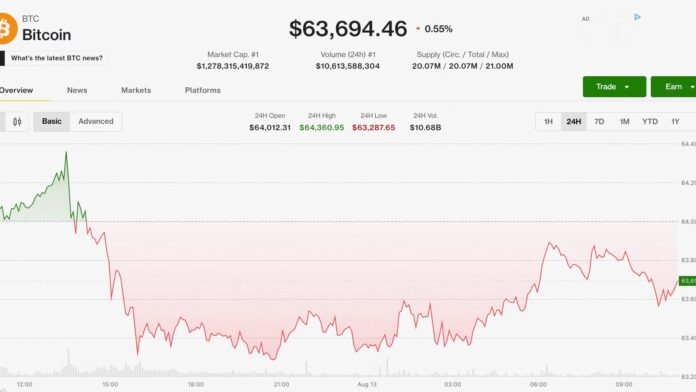
Bitcoin (BTC-USD) opened at $64,450.44 on Thursday, June 18, 2026, down 1.8% from Wednesday’s opening price. The value of bitcoin slid this morning to $63,980.59 by 7:33 a.m. ET. 

Ethereum (ETH-USD) opened at $1,748.91, down 2.3% from yesterday’s opening price. The price of ethereum edged lower this morning as well, moving to $1,744.25 by 7:33 a.m. ET.

Despite a signed peace deal between the U.S. and Iran, crypto prices are falling this morning. While the prices of bitcoin and ethereum are up substantially from last week, they are sliding following yesterday’s Fed meeting, which kept borrowing costs at current levels.

Investors are turning more of their attention to stocks and focusing on the signed deal, which is designed to fast-track the opening of the Strait of Hormuz, rather than on the prospect of higher interest rates, which remain a real possibility due to the war.

Read more: Bitcoin Steadies Near $64K as Analysts Eye Floor After Hawkish Fed

The price of bitcoin this morning was 1.8% lower than yesterday’s open. Here’s a look at how the opening bitcoin price has changed versus last week, month, and year:

  • One week ago: +4.9%

  • One month ago: -16.8%

  • One year ago: -38.4%

The all-time high for bitcoin was $126,198.07 on Oct. 6, 2025. The all-time low value for bitcoin was $0.04865 on July 14, 2010. 

The price of ethereum this morning was 2.3% lower compared to Wednesday’s open. Here’s a look at how the opening ethereum price has changed versus last week, month, and year:

  • One week ago: +7.9%

  • One month ago: -17.8%

  • One year ago: -30.3%

The all-time high for ethereum was $4,953.73 on Aug. 24, 2025. The all-time low value for ethereum was $0.4209 on Oct. 21, 2015. 

Bitcoin, ethereum, and other cryptocurrencies are rapidly evolving. Follow the latest developments from Yahoo Finance and others here.

A bitcoin or crypto credit card generally works just like any other credit card. When you apply and get approved, you’ll be assigned a credit limit, and you can use your card to make purchases. If you don’t pay your total balance by your card’s monthly due date, you’ll start to accrue interest at your assigned APR.

The difference is the types of rewards you’ll earn. Instead of earning airline miles, rewards points, or cash back on your spending, you’ll earn crypto. The percentage back you earn on each purchase — such as 3% back on gas or 2% back at restaurants — is converted from U.S. dollars to bitcoin or another cryptocurrency at the current market value. You can then access your rewards through your connected crypto account.

For example, say you make a $500 purchase that earns 3% bitcoin rewards. You’ll earn $15 in U.S. dollars on that purchase. With a bitcoin credit card, your $15 may be converted at the current bitcoin value (about 0.00014 bitcoin in October 2025) and deposited in your crypto account.

The biggest benefit of crypto rewards is the potential for growth over time. Let’s say you had a total bitcoin rewards balance worth $100 USD at the end of 2024. By early October 2025, the value of those same rewards would have increased to about $114 — even if you didn’t earn any additional rewards over that time.

Learn more: Do you need a bitcoin credit card? What you can gain (and lose) by earning bitcoin rewards on spending

Whether you’re brand new to tracking the value of bitcoin and ethereum or a more seasoned crypto investor, Yahoo Finance’s price-of-bitcoin chart and price-of-ethereum chart below show a visual history of how the currency’s value continues to move and evolve. 

More on crypto from the Yahoo Finance team: 


Source link

Schwab to join prediction markets race with S&P 500 event-based options: WSJ

0
Schwab to join prediction markets race with S&P 500 event-based options: WSJ

Charles Schwab is working with Cboe Global Markets to launch a new type of options contract that would allow customers to make yes-or-no wagers on the performance of the S&P 500, marking the brokerage’s first move into prediction markets, according to a Wall Street Journal report.

The feature is expected to roll out to Schwab customers in the coming months, the Journal reported, citing people familiar with the matter.

Unlike traditional prediction market platforms such as Polymarket and Kalshi, which typically offer futures-style contracts tied to the outcome of events, Schwab’s product would function more like a binary option, in which the contract would pay a fixed cash amount or expire worthless depending on whether the S&P 500 closes above or below a specified target price.

Schwab and Cboe are also in talks to offer a similar product tied to a Cboe feature known as the “Plus Zone,” which would allow traders to receive a partial payout when their prediction is close to the final outcome, even if the index does not finish exactly at the target level.


Source link

Jim Cramer: CoreWeave’s Backlog ‘May Be Much Greater’ Than Wall Street Thinks

0
Jim Cramer: CoreWeave’s Backlog ‘May Be Much Greater’ Than Wall Street Thinks


Quick Read

  • Jim Cramer says debt documents suggest CoreWeave (CRWV) already carries more contracted demand than its reported $99 billion backlog implies.

  • CoreWeave reached $5 billion in annual revenue faster than any cloud in history while posting a $740 million net loss last quarter.

  • Backlog rocketed from $30 billion in mid-2025 to nearly $100 billion by March 2026, anchored by long-term commitments from Meta and OpenAI.

  • Act now: the analyst who called NVIDIA in 2010 just named his top 10 AI stocks — and CoreWeave, Inc. Class A Common Stock didn’t make the cut. Grab the names FREE today.

Jim Cramer used his June 16 Mad Money Mad Dash segment to make the case that CoreWeave’s contracted revenue pipeline could be even larger than what the Street currently models.

ojbyrne / Flickr

“It’s got the best handle in the buildout. And this morning, [a research note] comes up with a piece looking at the debt documents showing that the backlog may be much greater when they report,” Cramer said of the AI cloud operator.

He paired that observation with a vivid pitch for the company’s execution: “If you want to put a rocket into space with a data center… you might at least peruse CoreWeave’s work, because that’s the one that knows how to build them fast.”

The bigger-backlog thesis comes from a third-party research note reviewing CoreWeave’s debt documents, not from the company itself, so investors should treat the upside as a possibility rather than confirmed guidance.

Why Cramer’s Backlog Claim Matters

CoreWeave (NASDAQ:CRWV) already disclosed a striking number on its Q1 2026 earnings release: a $99.40 billion revenue backlog as of March 31, 2026, anchored by a $21 billion commitment from Meta signed in March. CEO Michael Intrator called it “the strongest bookings quarter in CoreWeave’s history.”

Act now: the analyst who called NVIDIA in 2010 just named his top 10 AI stocks — and CoreWeave, Inc. Class A Common Stock didn’t make the cut. Grab the names FREE today.

The trajectory is what gives Cramer’s call its punch. Backlog moved from $30.1 billion in Q2 2025 to $55.6 billion in Q3 2025, then $66.8 billion in Q4 2025, before reaching nearly $100 billion last quarter. OpenAI alone accounts for roughly $22.4 billion in total commitments, and NVIDIA added a $2 billion Class A stock investment alongside a $8.5 billion non-recourse delayed draw term loan facility.

If the research note Cramer flagged is right and the debt documents imply additional contracted demand, the next reported backlog figure could move materially higher. The next earnings report is currently estimated for around August 13, 2026, though it has not yet been company-confirmed.


Source link

Axelar disables Secret connection after $4.67M exploit hits IBC-linked assets

0
Axelar disables Secret connection after $4.67M exploit hits IBC-linked assets


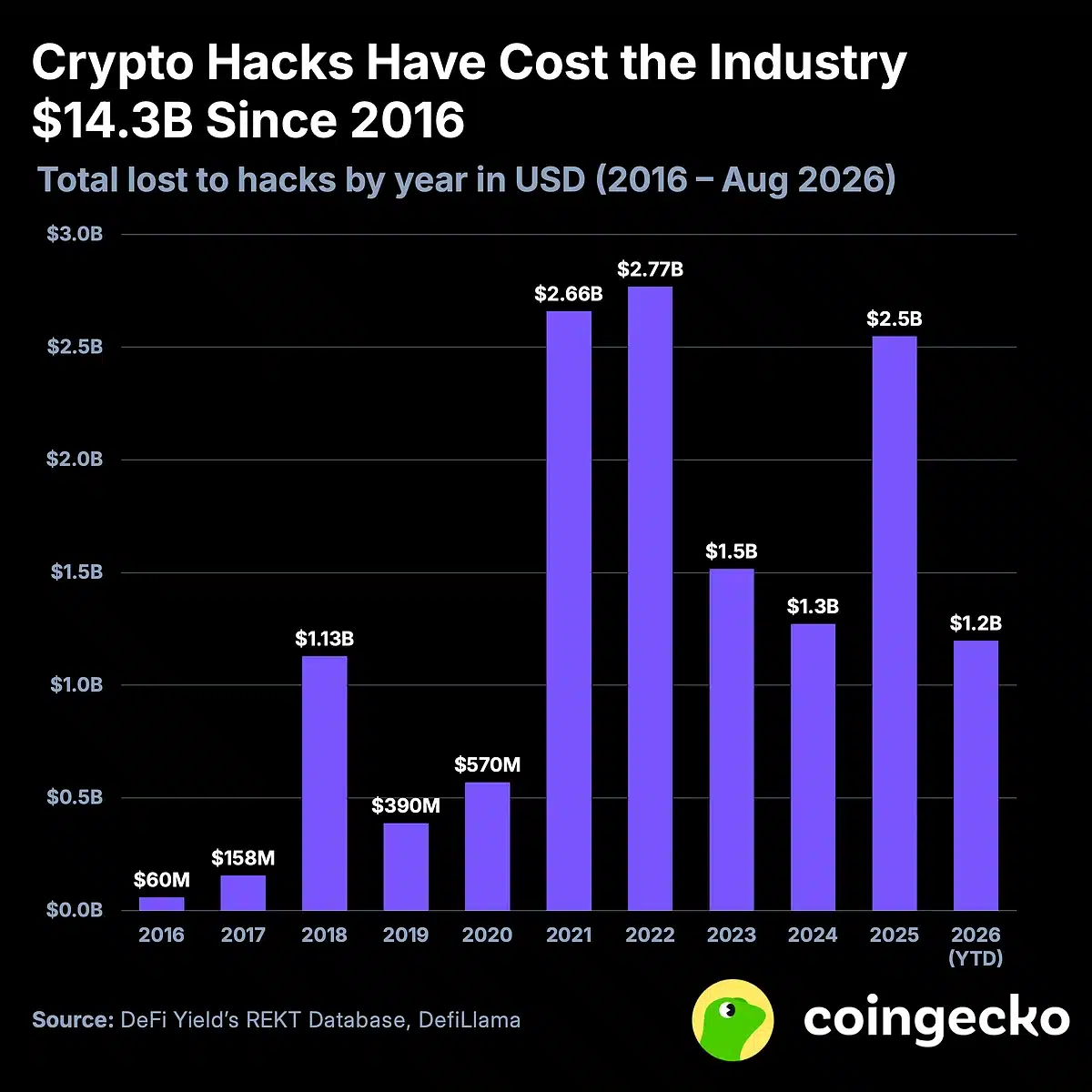
Cross-chain interoperability protocol Axelar has disabled its connection to Secret Network following an exploit that resulted in the loss of approximately $4.67 million in bridged assets.

In an update on June 19, Axelar said it had identified an incident affecting assets bridged over the Inter-Blockchain Communication [IBC] protocol from the Axelar chain to Secret Network. The team said the issue appears to be isolated to the Secret-side ICS-20 smart contract used in the Cosmos IBC connection between the two networks.

“Approximately $4.67M worth of tokens” were taken, according to the protocol.

Axelar shuts down affected connections

Axelar said its emergency committee disabled the Secret and Secret-SNIP connections immediately after becoming aware of the incident.

The protocol also said it has contacted relevant exchanges and law enforcement agencies while investigations continue.

According to the initial assessment, the exploit is limited to assets bridged from Axelar to Secret Network through the affected IBC route. Axelar said no other IBC connections appear to be impacted and that no other Secret Network tokens have been affected.

The team further stated that Axelar’s core protocol remains unaffected.

“We’re preparing a detailed post-mortem,” the protocol said.

Investigation focuses on Secret-side contract

The incident highlights the complexity of cross-chain infrastructure, where vulnerabilities can arise within specific integrations rather than the underlying bridge network.

Axelar’s statement suggests the issue originated in the Secret-side ICS-20 contract associated with the Cosmos IBC connection, rather than within Axelar’s validator network or core interoperability infrastructure.

That distinction could become an important focus of the investigation as both ecosystems work to determine the root cause of the exploit.

The latest incident adds to a growing list of bridge-related security events across the crypto sector, where interconnected networks and smart contracts continue to present attractive targets for attackers.

At the time of publication, neither Axelar nor Secret Network had released a detailed technical explanation of how the exploit occurred.


Final Summary

  • Axelar disabled its Secret Network connections after approximately $4.67 million in bridged assets was stolen.
  • The protocol said the issue appears isolated to a Secret-side ICS-20 contract, while Axelar’s core infrastructure remains unaffected.


Source link

Smart-contract and DeFi coins lead losses as BTC price wilts for 4th straight day

0
Bitcoin price news: BTC falls below $60,000 to weakest price since October 2024

The largest cryptocurrencies remained under pressure for a fourth straight day, with bitcoin falling 2.5% in 24 hours to just below $62,400.

It’s not alone. The CoinDesk 20 Index (CD20) has dropped 3.3%, with ether (ETH), XRP (XRP) and solana (SOL) all weaker. The CoinDesk Smart Contract Platform Select Capped Index fell 4%, and the CoinDesk 80 and CoinDesk DeFi Select Index are following close behind.

Concerns about Strategy (MSTR), the Michael Saylor-led bitcoin treasury company, continue to dominate market sentiment, with particular focus on its dividend-paying preferred stock, STRC.

“Strategy, the largest listed BTC holder, has watched its STRC preferred collapse below par, and the market is now openly pricing the tail that it has to sell coins to defend the structure,” analysts at Marex said.

“Add five straight months of BTC trading under its estimated $78k production cost, quietly forcing the weakest miners to capitulate, and you have two real sellers that were not in the frame a week ago,” they added.

Derivatives Positioning

  • Bulls continue to bleed as the market wilts in the wake of Wednesday’s hawkish Fed meeting. In the past 24 hours, more than $450 million in leveraged bets has been liquidated. As has been the case since the meeting, most are longs.
  • Open interest (OI) in bitcoin and ether futures is largely unchanged over the past 24 hours. SOL futures OI increased to over 70 million tokens, just shy of the June 5 record 71.57 million. In other words, demand for leverage remains near all-time highs, pointing to potential for outsized volatility.
  • The same is true of XRP, where futures OI is hovering at its highest since October last year.
  • As for cumulative volume delta, most of the biggest 25 tokens, except TRX and LAB, show negative OI-adjusted CVD for the past 24 hours. That’s a sign sellers are trading at market orders, leading the price action, as opposed to passive limit orders. It’s been the same playbook since at least Wednesday.
  • Funding rates for most tokens remain flat to negative, pointing to bearish sentiment. ADA, XLM, and BCH funding rates are down to between minus 20% and minus 30%.
  • In the bitcoin options market, traders are lifting put options in size, prepping for a potential slide down to $52,000 or lower in the coming weeks.
  • The bearish sentiment is also evident from 25-delta skews, which show one-week puts trading at a volatility premium of 10% or more.

Token Talk

  • Need evidence of how frenzied sentiment about AI is? Check out the LAB token, the cryptocurrency native to the LAB Terminal, which is a browser-based and extension-accessible platform for high-performance trade execution. Its key feature: AI-powered research and trade routing to minimize slippage.
  • LAB has gained 57% in seven days, a staggering rise compared with the malaise in the broader market.
  • The outperformance doesn’t end there: The token has surged 92% this month, following gains of 900% in May, 250% in April and 78% in March. Talk about a bull market.
  • Over the same period, bitcoin has ricocheted from $68,000 to $82,000 and back to $63,000.
  • While LAB’s performance is impressive, their’s not apparent reason for it. And it’s not without controversy.
  • Blockchain investigation expert ZachXBT recently highlighted that insiders supposedly own 95% of the token’s supply. He said they have used four methods concurrently to attract retailer investors. These include high-interest over-the-counter loans with promotional conditions, unilateral vesting period extensions, delayed or withheld market rewards and undisclosed market-making deals.
  • As the old saying goes: All that glitters is not gold.


Source link

How to Calculate Whether You Can Afford to Retire in 2028

0
How to Calculate Whether You Can Afford to Retire in 2028


If you’re thinking of retiring in 2028, you might already be picturing yourself having more free time and less stress. But now’s the time to figure out whether your savings will be enough to support your lifestyle.

If your plans need some tweaking, you’re better off discovering that this year, as opposed to three months before your planned workforce exit. So with that in mind, here’s how to determine whether you can afford to retire in 2028.

Missed Nvidia in 2009? This Rare Signal Is Flashing Again. In 2009, a “Double Down” signal flashed for a little-known chipmaker called Nvidia. For the first time in years, that same “Total Conviction” signal is flashing for a company 1/100th the size of Nvidia. Continue »

Image source: Getty Images.

1. Estimate your monthly expenses

The first step in figuring out whether you’re on track for a 2028 retirement is to understand how much you expect to spend each year. Don’t assume your spending will shrink significantly in retirement, because that may not be the case.

While commuting costs and other work-related expenses might disappear, you could easily find yourself spending more on healthcare, travel, hobbies, and home maintenance as your property ages. So make a list of your anticipated retirement expenses and figure out what you’re looking at spending on a monthly and annual basis.

2. Evaluate your retirement income sources

Once you retire, you may have several income streams available, from Social Security to savings. It’s important to understand how much actual income you can access on an annual basis to make sure you’re able to cover your spending needs.

With Social Security, that’s easy. Just create an account at SSA.gov and access your most recent earnings statement. It should give you an estimate of your monthly Social Security benefit at different filing ages.

With regard to your retirement savings, you’ll need to figure out what withdrawal rate you’re comfortable with. If you have a fairly even split between stocks and bonds and are retiring at a pretty traditional age (for example, sometime in your 60s), you may feel comfortable using a 4% withdrawal rate.

Let’s say you’ve saved $1.2 million. At 4%, your annual income from your IRA or 401(k) is roughly $48,000, not accounting for inflation adjustments.

If you’ll also get $30,000 a year in Social Security, your total annual income is $78,000. If you expect to spend $6,000 a month, you’re in a pretty good place, because your annual income can cover your anticipated spending plus give you a small buffer for unplanned bills.

3. Test your plan against future risks

Even if it seems like your retirement income streams will hold up, it’s important to test those numbers against events like market downturns or periods of prolonged inflation.

If the stock market crashes 20% your first year of retirement, you may not be able to withdraw $48,000. You’ll need to ask yourself if you’re willing to spend less or work part-time temporarily to cope, and/or if you have enough cash to give yourself a period to wait for a market recovery.

If inflation remains elevated, meanwhile, you may need to reduce spending in discretionary categories like leisure to ensure that your basic needs, like food and utilities, are covered. You’ll also want to make sure your IRA or 401(k) is invested to keep up with rising costs.

It’s exciting to find yourself getting close to retirement, but it’s important to go into that stage of life with confidence. That means having a grasp on your spending, an income strategy, and a backup plan in case hiccups arise.

The $23,760 Social Security bonus most retirees completely overlook

If you’re like most Americans, you’re a few years (or more) behind on your retirement savings. But a handful of little-known “Social Security secrets” could help ensure a boost in your retirement income. For example: one easy trick could pay you as much as $23,760 more… each year! Once you learn how to maximize your Social Security benefits, we think you could retire confidently with the peace of mind we’re all after.

Many Americans leave money on the table in retirement. Learn more about these retirement strategies and more, available when you join Stock Advisor.

View the “Social Security secrets” »

The Motley Fool has a disclosure policy.

How to Calculate Whether You Can Afford to Retire in 2028 was originally published by The Motley Fool


Source link