Home Blog Page 259

Lindsey Graham’s Business Legacy: Tax Cuts, Tariffs, and Defense

0
Lindsey Graham's Business Legacy: Tax Cuts, Tariffs, and Defense


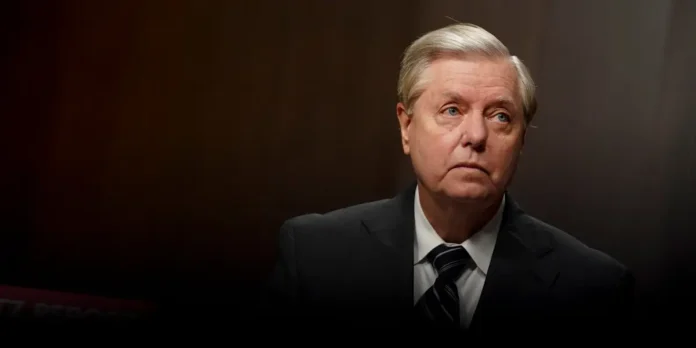
Republican lawmaker Lindsey Graham, who died on Saturday at the age of 71, had a major influence on corporate tax rates, tariff policies, and defense spending.

Graham’s office said in a statement on Sunday that the four-term senator died after a “brief and sudden” illness. Graham, an ally of President Donald Trump, had just returned from a trip to Kyiv, where he had met with Ukrainian President Volodymyr Zelenskyy.

In his 23 years in the Senate, Graham helped shape a protectionist, national-security-driven approach to trade and business-friendly policies that lowered corporate tax rates. His interventionist foreign policy views also translated into support for increased defense spending. Billions of dollars in military spending ultimately flowed to his home state of South Carolina.

Here’s how the late lawmaker impacted American businesses and the US economy.

Corporate taxes

Graham was instrumental in pushing corporate tax cuts through Congress over the last decade. He was a major supporter of the 2017 Tax Cuts and Jobs Act, which lowered the corporate tax rate from 35% to 21%.

During Graham’s unsuccessful 2016 run for president, he made cutting corporate taxes a central part of his campaign. During a Republican primary debate in 2015, Graham argued that the corporate tax rate should be lowered to prevent businesses from relocating overseas and to help create jobs for middle-class Americans.

“The best way to grow the middle class is to make it a good place to create a job,” he said during a debate at the time.

During Trump’s second term, Graham, who chaired the Senate Budget Committee, helped clear a path in Congress for the president’s 2025 tax-and-spending package, known as the One Big Beautiful Bill, which made permanent many of the corporate tax cuts the two leaders spearheaded in 2017 and restored or expanded other business-friendly policies.

Nine days before his death, the senator published a statement celebrating the first anniversary of making those tax cuts permanent.

“One year ago, President Trump signed the One Big Beautiful Bill into law, delivering the largest tax cut for working and middle-class families in American history,” Graham wrote. “As the Senate Budget Chairman, I was proud to lead this effort alongside my Senate and House Republican colleagues. We also ended taxes on tips and overtime and delivered no taxes on Social Security benefits for over 35 million seniors.”

Fair trade

While a broad supporter of free trade policies, Graham broke from some other Republicans in his calls to use tariffs to punish countries that, in his view, operated unfairly.

In 2005, during his first term in the Senate, Graham called for aggressive tariffs against China for manipulating currency and stealing intellectual property. His views helped influence Trump’s own tariff policies, which became a pillar of his administration’s strategy in his second term.

Graham, like Trump, argued that tariffs should be used as leverage over other governments. Graham supported using tariffs to force countries like Mexico and Canada to increase border security, both as a way to manage illegal immigration and stem the flow of fentanyl into the country.

Trump’s sweeping tariffs ultimately caused some headaches for American businesses, which struggled with supply chain uncertainties and rising prices. And the Supreme Court ruled in February that Trump’s use of the International Emergency Economic Powers Act to unilaterally issue sweeping tariffs on US imports was illegal.

In response to that ruling, Graham said it was “undeniable” that the tariffs were having their intended effect.

“One of the chief reasons that our border is so secure is President Trump threatened to put tariffs on countries that were allowing illegal immigrants to pour in through our southern border and held them accountable for the problem,” Graham wrote in a statement. “When it comes to finding fentanyl and other dangerous products coming into the country, President Trump has used tariffs extremely effectively.”

Defense spending

Graham was one of the Senate’s most vocal advocates for increased defense spending.

After the Trump administration outlined its initial 2027 budget plans, which included a total request for $1.5 trillion for the US military, the largest single-year military funding in modern US history and a near 45% increase from the previous year, Graham called Trump “second to none” on national security.

“President Trump’s budget is truly historic when it comes to defense spending. It is the most robust increase in defense spending in many years, and it is more than justified by the threats we face throughout the world,” he wrote in a statement in April.

Graham’s support for robust defense spending stemmed from his interventionist views on national security. He supported the Iraq war and opposed the withdrawal from Afghanistan. He supported Ukraine and called for sweeping sanctions and tariffs on Russia, as well as any country buying Russian oil. He also backed military support for Israel and the continuing war on Iran.

His support for military spending also benefited his home state of South Carolina, which grew a large military footprint during Graham’s time in the Senate. In 2024, South Carolina received nearly $7 billion in military spending through things like payroll, contracts, and construction, according to the Defense Department.

A 2022 state-commissioned study found that the military supported over 250,000 jobs in the states and generated an annual economic impact of some $35 billion.

Federal defense dollars have supported major bases, nuclear-weapons work, and aviation manufacturing in South Carolina. As a member of the Senate Appropriations Committee, Graham pushed money toward construction and military programs that helped secure and expand bases like Fort Jackson and Marine Corps Air Station Beaufort.

In 2023, Graham said his work to bring military spending to South Carolina “will pay dividends for our state for years to come.”



Source link

Signs of life?: State of Crypto

0
Summer of crypto (regs): State of Crypto

But the 2026 midterm election is coming up quite soon — Nov. 3, so less than four months from now — and lawmakers will have to face their own base and flanks after they break for the summer recess and go into the final campaign swing.

That means that U.S. President Donald Trump and the $1.4 billion he made off crypto will be a key factor in the floor vote. More specifically, if there isn’t an ethics provision, it’s unlikely that sufficient Democrats will vote for the bill in the Senate. If the text that drops next week doesn’t even include a placeholder to address the ethics portion, that may even be counterproductive to getting full bipartisan support for the bill, an individual said.

That means that Trump will still need to sign off on an ethics agreement. Several of the sources CoinDesk spoke to last week said the White House had not been as engaged recently as it had earlier in the summer, but another individual told CoinDesk in early July that it may just be a matter of waiting to see whether all the other outstanding issues are resolved first.

One bright side for the bill’s proponents: Assuming the President did not veto the housing bill sitting on his desk sometime between this newsletter’s filing and 12:00 a.m. on Saturday, a provision banning the Federal Reserve from issuing a central bank digital currency for at least four years will have taken effect. There was concern from industry players that House lawmakers might push to include a CBDC ban in Clarity if the Senate advanced the bill, which would further strain the negotiation process and timeline. But that issue should be resolved for now through at least until 2030, with the inclusion in the housing bill.


Source link

What Does a Privia Health Insider’s Sale of Company Shares for $3.6 Million Mean for Investors?

0
Sonic Automotive President Sells 50,000 Shares


Shawn Morris, former CEO and previously a member of the Board of Directors at Privia Health Group (NASDAQ:PRVA), reported the exercise of 135,498 stock options into common shares and immediately sold them for proceeds of approximately ~$3.57 million, as disclosed in the SEC Form 4 filing.

Transaction summary

Transaction value based on SEC Form 4 weighted average reported price ($26.32); post-transaction value based on July 1, 2026 market close.

Key questions

  • What was the structure and rationale of this transaction?
    This was an exercise-and-immediate-sale event, where 135,498 options were converted into common shares and then disposed of, providing liquidity while leaving Morris’ substantial options position intact.

  • How did the sale impact Morris’ equity exposure in Privia Health Group?
    The direct common share position was reduced by 63.87%.

  • Did the transaction reflect a change in trading cadence or capacity?
    The scale of this sale was materially larger than prior historic sales, but this increase is capacity-driven, as Morris’ available share pool has contracted after multiple prior disposals since December of last year.

  • What is the current context for Privia Health Group shares as of July 1, 2026?
    The stock closed at $26.88 on July 1, 2026, up 19.3% over the trailing year, and the transaction occurred at a slight discount to this level.

Company overview

* 1-year performance calculated using July 1, 2026 as the reference date.

Company snapshot

  • Privia Health offers technology-enabled management services, population health tools, and a national provider network, generating revenue primarily through management fees and value-based care contracts.

  • It operates a platform-based business model, supporting independent physician groups with practice management, payer contracting, and clinical integration to drive cost efficiency and quality outcomes.

  • The company serves independent physicians, medical groups, health plans, and health systems across the United States, targeting providers seeking to optimize clinical and financial performance.

Privia Health Group, Inc. is a national healthcare services company specializing in physician enablement and value-based care delivery. The company leverages a scalable technology platform and management services organization to streamline provider operations and enhance care coordination.


Source link

Bitcoin price holds above $60K – But is a BTC bull trap brewing?

0
Bitcoin price holds above $60K – But is a BTC bull trap brewing?


Bitcoin’s [BTC] resilience remains one of the key psychological metrics investors are watching.

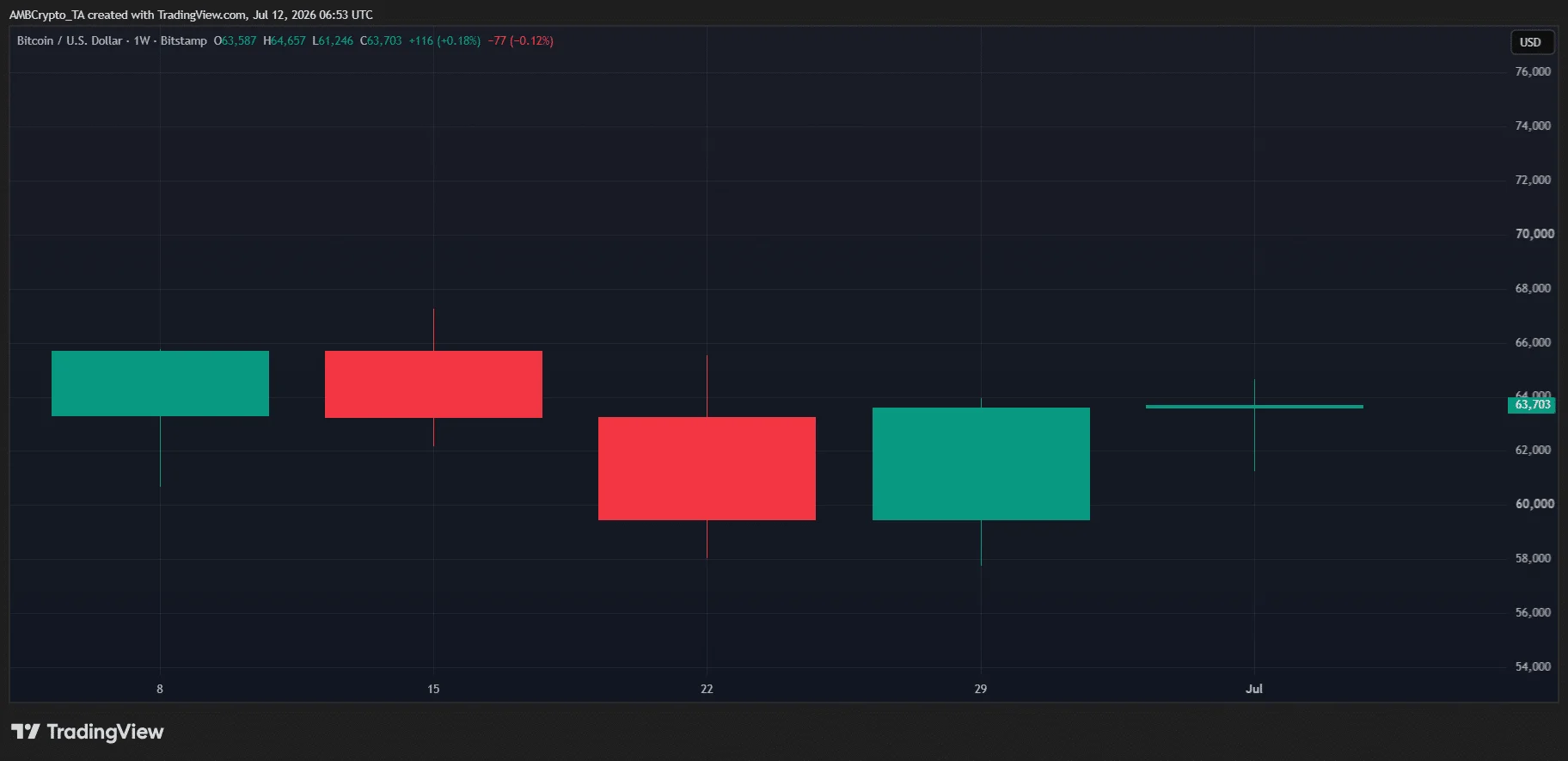
Currently, it’s standing out. Macro FUD is officially back after U.S. President Donald Trump pulled back from the ceasefire with Iran, triggering another wave of uncertainty. Oil prices have surged more than 5% and are now approaching the $75 resistance level. Historically, rising oil prices have often aligned with major corrections across the crypto market.

Yet Bitcoin’s technical structure continues to hold above the key $60k support zone, with BTC up more than 6% during the late June/early July rally. What’s interesting is that this strength has come alongside higher oil prices, a clear divergence from previous cycles. That could be an early sign that the market is starting to absorb the macro FUD instead of selling into it.

BTC
Source: TradingView (BTC/USDT)

Against this backdrop, Bitcoin’s resilience looks more like a healthy reset.

According to CoinGlass, BTC has wiped out more than $13 million in long liquidations over the past 24 hours, as FUD pushed leveraged traders out of the market. Despite the flush, BTC continues to hold above key support, suggesting the move has simply cleared out excess leverage rather than damaging the broader trend. 

Historically, this type of reset has often been followed by a strong rebound, putting the $65k-$70k range back in focus. The real question now is whether spot demand is strong enough to back the move. That’s where Bitcoin whale positioning becomes the key metric to watch.

Bitcoin holds firm as whales bet on strength despite macro FUD

Bitcoin’s resilience makes whale positioning worth watching.

According to Alphractal, the Whale vs. Retail Delta is rising again. The data shows whales are gradually adding to long positions. Bitcoin stands out with one of the strongest positive readings. Retail traders, however, continue to lean the other way, with smaller positions still positioned for further downside.

Interestingly, whale long exposure spiked around Bitcoin’s recent $58k bottom, reinforcing the view that larger players were buying into weakness while retail stayed defensive. More importantly, this divergence is unfolding while one of Bitcoin’s key on-chain demand metrics remains weak.

BitcoinBitcoin
Source: CryptoQuant

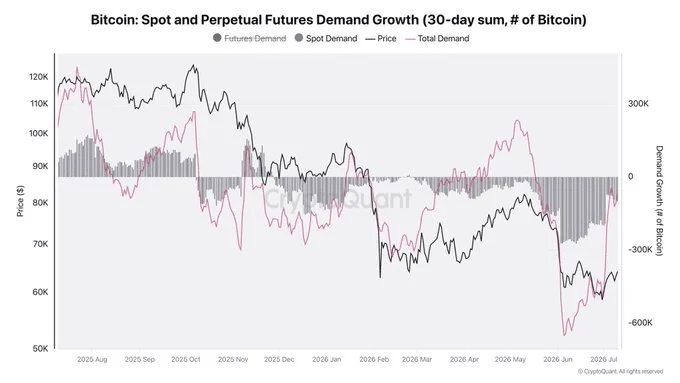
According to CryptoQuant, Bitcoin’s 30-day Spot Demand has been in negative territory since December 2025. The metric bottomed at -273,000 BTC in mid-June before recovering to around -100,000 BTC as of writing. 

In simple terms, negative Spot Demand means new Bitcoin supply still isn’t being fully absorbed by buyers. Combined with a lack of a strong institutional bid, Bitcoin’s resilience is starting to look increasingly dependent on whale accumulation. Unless spot demand begins to recover, that resilience could be difficult to sustain. 

In this context, the rise in whale long positioning becomes even more significant. If whales continue accumulating while spot demand gradually improves, Bitcoin could have the foundation for another leg higher. If not, BTC’s current consolidation around the $60k level may simply be a bull trap.


 Final Summary

  • Bitcoin is holding above key support despite macro FUD.
  • Whales are betting on more upside while retail stays bearish. Spot demand will likely decide whether BTC breaks out or turns into a bull trap.


Source link

DFW Office Market Gains Momentum in First Half of 2026

0
DFW Office Market Gains Momentum in First Half of 2026


This story was originally published on CRE Daily. Join 70,000+ commercial real estate professionals getting daily news, market insights, and industry analysis delivered straight to their inbox with the free CRE Daily newsletter.

Key Takeaways

  • Leasing volume reached 7.6 M SF during the first half of 2026, reflecting stronger tenant demand across North Texas.

  • Trophy office buildings attracted the largest leases, while sublease inventory and overall availability continued to decline.

  • Older office corridors, particularly downtown Dallas, still face elevated vacancy despite improving market fundamentals.

The DFW office market entered the second half of 2026 with stronger fundamentals than it has seen in several years.

According to Savills USA, tenants leased 7.6 M SF during the first six months of the year, up nearly 13% from the same period in 2025. At the same time, overall availability declined to 26% from 28.1%, and landlords continued pushing asking rents higher. The numbers suggest that office demand is broadening beyond headline relocations as companies commit to long-term workplace strategies.

Flight To Quality Continues

The market’s recovery remains centered on high-quality office space rather than a broad rebound across every asset. Companies from financial services, healthcare, technology, and legal sectors continued renewing leases, relocating to newer buildings, and upgrading workplace environments.

Savills also reported that roughly 2.5 M SF of sublease inventory disappeared over the past year. That reduction signals fewer companies are shedding excess space, a notable shift from the downsizing that defined much of the post-pandemic office cycle. Demand has remained consistently above the market’s five-year quarterly average instead of relying on a handful of major headquarters relocations.

The Details

Several large transactions helped reinforce leasing momentum across North Texas. GEICO signed more than 205,000 SF in Richardson, while Oncor renewed nearly 177,000 SF in Fort Worth’s central business district. Mercury One leased approximately 172,000 SF at 6655 N. MacArthur Blvd. in Las Colinas and plans to relocate its American Journey Experience Museum there. Welltower also committed to more than 140,000 SF after moving from Preston Commons to Preston Center.

Preston Center accounted for four of the market’s 20 largest office leases during the first half of 2026. Jones Day, Fifth Third Bank, and Arctos Partners joined Welltower in signing more than 200,000 SF combined. According to Savills, the submarket’s availability sits at just 6.8%, making it one of the region’s tightest office markets.

Premium Office Buildings Pull Ahead

The strongest leasing activity continues to favor newer, amenity-rich properties. Asking rents averaged $34.44 PSF through the second quarter of 2026, up from $32.89 PSF a year earlier, according to Savills. Uptown remains North Texas’ most expensive office submarket at roughly $60 PSF, reflecting sustained demand for premier buildings.

Other submarkets also captured significant activity. The North Dallas Corridor and Las Colinas each landed four of the year’s 20 largest leases. Public Storage’s 122,500 SF headquarters move to Hall Park in Frisco highlighted continued corporate interest in suburban office locations offering modern space and strong amenities.

Why It Matters

The latest leasing figures suggest the DFW office market continues to outperform many large US office markets, but the recovery remains uneven. Demand is concentrating in the highest-quality buildings, allowing landlords to raise rents and tighten availability even as older properties struggle to compete.

Downtown Dallas illustrates that divide. Savills reported the central business district posted a 33.9% availability rate during the first half of 2026, placing it among the region’s weakest-performing submarkets. Leasing activity continues, but transactions tend to be smaller than those occurring in suburban trophy buildings. That pattern mirrors a national trend in which tenants increasingly prioritize building quality, amenities, and employee experience over simply reducing occupancy costs.

What’s Next

The second half of 2026 will test whether leasing momentum can continue without relying on major corporate relocations. Market watchers will also follow potential large transactions, including Morgan Stanley’s reported evaluation of Fountain Place, which could provide a meaningful boost to downtown Dallas.

For now, the data points to a healthier office market than North Texas has seen in years. Leasing activity remains steady, sublease inventory continues to shrink, and premium office assets are widening their lead over older buildings. The next phase of the recovery will depend on whether that strength expands beyond the region’s top-performing submarkets.


More from CRE Daily


Source link

‘We’re trying to defend Bitcoin’: Why BIP-110 is losing community support

0
'We're trying to defend Bitcoin': Why BIP-110 is losing community support


Bitcoin Improvement Proposal (BIP-110), the contentious Bitcoin [BTC] soft fork, is back in the news, and many industry experts are talking about it. 

This time, Blockstream CEO Adam Back contended that misconceptions about Bitcoin’s architecture are fueling discussions over BIP 110 and the OP_RETURN policy. Acknowledging many BIP 110 proponents as well-intentioned newcomers, he added,

If these are the people with #110 in their handles, I’m sad to see them about to fork off and get disillusioned without understanding why bitcoin rejected 110 robustly.

For background, BIP-110 was implemented in December 2025. This was done to prevent arbitrary data, such as Ordinals inscriptions, which resemble non-fungible tokens, from spamming the network and to maintain Bitcoin’s primary function as a peer-to-peer cash system.

Back acknowledges that spam is a genuine issue. However, he argues that Bitcoin already addresses it through market‑driven mechanisms. This includes things like transaction fees, miner incentives, and decentralized consensus, rather than restrictive rules. 

Does BIP‑110 clash with Bitcoin ethos?

The CEO further argued that BIP 110 also goes against the permissionless nature of Bitcoin. He concluded that anyone who disagrees with its direction can fork the network and impose their own regulations.

Moreover, he contends that a fork based on BIP 110 is unlikely to be successful. This, he believes, would happen due to the lack of widespread community support and the fact that it goes against the fundamental ideas of Bitcoin.

He added,

It would be sad if bitcoin lost people disillusioned due to simple lack of understanding of what’s going on there, we’re all trying to defend bitcoin and keep it on mission.

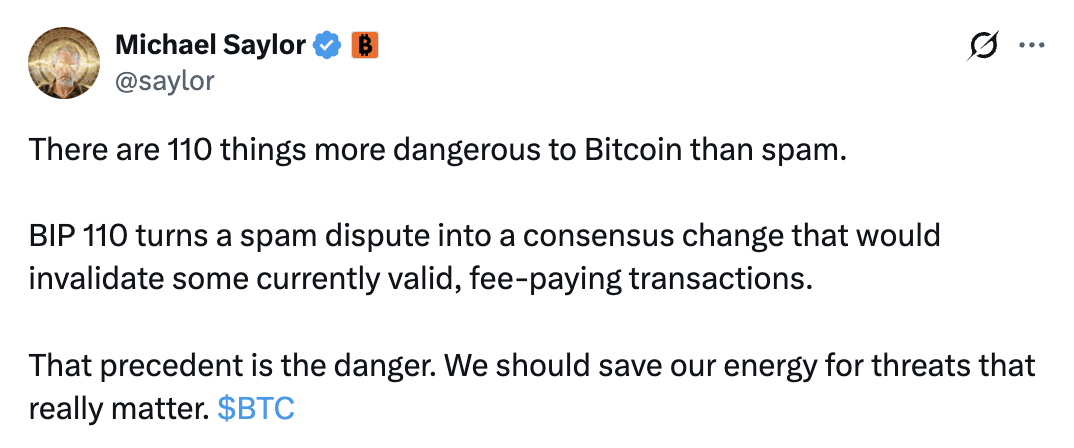
Echoing similar sentiments, Strategy’s Michael Saylor said, 

Saylor opposes BIP-110
Source: Michael Saylor/X

Market dynamics raise further concerns

This criticism came after only 10 blocks out of 2,016 supported the temporary upgrade on the 4th of July. 

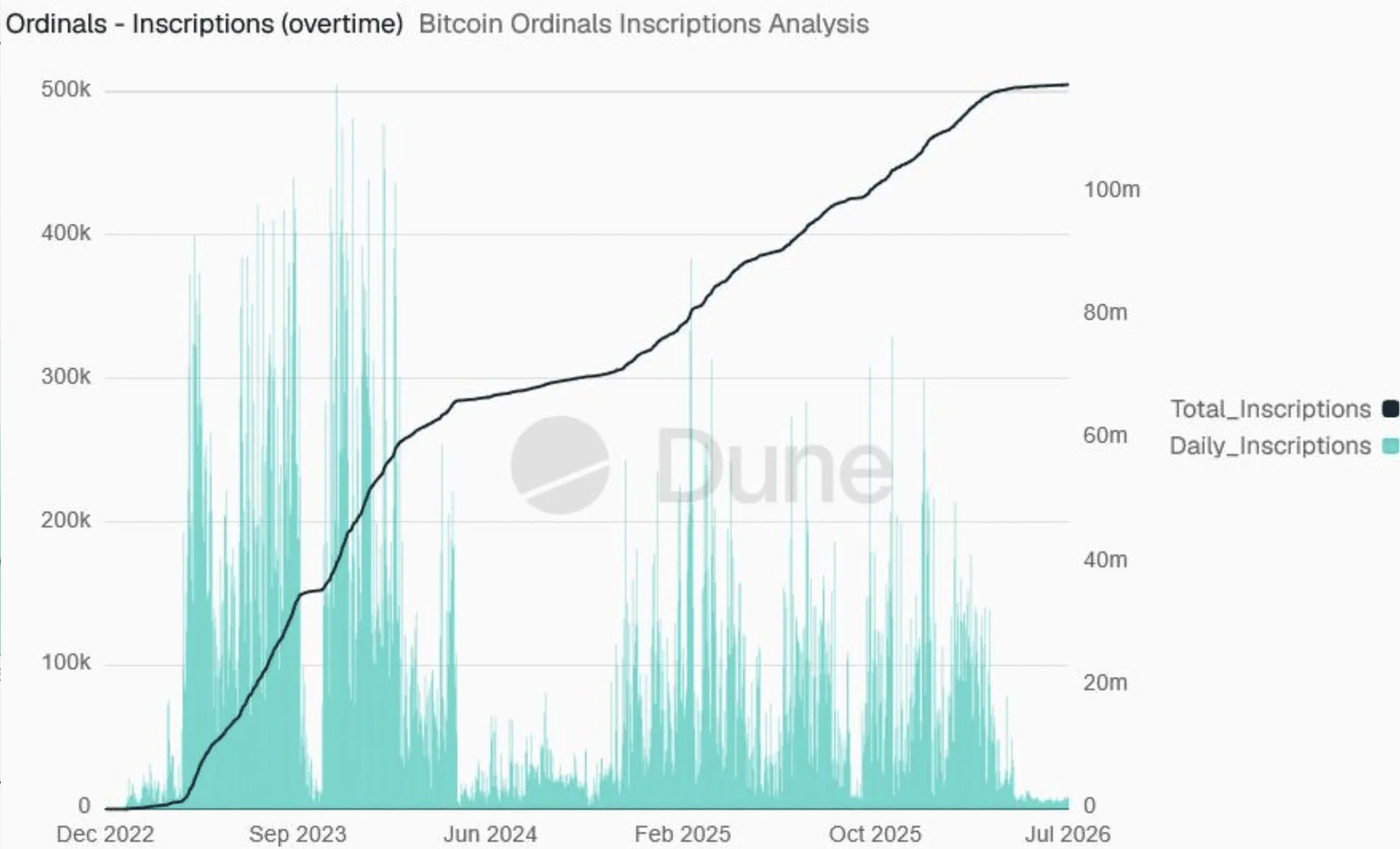
Adding further pressure, Ordinals activity has dropped to all‑time lows. For the past month, fewer than 10,000 Ordinals have been added to the Bitcoin blockchain each day. 

Change in daily Ordinals inscriptionsChange in daily Ordinals inscriptions
Source: Dune Analytics

Finally, Bitcoin’s price has fallen 45% over the past year, from its peak of $124,500 to $63,901.24 at press time.


Final Summary

  • Adam Back criticizes BIP-110 in light of false beliefs about the architecture of Bitcoin rather than malicious intent.
  • Saylor stands supporting Back’s argument as even Ordinals activity falls to its all-time lows.


Source link

Stablecoins see biggest drop since 2022 crypto winter led by Tether (USDT), Circle’s USDC decline

0
Stablecoins see biggest drop since 2022 crypto winter led by Tether (USDT), Circle's USDC decline

The combined market capitalization of major stablecoins fell from roughly $166 billion in March 2022 to $122 billion by September 2023, RWA.xyz data shows — a decline of over 26% as investors pulled money from the digital asset market.

Tether’s USDT fell from $78 billion to $65 billion between March and November 2022. For USDC, the downtrend took much longer to play out, falling from $55 billion in July 2022 to below $24 billion by November 2023, exacerbated by its banking partner Silicon Valley Bank’s collapse in 2023 March.

The implosion of TerraUSD, the algorithmic stablecoin of the Terra-Luna crypto project, also wiped out $18 billion from the stablecoin market.

The current decline is only a temporary setback in a long-term uptrend, one analyst said.

“The recent decline in stablecoin market cap represents a relatively small pullback in what we believe is a long-term growth market,” said Paul Howard, senior director at trading firm Wincent.

“Short-term fluctuations in liquidity are normal, but they don’t change our view that stablecoins will continue to play an increasingly important role in the digital asset ecosystem,” he added.

Increasing stablecoin competition

Looking beyond the headline decline, the trend appears more nuanced.

Part of the slowdown reflects a changing competitive landscape. As stablecoins move beyond crypto trading and into mainstream payments, new issuers have entered the market following regulatory progress such as the GENIUS Act in the U.S.


Source link