Home Blog Page 263

Bitcoin nears cycle bottom despite record $8B Spot ETF outflows – Why?

0
Bitcoin nears cycle bottom despite record $8B Spot ETF outflows – Why?


At press time, Bitcoin [BTC] was trading at $64,099.20, indicating a recovery from the decline below the $60k mark, but there are still concerns lingering. CoinShares’ Head of Research, James Butterfill, in his recent report, emphasized the three-front headwind facing Bitcoin.

One of the main issues, according to Butterfill, is the shaky ceasefire between Iran and Israel, which hasn’t done much to allay worries about a new Middle East war.

He said,

In markets like this, the turn often begins when forced selling is exhausted rather than when the headline backdrop improves.

Concerns were further heightened by the minutes of the most recent Federal Reserve meeting, which concluded that interest rates remained unchanged at 3.50% to 3.75%. 

Because of tariffs, disruptions around the Strait of Hormuz, and robust demand for AI, the Fed’s top concern remained inflation, with core PCE inflation at 3.3% in April and an estimated 3.4% in May. However, there was little justification for policymakers to loosen monetary policy, as the U.S. unemployment rate was 4.3% in May and then decreased to 4.2% in June. 

Is Bitcoin nearing the bottom? 

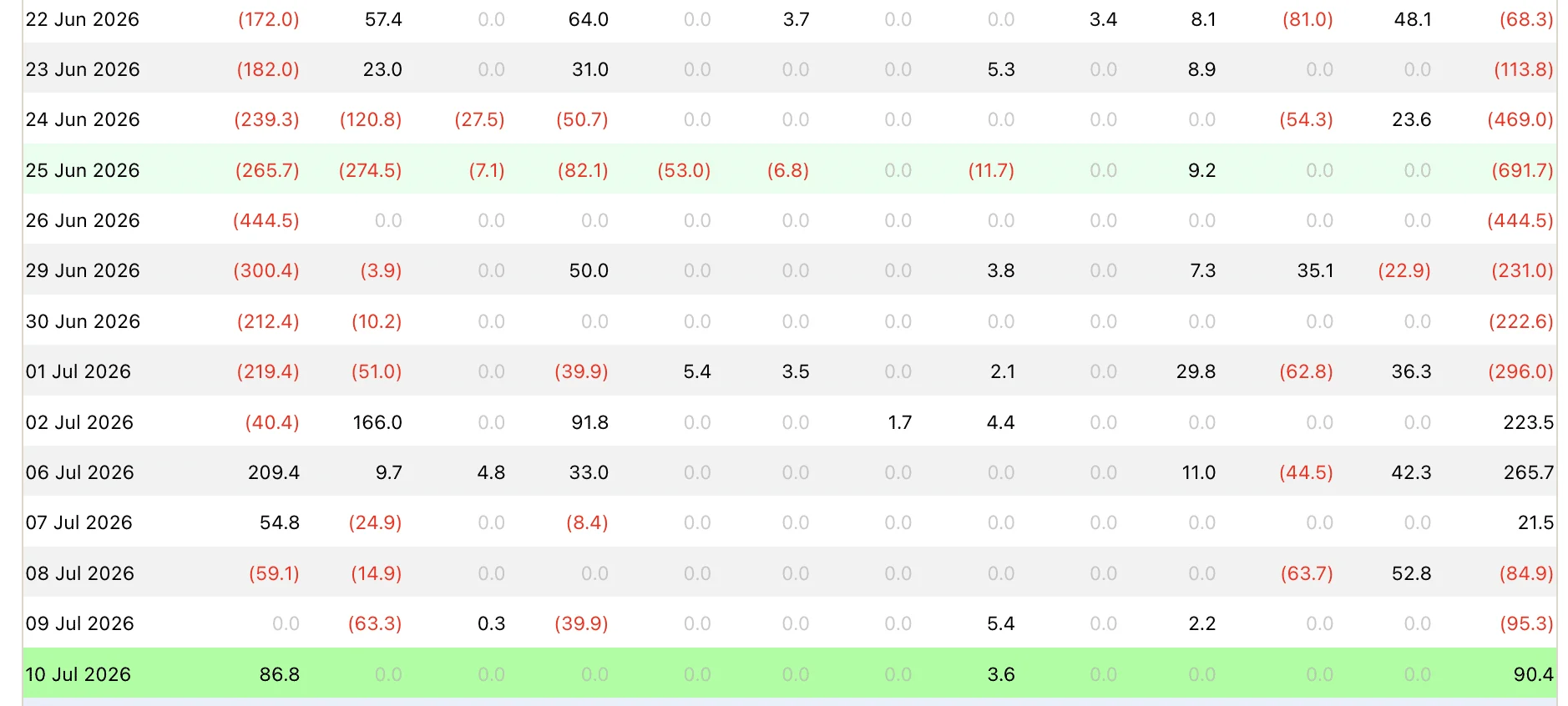
Butterfill, however, finds preliminary indications that Bitcoin might be approaching a bottom despite these obstacles. The reason behind this is that the Spot Bitcoin ETFs have experienced the longest withdrawal streak on record, with net outflows of about $8 billion over the last eight weeks.

However, recent inflows over the past three trading sessions indicate that institutional selling pressure might be lessening.

BTC ETFs outflows outpace
Source: Farside Investors

Meanwhile, there are no longer as many worries about Strategy’s Bitcoin sales. A much bigger sale of 3,588 BTC in early July had little effect on the market, with Bitcoin eventually rising toward $63,800.

Regarding regulations, Butterfill notes that there is waning hope for the CLARITY Act, which is still pending a Senate floor vote. The approval is further predicted to push Bitcoin to new heights. 

Hence, Butterfill concluded it best when he said,

The market remains under pressure, but not broken.

Final Summary

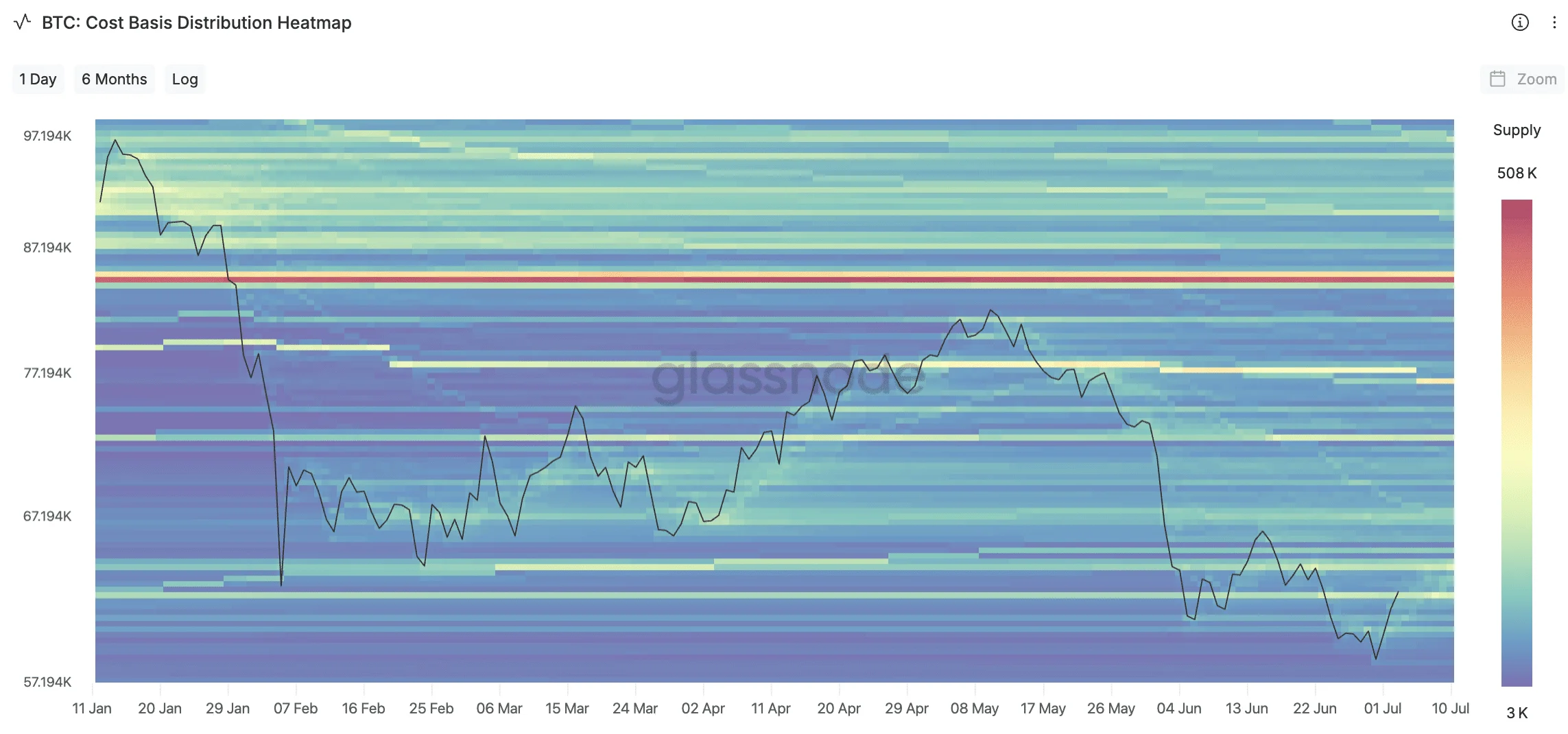
Meanwhile, the BTC Cost Basis Distribution Heatmap displays that the $77k cost-basis cluster has now become a significant resistance zone after supporting prices in April and May.

BTC cost basis distribution heatmapBTC cost basis distribution heatmap
Source: Glassnode

Since many holders might sell at break-even, a much larger supply cluster around $84k to $85k also represents significant overhead resistance.

Meanwhile, new accumulation in the $60k–$63k range indicates that buyers are establishing a new support base. While sustained buying above $77k would improve the bullish outlook, overall, Bitcoin is still below significant historical cost-basis levels, indicating cautious sentiment.


Final Summary

  • Middle East tensions and the 3.50% to 3.75% Fed rate are playing a major role behind Bitcoin’s weak momentum.
  • Spot Bitcoin ETF outflows and the BTC sell-off by Strategy suggest that Bitcoin might be nearing its bottom. 


Source link

Stock Indexes Settle Higher as Geopolitical Risks Ease

0
Stock Indexes Settle Higher as Geopolitical Risks Ease


The S&P 500 Index ($SPX) (SPY) on Friday closed up +0.42%, the Dow Jones Industrial Average ($DOWI) (DIA) closed up +0.29%, and the Nasdaq 100 Index ($IUXX) (QQQ) closed up +0.33%.  September E-mini S&P futures (ESU26) rose +0.43%, and September E-mini Nasdaq futures (NQU26) rose +0.35%. 

Stock indexes settled higher on Friday, with the S&P 500 posting a 5-week high.  Stocks turned higher on Friday after crude prices whipsawed lower when President Trump said US officials told Iran that the ceasefire is “over,” but the US would continue peace talks with Iran.  Easing geopolitical tensions also boosted stocks, following an American official who said talks between the US and Iran over a permanent peace deal are continuing, as the US remains committed to a diplomatic solution with Iran.   

More News from Barchart

Market sentiment also improved on Friday after South Korea’s SK Hynix jumped more than +12% in its first day of trading in the Nasdaq 100, which helped chipmakers recover from early losses.  Gains in stocks were limited on Friday amid weakness in cybersecurity stocks. 

The outlook for strong Q2 earnings, which will begin to be released next week, is a bullish factor for stocks.  Forecasts compiled by Bloomberg Intelligence suggest Q2 earnings may increase by +23%, close to Q1’s blowout earnings of +30%, which was more than double the +12% analysts had expected.  AI spending is expected to account for most of earnings, with AI infrastructure stocks set to contribute nearly 60% of the S&P 500’s earnings-per-share growth in Q2.   

WTI crude oil (CLQ26) fell nearly -1% on Friday after an American official said talks between the US and Iran over a permanent peace deal are continuing, as the US remains committed to a diplomatic solution with Iran despite this week’s hostilities.  Also, Al Jazeera reported Friday that Qatar said it supports all efforts to defuse US-Iran tensions.  Losses in crude were limited after Iran vowed to respond to the US attacks this week on Iran’s rail and maritime infrastructure.  On Wednesday, President Trump said the ceasefire with Iran is over, raising the prospect of persistent hostilities in the region that could disrupt energy supplies.  The US on Tuesday also revoked the Iran oil waiver that allowed buyers to purchase and transport Iranian oil legally.

The markets are discounting a 32% chance of a +25 bp rate hike at the next FOMC meeting on July 28-29.

Overseas stock markets settled mixed on Friday.  The Euro Stoxx 50 closed down -0.23%.  China’s Shanghai Composite fell from a 1-week high and closed down -1.00%.  Japan’s Nikkei-225 Stock Average closed up +1.20%.

Interest Rates

September 10-year T-notes (ZNU6) on Friday closed down -7.5 ticks, and the 10-year T-note yield rose +1.4 bp to 4.565%.  T-notes moved lower on Friday after the S&P 500 rallied to a 5-week high, curbing safe-haven demand for government debt securities.  Also, easing geopolitical risks reduced safe-haven demand for T-notes after President Trump said the US would continue peace negotiations with Iran.   

Losses in T-notes were limited on Friday as crude oil prices fell nearly -1%, which lowered inflation expectations and is a supportive factor for T-notes.  Also, bond dealer short covering boosted T-note prices, as dealers lifted short positions in T-notes that hedged this week’s new Treasury supply of $119 billion in T-notes and T-bonds.

European government bond yields moved lower on Friday.  The 10-year German bund yield fell -1.9 bp to 3.065%.  The 10-year UK gilt yield fell -2.5 bp to 4.872%.

Italy May industrial production fell -0.3% m/m, weaker than expectations of -0.2% m/m and the biggest decline in 4 months.

Swaps are discounting a 12% chance of a +25 bp ECB rate hike at its next policy meeting on July 23.

US Stock Movers

The weakness in cybersecurity stocks weighed on the broader market.  Okta (OKTA) closed down more than -6%, and CrowdStrike Holdings (CRWD) closed down more than -5% to lead losers in the Nasdaq 100.  Also, Zscaler (ZS) closed down more than -4%, and Palo Alto Networks (PANW) and Fortinet (FTNT) closed down more than -3%.  In addition, Cloudflare (NET) closed down more than -2%. 

EquipmentShare.com (EQPT) closed up more than +17% after raising its full-year adjusted core Ebitda estimate to $1.95 billion to $2.06 billion from a previous estimate of $1.88 billion to $2.00 billion.  The company also announced a $500 million share buyback program. 

WD-40 Co (WDFC) closed up more than +10% after boosting its full-year net sales forecast to $652 million to $667 million from a previous forecast of $630 million to $655 million. 

Meta Platforms (META) closed up more than +5% to lead gainers in the S&P 500 and Nasdaq 100 after research firm SemiAnalysis posted a positive report on the company’s AI computing business.

Jackson Financial (JXN) closed up more than +5% after Jeffries upgraded the stock to buy from hold with a price target of $140.

Nvidia (NVDA) closed up more than +4% to lead gainers in the Dow Jones industrials after the US Commerce Department said the UAE qualifies for easier treatment under US export control laws, which paves the way for the country to buy advanced AI chips from Nvidia. 

Circle Internet Group (CRCL) closed up more than +4% after receiving approval from the US Comptroller of the Currency to establish “First National Digital Currency Bank,” a national trust bank that will offer digital asset services. 

Weyerhaeuser (WY) closed up more than +4% after Raymond James upgraded the stock to strong buy from outperform with a price target of $30.

Sensient Technologies (SXT) closed down more than -3% after holder Freemont Capital announced the sale of as much as $237.7 million shares of Sensient via an unregistered block trade. 

Netflix (NFLX) closed down more than -2% after the Wall Street Journal reported on steps the company is considering to counter signs of declining subscriber engagement.

Delta Air Lines (DAL) closed down more than -2% after reporting Q2 passenger revenue of $15.61 billion, below the consensus of $15.63 billion. 

Earnings Reports(7/13/2026)

American Resources Corp (AREC), Anavex Life Sciences Corp (AVXL), FB Financial Corp (FBK).

On the date of publication, Rich Asplund did not have (either directly or indirectly) positions in any of the securities mentioned in this article. All information and data in this article is solely for informational purposes. This article was originally published on Barchart.com


Source link

Big fast-food burger chain franchisee files Chapter 11 bankruptcy

0
Big fast-food burger chain franchisee files Chapter 11 bankruptcy


A lender dispute over millions of dollars has led a Hardee’s restaurant franchisee to file for bankruptcy to invoke an automatic stay of all legal actions against the debtor.

Hardee’s restaurant franchisee Superior Star LLC filed for Chapter 11 bankruptcy protection, facing an alleged seller financing dispute, according to court papers.

Hardee’s franchisee Superior Star LLC files for Chapter 11 bankruptcy facing a lender dispute.Shutterstock

Hardee’s franchisee files for bankruptcy

The Phoenix-based franchisee filed its petition in the U.S. Bankruptcy Court for the Western District of Kentucky on July 9, listing $10 million to $50 million in assets and liabilities, according to PacerMonitor.

The debtor’s largest creditors include Starcorp LLC, owed $7.04 million in a disputed seller note subject to setoff; Lionsgate Investment, owed over $184,000 in terminated leases; Kosmides Family Trust, owed over $147,000 in a settlement; FJ Enterprises LLC, owed over $144,000 in a settlement agreement; McLane Company Inc., owed over $138,000 for food products; and MB2K LLC, owed over $123,000 in rent, according to court papers.

Superior Star, which purchased 93 Hardee’s locations in 10 states from Starcorp in 2023, currently operates 59 locations in Midwestern states. The company closed about 12 locations in 2025, according to Nation’s Restaurant News.

The debtor and Starcorp are entangled in a financing dispute over a $7.04 million seller note.

“We are aware that Hardee’s franchisee Superior Star, which independently owns and operates certain Hardee’s restaurants primarily in the Midwest region, has filed a voluntary petition for relief under Chapter 11 of the U.S. bankruptcy code,” franchisor Hardee’s said in a statement.

Hardee’s comment on dispute

“Superior Star’s decision to file is based on its own specific financial and business circumstances. We remain focused on continuing to strengthen the Hardee’s system and deliver quality experiences for our guests,” Hardee’s said.

Burger chain franchisor CKE Restaurants Holdings, which franchises the 66-year-old Hardee’s and Carl’s Jr restaurants, has been in a battle with some of its franchisees as it tries to collect revenue, such as franchise fees, digital fees, advertising fees, and rent.

One such dispute led a franchisee to file for Chapter 7 bankruptcy liquidation.

CKE affiliate Hardee’s Restaurants LLC sued franchisee ARC Burger LLC for alleged breach of contract, seeking to recover over $6.5 million in unpaid franchise fees and other obligations, according to Law.com.

ARC Burger LLC, closed all 77 of its locations after Hardee’s Restaurants LLC filed a lawsuit against the franchisee in November 2025, for alleged failure to pay franchise fees and other obligations.

ARC filed Chapter 7 bankruptcy

The franchisee subsequently filed for Chapter 7 bankruptcy liquidation on April 20, 2026, which invoked an automatic stay while its bankruptcy case proceeded.

Hardee’s, however, reopened 25 of the ARC locations as company-operated stores and plans to reopen more, according to Nation’s Restaurant News.

Another Hardee’s franchisee, Paradigm Investment Group, battled franchisor CKE Restaurants Holdings over the parent’s demands that the franchisee’s restaurants stay open past 2 p.m., pay digital fees, and adhere to loyalty program mandates.

CKE Restaurants indicated that it would terminate Paradigm’s franchise agreements if the franchisee — which operated 76 Hardee’s restaurants in Alabama, Florida, Mississippi, and Tennessee — did not make the changes and payments. The franchisee refused, and CKE on Jan. 15, 2025, sent Paradigm a notice of default and termination, threatening to cancel the franchise agreements on April 15, 2025.

CKE Restaurants operates over 3,800 Hardee’s and Carl’s Jr. restaurants across 44 states and 43 countries.

Related: Costco and Walmart capture grocery-store crowns

Superior Star location territories

Related: Major tire and auto repair franchisee files Chapter 11 bankruptcy

This story was originally published by TheStreet on Jul 11, 2026, where it first appeared in the Restaurants section. Add TheStreet as a Preferred Source by clicking here.


Source link

‘Priced out’ — Metaplanet launches study on Bitcoin-backed digital credit

0
‘Priced out’ — Metaplanet launches study on Bitcoin-backed digital credit


Metaplanet plans to turn Strategy’s STRC design into a digital credit framework to help the Bitcoin treasury firm and other small firms locked out of Japan’s rigid bond market. 

To achieve this plan, dubbed Project Nova, the firm has partnered with Metaplanet Securities, stablecoin issuer JPYC, and tokenization firm Progmat. 

According to the arrangement, the Bitcoin-backed digital credit framework will use Metaplanet’s BTC holdings (currently at 43K coins) as collateral.

However, unlike the yield-paying STRC that is issued only by Strategy, other mid-sized and high-growth firms in Japan can leverage the platform. They can issue their own tokenized digital credit to investors. Think of it as an open marketplace for other firms to issue their credit directly to investors. 

The study aims to explore the possibility of round-the-clock trading and settlement with daily interest. Underscoring the importance of the project, Metaplanet CEO Simon Gerovich said, 

This is Project NOVA at work: using Bitcoin’s strength as an asset to open Japan’s credit markets to companies the current system prices out.

Earlier this year, the firm launched a venture capital firm and asset management subsidiaries. The first investment was in JPYC, a regulated stablecoin issuer in Japan, and Project Nova partner. The subsidiaries are meant to be at the center of its digital credit and BTC capital markets.

Four months later, the recent study into a white label platform for BTC-backed digital credit now unravels the firm’s aggressive long-term BTC plan. The move also comes at a time when Japan is reviewing crypto ETF approvals. 

Assessing Bitcoin’s digital credit market

Pioneered by Michael Saylor’s Strategy, BTC digital credit refers to debt instruments like preferred stocks (like Stetch [STRC]) or convertible loans backed by the firm’s crypto holdings. 

Metaplanet and Bitmine (the world’s largest Ethereum treasury) are both exploring STRC-like instruments for more crypto accumulation. 

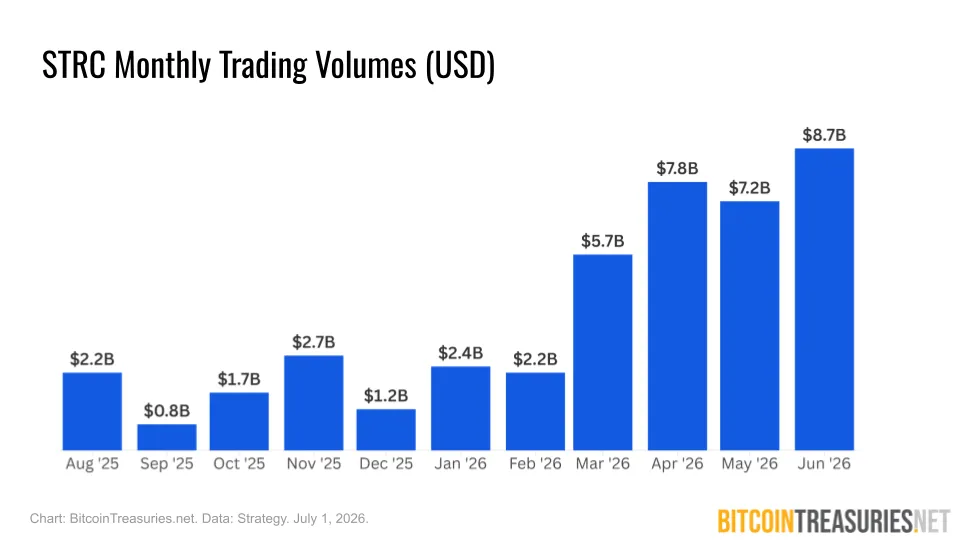
Interestingly, STRC faced a market distress and trust test after de-pegging from its $100-target level. Despite the de-peg, volumes remained strong as buyers came in to pick the stock at its lows. 

STRC did about $9 billion in June, according to a report by Bitcoin Treasuries. In fact, the stock has since recovered to close to its $100, underscoring renewed confidence and trust in BTC digital credit.     

Metaplanet
Source: Bitcoin Treasuries 

It’s unclear how the Japanese market will receive the BTC-backed digital credit plans. In the meantime, Metaplanet’s stock jumped 4% following the update. 


Final Summary

  • Metaplanet is evaluating the feasibility of launching an open marketplace for BTC-backed digital credit for Japanese small firms.
  • It remains unclear whether Japan’s regulators and market will embrace the plan. 


Source link

Blue Jays’ 7-Year Veteran Questions ‘Void’ Left By Phillies’ Don Mattingly

0
Blue Jays’ 7-Year Veteran Questions ‘Void’ Left By Phillies’ Don Mattingly


The departure of Don Mattingly from the Toronto Blue Jays coaching staff continues to be a talking point months into the 2026 season, particularly as Mattingly has helped spark an unexpected turnaround with the Philadelphia Phillies.

While Mattingly’s success in Philadelphia has fueled speculation about his long-term future, it has also prompted a former Blue Jays player to wonder whether Toronto underestimated the impact of losing one of baseball’s most respected veteran coaches.

Former Blue Jays outfielder Kevin Pillar recently spoke out about Mattingly’s departure and speculated that his exit could be contributing to the club’s ongoing struggles this season.

Toronto Blue Jays 7-Yer Veteran Kevin Pillar Praises Philadelphia Phillies’ Don Mattingly

Speaking on “Foul Territory,” Pillar questioned whether Mattingly’s absence has had a larger impact than many expected.

“Is it the reason the Blue Jays aren’t playing well? Could it be some reason that they’re not playing as well, the fact that Don was there last year and he’s not there anymore?” Pillar asked during a recent segment. “Clearly, there’s a void that’s missing without Donnie Baseball there and clearly something has changed in Philadelphia, because we’re talking about the same group of players… The team’s playing better so there’s something magical about Donnie Baseball.”

Pillar spent seven seasons with Toronto, from 2013 to 2019, and remains one of the more recognizable veterans to come through the organization in the past decade. And his questions were raised as Mattingly’s influence has become increasingly visible in Philadelphia following the club’s managerial change.

“With the Philadelphia Phillies firmly in playoff contention heading into the All-Star break, interim manager Don Mattingly said he would be interested in leading the club full time,” ESPN reported. “Since Rob Thomson was fired in April, Mattingly has led a remarkable turnaround in Philadelphia over the past two months. At the time of Thomson’s dismissal, the Phillies were 9-19, tied with the New York Mets for MLB’s worst record.”

Toronto Blue Jays Lost ‘Dream’ Coach When Don Mattingly Joined Philadelphia Phillies

Mattingly’s impact in Toronto was well documented but with his new team ascending and his former team struggling, it’s becoming apparent that his impact on the offense was key. And there’s little doubt that Blue Jays manager John Schneider would like to have kept him in the dugout.

“Having Mattingly as bench coach was a dream for Blue Jays manager John Schneider,” Keegan Matheson wrote for MLB.com. “As a kid growing up in New Jersey, Schneider had Mattingly’s poster on his wall. The initial awe wore off, of course, and the two grew close, the veteran Mattingly helping the younger Schneider lead this organization back to the World Series.”

Whether Mattingly ultimately lands the Phillies’ managerial job for next season remains to be seen, but as Philadelphia continues its resurgence, the discussion surrounding his influence is only growing louder — both in Pennsylvania and north of the border.


Source link

Ethereum news: Robinhood chain hits $568M in trading frenzy, benefitting Arbitrum

0
Ethereum news: Robinhood chain hits $568M in trading frenzy, benefitting Arbitrum

Digital broker Robinhood’s new chain is off to a flying start, and the benefits are trickling to Ethereum-based network Arbitrum.

The native token of Arbitrum (ARB) jumped 19% over the past 24 hours, making it the best-performing asset in the top 100 cryptocurrency, according to CoinDesk data. Bitcoin edged 1.5% higher to trade above $63,000, while ether (ETH) was up 0.5% in an otherwise muted day.

The gains came as Robinhood Chain, built on top of Arbitrum’s technology stack and rolled out to the broader public a week ago, processed over $568 million in daily trading volume on Wednesday and logged over $350 million so far on Thursday, according to blockchain data from Entropy Advisors. Much of that activity was driven by a burst of memecoin trading, while stablecoin balances on the network also climbed quickly above $260 million within its first week.

The activity is translating into revenue for Arbitrum. Under the agreement, 10% of Robinhood Chain’s net protocol revenue flows back to the Arbitrum ecosystem, split between the DAO treasury and the Developer Guild.

Robinhood’s crypto push

Robinhood unveiled the chain at its London event last week as the centerpiece of a broader crypto push. The brokerage announced it would expand access to tokenized U.S. stocks to customers in more than 120 countries, launched a DeFi-powered savings vault offering yields through the lending protocol Morpho, and outlined plans to expand its crypto business into AI-powered trading and additional asset classes.


Source link

This Unstoppable Tech ETF Is Down More Than 20%. Is It Time to Buy the Dip?

0
This Unstoppable Tech ETF Is Down More Than 20%. Is It Time to Buy the Dip?


The DRAM – Roundhill Memory ETF (NYSEMKT: DRAM), the first-ever exchange-traded fund (ETF) dedicated to memory stocks, came out of the gate strong, with the fund tripling from its $27 opening price when it debuted on April 2. However, more recently, the fund has pulled back, along with memory stocks, and is down more than 20% from its highs as of this writing.

With the fund well off its highs, is now the time to buy the ETF?

Missed Nvidia in 2009? This Rare Signal Is Flashing Again. In 2009, a “Double Down” signal flashed for a little-known chipmaker called Nvidia. For the first time in years, that same “Total Conviction” signal is flashing for a company 1/100th the size of Nvidia. Continue »

A concentrated bet on memory stocks

The DRAM – Roundhill Memory ETF is not your typical diversified fund, nor even a sector-specific fund. It’s a highly focused play on the memory market, especially DRAM (dynamic random access memory) and, to a lesser extent, NAND (flash) memory. Nearly 75% of the ETF’s holdings are concentrated in the big three DRAM makers: Micron (NASDAQ: MU), Samsung, and SK Hynix. The weightings of the three are currently pretty evenly spread out, with Micron the highest at 25.8% and SK Hynix the lowest at 23.7%.

All three DRAM makers are basically riding the same tailwinds. DRAM prices have soared as demand for high-bandwidth memory (HBM), a special form of DRAM, has taken off. HBM is packaged with graphics processing units (GPUs) and other AI chips to help optimize their performance. This demand is increasing even more with the rise of AI inference, which tends to be more memory-bound than compute-constrained. With inference expected to become the larger market than training, demand for HBM is expected to remain strong.

At the same time, HBM takes upwards of three times the wafer capacity of ordinary DRAM, which is helping exacerbate the current supply shortage. With the big three memory makers focused on higher-margin HBM, this has led all DRAM prices to skyrocket due to the current supply-demand imbalances.

The result is that all three companies have seen both their revenues surge and gross margins balloon. This isn’t expected to let up soon, with SK Hynix CEO Kwak Noh-jung recently saying he expects the worst-ever DRAM supply shortage next year. He has predicted the market will remain supply-constrained beyond 2030.

Image source: Getty Images.

This is a typically highly cyclical business, and the big three DRAM makers have also all been locking in longer-term contracts for the first time. This should help reduce some of the cyclicality of the business, and could help the stocks attain higher multiples.

The DRAM ETF is a great way to play the memory market, giving you exposure to not only the big three DRAM players but also NAND companies like Sandisk and Japanese company Kioxia, which are both looking to develop high-bandwidth flash (HBF). Notably, the ETF will sometimes use leverage and total return swaps, but this is largely done for tax purposes and as a way to quickly gain exposure to a stock. Roundhill offers a distinct leveraged version of the ETF, the Roundhill T-REX 2X Long DRAM Daily Target ETF, but I generally don’t recommend leveraged ETFs.

All in all, this is an ETF I’d treat more as an individual stock, and I think it is a nice way to play the current DRAM supercycle, which looks like it could have some legs over the next several years.

Should you buy stock in Roundhill ETF Trust – Roundhill Memory ETF right now?

Before you buy stock in Roundhill ETF Trust – Roundhill Memory ETF, consider this:

The Motley Fool Stock Advisor analyst team just identified what they believe are the 10 best stocks for investors to buy now… and Roundhill ETF Trust – Roundhill Memory ETF wasn’t one of them. The 10 stocks that made the cut could produce monster returns in the coming years.

Consider when Netflix made this list on December 17, 2004… if you invested $1,000 at the time of our recommendation, you’d have $395,679!* Or when Nvidia made this list on April 15, 2005… if you invested $1,000 at the time of our recommendation, you’d have $1,294,805!*

Now, it’s worth noting Stock Advisor’s total average return is 929% — a market-crushing outperformance compared to 211% for the S&P 500. Don’t miss the latest top 10 list, available with Stock Advisor, and join an investing community built by individual investors for individual investors.

See the 10 stocks »

*Stock Advisor returns as of July 11, 2026.

Geoffrey Seiler has no position in any of the stocks mentioned. The Motley Fool has positions in and recommends Micron Technology. The Motley Fool has a disclosure policy.

This Unstoppable Tech ETF Is Down More Than 20%. Is It Time to Buy the Dip? was originally published by The Motley Fool


Source link