Home Blog Page 271

Does age matter when getting a mortgage?

0
Does age matter when getting a mortgage?


Can you get a mortgage and buy a house at the age of 18? What about 68? Does age matter when getting a mortgage? The simple answer is that age discrimination in lending is prohibited. However, real life is a bit more nuanced.

If you’re of legal age in your state, you can sign a contract and apply for a mortgage. In most states, the “age of majority” is 18. It’s 21 in Mississippi and 19 in Alabama and Nebraska. 

There are exceptions. A minor may buy a house if:

  • The minor is legally emancipated, which is a court-ordered process that enables a minor to sign ownership and mortgage agreements. Of course, lender approval would be required. 

  • The property is held in a trust or under joint ownership. Under this legal structure, an adult executes the contract on behalf of the minor with the property placed in a trust or jointly held.

That’s the legal minimum age factor in play. Of course, a borrower, regardless of age, must qualify financially for a mortgage, which includes proof of steady income, an acceptable credit history, and the down payment required for the loan they are applying for.  

Now to the other end of the scale: First of all, home buyers are getting older. The median age for a home buyer is 59, according to the National Association of Realtors. First-time home buyers are averaging 40 years old. 

But is there an age limit?

No, not in a legal sense. A lender will consider a borrower’s source of repayment, whether it’s income from a job, an investment, a retirement account, or other assets (see “Asset depletion loans” below). Even Social Security payments count as income. 

Now, here’s where the real-life nuances come in. Remember, age discrimination in lending is prohibited. However, loan denials increase significantly among those aged 70 and older, according to a 2023 study by the Federal Reserve Bank of Philadelphia. Reasons can include:

  • Mortality risk: While lenders can’t decline an application based on life expectancy, they do consider the risk of loan default or foreclosure that may arise from a loan guarantor’s death. 

  • Declining income and savings: As borrowers age, income often declines or, at the very least, becomes harder to verify. In addition, retirement savings are often drawn down, reducing net worth.  

  • Lack of collateral: In this instance, it’s most directly related to the loan-to-value. The Philadelphia Fed study noted that for elderly borrowers, particularly those refinancing mortgages, the appraised value of the home may be too low for the requested loan amount. “An inability to maintain one’s property may be a contributing factor,” the study added.

Regardless of the reason, “it is important for older individuals to know that they are more likely to be denied credit,” the Fed concluded. 

See today’s best mortgage interest rates.

Using investments to back a mortgage is known as an “asset depletion loan.” Freddie Mac, the government-sanctioned company that helps fund mortgages, offers guidelines for structuring such loans. The assets can be held in a retirement, investment, or deposit account, in a living trust, or from the sale of a business. Other restrictions also apply.

A calculation that divides the eligible assets by 240 determines the borrower’s debt-to-income ratio. 

There is one mortgage with strict age guidelines: the Home Equity Conversion Mortgage, also known as a reverse mortgage. Designed for borrowers 62 and over, a reverse mortgage requires no monthly payment. The equity in the home is paid to the owner as a lump sum or monthly payments. 

A borrower must be of the minimum age required to be legally qualified to sign contracts in their state. In most states, that is 18.  

Yes, retirees can qualify for a mortgage. Lenders can consider a portion of the value of a retiree’s investment portfolio instead of a salary. 

An 80-year-old can buy a house if they qualify financially. However, as noted above, loan denials increase after the age of 70. One option is to use investment assets as a proxy for the debt-to-income ratio. See “Asset depletion loans” above.


Source link

IndyCar’s New Video Game ‘The Game’ Will Roll Out In Early 2027

0
IndyCar’s New Video Game ‘The Game’ Will Roll Out In Early 2027


A long wait by motorsports gamers is getting closer to coming to an end.

IndyCar and iRacing and announced on July 10 that “INDYCAR Racing The Game,” the highly anticipated official standalone IndyCar video game developed by world-renowned motorsport simulation company iRacing Studios, is set to launch in early 2027 on PlayStation 5, Xbox consoles and PC via Steam.

This is the first IndyCar standalone video game in more than two decades and is expected to launch in the countdown to the 2027 Indianapolis 500 presented by Gainbridge.

“This is a project our team has been passionate about for a long time,” said Tony Gardner, iRacing president. “We’re bringing everything we know about authentic, immersive racing to consoles and PC, and creating an experience worthy of the IndyCar name. 2027 can’t come soon enough.”

What Fans Can Expect From IndyCar Racing ‘The Game’

IndyCar Racing The Game brings the raw speed, precision and drama of the NTT IndyCar Series to a new generation of racing fans and gamers. Leveraging iRacing Studios’ industry-leading expertise in authentic motorsport simulation, the title promises to deliver an unmatched open-wheel racing experience – from the iconic Indianapolis Motor Speedway to the sport’s most celebrated street circuits, road courses and ovals.

“IndyCar features the most competitive and action-packed racing on the planet, challenging drivers at every turn with incredible speeds and demanding layouts,” said Alex Damron, IndyCar chief marketing officer. “Our new video game is going to capture the energy and drama of our sport with hyper-realism, bringing our series to a new generation of gamers. Partnering with iRacing — the gold standard in racing simulation — ensures this will be a truly special new chapter in our gaming history. We can’t wait for fans to get behind the wheel.”

IndyCar Racing The Game will be available on PlayStation 5, Xbox Series X|S, Xbox One and PC via Steam. Additional game details, including features, modes, and pre-order information, will be announced in the coming months.

Play Puzzles & Games on Forbes


Source link

Bitcoin reclaims $64k – But Strategy’s $216mln underwater sale threatens momentum

0
Bitcoin reclaims $64k - But Strategy's $216mln underwater sale threatens momentum


Bitcoin climbed above $64,200 in early trading on Friday, the 10th of July, strengthening its recovery even as Strategy sold Bitcoin at a loss.

Holding above this level into next week could reinforce the recovery. However, the bigger question is who has been selling into the rally, and at what price.

Strategy’s recent disposals weighed on sentiment. Even so, its average acquisition price remains well above that of retail investors on Binance. That gap shifts attention away from Strategy and toward retail holders, who now sit comfortably in profit and may choose to sell into strength.

Did Strategy’s Bitcoin sales really matter?

Strategy recently announced plans to sell part of its Bitcoin [BTC] holdings through its Digital Credit Capital Framework. The company said the proceeds would fund dividend payments and share repurchases.

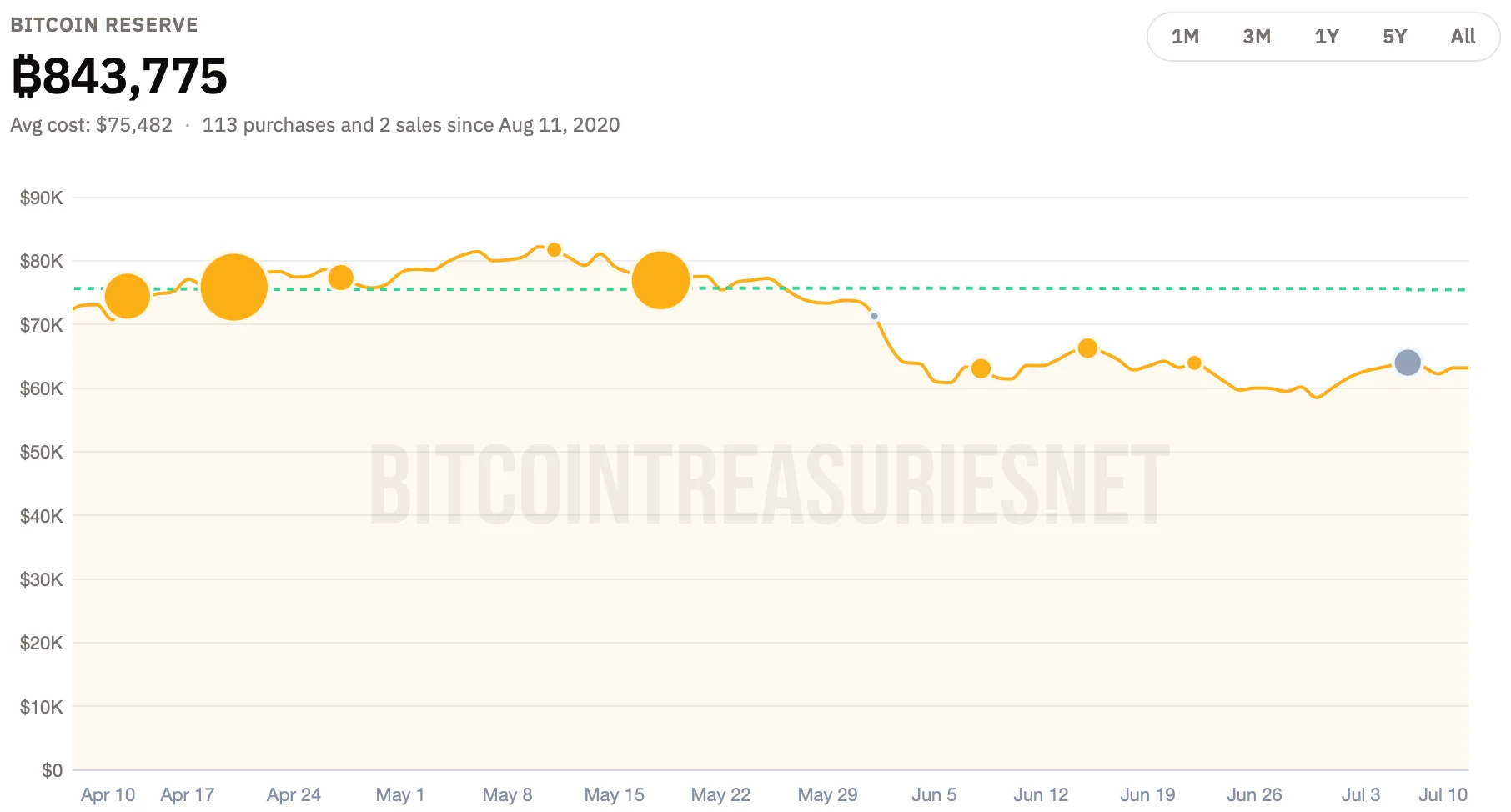
On the 6th of July, Strategy sold 3,588 BTC for roughly $216 million, marking its largest disposal to date. The sale occurred near $60,000, around 20% below Strategy’s average acquisition price of $75,476.

Including its earlier sale of 32 BTC on the 1st of June, Strategy’s average disposal price reached $65,721. Its average purchase price stood at $75,584, leaving the company with an overall realized loss of 13.06%.

Strategy Bitcoin holding.
Source: BitcoinTreasuries.net

While the market viewed the sales as bearish, CryptoQuant analyst Darkfost argued they reflected liquidity needs rather than a change in Strategy’s long-term outlook.

A choice that reflects the company’s need for liquidity, rather than a market conviction.

That view aligned with Strategy’s continued commitment to Bitcoin. The company still holds 843,775 BTC, roughly 4.2% of the circulating supply, valued at about $53.8 billion at press time.

Why could retail decide Bitcoin’s next move?

The same data suggested retail activity may now carry greater influence over Bitcoin’s direction.

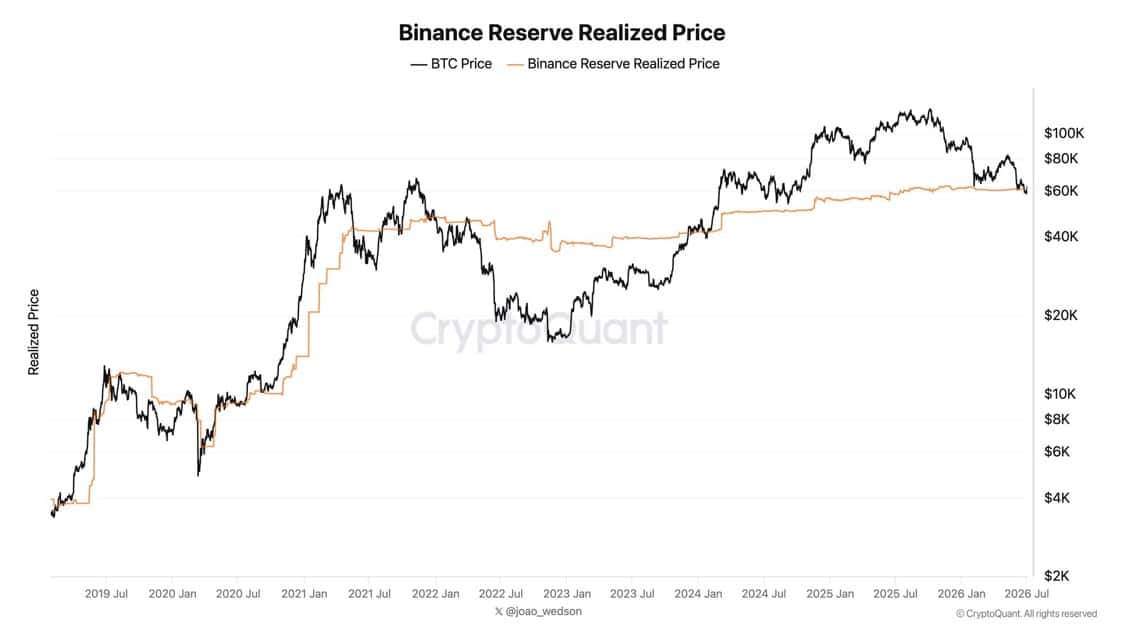
A comparison between Strategy’s realized price and Binance’s retail cost basis highlighted the difference. Binance holds nearly 30% of all exchange-held Bitcoin, or about 2.38 million of the 8 million BTC held across exchanges.

Binance reserve vs. Realized price Binance reserve vs. Realized price
Source: CryptoQuant

Strategy realized its recent sales at $65,721. By comparison, retail investors realized Bitcoin near $60,900, while Binance-linked addresses held an average cost basis around $57,000, according to CryptoQuant data from the 2nd of July.

That left most retail holders in profit at current prices. As Bitcoin approaches levels well above its average entry, profit-taking becomes increasingly likely.

Spot demand already reflected that caution.

Binance recorded only about $35.5 million in net buying, a relatively small margin that kept the market only modestly bullish. That thin buying pressure suggested buyers had yet to fully absorb potential selling from profitable retail holders.

If retail investors begin locking in gains, their selling activity could carry greater influence over Bitcoin’s next move than Strategy’s recent disposals.


Final Summary

  • Strategy sold Bitcoin at a loss to fund dividends and share buybacks but still holds roughly 4.2% of the circulating supply.
  • Retail investors remain comfortably in profit, making their willingness to sell the more important signal for Bitcoin’s next move.


Source link

U.S. government digital dollar set to be banned tonight under housing law’s CBDC limit

0
U.S. government digital dollar set to be banned tonight under housing law's CBDC limit

The CBDC limit expires at the end of 2030, though there was little chance that a Fed digital currency would have been executed by then. There’s been limited appetite at the central bank, where its previous leadership — even before the arrival of Trump’s newest Fed chair, Kevin Warsh — had long said that such an effort would require backing from the White House and congressional authorization. There’s never been wide support for a CBDC in Congress.

But the idea — strongly opposed by the crypto industry for its potential to compete with privately issued stablecoins — has been pursued in other jurisdictions, such as Europe and China, and it became a popular political target for U.S. politicians. So Republicans managed to slip it into the unrelated housing legislation, after previously trying to include it in a range of bills including the Foreign Intelligence Surveillance Act.

Despite the overall housing bill’s popularity, Trump took an unexpected, last-minute stand against signing it, for which he’d previously scheduled a ceremony and had a stage erected. He declared that he wouldn’t sign anything until lawmakers approved a bill that would impose new proof-of-citizenship and identity checks on voters — an effort without sufficient current support to pass in Congress.


Source link

Bloomberg’s Daybreak Desk Says SK Hynix’s Record $26.5 Billion Nasdaq Debut Proves the AI Chip Boom Isn’t Cooling

0
Bloomberg’s Daybreak Desk Says SK Hynix’s Record $26.5 Billion Nasdaq Debut Proves the AI Chip Boom Isn’t Cooling


Quick Read

  • Micron (MU) guided $50B in Q4 revenue while NVIDIA (NVDA) posted $75B in Data Center sales, both validating SK Hynix’s record $26.5B US debut.

  • KLA surged 150% over the past year supplying the process control tools that make HBM stacking commercially viable across the entire AI buildout.

  • This lithium producer surpassed a $1B private valuation, joining some of America’s most powerful startups. Now you can invest in EnergyX alongside global giants like General Motors, but only through July 16. (sponsor)

Bloomberg’s Daybreak Europe desk framed today’s SK Hynix NASDAQ debut as validation that AI-driven chip demand remains structurally intact, even with equity markets navigating fresh macro cross-currents. The South Korean memory maker raised $26.5 billion in its ADR offering, a deal that surpassed Alibaba’s prior record to become the largest ever US listing by a foreign company.

SK hynix

Bloomberg correspondent Winnie tied the reaction to memory sector fundamentals: “The gains are being boosted by the technology shares after Micron spending plan really reassured investors that the AI demand remains solid, and here you can see that KOSPI still leading gains up almost 5% ahead of the SK Hynix US listing.” The bureau editor added that “the two stocks in Korea are the foundation of the whole AI buildout” and that “the fact that SK was able to raise this kind of money at a premium is a strong point.”

With ADRs opening at a 3% premium to Thursday’s Korea close and the broader Asian stocks benchmark up 1.4% to 1.5%, the price action aligned with what three US-listed AI beneficiaries have been telling investors in their most recent results.

Micron: The Direct Read on Memory Demand

Micron Technology (NASDAQ:MU) is the direct US-listed proxy for what SK Hynix does. In fiscal Q3 2026, Micron reported revenue of $41.456 billion, a 345.72% jump from the prior year, with non-GAAP EPS of $25.11 against a $20.2843 consensus. Cloud Memory contributed $13.769 billion and Core Data Center added another $11.524 billion.

July 16 is the Final Day to Tap Into the Lithium Boom (sponsor)
General Motors, POSCO, and 50,000+ everyday investors have already backed lithium producer EnergyX

Here’s why you should do the same before their July 16 investment deadline: lithium prices are up 75% this year, with demand projected to grow a staggering 5X by 2040. 

With tech that can recover up to 3X more lithium than traditional methods, EnergyX is preparing to unlock up to 15M+ tons. Become a private-stage EnergyX investor before the July 16 deadline.


Source link

Circle secures final OCC approval for national trust bank to strengthen USDC infrastructure

0
Circle secures final OCC approval for national trust bank to strengthen USDC infrastructure


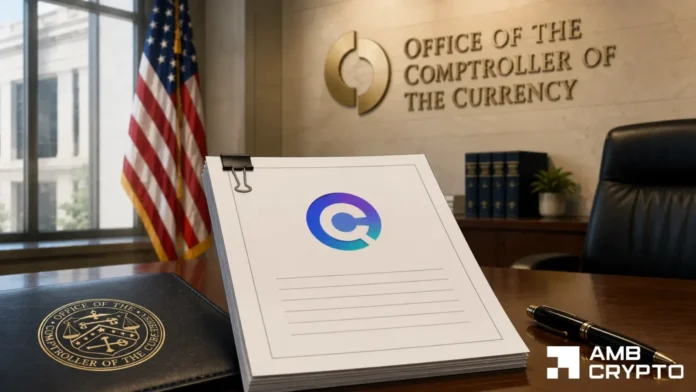
Circle has received final approval from the U.S. Office of the Comptroller of the Currency [OCC] to establish a national trust bank. This marks a major regulatory milestone as the stablecoin issuer moves another key part of its USDC infrastructure under direct federal oversight.

The approval makes Circle one of the first crypto-native firms from the OCC’s latest wave of digital asset trust bank applicants to reach the operational stage. It also signals a broader shift as U.S. regulators increasingly integrate crypto infrastructure into the existing banking framework rather than creating a separate regime for digital assets.

Circle National Trust to provide federally regulated custody

The new institution, First National Digital Currency Bank, N.A., will operate as Circle National Trust under OCC supervision. According to Circle, the national trust bank will initially provide fiduciary digital asset custody services for the company and its affiliates. 

It does this while creating a pathway to offer custody services directly to a limited number of institutional clients. This includes banks and regulated financial institutions, depending on market demand.

Circle also said the charter is designed to support future management of the USDC Reserve. Thus, bringing reserve operations under federal banking oversight if implemented. 

The company described the approval as strengthening USDC’s infrastructure through federally regulated custody. It also lays the foundation for additional capabilities as the platform evolves.

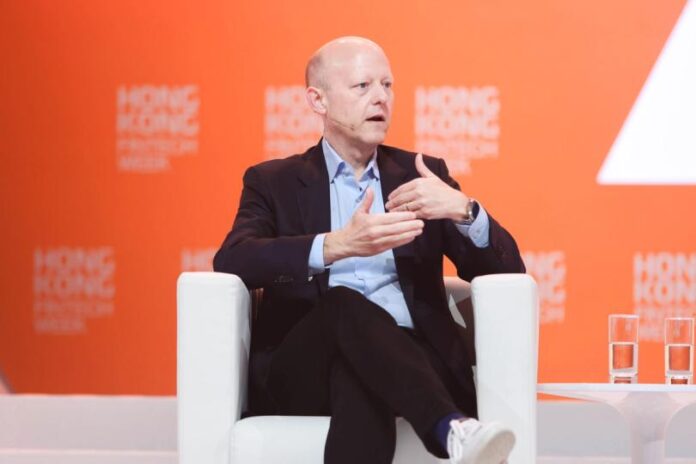
Chief Executive Jeremy Allaire said the approval represents “a defining step” in bringing blockchain infrastructure into the U.S. financial system. He added that federal oversight would provide greater transparency, governance, and confidence for institutions building on public blockchains.

Approval advances latest wave of crypto trust banks

The announcement also places Circle at the forefront of the OCC’s latest push to bring crypto firms into the federal banking system.

In December 2025, the OCC granted conditional approval to a group of crypto-focused national trust bank applicants, including Circle, Ripple, BitGo, Fidelity Digital Assets, and Paxos. 

Circle has now progressed from conditional to final approval, allowing it to establish and operate its national trust bank under the regulator’s supervision.

The milestone reflects a broader trend in U.S. digital asset regulation, with crypto infrastructure providers increasingly seeking national trust bank charters to expand regulated custody services and strengthen institutional participation in digital assets.

What a national trust bank means

Unlike a traditional commercial bank, a national trust bank does not operate as a retail lender or accept consumer deposits in the conventional sense. Instead, it specializes in fiduciary services, asset custody, and trust activities under OCC oversight.

For Circle, that structure enables the company to provide regulated digital asset custody while positioning USDC infrastructure within an established federal banking framework. 

The approval also establishes a pathway for future reserve management under OCC supervision, reinforcing Circle’s strategy to expand regulated infrastructure around its stablecoin ecosystem.


Final Summary

  • Circle has received final OCC approval to establish Circle National Trust, moving key parts of its USDC infrastructure under direct federal banking oversight.
  • The approval advances Circle beyond the OCC’s earlier conditional approval stage.


Source link

Circle takes banking step with U.S. trust bank approval

0
Circle takes banking step with U.S. trust bank approval

Circle (CRCL), the issuer of the world’s second largest stablecoin USDC, received approval from the U.S. Office of the Comptroller of the Currency (OCC) to establish a national trust bank.

National trust banks are authorized to provide users with custody and fiduciary services but do not accept consumer deposits or make loans like traditional commercial banks.

Shares are higher by 14% in pre-market trading.

“OCC approval to establish Circle National Trust marks a defining step in bringing blockchain technology and digital assets into the core of the U.S. financial system,” Circle CEO Jeremy Allaire said Friday in a statement announcing the milestone. “Federal oversight of our trust bank sets a new standard for transparency, governance, and scale for Circle’s infrastructure.”

The move comes as crypto firms such as Kraken, increasingly seek federal charters, licenses and banking approvals. Crypto.com secured an OCC license in February to operate as a federally regulated crypto custodian bank. BitGo, Circle, Ripple, Paxos, and Fidelity Digital Assets all received similar conditional approvals in December. The OCC upgraded BitGo’s approval to unconditional immediately after.


Source link