Home Blog Page 304

XRP Open Interest on Binance Hits a Three-Month Low: What It Means for Price

0
XRP Open Interest on Binance Hits a Three-Month Low: What It Means for Price


Photo by BeInCrypto

XRP futures open interest on Binance has fallen to roughly 397 million XRP, its lowest level in over three months. The decline arrives as the token trades at $1.09.

Here is what the drop means, how spot data contrasts, and what could come next for the price.

What the XRP Open Interest Decline Actually Means

Open interest measures the total number of outstanding derivative contracts in a market. A decline in this metric, especially alongside price weakness, often reflects deleveraging as traders reduce or close their existing positions.

On Binance, the drop signals lower speculative activity in XRP futures compared to previous periods. Furthermore, the metric is now at its weakest level in over three months, suggesting a cooling appetite for leveraged exposure.

CryptoQuant analyst Arab Chain clearly framed the trend. The analyst wrote that the decline points to “a slowdown in activity within the derivatives market.”

The analyst also noted that falling open interest alongside soft prices often signals weaker risk appetite and an outflow of liquidity from futures.

“Although a decline in open interest is not necessarily a definitive bearish signal, it does point to reduced trader participation in the derivatives market. In many cases, this phase represents a period of repositioning as investors await a clearer market direction,” CryptoQuant analyst Arab Chain said.

Follow us on X to get the latest news as it happens.

XRP Ledger: Open Interest - Binance. Source: CryptoQuant.
XRP Ledger: Open Interest – Binance. Source: CryptoQuant.

The spot side, however, tells a contrasting story. The XRP Binance Scarcity Index has risen to 0.77, its highest reading in over two years. As a result, the available supply for immediate selling on the exchange appears notably reduced.

Exchange reserves reinforce that trend. Binance XRP reserves have dropped roughly 650 million coins, or about 20%, since November 2024. Moreover, they fell from 2.8 billion in May to around 2.6 billion more recently.

Such withdrawals can signal investors moving tokens into self-custody. However, they do not automatically translate into upward price pressure without corresponding demand from fresh buyers entering the market.

What Does This Mean for the XRP Price

Reduced open interest may lead to lower leverage-driven volatility in the short term. As a result, the XRP price action could become more influenced by spot flows than by derivatives positioning across the market.

Technical observations remain mixed, though. Some charts show a hidden bearish divergence on the daily timeframe: price is forming lower highs while the RSI is forming higher highs. Holding above $1.15 is seen as important.
In derivatives, short positions faced pressure near the $1.00 to $1.04 area, contributing to a recent rebound. However, elevated unliquidated long positions across major cryptocurrencies increase the potential for volatility if key levels break.

A failure to hold $1.00 could open the path toward lower supports near $0.87. Meanwhile, XRP’s trajectory will likely continue to correlate with broader market conditions, particularly Bitcoin’s performance and overall risk sentiment.

“While many have been calling bottoms throughout this entire correction on every green candle, I’ve consistently argued that XRP would likely need a test of $1.09 or $0.87 before a true macro pivot could occur… here we are. We’re no longer talking about hypothetical levels. We’re sitting on them,” analyst CasiTrades noted.

XRP Price Analysis. Source: X/@CasiTrades

Trading volume during the latest recovery has stayed relatively modest. Consequently, spot buyer conviction remains unconfirmed at current levels. Resistance sits near $1.19, with further upside toward $1.38 possible on a sustained break.

Subscribe to our YouTube channel to watch leaders and journalists provide expert insights.

https://www.youtube.com/watch?v=750fiQNOXn0

Read the Original story XRP Open Interest on Binance Hits a Three-Month Low: What It Means for Price by Luis Blanco at beincrypto.com


Source link

Zapper shuts down after 7 years despite $13B peak volume – Details

0
Zapper shuts down after 7 years despite $13B peak volume – Details


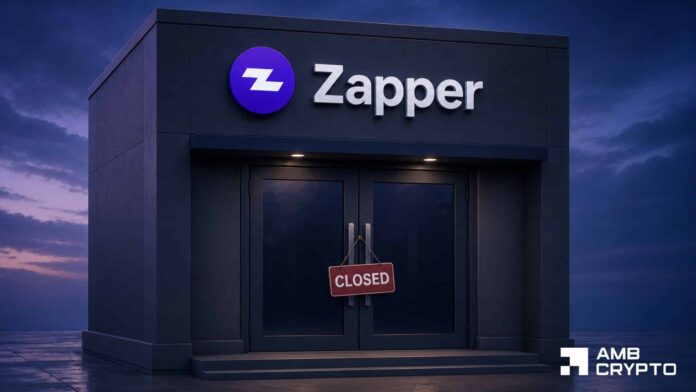
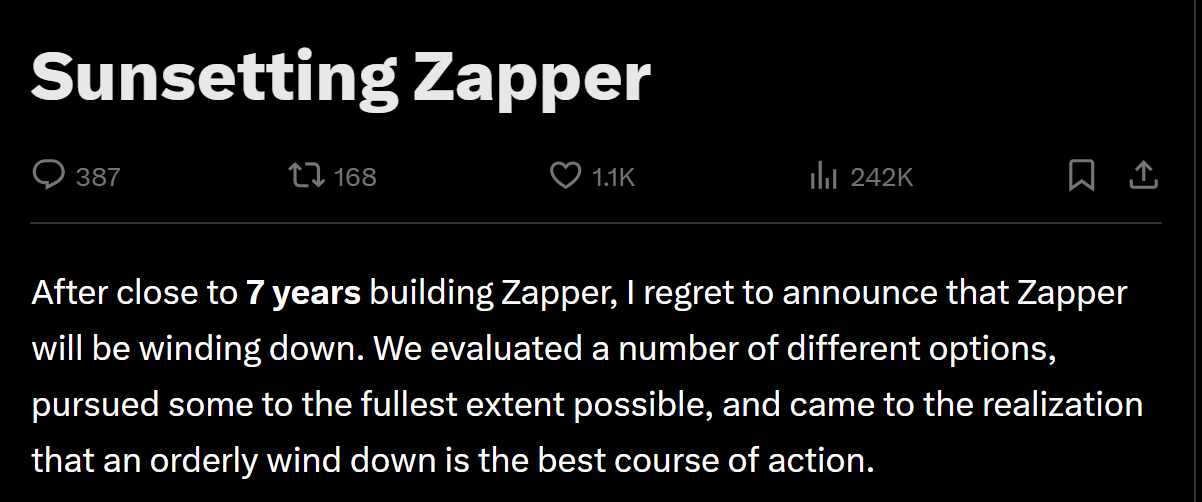
Zapper, a DeFi asset manager, has announced plans to shut down after nearly seven years of operation.

To quantify the scale of its operation, the asset manager had attracted over 2 million active monthly users while it processed over $13 billion at its peak in transaction volume.

Yet, the strong user adoption did not translate into a sustainable business model as revenue declined due to intensified competition. This competition narrowed the asset manager’s profit margin, crippling its operations.

Source: Zapper on X

On the 3rd of August, the asset manager will shut down completely, bringing an end to its operations. The platform will assist its users in transitioning.

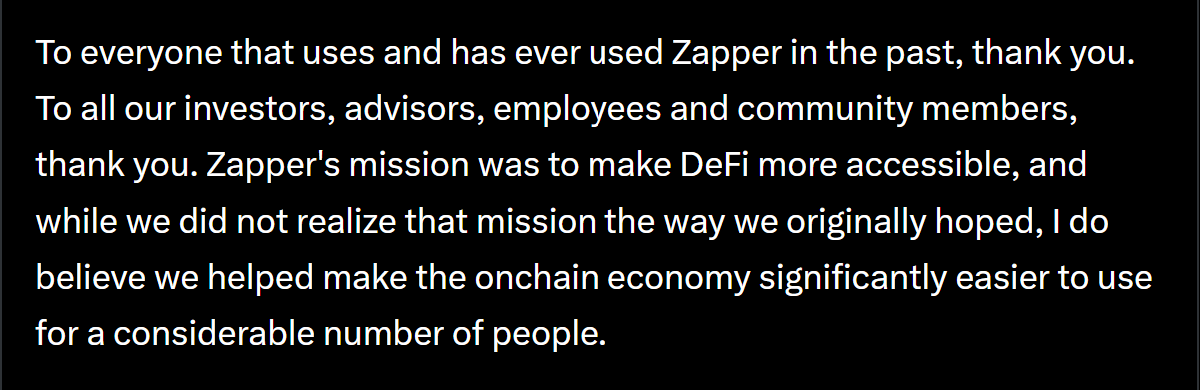
Seb Audet, Co-Founder and CEO of Zapper, acknowledged that Zapper fell short of its mission. On a post on X he stated,

Zapper’s mission was to make DeFi more accessible, and while we did not realize that mission the way we originally hoped…

Source: X

That shift exposed the growing challenge of monetizing DeFi infrastructure beyond attracting traffic. Zapper’s closure suggests the sector is entering a more demanding phase, where long-term survival increasingly depends on sustainable revenue rather than user growth alone.

Growth outpaced sustainable economics

The Zapper shutdown demonstrates some other major limitations of VC funding to ensure the long-term sustainability of DeFi infrastructure.

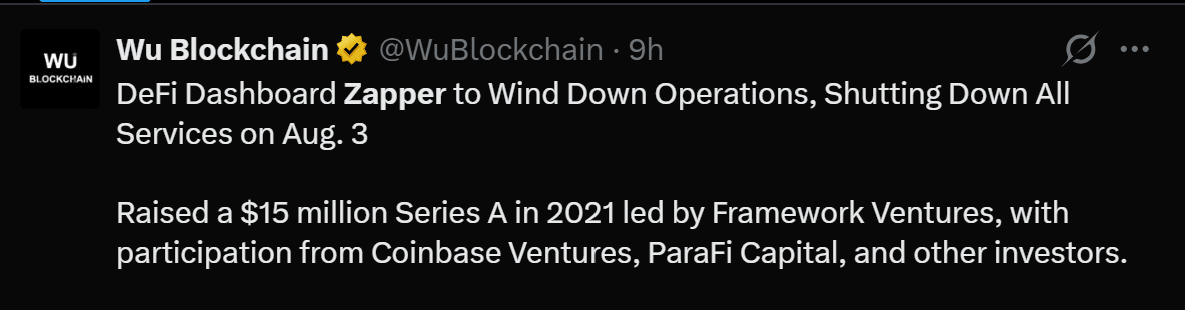
In fact, Zapper had secured $15 million in funding from Framework Ventures, Coinbase Ventures, and ParaFi Capital. This was to allow it to continue to grow product offerings as well as increase the rate of adoption.

Source: X

Despite the funding, Zapper was unable to counter the decline in profitability. Therefore, fee compression increased while the cost of supporting infrastructure increased, ultimately leading to an unsustainable business model for the company.

More importantly, rather than continuously receiving injections of capital to support their operations, investors expected the projects to be able to generate sustainable revenue.

This trend indicates a larger trend within DeFi where success depends on multiple factors beyond just growth.

All in all, successful infrastructure projects will require stronger monetization, disciplined spending, and clear competitive advantages in order to sustain themselves through future market cycles.


Final Summary

  • Zapper’s shutdown shows that user growth alone cannot sustain DeFi infrastructure businesses.
  • Zapper’s closure highlights the growing importance of sustainable revenue over venture funding.


Source link

Crypto lender giant Aave rolls out vaults for yield-hungry fintech investors

0
Inside the chaotic $300 million emergency bailout that saved a top crypto platform from total collapse

Aave Labs, the organization behind the largest decentralized lending platform Aave , is rolling out vaults to help fintech companies offer yield on stablecoins without requiring users to interact directly with crypto rails.

The new Stable Vaults let wallets, exchanges and payment providers embed stablecoin earning through a single connection. Behind the scenes, the vaults allocate deposits across approved decentralized finance (DeFi) lending strategies while the customer continues using a familiar app interface.

“Stable Vaults make predictable stablecoin earning simple to plug into any fintech application,” Aave founder Stani Kulechov said in a statement.

The move comes as stablecoins has become increasingly part of everyday payments and digital banking. As more fintech firms adopt stablecoins for moving money globally, many are looking for ways to let customers earn a return on idle balances without leaving blockchain rails or navigating crypto-native applications.

Vaults have emerged to fill that role. They are a piece of infrastructure that automatically move users’ deposits between lending and yield strategies based on predefined rules, allowing investors to earn returns without actively managing positions or monitoring markets.


Source link

Nestlé to build Thailand coffee factory after end of JV

0
Nestlé to build Thailand coffee factory after end of JV


Nestlé is spending SFr563m ($697.6m) to build its own coffee production plant in Thailand after the end of a local joint venture.

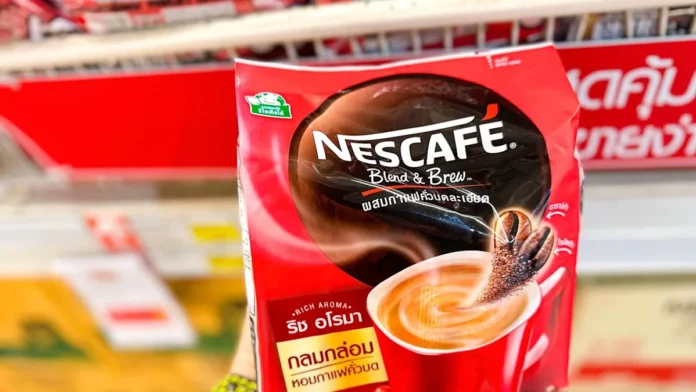
Between 1990 and 2024, the Swiss giant had worked with local group Quality Coffee Products (QCP) to manufacture Nescafé products in the country.

The contract ended in December 2024, with the breakup triggering court proceedings, which ultimately found in favour of Nestlé earlier this year.

Since 2025, Nestlé has maintained the production of Nescafé drinks in Thailand through installing lines in existing factories, outsourcing to local firms and temporarily importing products, it told Just Drinks.

The new plant in the Thai province of Samut Prakan will supply both the domestic market and neighboring countries.

The factory will make various Nescafé products, spanning soluble coffee, ready-to-drink options, and coffee blends, it said in a separate statement today (9 July).

The site will also include a distribution centre.

The facility is due to start operations in the latter half of 2028 and will be equipped with the “most advanced technology” and AI-enabled systems, it added.

The Swiss food and drinks giant described Thailand as a “dynamic” coffee market with an estimated value of about SFr1bn.

It has operated in the country for more than 130 years and, according to its 2025 annual report, runs seven factories there.

Remy Ejel, the executive vice president and CEO of Nestlé Zone Asia, Oceania and Africa (AOA), said: “This new state-of-the-art factory will increase our Nescafé production capacity in Southeast Asia and contribute to the long-term growth of our coffee business in one of the world’s most dynamic coffee markets.”

Nestlé said the new factory will generate more than 500 jobs and source ingredients locally.

The investment has secured backing from Thailand’s Board of Investment and aligns with the government’s ambition to advance a bio-circular green (BCG) economy.

The project adds to a broader run of coffee-related investments announced by Nestlé last year.

In March, the company said it would spend about €15m (then $15.7m) at its Girona factory in Catalonia, Spain, where it is adding two packaging lines for Nescafé instant coffee and Nescafé Dolce Gusto capsules.

A month later, it announced plans to invest VND1.9trn (then $73m) for the expansion of a coffee production facility in Vietnam’s Dong Nai province.

In November, Nestlé said it would invest £28m (then $36.7m) at its Dalston plant in Cumbria to construct a new mixing facility and add two packing lines for the Nescafé Frothy Coffee instant beverage range.


Source link

Over $7.2 billion have migrated from LayerZero to Chainlink CCIP as Mantle joins exodus

0
Over $7.2 billion have migrated from LayerZero to Chainlink CCIP as Mantle joins exodus

More than $7.2 billion in cross-chain and wrapped assets have migrated from LayerZero to Chainlink’s Cross-Chain Interoperability Protocol (CCIP) since May, with Mantle becoming the latest project to replace LayerZero for high-value token transfers.

Mantle said it is migrating its Super Portal, which it co-developed with Bybit, from LayerZero’s Omnichain Fungible Token (OFT) standard to Chainlink’s Cross-Chain Token (CCT) standard.

LayerZero and Chainlink CCIP both let token holders move assets between blockchains, a basic requirement as crypto markets spread across competing networks.

The infrastructure matters because bridges between different blockchains have become one of crypto’s largest security risks, with a single failure able to expose hundreds of millions of dollars in user assets.

The portal enables transfers of the MNT token between Ethereum and Solana, with support for additional blockchain networks planned.

The migration includes MNT, the native token of Mantle’s network, which has more than $2.5 billion in value locked. Mantle’s move pushes the total value of announced migrations from LayerZero to Chainlink CCIP above $7.24 billion.


Source link

Chevron (CVX) – Among the 14 Best Blue Chip Dividend Stocks to Buy According to Hedge Funds

0
Chevron (CVX) – Among the 14 Best Blue Chip Dividend Stocks to Buy According to Hedge Funds


With an annual dividend yield of 4.21%, Chevron Corporation (NYSE:CVX) is included among the 14 Best Blue Chip Dividend Stocks to Buy According to Hedge Funds.

Chevron (CVX) – Among the 14 Best Blue Chip Dividend Stocks to Buy According to Hedge Funds

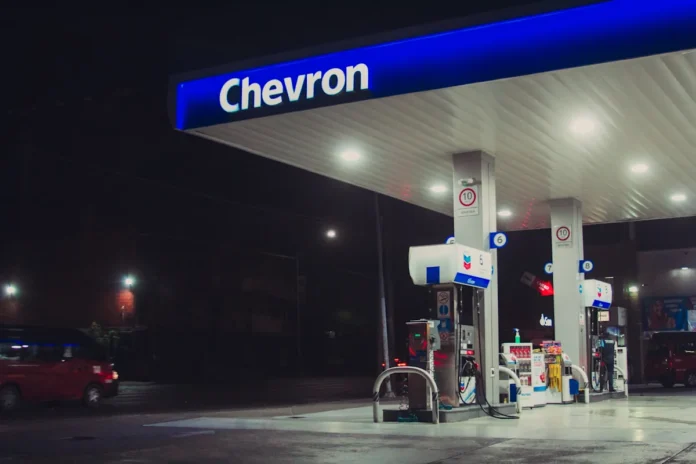
Photo by Luis Ramirez on Unsplash

Chevron Corporation (NYSE:CVX) manufactures and sells a range of high-quality refined products, including gasoline, diesel, marine and aviation fuels, premium base oil, finished lubricants, and fuel oil additives.

On July 2, Wolfe Research analyst Doug Leggate upgraded Chevron Corporation (NYSE:CVX) from ‘Peer Perform’ to ‘Outperform’ and assigned the stock a price objective of $210, implying an upside of over 25% from the current levels.

Chevron hit an all-time high at the end of March and has since fallen by almost 20%. According to Wolfe Research, the stock’s sharp rise and subsequent pullback so far this year have “masked several key changes that improve the investment case”. The analyst also highlighted the incremental production options that Chevron has secured since the beginning of the year, which it believes extend the energy giant’s free cash flow growth trajectory well beyond 2030.

According to Wolfe, the recent pullback in CVX provides an attractive entry point for investors looking to increase exposure to the energy sector, with Chevron positioned to outperform its major oil peers.

Meanwhile, earlier on June 29, Morgan Stanley lowered its price target on Chevron Corporation (NYSE:CVX) by $5 but reiterated its ‘Overweight’ rating on the shares (read more details here).

While we acknowledge the potential of CVX as an investment, we believe certain AI stocks offer greater upside potential and carry less downside risk. If you’re looking for an extremely undervalued AI stock that also stands to benefit significantly from Trump-era tariffs and the onshoring trend, see our free report on the best short-term AI stock.

READ NEXT: 10 Energy Stocks with Highest Dividends and 12 Best NYSE Stocks to Buy for Dividends

Disclosure: None. Follow Insider Monkey on Google News.


Source link

US-Iran War: Trump is following similar playbook to China in first term

0
US-Iran War: Trump is following similar playbook to China in first term

It seems U.S.-Iran negotiations aren’t going as planned for either side, with fresh hostilities flaring this week, sending oil prices higher once again. For analysts, the question is whether this is the tried-and-tested White House method of pressure and de-escalation, or whether the conflict is spiraling.

At the time of writing, Brent crude is back up to $77 a barrel—significantly down from the May high of $113 but still elevated compared to February, when the war started.

Despite a supposed ceasefire, the U.S. and Iran have traded strikes on numerous occasions this week. Oil tankers are now reluctant to travel through the Strait of Hormuz, stalling supplies as a result.

Wall Street, on balance, is looking ahead despite the geopolitical bumps. Markets are still up month-to-month, and while the VIX volatility index is creeping higher, it is still some way off the levels reached at the outset of the conflict.

Some might argue that optimism bias is the factor settling the markets—others suggest it’s because analysts may have a sense of déjà vu.

The turbulent negotiations in the Middle East are “eerily similar” to Trump’s methods in dealing with Beijing in his first term, Oxford Economics’s Ben May wrote in a note yesterday.

May, director of global macro research, said that “deep distrust between the U.S. and Iran meant bumps in the road were inevitable,” echoing the cycle of flare-ups and de-escalation markets endured from 2018 and 2019.

In Trump’s first term, a tit-for-tat trade war initiated by tariffs from D.C. (sound familiar?) escalated to the point that vast swathes of Chinese imports were subject to increased duties. China responded in kind until Presidents Trump and Xi Jinping reached the “Phase One” trade agreement in 2020. The agreement, the U.S. government said, was the first step in rebalancing trade with China and resolving structural issues.

In his first term, Trump struck a firm tone that China was “ripping off” the U.S. and that action had to be taken, but he maintained that he could reach a trade deal.

When it comes to Iran in his second term, Trump has oscillated between claiming negotiations with Iran are a “waste of time” but has also insisted that the conflict wouldn’t return to all-out war.

“The question is whether the latest developments merely represent a bump in the road or if we’re emerging from the eye of the storm,” May noted. Despite harsh criticism, Trump “maintained an off-ramp by noting that U.S. negotiators would continue talks with Iran, suggesting the truce hasn’t been irrevocably broken.”

This is a “similar playbook” to China, May adds, saying: “This is reflected in market volatility and the associated difficulty in pricing in the relative likelihood of different scenarios playing out.”

Inflation impact

The current tipping point makes it difficult for economists to establish whether oil prices—and as a result, inflation—are in danger of spiking higher once again.

“It was always going to be hard to have strong conviction about reopening the Strait of Hormuz and the path for oil prices in the baseline forecast, leaving risks weighted to the upside in the near term,” May wrote. “The latest developments probably increase the risk of a scenario akin to our sustained disruption and intensifying war scenarios, but they haven’t yet provided grounds for major wholesale adjustments to our baseline forecast.”

Oxford Economics’s baseline forecast is that $73 per barrel by the end of Q3 and $70 by the end of the year—roughly in line with the pre-war price.

This isn’t an unreasonable expectation, May adds, as long as both the U.S. and Iran continue to leave negotiation as an option on the table, highlighting: “While both countries will be keen to consider themselves as winners, it’s in neither side’s interests for traffic through the Strait of Hormuz to grind to a complete standstill for a sustained period.

“While the balance of risks might be slightly more skewed towards a more adverse scenario materializing, it feels too early to conclude that a major and sustained surge in oil prices … is more likely than not.”


Source link