Home Blog Page 305

UN Blockchain Week 2026: The Premier Blockchain Gathering Redefining Global Innovation During UNGA and NYFW

0
UN Blockchain Week 2026: The Premier Blockchain Gathering Redefining Global Innovation During UNGA and NYFW


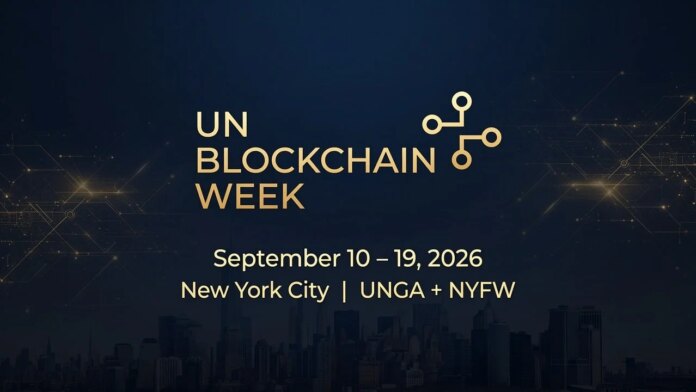
UN Blockchain Week is emerging as the must-attend blockchain event of the year. This premier 10-day gathering in New York City from September 10–19, 2026, is perfectly timed with the United Nations General Assembly (UNGA) and New York Fashion Week (NYFW).

It brings together blockchain leaders, policymakers, high-net-worth investors, heads of state, and visionaries at the powerful intersection of Bitcoin, AI & Energy, Space, and fashion-tech.

The event features a flagship premiere 2-day conference on September 16–17, followed by BitcoinPalooza as its official evening after-party.

What Sets UN Blockchain Week Apart in the Blockchain Event Landscape?

UN Blockchain Week stands out as the only major blockchain event synchronized precisely with UNGA and NYFW. It moves beyond standard conferences by delivering direct engagement with world leaders, diplomats, and decision-makers from 193 countries.

The program is built around real-world impact and forward-thinking themes: Bitcoin adoption, AI governance and regulation, Space innovation, sustainable blockchain frameworks, and the creative fusion of blockchain with fashion and art.

Flagship 2-Day Conference & BitcoinPalooza After-Party

A major highlight of UN Blockchain Week 2026 is the premiere 2-day conference taking place on September 16–17. This concentrated, high-impact program brings together top speakers, panels, and workshops focused on the most pressing topics in Bitcoin, blockchain, and emerging technologies.

Following the conclusion of the 2-day conference, BitcoinPalooza will serve as the official evening after-party, offering attendees an exclusive and energetic networking experience.

Washington Elite Investment Summit & Gala: The Highlight Event

One of the standout moments is the exclusive Washington Elite Investment Summit & Gala on September 18 in Times Square. This black-tie affair unites high-net-worth investors, heads of state, blockchain pioneers, and fashion icons for an unforgettable evening of high-level networking and deal-making.

It’s where strategic partnerships are formed, and billion-dollar opportunities are explored in an intimate, high-caliber setting.

NYFW × Blockchain Runway and 100+ Events

The event features the innovative NYFW × Blockchain Runway, blending cutting-edge fashion with blockchain technology. Across the full 10 days, attendees can expect 100+ events including panels, keynotes, workshops, fireside chats, and side events.

Topics range from Bitcoin & Energy breakthroughs and AI agents to Space discussions and sustainable innovation.

Why UN Blockchain Week Is a Must-Attend for Visionaries

Attendees gain:

  • Direct influence on global policy conversations during UNGA week
  • Elite networking with 1,000+ visionaries and thousands of high-value connections
  • Opportunities to speak on stage, host private roundtables, or secure strategic partnerships
  • Deep dives into Bitcoin, AI governance, energy, Space, and fashion-tech intersections

Early participants maximize their experience and savings by securing tickets now.

Tickets and Early Bird Opportunity

Tickets are on sale now with attractive early bird pricing. General Admission starts at $149 (full week access), while the VIP Pass at $799 includes access to the exclusive Washington Elite Gala (limited availability).

Early buyers can save up to 80%. Current early bird pricing ends July 15, 2026 — after which prices increase.

For those looking to be part of the most powerful week in blockchain, don’t miss this opportunity. Visit unblockchainweek.com to secure your ticket today.

About UN Blockchain Week

UN Blockchain Week is the premier platform where corporations and visionary leaders engage directly with the world’s most influential policymakers during the United Nations General Assembly. Held in New York City from September 10–19, 2026, coinciding with UNGA and NYFW, it offers unmatched access to shape conversations on blockchain’s role in global progress, policy, and innovation.

Media Links

Website: https://unblockchainweek.com/

X: https://x.com/BlockchainWeeks

LinkedIn: https://www.linkedin.com/company/un-blockchain-week/

Media Contact

Bruce Porter Jr.
UN Blockchain Week
Contact@UNBlockchainWeek.com
+1-202-436-6577

 Disclaimer: This is an Event Partner post and should not be treated as news/advice.


Source link

RWA news: A DEX trader holds $1 million EUR/USD bullish bet for 400 Days

0
RWA news: A DEX trader holds $1 million EUR/USD bullish bet for 400 Days

The term “HODLing,” crypto slang for buying and holding an asset for a long time, has historically been associated almost exclusively with bitcoin and ether (ETH).

One trader has now applied the same long-term approach to perpetual futures tied to the euro-dollar pair (EUR/USD) listed on the decentralized exchange (DEX) Ostium, which is powered by Nasdaq data.

A trader has held a long position in EUR/USD worth $1,139,490 for 400 days, Ostrium said on Tuesday. The bullish bet, expecting the euro to strengthen against the U.S. dollar, was opened around early June 2025. EUR/USD traded above 1.14 as of this writing, largely unchanged from where it was in June last year, but it did rise as high as 1.2082 in January this year.

Onchain FX trading offered by platforms such as Ostium, Gains Network, Synthetix, GMX, and others remains a very tiny fraction of the global traditional FX market, which sees daily trading volume exceeding $9 trillion.

Nevertheless, this single 400-day HODL on EUR/USD demonstrates that some traders are comfortable using blockchain rails and perpetual contracts to take leveraged positions on major traditional assets.


Source link

AT&T leaves rivals flat-footed as bankrupt carrier folds

0
AT&T leaves rivals flat-footed as bankrupt carrier folds


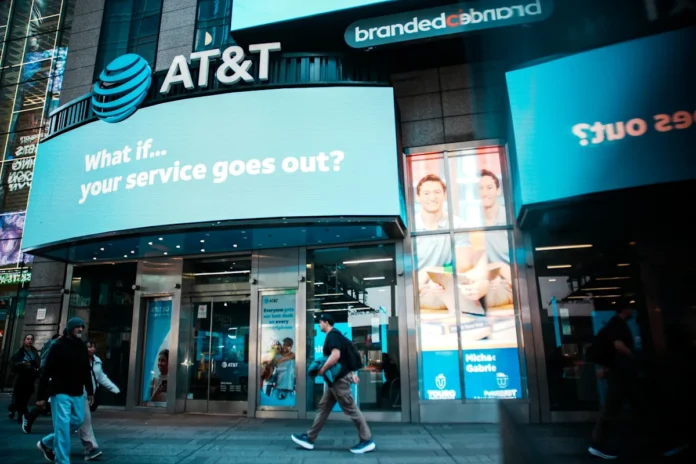
Dish DBS, the satellite TV and wireless subsidiary of EchoStar, filed for prepackaged Chapter 11 bankruptcy on June 30 in federal court in Houston. 

The filing ends months of speculation about the future of the industry’s would-be fourth wireless carrier.

More than 88% of Dish’s bondholders backed the filing, which was triggered when the company could not repay $2 billion in senior secured notes carrying a 7.75% interest rate, due July 1.

There is a twist in this story, and it works in AT&T’s favor.

AT&T’s spectrum deal sits at the center of the story

EchoStar took on roughly $25 billion in debt after merging with Dish in 2024. It had been counting on a cash infusion from AT&T (T) to bridge the gap between its debt payments and its available cash.

  • Back in August 2025, AT&T agreed to buy about 50 megahertz of nationwide spectrum from EchoStar for $23 billion. 

  • That includes around 30 MHz of 3.45 GHz mid-band airwaves and 20 MHz of 600 MHz low-band spectrum, spread across more than 400 markets.

  • The deal was expected to close by mid 2026, but regulatory delays pushed the timeline back, which left EchoStar short of the cash it needed to make its July 1 payment.

In plain terms, AT&T’s own pending spectrum purchase is the deal whose delay helped push Dish DBS into bankruptcy court.

And once that sale finally closes, AT&T stands to gain from it twice over.

John Stankey, Chairman and CEO of AT&T inked a spectrum deal with EchoStarBill Pugliano/Getty Images

AT&T’s network already leans on this strategy

AT&T CFO Pascal Desroches has repeatedly described the company’s approach as playing the long game rather than chasing quick wins. 

Speaking at the Mizuho Technology Conference on June 9, Desroches said: 

“So we are building a network, not simply for today, we are building it — a network for the future. And that network is going to be AI-ready for whatever workloads it produces.”

The CFO pointed to rising demand for bandwidth from AI, autonomous vehicles and smart devices.

More AT&T:

Once the sale closes, AT&T adds a large amount of low-band and mid-band capacity, the type of spectrum it has trailed Verizon and T-Mobile on in recent years. 

Under a companion agreement, EchoStar is also winding down parts of Boost Mobile’s radio network and shifting to a hybrid setup where AT&T’s network carries Boost’s traffic.

Boost, which has roughly 7.6 million subscribers today, down from more than nine million when EchoStar acquired it, is not part of the bankruptcy filing. Neither is sister brand Gen Mobile. 


Source link

Bitcoin vs. gold: Why the BTC/XAU ratio could be key in July

0
Bitcoin vs. gold: Why the BTC/XAU ratio could be key in July


July has officially kicked off, bringing the hedge narrative back into focus.

At the macro level, volatility is picking up again. On the 8th of July, the U.S.-Iran ceasefire collapsed, sending Bitcoin back toward $62k and wiping out $300 million in long positions shortly after the news broke. At the same time, oil jumped over 4%, reclaiming the $75/barrel level for the first time since losing it in mid-June.

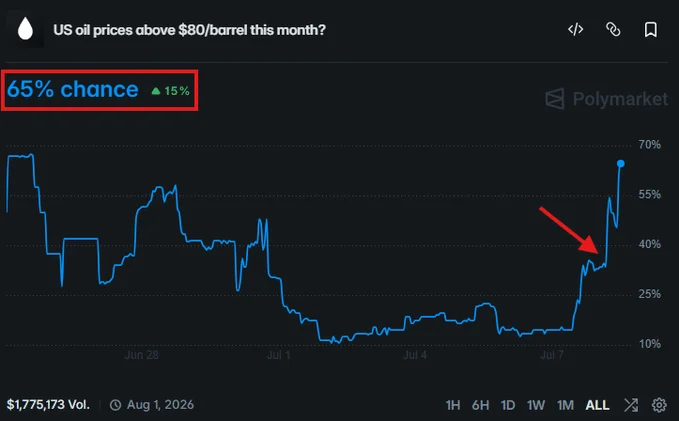
While U.S. President Donald Trump later said Iran is open to another round of negotiations, the damage to risk sentiment has already been done. On Polymarket, the odds of oil trading above $80/barrel this month have surged from just 13% to 65%, reflecting growing expectations of further geopolitical escalation and tighter energy markets.

oil
Source: Polymarket

Notably, the shift is already showing up across macro data. 

According to FedWatch, the probability of a rate hike at the upcoming FOMC meeting has climbed to 29.4%, marking the highest pricing in over a month. The move suggests markets are beginning to price in a more hawkish Fed as higher oil prices fuel fresh inflation concerns.

Naturally, that adds another layer of pressure on Bitcoin [BTC]. On-chain data already shows that 50% of the BTC supply is now underwater, marking the sharpest decline in months. With market sentiment already fragile, any further macro shock could quickly accelerate downside volatility, triggering market-wide capitulation.

Against this backdrop, the seasonal setup between gold and BTC is back in focus. Historically, both assets have performed well in July, putting the BTC/XAU ratio at the center of attention. If macro FUD continues to build, the ratio could offer an early read on whether capital continues rotating into Bitcoin or shifts back toward gold as the preferred hedge.

Bitcoin/Gold ratio emerges as July’s most important macro signal 

The ongoing macro volatility is what sets this cycle apart.

The setup is fairly simple. Historically, both Bitcoin and gold tend to outperform in July. This time, though, the backdrop is quite different. Renewed geopolitical tensions have brought rate-hike expectations back into focus, forcing investors to choose between risk and safety rather than chasing both. 

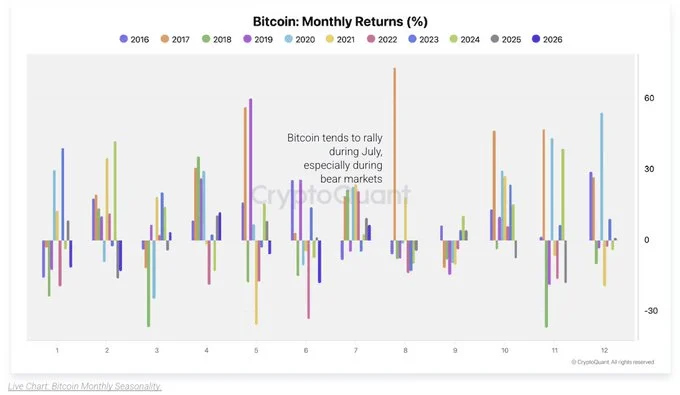
As the chart below shows, Bitcoin has posted strong July returns even during weaker market cycles. In 2018 and 2022, BTC rallied 20% and 17%, respectively. With BTC entering this July after bouncing from its $57k cycle low, seasonality continues to favor the bulls. The key takeaway? Gold is showing a similar pattern.

BITCOINBITCOIN
Source: CryptoQuant

According to the Kobeissi Letter, gold has averaged a 1.5% gain in July over the past 20 years, making it its second-strongest month of the year. With both assets entering a historically strong month, the BTC/XAU ratio naturally becomes the metric to watch. So far, the flows still favor Bitcoin. 

From the technical standpoint, the BTC/XAU ratio is already up more than 4.5% this month, showing BTC continues to outperform gold despite the return of macro volatility. 

The question now is whether that trend can continue. If geopolitical tensions keep driving oil higher and rate-hike expectations continue to build, the balance could quickly shift back toward gold, making the BTC/XAU ratio one of the clearest gauges of capital rotation this month. 


Final Summary

  • The BTC/XAU ratio is up over 4.5% this month, showing Bitcoin is still outperforming gold despite rising macro uncertainty.
  • If macro risks continue to build, the BTC/XAU ratio could reveal whether capital stays in Bitcoin or rotates back into gold.


Source link

Live markets: Bitcoin ETFs slip back to outflows while ether funds extend their streak

0
What next for BTC prices as Bitcoin slides to $70,000 on Strategy's sale

U.S. spot bitcoin ETFs lost a net $85 million on Wednesday, ending a three-day inflow run that had pulled in roughly $509 million, per SoSoValue data. Ether ETFs took in about $70 million the same day, a fifth straight session of inflows.

The bitcoin outflow was broad. BlackRock’s IBIT shed roughly $59 million, Grayscale’s GBTC lost nearly $64 million, and Fidelity’s FBTC gave up about $15 million.

Grayscale’s mini BTC fund was the only one in the green at nearly $53 million. Total bitcoin ETF assets fell to about $75 billion.

Ether’s flows came from a narrower base but kept pointing the same way. Fidelity’s FETH led with roughly $69 million, with VanEck’s ETHV adding just over $1 million and every other fund flat. Ether ETF assets sit at about $9 billion.

The split matches the price tape. Bitcoin traded near $62,300 and ether near $1,740, both down about 3% on the day, though ether has outperformed over the past two weeks as the Lean Ethereum roadmap and returning ETF demand gave it a story bitcoin has lacked.


Source link

Oil spikes, Wall Street drops as US-Iran tensions rebuild

0
Oil spikes, Wall Street drops as US-Iran tensions rebuild


By Pete Schroeder

WASHINGTON, July 7 (Reuters) – Oil prices spiked late on Tuesday on renewed fears that a tenuous peace between the U.S. and Iran was faltering, while U.S. stocks fell, led by technology shares on investors’ concerns about the longevity of the AI-driven ‌rally.

All three major U.S. indices ended the day in negative territory, with the tech-heavy Nasdaq Composite suffering the steepest decline, falling 1.16% ‌to 25,818.69. The Dow Jones Industrial Average lost 0.25% to 52,925.15, and the S&P 500 <.SPX> dropped 0.45%, to 7,503.85.

MSCI’s gauge of stocks across the globe fell 0.64% to 1,121.20.

The selloff began ​following blockbuster results from Samsung Electronics, even though the firm forecast a 19-fold jump in April-June operating profit to 89.4 trillion won ($58.4 billion), the third straight quarter of record operating profit for the world’s largest memory-chipmaker.

Rather than reassuring investors, the results triggered selling in Samsung and rival SK Hynix shares. Investors have increasingly questioned whether profit growth linked to artificial intelligence can be sustained if supply bottlenecks in key components such as memory chips ease. Further weighing on markets was a ‌Reuters report that Chinese startup DeepSeek was developing its ⁠own AI chip, which could reduce its reliance on other major chipmakers to train and run its AI models.

Market pessimism was exacerbated by an apparently worsening situation in the Middle East, after Qatar blamed Iran for an attack on several vessels ⁠in the Strait of Hormuz, with one LNG tanker forced to evacuate its crew due to the risk of explosion, Reuters reported.

The situation escalated as the White House revoked a license it granted Iran to sell oil, part of an effort to ease tensions from the three-month war that had upended global energy supplies. The two ​nations ​are continuing negotiations towards a final agreement to end the conflict.

Oil prices settled 3% higher ​on Tuesday, and then extended gains post-settlement. U.S. crude was ‌last up 5.3% to $72.20 a barrel and Brent rose to $76.09 per barrel, up 5.9%.

“The U.S. reimposing sanctions on Iran is a major escalation,” said Josh Young, chief investment officer at Bison Interests. “Iran may respond with force, further limiting exports through the Strait of Hormuz, and risking $100+ oil prices again in the near term.”

NATO MEETS IN TURKEY

NATO leaders met in Turkey Tuesday, where European leaders unveiled arms deals worth tens of billions of dollars. However, U.S. President Donald Trump expressed frustration at what he said was insufficient support for the U.S.-Israeli war on Iran, and again resurfaced calls for the U.S. to gain control ‌of Greenland from Denmark.

NATO allies were also expected to discuss plans for a multinational ​maritime mission in the Strait of Hormuz along the sidelines of the summit with Gulf ​Arab foreign ministers.

Trump said on Monday the U.S. would either reach a ​deal with Iran or “finish the job,” renewing his threat of military action as Tehran projects defiance following the funeral of ‌Supreme Leader Ayatollah Ali Khamenei.

In currency markets, the dollar index, ​which tracks the U.S. currency against six ​others, was up 0.21% to 101.07, while the euro slid 0.24% against the dollar.

The yen hovered above 40-year lows, and was last at 162.06 per dollar. Traders were alert for intervention given signs of a possible shift in strategy by Japanese authorities.

The yield on benchmark U.S. ​10-year notes was up 7.01 basis points to 4.549% ‌ahead of the Wednesday release of the minutes of the Federal Open Market Committee’s latest meeting. These may give investors more of ​a steer on how new Federal Reserve chair Kevin Warsh is approaching monetary policy.

(Additional reporting by Satoshi Sugiyama in Tokyo and ​Amanda Cooper in London; Editing by Mark Potter, Kevin Liffey and Aurora Ellis)


Source link

Jensen Huang Says His Engineers Prefer Building Agents to Writing Code

0
Jensen Huang Says His Engineers Prefer Building Agents to Writing Code


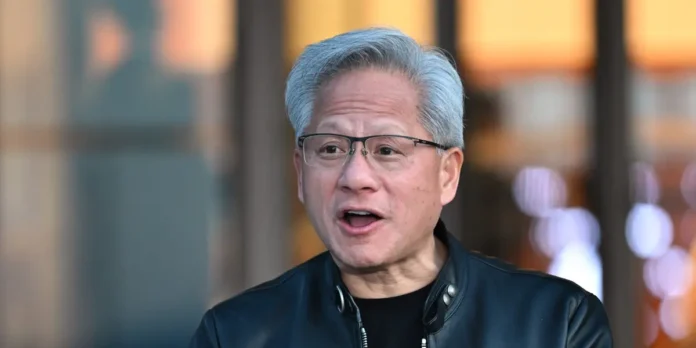
Jensen Huang says his software engineers love how AI is changing their role.

“These agentic systems are new skills, and now we have a lot of software engineers building agents,” the Nvidia CEO said in an interview published by the company on Wednesday. “If you ask me, every one of my software engineers prefers to be building agents than to be writing Python code.”

Huang said that because of AI, Nvidia’s engineers are doing less coding, which is like typing. Now, they’re working on building agents, benchmarks, and guardrails.

“You’re taking all the mundane work, and you’re trying to get this agent to do it,” he said. “That requires imagination, that requires creativity, a lot of technology.”

Huang, who cofounded the chipmaker in 1993, has been a strong advocate for AI assistants in the workplace. He has repeatedly described a future in which Nvidia will mass-deploy agents across every division to improve productivity.

AI agents break down a task into multiple smaller steps, each tackling a specific task to achieve a bigger goal.

‘Whole bunch of jobs’

In the interview, Huang rejected the idea that AI simply replaces workers, arguing instead that it creates new roles.

“The amount of work that we have to do to bring AI into the world is really quite incredible,” he said. “So it’s creating a whole bunch of jobs. And, my software engineers love this.”

Unlike Anthropic CEO Dario Amodei and Amazon chief Andy Jassy, Huang has dismissed the increasingly popular concern that AI will mass eliminate white-collar jobs.

“This is the part that people don’t realize about AI. The first thing that AI is doing right now is creating an enormous number of jobs,” Huang said in a May TV interview. “AI creates jobs. AI is the United States’s best opportunity to re-industrialize ourselves.”


Source link