Home Blog Page 324

Keyera Bets on Montney Growth With Pipeline Buyout

0
Keyera Bets on Montney Growth With Pipeline Buyout


Keyera Corp. has completed the acquisition of the remaining 50% stake in the KAPS Pipeline from infrastructure investment firm Stonepeak for C$1.215 billion, consolidating ownership of one of Western Canada’s most important natural gas liquids transportation systems.

The Calgary-based midstream company said the transaction closed immediately upon signing and gives Keyera full ownership and operational control of the pipeline network, which transports condensate and NGLs from the rapidly expanding Montney and Duvernay shale plays to downstream markets.

The KAPS system has become increasingly important as producers in the Montney and Duvernay continue to boost liquids-rich natural gas production. Keyera said it has secured more than 120,000 barrels per day of additional commitments across KAPS Zones 1 through 4 since 2025, supporting long-term contracted revenue growth.

The acquisition comes as construction of KAPS Zone 4 remains on schedule and on budget, with the expansion expected to enter service in mid-2027. The project is designed to accommodate growing volumes from Western Canada’s most active unconventional resource basins.

Keyera expects the deal to be accretive to distributable cash flow per share over the next several years and said the pipeline should generate significant free cash flow through the end of the decade following completion of Zone 4. The company estimates the transaction represents an acquisition multiple of roughly 11 times projected 2029 EBITDA based on currently contracted volumes.

The company also raised its growth outlook, increasing its targeted fee-based adjusted EBITDA per share compound annual growth rate for 2025-2027 to 16%-18%, up from its previous guidance of 15%-17%. Its longer-term growth target of 7%-8% annually between 2027 and 2029 remains unchanged.

A key attraction of the asset is its stable, contracted revenue profile. Keyera said approximately 75% of KAPS cash flow is backed by take-or-pay agreements, while customer contracts have an average remaining term of around 12 years.

To finance the acquisition, Keyera announced a C$525 million bought-deal equity offering and initially funded the purchase through existing credit facilities. The company said it expects to remain within its target leverage range of 2.5x to 3.0x net debt-to-adjusted EBITDA by 2028, preserving its investment-grade balance sheet.

The deal underscores continued investment in Canadian energy infrastructure as producers expand liquids production from the Montney and Duvernay formations, two of North America’s most prolific unconventional hydrocarbon regions. Full ownership of KAPS also strengthens Keyera’s integrated midstream network, which includes gas processing, NGL transportation, storage and marketing assets across Western Canada.


Source link

Ethereum Foundation loses another top executive: Co-director Hsiao-Wei Wang exits

0
Ethereum Foundation loses another top executive: Co-director Hsiao-Wei Wang exits


Ethereum Foundation leadership exodus continues with Hsiao-Wei Wang, the co-director, being the latest to exit the organization. 

Her departure follows fellow co-director Tomasz Stanczak, who exited the Foundation in February. 

Wang has been with the organization for nearly a decade. Before calling it quits, she recently took a sabbatical, leaving Bastian Aue, the interim co-director, to handle the load during her absence. She added

During my break, Bastian Aue guided the transition with care and thoughtfulness. Over time, I’ve come to feel that this is the right moment for me to step back.

Bastian Aue now remains as the sole executive director at the organization after two co-directors left. But Wang and Stanczak are not the only high-profile exits. 

Ethereum Foundation exodus: 19 layoffs and departures

For the unfamiliar, Stanczak stepped down after less than a year as the co-director. John Stark, another executive team member who handled operations and writing, left in April 2026. 

On the protocol and core research segment, Tim Beiko (protocol lead) also left a month later in May 2026. Another key figure, Barnabe Monnot (former lead developer), also exited last month. 

Other key players, such as Carl Beekhuizen (senior protocol researcher), Julian Ma (research scientist), Tren Van Epps, Pablo Voorvaart, and Alex Stokes (protocol research co-lead), all left in May 2026.

Overall, estimates suggest that about 18 people have exited the Ethereum Foundation. This has coincided with Vitalik Buterin, the network co-founder, calling for a ‘lean Ethereum’ that does not compromise security for speed. 

In fact, Buterin envisioned a reduced role for EF in the future and expected other players to help shape Ethereum’s vision. Still, there is a lot of unfinished work, with Glamsterdam as the next upgrade. 

Assessing potential impact on ETH

Whether the string of exits will complicate Glamsterdam and other upgrades remains unclear. Rejamong, a research analyst at Four Pillars, also questioned whether EF could deliver on these upgrades. 

Can the EF push the current roadmap far enough before its remaining influence, funding, and human capital run down?

He added,

In the worst case, a core task like the quantum transition stalls half-finished while the EF that was supposed to drive it has already shrunk.

Ethereum Foundation
Source: X

He warned that Ethereum may end up moving slowly and conservatively like Bitcoin. And this would eventually impact how investors view ETH’s value.

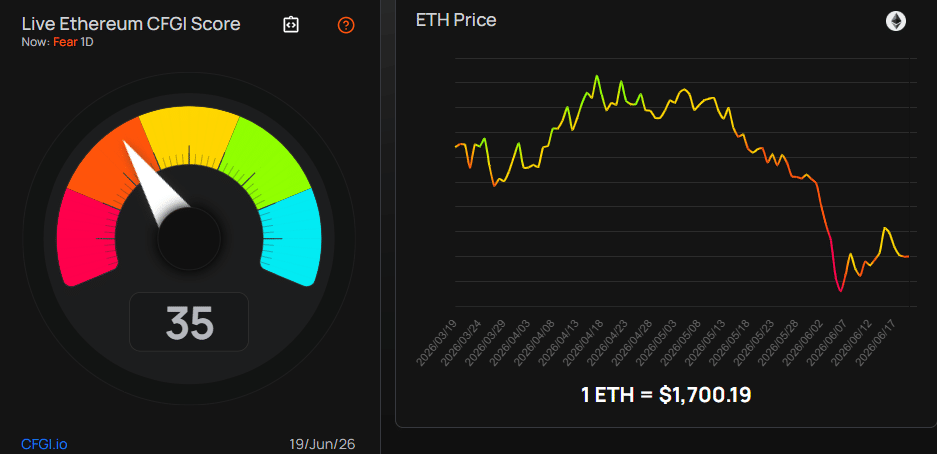
As of writing, ETH traded at $1.7K, effectively flipping from a ‘neutral’ to a ‘fear’ level of 35 following the broader crypto market correction. It was not clear whether the Ethereum Foundation update contributed to the negative market sentiment. 

Ethereum FoundationEthereum Foundation
Source: CFGI

Final Summary

  • Hsiao-Wei Wang, a co-director at EF, has left the foundation, marking the second top executive member to call it quits this year
  • Analyst flagged that future Ethereum upgrades, such as post-quantum transition, could face issues amid shrinking talent and funding. 


Source link

Digital credit market hit by record selloff as Strive CEO blames leverage liquidations

0
Digital credit market hit by record selloff as Strive CEO blames leverage liquidations

The digital credit market suffered one of its sharpest selloffs to date on Thursday,
with Strive Asset Management CEO Matt Cole describing the move as a leverage-driven liquidation rather than a sign of weakening credit fundamentals.

Cole said it was “the most difficult day in the history of Digital Credit,” in a post on X, as Strategy’s preferred equity STRC fell as low as $82.50 before recovering to $89, while Strive’s SATA dropped from its par value fell below $93 before rebounding to $97. Both products are designed to trade close to their $100 par value

“What happened today was a leverage liquidation event, not a deterioration in underlying credit quality,” Cole wrote.

Investors attracted by the sector’s relatively high yields (both products offer over double digit yields) increasingly used leverage to enhance returns, according to Cole. When prices began falling, margin calls triggered forced selling, creating a self-reinforcing decline detached from the underlying creditworthiness of issuers.

“There is an old saying in income markets that the road to hell is paved with carry,” he said.


Source link

How FIFA restructured the World Cup into its biggest payday as host cities face a budget shortfall

0
How FIFA restructured the World Cup into its biggest payday as host cities face a budget shortfall

FIFA will collect an estimated $8.9 billion from the 2026 World Cup while the 11 U.S. cities hosting it could face a collective shortfall of upwards of $250 million. And that’s thanks to FIFA’s restructuring of how it runs the World Cup.

For most of the tournament’s history, a World Cup was run by a local organizing committee that absorbed the costs and shared in the upside. For the first time in World Cup history, that’s not the case. In the 2026 edition, FIFA is operating the tournament itself, dealing directly with host cities rather than through national federations. Under that arrangement, it controls essentially all of the revenue, from media rights and sponsorship to ticketing, hospitality and merchandise. The cities and states whose names are on the marquee control the costs. In effect, it becomes a franchise model in which the franchisees pay to operate the business and the franchisor keeps the receipts.

When Gianni Infantino campaigned for the FIFA presidency in 2016, he promised to quadruple the organization’s income, and he’s on pace to realize that goal after 2026. That’s why, in addition to the other historic changes underway this World Cup, Infantino and FIFA are lauding the expanded, 48-team, 104-match tournament across three countries, with the FIFA president calling it the equivalent of “104 Super Bowls.”

Dynamic pricing for the world’s most equalizing sport

A large chunk of the revenue haul comes from a mechanism FIFA is deploying at a World Cup for the first time: dynamic pricing. Ticket prices float with demand, the way airline seats and concert tickets do, which means that face values that start at a federation-only $60 and climb to $7,875 for a Category 1 seat at the final. As a result, several matches are selling for many times what comparable seats cost at Qatar 2022. Industry trackers have already labeled it the most expensive World Cup in history—a designation FIFA has done nothing to dispute, and in fact, is what Infantino attributes to U.S. “market rates.”

The pricing reflects a simple incentive, says Victor Matheson, a sports economist at the College of the Holy Cross who has studied mega-events for nearly three decades. Unlike a local team that needs its fans back next season, FIFA has no repeat business to protect. “FIFA is not coming back to the United States for another 30 or 40 years,” he told Fortune, “which means that you can afford to make that ticket buyer angry today, and squeeze all of the money out of them you can.” A local franchise might leave money on the table to keep season-ticket holders happy, but for FIFA, arriving once a generation, it has no such reason to.

What the host cities get out of this is the privilege of paying for it. FIFA’s contracts assign security, transportation, stadium retrofits, administration, and public fan zones to the localities, while withholding access to the revenue streams like tickets, sponsorship and media, that might offset them. The result, as economist Andrew Zimbalist of Smith College put it, is a structurally losing proposition. “There are very, very significant costs to host cities, which host anywhere from four to eight games,” he said. “I think it’s fair to say that none of them will benefit economically from the World Cup because they don’t get the revenue, but they get the costs, which can run well over $100 million.”

The host of the final loses money on paper

New York City’s own fiscal watchdog has run the numbers, and they don’t work. City Comptroller Mark Levine estimated this spring that even if FIFA’s prediction of 1.2 million regional visitors fully materialized, the additional tax revenue flowing to New York City would be no more than $55 million—while the city is on track to spend roughly $70 million in added costs for the NYPD, emergency management, and small-business support. That is a loss, on paper, in the optimistic scenario, and if the number of visitors falls short, the gap only widens.

A spokesperson for Mayor Zohran Mamdani argued the comptroller’s estimate “falls short of capturing the full scope of what this World Cup will mean for our city,” pointing to $1.7 billion in expected direct spending that would “translate into hundreds of millions in tax revenue.” That $1.7 billion figure—like FIFA’s claim of $432 million in state and local tax revenue—describes the entire New York–New Jersey region, not the city’s slice of it. The host committee, working with the consultancy Tourism Economics, has projected $3.3 billion in regional economic impact and more than 26,000 jobs, a number it unveiled by ringing the opening bell at the New York Stock Exchange.

The optimism isn’t arriving

The trouble with a forecast built on 1.2 million visitors is that the visitors have to show up. As of mid-March, advance hotel reservations for New York’s World Cup weeks were tracking 2% below bookings for those same dates in 2025—a year with no special events at all. By early May, a American Hotel & Lodging Association survey of hoteliers across all 11 U.S. host markets found 80% reporting bookings below initial forecasts, with 65% to 70% citing visa barriers and broader geopolitical concerns as a drag on international demand.

In New York, roughly two-thirds of hotel respondents reported softer-than-expected bookings—though the report noted demand there still tracked a normal summer; in Boston, Philadelphia, San Francisco, and Seattle, hoteliers went further, describing the tournament as a “non-event.”

Matheson said foreign visitors are the entire engine of a host country’s economic gain—a New Yorker who buys a ticket is just moving money around the city—and the Trump administration, he said, is “doing his best to reduce the economic impact of this event by making the United States an unfriendly and an unwelcome place for foreign tourists to come.” A would-be visitor from Oslo or Munich, he added, “might just say, look, I just don’t like the way this country is acting, and I’ll save my money, and I’ll go in four years when the tournament is in Spain.”

The hotel association found that FIFA had reserved enormous room blocks for official use, creating what it called an “artificial early demand signal,” then released roughly half of that inventory back to the market, forcing hotels to recalibrate forecasts downward. In New York, that poses an even larger issue, as the hotel workers’ union contract expires June 30 for the first time in a decade.

A poor track record

None of this would surprise the economists who study these events. The projections fail, Matheson explained, for three compounding reasons. The first is the substitution effect: a local fan hasn’t enlarged his entertainment budget just because the World Cup is in town. “That’s $410 I’m spending for a ticket to go see Scotland-Morocco,” he said of his own plans, “so that’s $410 less that I’m spending on Red Sox tickets or Museum of Fine Arts tickets or Legal Seafoods.” The second is crowding out: the tournament displaces the tourists and conventions a city would have hosted anyway. He pointed to Paris during the 2024 Olympics, where “all the hotels were full, but guess what, all the hotels are always full in Paris during the summer,” even as attendance at the Louvre and the Musée d’Orsay fell by about 25%. “You have gotten rid of one kind of tourist and replaced it with another.”

The third reason is the one that indicts FIFA’s model directly—what economists call leakage. When a fan spends money at a locally owned restaurant, it recirculates through the local economy several times over. A World Cup ticket does the opposite. “When I spend $400 on a World Cup ticket, that money all goes to FIFA,” Matheson said. “So not only is it not going to any local person in the first place, they’re not taking that money and then respending it in the local economy either.”

“That $400 would have been much better for the local economy had I spent basically anything but a FIFA ticket.” The same logic applies to the inflated hotel bill, he noted—the surcharge flows to corporate headquarters, not to the desk clerks and housekeepers. “Most economists suggest that economic impact is lower than typically advertised by people like FIFA and boosters.”

Research from the University of Toronto found that 12 of the last 14 World Cups produced net economic losses for their host regions. When ProPublica pressed FIFA repeatedly for details on event revenue, the organization never responded; it said it “expects cities to benefit.” The benefits are asserted. The costs are contractual.

Underwriting all of this would be easier if cities could raise money the way any business does. They can’t, because FIFA’s commercial exclusivity rules wall them off from their own corporate neighbors. FIFA told North American hosts they could sell local sponsorships to cover their costs. It then made it nearly impossible by locking up the market categories for its own partners: cities couldn’t even sign convenience-store chains, because their food sales were deemed to cut across primary partners like McDonald’s. The 11 U.S. host cities face a collective shortfall of up to $250 million, according to The Independent. Even the $625 million in federal security funding meant to backstop the cities was still being lobbied for late in the process, and, averaged across 11 hosts, wouldn’t come close to covering the bills.

The fan-zone reversal: pushing the benefit downstream

If FIFA’s model pushes costs down and pulls revenue up, New York’s response has been to invert it. Mamdani made the city a national outlier by announcing free fan zones in all five boroughs—”free 99,” in his phrasing—reversing a plan by his predecessor, Eric Adams, to charge for entry, and breaking from Los Angeles and Toronto, which are charging fans to recoup expenses. The administration frames the free model as a deliberate effort to route economic activity and equity toward small businesses, backed by a Five Borough Winners Special promotion nudging fans into neighborhood bars and restaurants rather than FIFA’s perimeter.

Mamdani’s betting that the multiplier shows up in Jackson Heights and the Bronx rather than in city tax receipts. New Jersey has made similar moves: after the marquee New York–New Jersey festival planned for Liberty State Park was canceled, the state replaced it with a thinner network of community events across 21 counties, backstopped by $5 million in economic-development money. The pattern holds nationwide, because staging a fan fest can cost about $1 million a day with little FIFA support, a figure so high that Boston cut its festival to 16 days, less than half the tournament.

No single number has captured the cost-shifting better than the price of the train. New Jersey initially set the round-trip fare from Manhattan to MetLife Stadium—a 20-minute ride that normally costs about $13—at $150, prompting a public backlash and a feud between Governor Mikie Sherrill and FIFA. NJ Transit said moving fans to and from the stadium would cost it $62 million, with outside grants covering only $14 million. “This isn’t price gouging,” NJ Transit chief Kris Kolluri said. “We’re literally trying to recoup our costs.” The fare was cut twice, to $105 and then to $98, with each reduction financed not by FIFA but by a hastily assembled roster of corporate sponsors including DoorDash, FanDuel, and American Water. Governor Kathy Hochul separately slashed the Manhattan shuttle-bus fare from $80 to $20, meaning two of the most powerful governors in the country spent the spring competing to subsidize FIFA, a private organization.

To Matheson, that distributional question is the heart of the matter. The premium-experience model that drives stadium economics—fewer, pricier seats sold to the wealthy rather than cheap ones sold to the many—becomes indefensible, he argues, once public money is involved. Asking taxpayers to subsidize a profit-maximizing event, he said, “when you’re simultaneously asking for handouts from regular taxpayers, is appalling,” and forcing “blue-collar workers to pay higher taxes so the wealthy and the upper middle class can go see games in shiny new stadiums is absolutely one of the worst pieces of public policy out there.”



Source link

Jim Cramer sends a stern message to SpaceX buyers

0
Jim Cramer sends a stern message to SpaceX buyers


Every generational stock reaches a moment where its biggest fans start watching the tape with one eye closed. The story is still good. The buying is still frantic. And somewhere in the back of the room, a few people who own the dream begin asking how much of tomorrow has already been priced into today.

That moment arrived fast for the most hyped listing in market history.

SpaceX (SPCX) priced its initial public offering (IPO) at $135 a share on June 12 and raised about $75 billion. It was the biggest stock-market debut on record, according to CNN. The stock jumped roughly 19% on its first day, kept climbing through June 15, and by the morning of June 16 the aerospace and artificial intelligence (AI) company had passed Microsoft (MSFT) toward a value near $2.7 trillion. Retail investors had reportedly placed more than $100 billion in orders before a single share changed hands.

Then one of the loudest bulls on financial television flinched.

CNBC’s Jim Cramer, who has said more than once that he likes SpaceX, warned on June 16 that the stock had started to behave like something he no longer trusts.

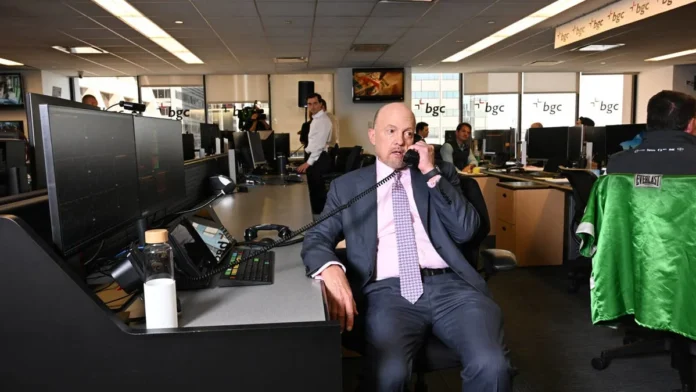
Jim Cramer say SpaceX is starting to trade like a meme stock, even as he admits he likes the company.TIMOTHY A. CLARY / Getty Images

Why Jim Cramer is uneasy about the SpaceX stock surge

Cramer’s discomfort is about mechanics, not the mission. He said he would hate to watch a meme stock, which is what he believes SpaceX has become, get “walked to the size of Nvidia” through a string of overnight moves with no one selling, in a post on X. Nvidia (NVDA) carried a market value of roughly $5 trillion as of June 15, according to Companies Market Cap, so he was describing a near doubling from where SpaceX trades today.

More Tech Stocks:

His sharper point was about speed. He said watching the stock climb ten points in a couple of hours made him uneasy, and then he repeated that he still likes the company.

That contradiction is the honest part, and it is the part that should land for anyone who bought this week. When I read through his post, the tell in my analysis was not the size of the gain. It was the idea of a one-way market where nobody is willing to sell. A stock that rises only because no one will take a profit is a stock waiting for the first person who does.

Not everyone accepts the label. Analysts at 24/7 Wall St. argued that SpaceX fails the meme-stock test, because the rally rides on real launch, satellite, and AI businesses rather than a coordinated online crowd, according to 24/7 Wall St. The fairer read may be that Cramer is flagging valuation risk and reaching for the scarier word to make it stick.


Source link

Why traders could eye sub-$1,300 Ethereum targets if Bitcoin slumps below $60,000

0
Why traders could eye sub-$1,300 Ethereum targets if Bitcoin slumps below $60,000


The Glamsterdam Ethereum [ETH] upgrade is set to be rolled out in Q3 of 2026. The upgrade’s focus will be on processing transactions and allowing the handling of multiple transactions simultaneously, while also updating the fee rules to support higher network capacity.

Improved speed, capacity, and efficiency will be a great outcome for one of the largest Layer-1 networks in crypto. However, it might also have very little immediate impact on the altcoin’s price.

Despite Ethereum being able to attract institutional buyers, the market-wide selling has not eased significantly yet.

Sidelined dry powder could supercharge an Ethereum recovery

Binance Stablecoin Inflows
Source: CryptoQuant

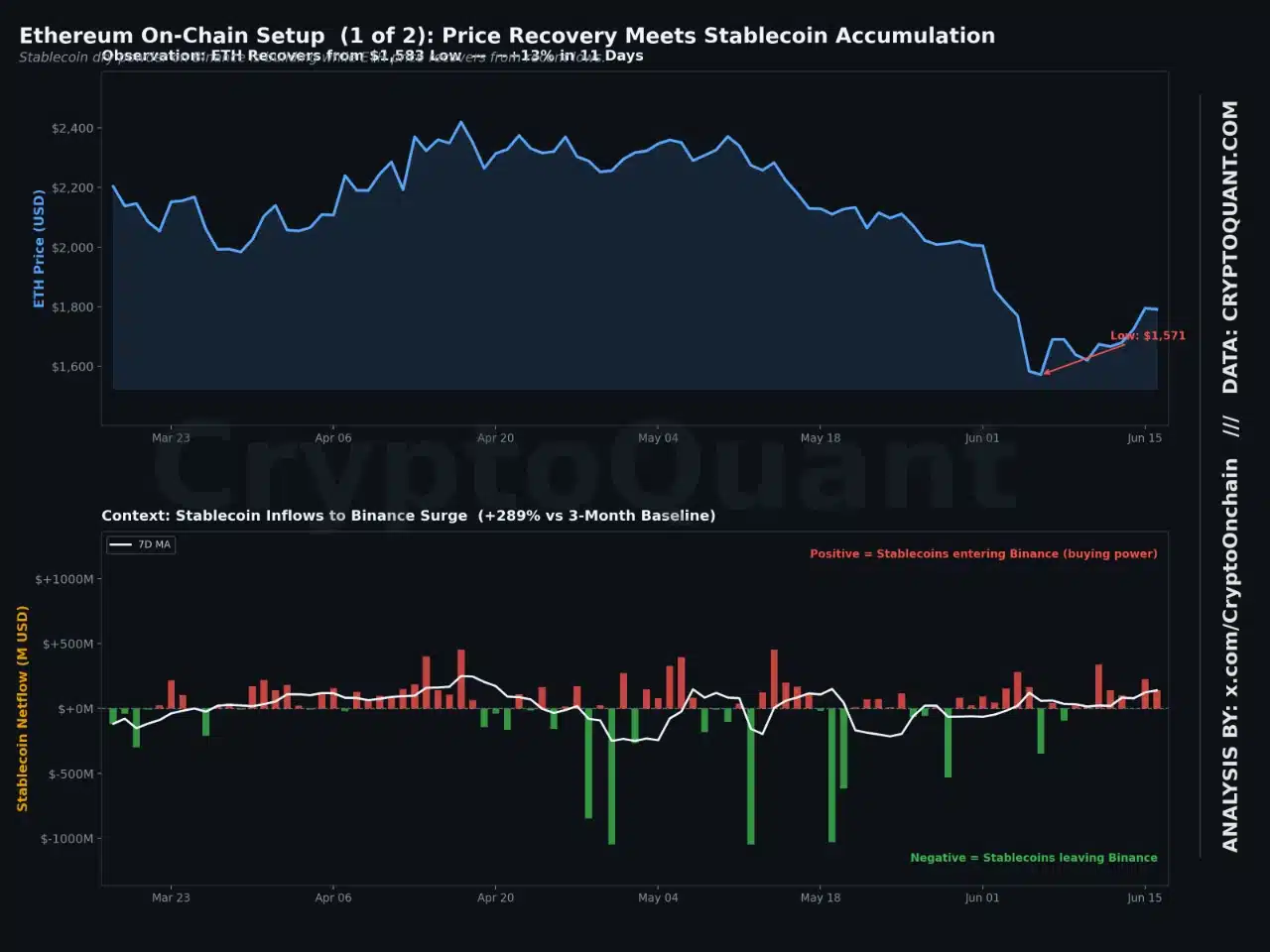
Posting on CryptoQuant Insights, analyst CryptoOnChain drew attention to the rising stablecoin net inflows to Binance.

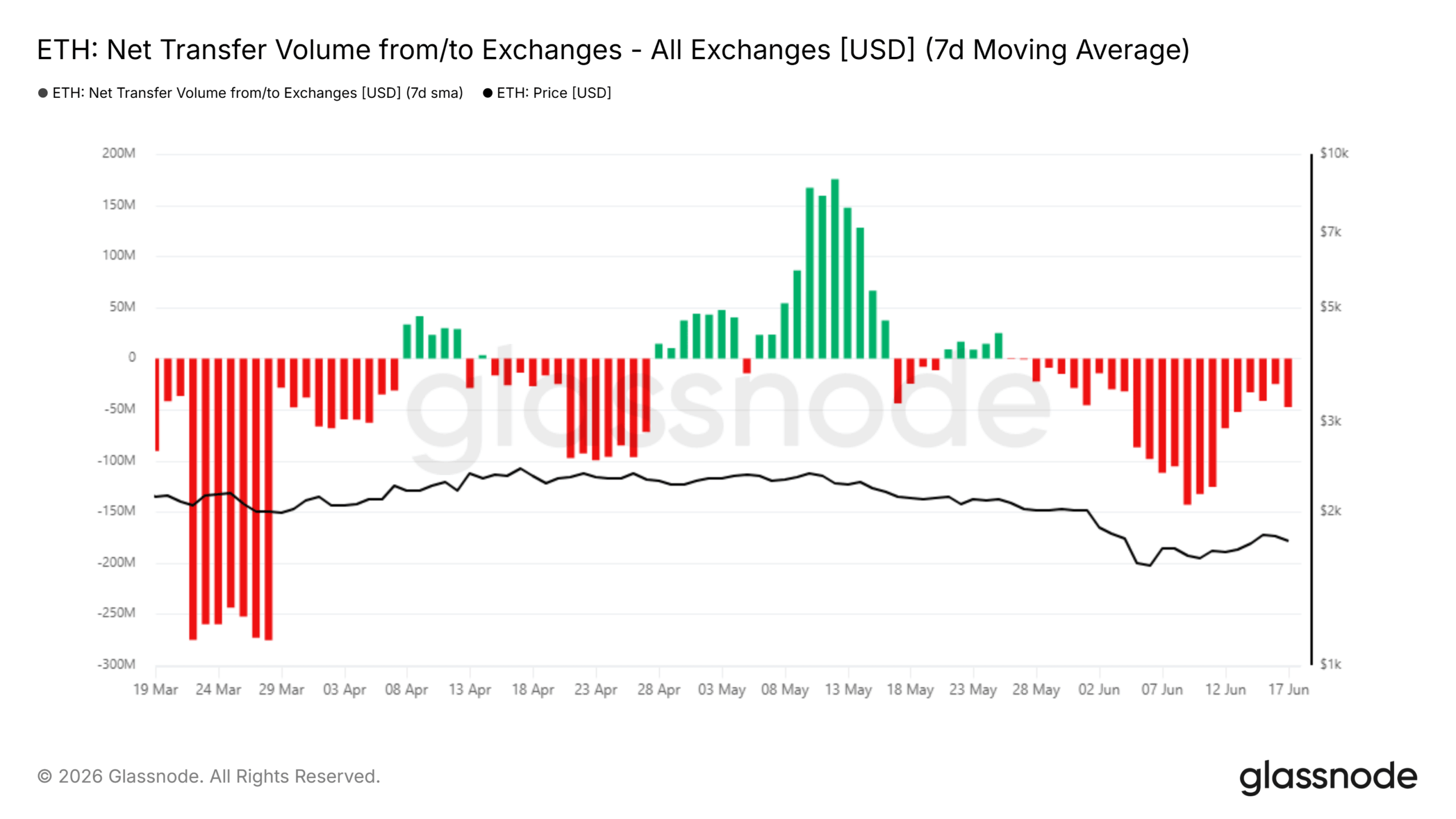
At the same time, ETH has been flowing out of exchanges, leading to falling reserves.

Ethereum Exchange Net Transfer VolumeEthereum Exchange Net Transfer Volume
Source: Glassnode

Rising stablecoin deposits on exchanges represent buying power waiting on the sidelines. The negative 7-day net transfer volume agreed with the ETH flow out of exchanges.

Ethereum Coinbase PremiumEthereum Coinbase Premium
Source: CryptoQuant

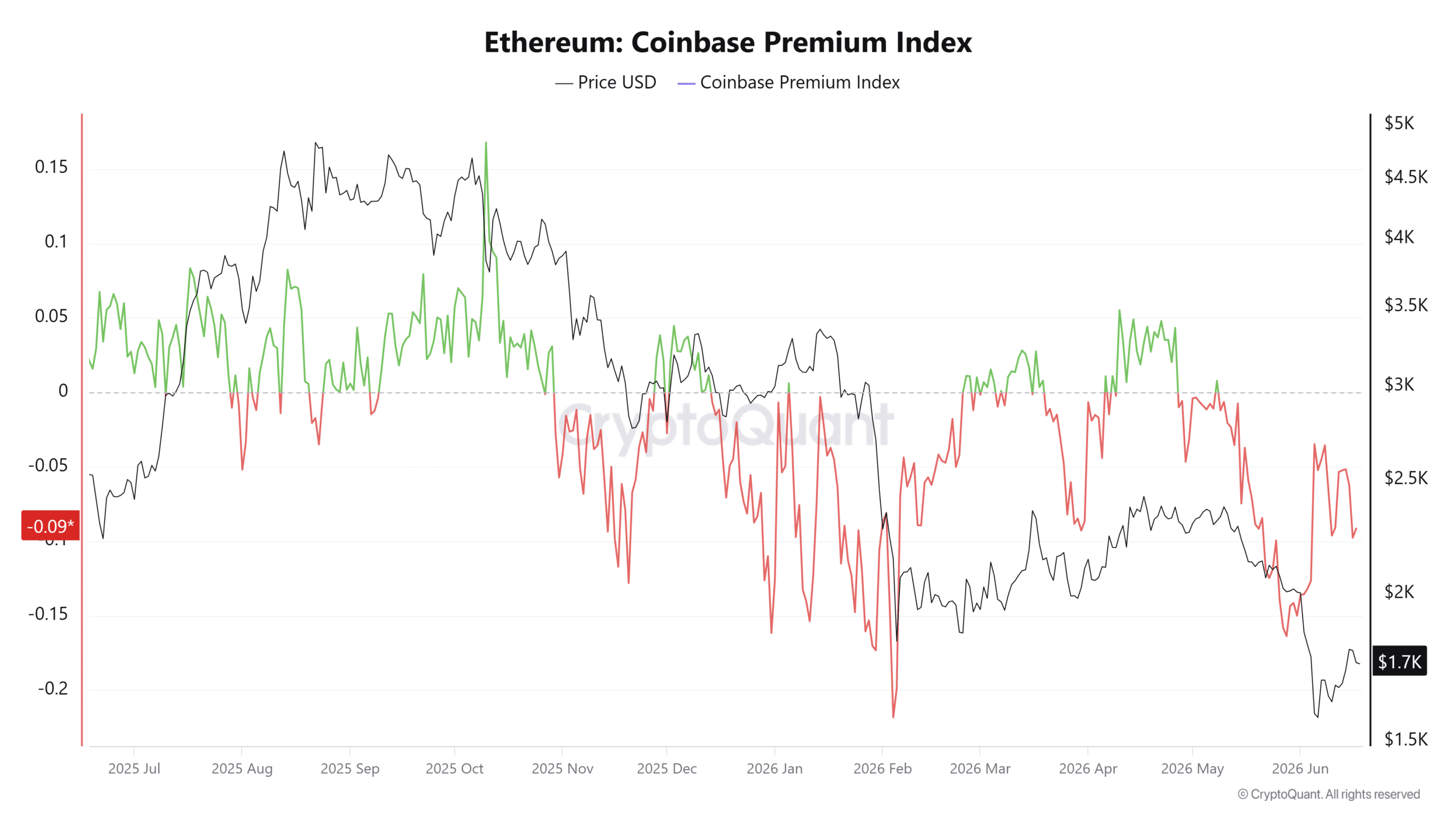
However, the Coinbase Premium has been falling in recent weeks – Evidence of how U.S-based investors might not yet be willing to bet on a price recovery.

These metrics set up the conditions for sharp price volatility in either direction. Another sell-off might be necessary before smart money chooses to stop waiting and enter with sizeable capital.

Dissecting the conflicting Ethereum signals

Ethereum 1-week ChartEthereum 1-week Chart
Source: ETH/USDT on TradingView

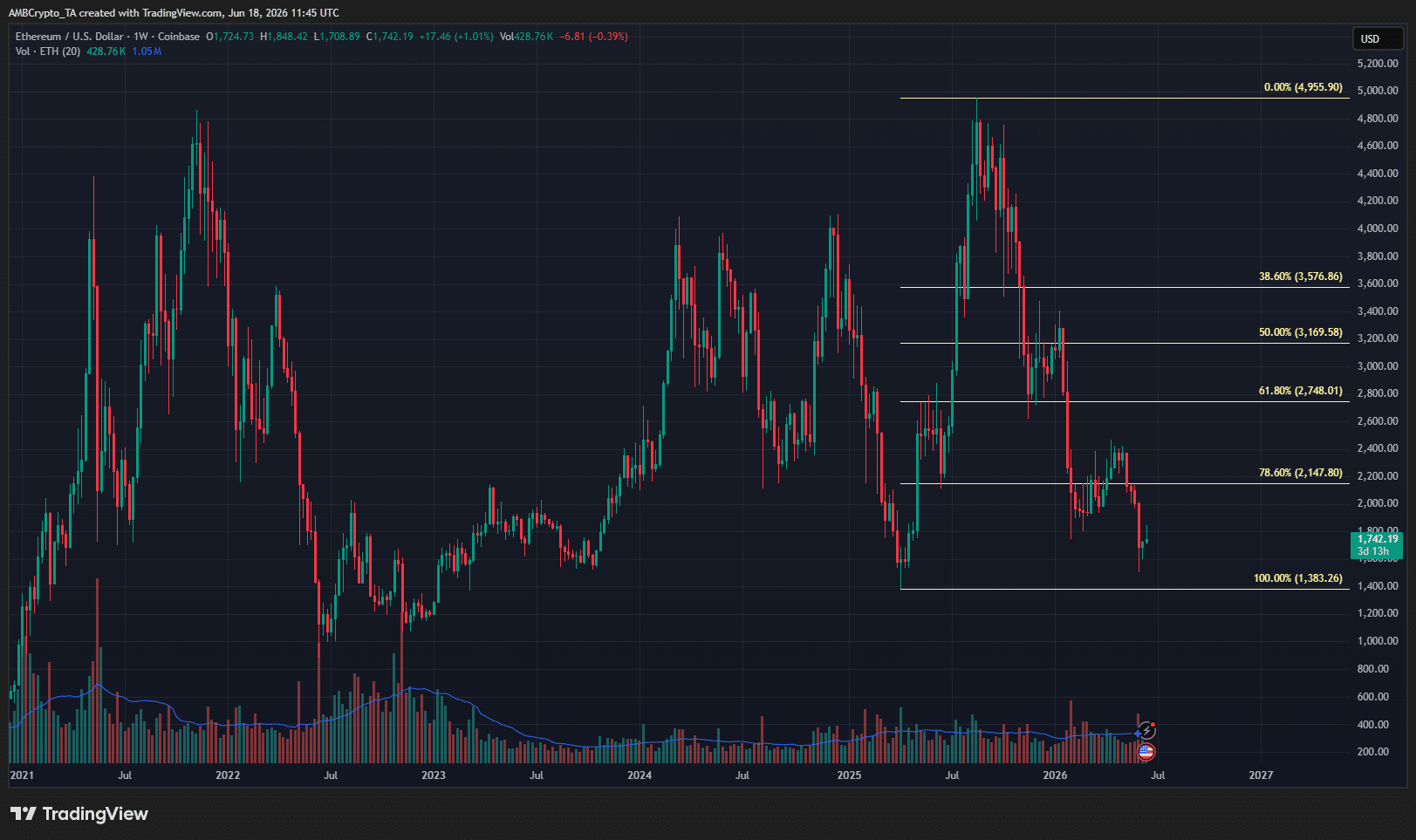
At press time, the weekly Ethereum chart exhibited a bullish swing structure.

Crucially, the 78.6% retracement level at $2,147 had been breached too. The internal structure was bearish, especially after the sellers were in control for nearly 10 months.

Ethereum 1-day ChartEthereum 1-day Chart
Source: ETH/USDT on TradingView

They did not seem likely to relinquish their grip on the markets anytime soon. In fact, the 1-day chart had a bearish structure and had fallen below the February lows earlier this month. This breakdown could be evidence of a bearish continuation.

Technically, a bounce to the key retracement levels at $2.1K and $2.26K is possible, but unlikely if Bitcoin [BTC] slumps below $60K once again.

Therefore, traders and investors can anticipate a move towards the southward extension level at $1,278 next.


Final Summary

  • Ethereum exchange outflows represented accumulation while stablecoin supplies climbed on the charts.
  • Coinbase Premium Index and price trends both suggested sellers may be in control for now.


Source link

Live updates: Bitcoin has traded below its mining cost for five months, squeezing miners

0
Live updates: Bitcoin has traded below its mining cost for five months, squeezing miners

The US and Iran signed their memorandum of understanding on Friday, following the G7 summit in France, formally ending the conflict that has roiled energy markets since February.

Bitcoin climbed above $66,000 and Brent crude fell more than 4%, per CoinDesk data. The 14-point framework halted hostilities, reopened the Strait of Hormuz, commited Iran to abandon nuclear weapons development, and will begin gradual US sanctions relief, with a 60-day window to reach a full deal.

The bitcoin move is not a pure geopolitics play, said Mike McCluskey, co-founder of tx, in a note to CoinDesk.

The deal’s impact is “less immediate than commonly believed.” The real catalyst, he argues, is whether a sustained drop in oil prices cools inflation enough to shift central bank policy, a process that works with a lag.

The agreement is interim, sanctions persist, and the US has threatened renewed strikes if nuclear talks fail. Traders burned by collapsed ceasefires in April and early June are, in his words, “prioritizing pattern recognition over headlines.”

A genuine shift, McCluskey says, would need three things: the accord to hold, the Fed to acknowledge oil-driven disinflation, and ETF inflows to continue. Two already look shaky, with the Fed turning hawkish on Wednesday, raising its rate projections rather than nodding to disinflation, and spot bitcoin and ether ETFs swinging back to outflows the same day.


Source link