Xtant Medical Holdings, Inc. Q2 2026 Earnings Call Summary – Moby
Strategic Performance Drivers
Our analysts just identified a stock with the potential to be the next Nvidia. Tell us how you invest and we’ll show you why it’s our #1 pick. Tap here.
Reported revenue faced significant year-over-year headwinds due to the divestiture of non-core assets to Companion Spine and the cessation of certain license revenue following reimbursement changes.
The integration of 17 new sales representatives from the Dilon distribution agreement consumed significant management resources, contributing to softer-than-expected Q2 sales performance.
Management attributed biologics underperformance to softness in legacy ‘workhorse’ product lines and ongoing headwinds in the amniotic membrane market tied to advanced wound care.
The launch of Trivium Shaped in May is driving early sales momentum by addressing surgeon needs for pre-shaped configurations that reduce preparation time and improve consistency.
The company is transitioning from a small commercial footprint to a scaled organization with over 25 reps and expanded national accounts teams to drive institutional adoption.
Strategic entry into the $1 billion hemostasis market via HEMOBLAST Bellows provides access to high-value hospital systems like Cleveland Clinic and Mass General.
Outlook and Strategic Assumptions
Full-year 2026 revenue guidance was modestly reduced to $99 million to $103 million, reflecting Q2 biologics softness and persistent amnio product headwinds.
Management expects accelerating biologics growth in Q3 and beyond as the newly integrated specialty reps move past the learning curve and begin selling the full product bag.
Substantially all HEMOBLAST Bellows sales are expected to transition to Xtant’s own customer agreements, allowing for gross revenue recognition versus the net basis used in Q2.
The company anticipates significant sales synergies as legacy reps and new specialty reps share few overlapping call points, allowing for broader market penetration.
Future growth strategy relies on leveraging a broad regenerative medicine portfolio to become a ‘one-stop shop’ for hospital materials management and large practice groups.
Operational and Financial Context
A $5 million exclusivity fee paid to Dilon Technologies was recorded as a one-time operating expense in the second quarter.
Gross margin declined to 57.9% primarily due to the termination of Q-Code license revenue and reduced production efficiencies.
Revenue recognition for HEMOBLAST was approximately $600,000 to $700,000 lower than potential due to the timing of transitioning purchase orders from Dilon to Xtant.
Cash and cash equivalents decreased to $9.9 million as of June 30, 2026, compared to $17.3 million at the end of 2025.
Q&A Session Highlights
One stock. Nvidia-level potential. 30M+ investors trust Moby to find it first. Get the pick. Tap here.
Specific drivers of orthobiologics underperformance relative to initial expectations
Management identified ‘old line’ products like OsteoSelect and OsteoSponge as being down more than anticipated.
The Amnio product line remains soft, and while ‘green shoots’ were expected, the recovery has not yet materialized as planned.
Cross-selling opportunities and synergies from the Dilon sales force
The new reps provide entry into non-orthobiologic areas like OB/GYN where products like CollagenX and Amnio have strong applications.
The 17 new reps will be tasked with managing approximately 400 ‘transactional’ independent agent accounts that previously lacked consistent coverage.
Management believes the new team’s relationships with hospital materials management will facilitate larger institutional contracts.
HEMOBLAST revenue recognition and transactional volume expectations
Management maintains an expectation of over $1 million per month in gross transactional volume for HEMOBLAST.
A ‘buffer’ remains in Q3 guidance to account for any remaining orders that might still be processed through Dilon during the final stages of the contract transition.
For years, Strategy’s [MSTR] Bitcoin [BTC] plan has been simple: Keep buying. In 2026 though, the company’s a bit more held back, focusing on building a cushion before its next big move.
So, what’s new?
Bitcoin risk is on the table
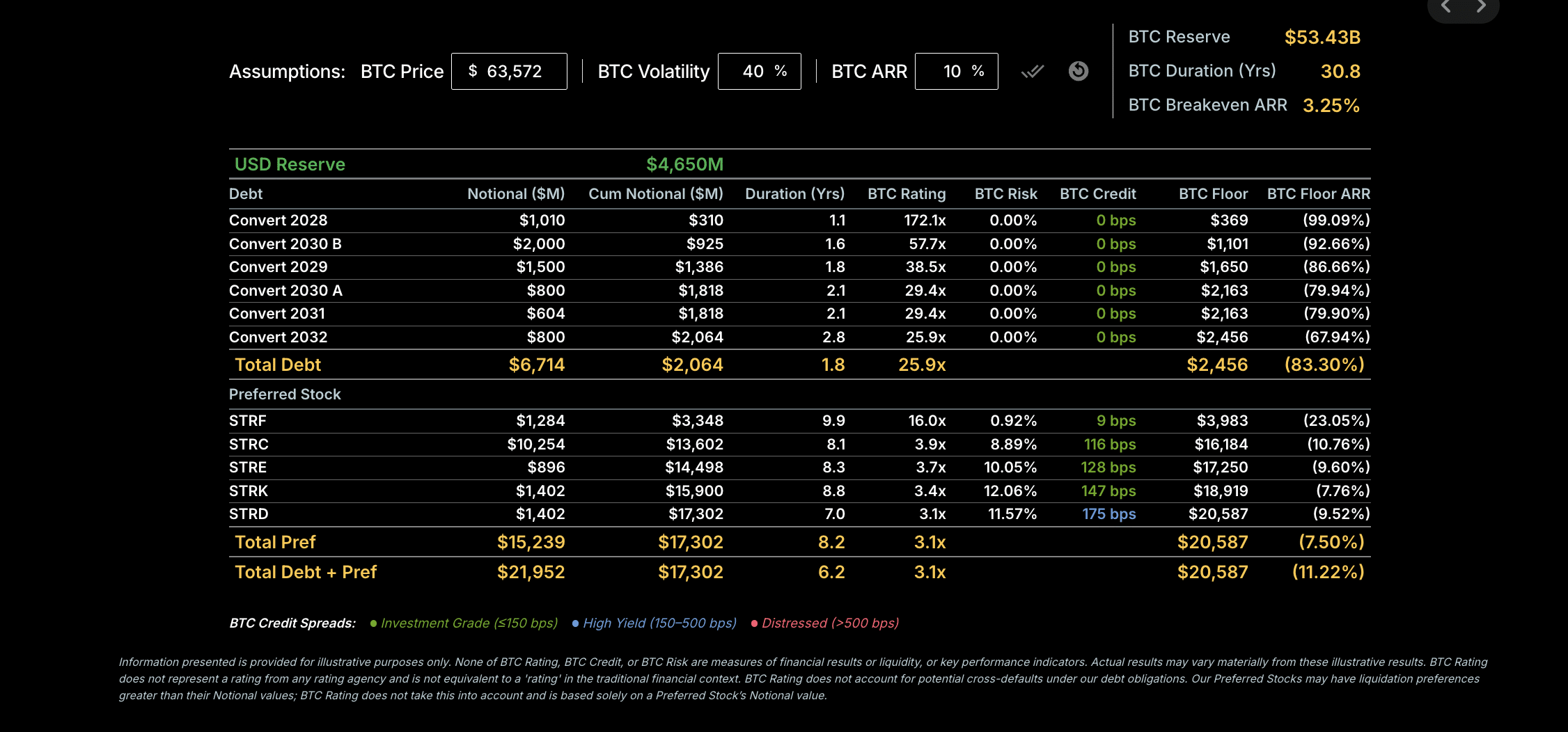
Strategy recently took an unusual step by publishing a Bitcoin Credit model. It revealed how its balance sheet could behave under different price and volatility scenarios.
Its model maps credit spreads, potential under-collateralization risk and Bitcoin “floor” prices. This, across roughly $53.5 billion in BTC reserves and $21.95 billion in debt and preferred stock.
Source: Strategy
For years, Strategy was known for raising capital and buying more Bitcoin. Now, it is also showing investors how much protection is between its holdings and obligations.
Why Strategy is building cash before buying more BTC
In a recent interview with Fox Business, CEO Phong Le stated that the company is building a larger U.S. dollar reserve. He added,
We will resume buying more Bitcoin before the end of this year…
The key lesson may be that institutional and preferred-stock investors do not treat Bitcoin the same way they treat cash. A bigger cash buffer ordinarily gives the company more room to meet dividend and funding obligations. This, without relying on BTC sales during weaker days.
Le described MSTR as an “amplified Bitcoin” play, meaning that the long-term thesis has not changed. Even though the approach may have.
In fact, they now seem more willing to put their balance sheet first.
A defensive MSTR stock?
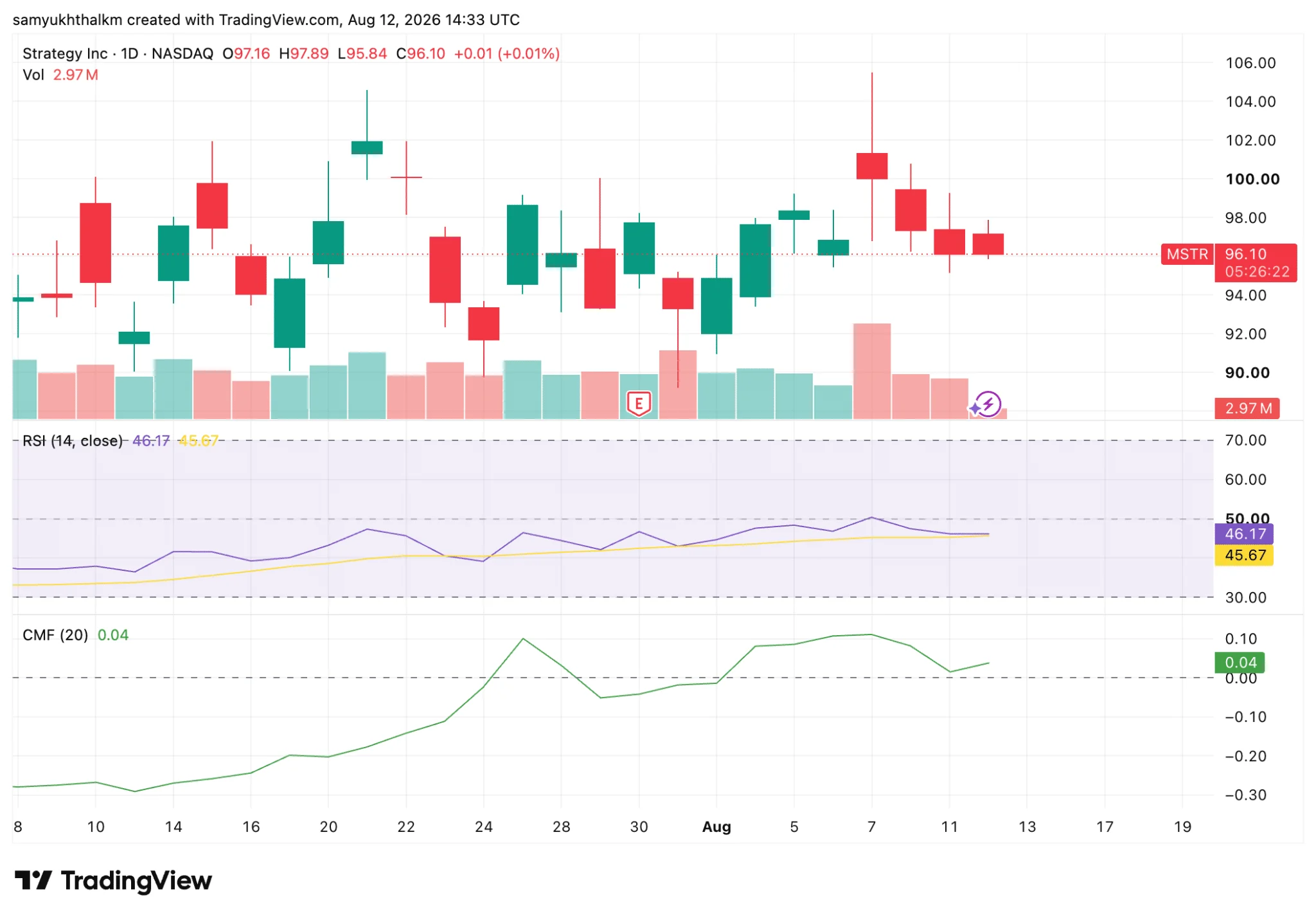
MSTR was trading at around $96 at press time, after failing to hold above the $100-area in recent sessions. The pace seemed neutral, with the RSI near 46 while the CMF was positive too.
Source: TradingView
This implied that investors are not running for the exits, but neither have they been convinced to stay. As it stands, he stock is waiting for something to catalyze it.
Strategy’s next move on Bitcoin could be exactly that. If the company resumes accumulation later this year, sentiment around MSTR may get better.
Final Summary
Strategy is prioritising a larger cash reserve and balance-sheet protection right now.
Risk management is priority, before buying resumes.
Patil co-founded Function to provide a comprehensive preventive health solution.
She and her co-founders convinced investors of a long-term vision, in part powered by AI.
Now, Function is in its second act, she says — and is valued at $2.5 billion.
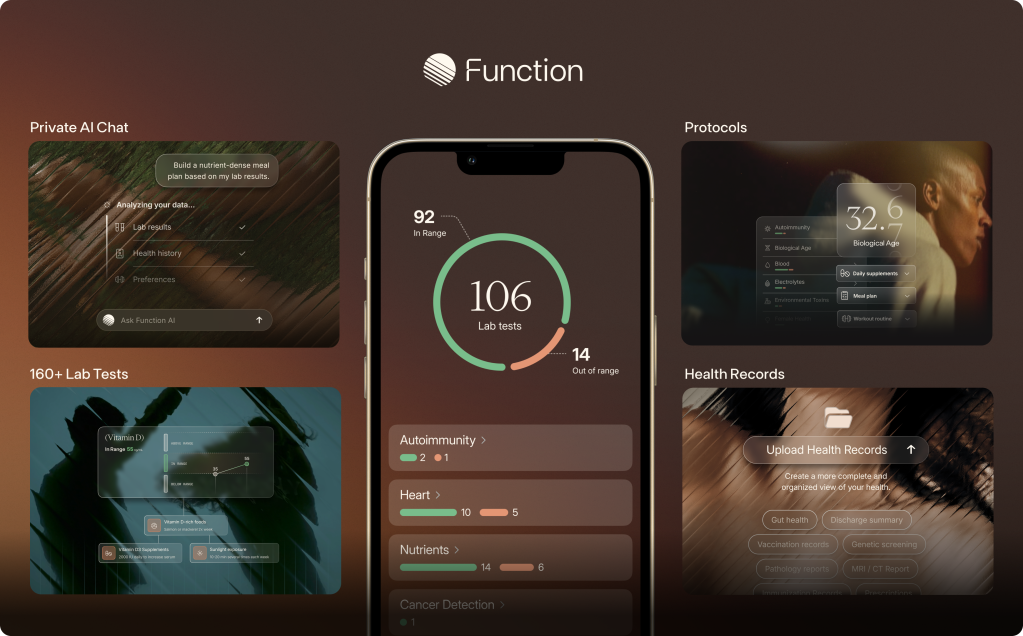
This as-told-to story is based on a conversation with Pranitha Patil, co-founder and chief business officer of preventive health membership platform Function, now valued at $2.5 billion. Function, co-founded by Jonathan Swerdlin (CEO), Dr. Mark Hyman (chief medical officer), Seth Weisfeld (chief design officer) and Dan Swerdlin (general counsel), provides access to more than 160 lab tests, advanced MRI and CT imaging, and AI-powered insights that help members understand what their results mean and which actions to take next. The membership costs $365 annually, compared to roughly $15,000 for comparable testing purchased independently, per the company. The piece has been edited for length and clarity.
Image Credit: Function. Pranitha Patil.
The journey to Function started way before 2021, when we officially launched. I experienced a few diagnoses in my teenage years and early 20s. I was diagnosed with PCOS and was pre-diabetic. My HbA1c was always teetering in the 6% range, and I had genetically high cholesterol. I was a young South Asian woman. There wasn’t enough clinical data showing what to do with somebody like me and my picture. The solution was either, “You’re going to live a pretty low-quality life,” or “You have to fix all these things yourself.” I really did feel like I was on my own, tracking my blood work and trying to figure it out. The healthcare system is set up so that you only go once you have a problem. Had I seen these signs way earlier, these markers being elevated, I would’ve done something about it.
Dropping out of Harvard to build Function
I was at Harvard studying for a master’s in design engineering when I came up with the idea to develop a comprehensive preventive health platform. Initially, I thought a product like it must already exist somewhere in the world, but I couldn’t find it. Then I met my co-founder and CEO, Jonathan Swerdlin, and was like, “This product needs to exist.” It was a no-brainer; there wasn’t a lot of hesitation.
I connected with the rest of the co-founding team and had a lot of confidence in the people I’d be working with and the passion behind what we were building. I ended up dropping out of the Harvard program early to bring the company to life. Everything clicked. As co-founders, we have different backgrounds, but we were all driven by giving people the opportunity to own their health. That mission hasn’t changed in the five and a half years since Function’s founding.
The typical annual physical gives you a snapshot of your health at one point in time. Function offers people the most cutting-edge information, and it’s ongoing.
Image Credit: Function
Pitching a big long-term vision to investors
We wanted to start with lab testing in blood and urine, but we always envisioned doing so much more. So the most challenging part in the early days — and this is true of building any company — was convincing investors of the bigger vision when it wasn’t here yet. For us, it was like, “Hey, we’re starting with the most comprehensive lab testing you’ve ever seen, and if you think about that data set that has never been done before, and you add things like imaging, and combine it with AI, and have other types of data sets, picture how incredible that could be.” Investors connected with our ability to communicate this big vision. Before long, we got traction for our Series A. Then the company took off from there. Now Function is valued at $2.5 billion.
Our goal is to reach eight billion people as quickly as possible. We mean that; that’s been the throughline for us since day one. AI is helping us achieve that. We use the technology in a few different ways.
Using AI for communication and medical intelligence
We have our private AI chat, which allows members to communicate with AI after they’ve gotten their results to build a plan, learn what’s going on and get a deeper understanding of what to do next.
Additionally, we’re building a medical intelligence lab that’s bringing together all different types of data — from labs, images, wearable devices, past medical records, etc. — to create this longitudinal picture of someone. That information is summarized in a way that the average person on the street can actually do something about it. Since that hasn’t been done before, the only way to do it is with AI. We’ve got researchers, scientists, clinicians, coders and people who really understand AI working to bring technology and medicine together and make it as clean, accessible and actionable as possible for somebody today.
We’re in our act two as a company. For act one to be successful, we had to lay the foundation with the labs. The lab piece had to be accurate and correct, and get as many people in the door as possible multiple times a year. That behavior shift happened. Now, people are excited about seeing how their labs have changed, or their biological age has come down. But we always knew there was more to build.
Image Credit: Function
Acquisitions were critical to Function’s growth
We knew we would need to make some acquisitions toscale, which is why we added imaging, supplement intelligence through SuppCo and home blood draws with Getlabs. It would take too long to build everything in-house. And we needed to make it seamless for people to take action. If we’re telling you to take a supplement or get your blood drawn, we have to make it easy.
We’re never going back to a time where we don’t have access to this data. Once you open Pandora’s box, it’s here. That’s a great responsibility, but it’s also such a cool time to live in because we have the opportunity to actually change health, not healthcare, but the actual health of a population.
When I think about the future, I’m reimagining everything we’ve known about how we interact with our health. This is a new set of expectations and a new set of information. Historically, this has been so severely disconnected, and you’re playing insane Tetris trying to figure out one thing about yourself. I am so excited about a world, whether that’s in three to five years or 10 years, or even sooner, where people can detect a problem before it becomes an actual problem, take action and have a strong relationship with their health. We deserve that. If we can make it that much easier for people, then we’ve done something right.
Image Credit: Function
Building in healthcare for lasting change
I pinch myself that this is the company we built, and so much is still possible. It’s an incredible time to be building in healthcare and see the change from humans around you. So many people want to build in health. The first thing I would say is, if you’re interested in building in this space, it is most certainly bigger than yourself. The work is bigger than you, and the sooner you realize that, the better, because it humbles you in the best way.
But on the flip side of that, healthcare is also one of the messiest industries because you’re working with old-school systems. So acknowledge that. If you’re building for the initial stages, don’t focus so much on what others are doing. If you have an idea that you believe is actually novel and should be in the world, just get started. That’s what someone told me in the early days with Function. You just have to get started. You can iterate. No one’s grading you. There’s so much to be done in this industry compared to the financial industry or any other industry. We’re always 10 years behind most of the big industries. With AI, we have the opportunity to catch up really quickly, but remain human and empathetic.
Key Takeaways
Patil co-founded Function to provide a comprehensive preventive health solution.
She and her co-founders convinced investors of a long-term vision, in part powered by AI.
Now, Function is in its second act, she says — and is valued at $2.5 billion.
This as-told-to story is based on a conversation with Pranitha Patil, co-founder and chief business officer of preventive health membership platform Function, now valued at $2.5 billion. Function, co-founded by Jonathan Swerdlin (CEO), Dr. Mark Hyman (chief medical officer), Seth Weisfeld (chief design officer) and Dan Swerdlin (general counsel), provides access to more than 160 lab tests, advanced MRI and CT imaging, and AI-powered insights that help members understand what their results mean and which actions to take next. The membership costs $365 annually, compared to roughly $15,000 for comparable testing purchased independently, per the company. The piece has been edited for length and clarity.
Image Credit: Function. Pranitha Patil.
The journey to Function started way before 2021, when we officially launched. I experienced a few diagnoses in my teenage years and early 20s. I was diagnosed with PCOS and was pre-diabetic. My HbA1c was always teetering in the 6% range, and I had genetically high cholesterol. I was a young South Asian woman. There wasn’t enough clinical data showing what to do with somebody like me and my picture. The solution was either, “You’re going to live a pretty low-quality life,” or “You have to fix all these things yourself.” I really did feel like I was on my own, tracking my blood work and trying to figure it out. The healthcare system is set up so that you only go once you have a problem. Had I seen these signs way earlier, these markers being elevated, I would’ve done something about it.
Dropping out of Harvard to build Function
I was at Harvard studying for a master’s in design engineering when I came up with the idea to develop a comprehensive preventive health platform. Initially, I thought a product like it must already exist somewhere in the world, but I couldn’t find it. Then I met my co-founder and CEO, Jonathan Swerdlin, and was like, “This product needs to exist.” It was a no-brainer; there wasn’t a lot of hesitation.
Unlike denials (as received by Wise and Bunq) a return doesn’t come with a detailed explanation. The company didn’t publicly disclose the development when it happened, as it had with the submission of its application. And Zerohash hadn’t voluntarily withdrawn the filing, as was its option.
A spokesperson for the OCC didn’t immediately respond to questions about the application, and spokespeople for Morgan Stanley declined to comment.
Just a month before returning Zerohash’s effort, the regulator issued an explanation for how it makes such decisions, including its new approach to returning applications without registering a decision. The OCC will return a filing, the agency said, if it doesn’t contain necessary information on the company’s finances or officers. Or, it noted, “the OCC may return a filing as materially deficient if, after attempting to have the filer furnish all required information for the OCC to assess the statutory or regulatory criteria through an additional information request, the responses do not sufficiently respond to the requests.”
When the Independent Community Bankers of America filed an objection to the application in April, the community-bank group’s letter noted: “In less than twelve months the OCC has conditionally approved or received applications from Circle Internet Group, Ripple, Paxos Trust, BitGo, Fidelity Digital Assets, Crypto.com, Payoneer (PAYO), and now Zerohash. This pace — eleven filings or approvals in under one hundred days in some windows — precludes deliberate, transparent policymaking.”
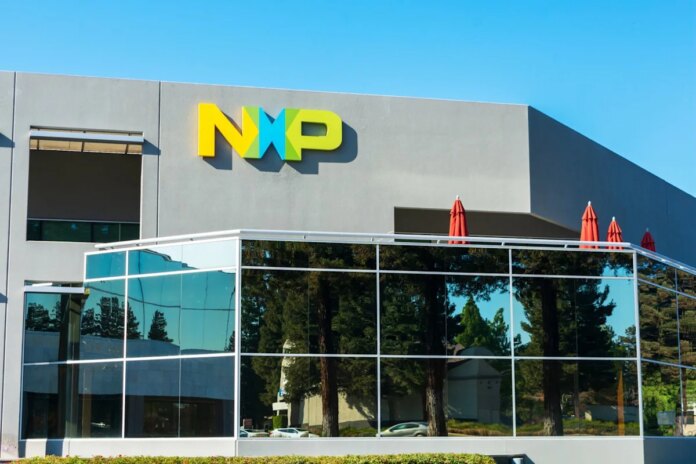
NXP Semiconductors company office in Silicon Valley_ By MichaelVi
With a market cap of $58.9 billion, NXP Semiconductors N.V. (NXPI) is a trusted global technology partner delivering innovative solutions across the automotive, industrial and IoT, mobile, and communications infrastructure markets. Through its “Brighter Together” approach, NXP combines advanced technology and pioneering talent to create system solutions that make the connected world better, safer, and more secure.
Shares of the Eindhoven, the Netherlands-based company have underperformed the broader market over the past 52 weeks. NXPI stock has increased 17.1% over this time frame, while the broader S&P 500 Index ($SPX) has gained 21.7%. Moreover, shares of the company are up 10.6% on a YTD basis, compared to SPX’s 13.3% rise.
More News from Barchart
Narrowing the focus, the chipmaker stock has lagged behind the State Street SPDR S&P Semiconductor ETF’s (XSD) 98.7% surge over the past 52 weeks.
www.barchart.com
NXP Semiconductors has underperformed as its heavy exposure to the automotive market has made it vulnerable to slowing vehicle demand in China and the risk of inventory corrections. Its limited exposure to AI infrastructure has also caused it to lag semiconductor peers benefiting more directly from the AI boom.
For the fiscal year ending in December 2026, analysts expect NXP Semiconductors’ EPS to grow 34.6% year-over-year to $13.73. The company’s earnings surprise history is promising. It beat the consensus estimates in each of the last four quarters.
Among the 26 analysts covering the stock, the consensus rating is a “Moderate Buy.” That’s based on 15 “Strong Buy” ratings, two “Moderate Buys,” eight “Holds,” and one “Strong Sell.”
www.barchart.com
This configuration is less bullish than three months ago, with 18 “Strong Buy” ratings on the stock.
On Jul 29, Morgan Stanley analyst Joseph Moore raised NXP Semiconductors’ price target to $338 and maintained an “Overweight” rating.
The mean price target of $309.17 represents a 29.5% premium to NXPI’s current price levels. The Street-high price target of $400 suggests a 67.6% potential upside.
On the date of publication, Sohini Mondal did not have (either directly or indirectly) positions in any of the securities mentioned in this article. All information and data in this article is solely for informational purposes. This article was originally published on Barchart.com
Bitwise accumulated 28,085.8 HYPE, worth approximately $1.52 million, from Nonco for its ETF clients.
The buying added institutional demand just as HYPE was making its way through a wider price correction.
Notably, Bitwise transferred the tokens purchased to their HYPE wallet after the acquisition. Therefore, the transaction reinforced the accumulation narrative instead of providing immediate exchange-side supply.
Exchange outflows tightened available HYPE supply
The supply case for Bitwise’s latest institutional purchase got a boost from exchanges as well.
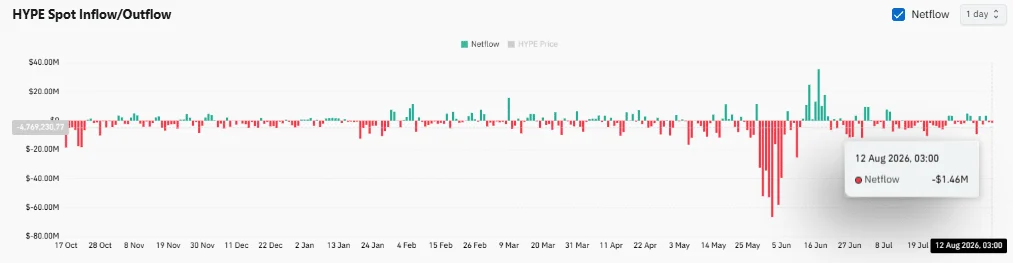
HYPE’s negative Spot netflows for the most recent period on record stood at around $1.46 million. The negative figure implied more tokens were withdrawn from exchanges than added to them, thereby decreasing the liquidity right away for exchanges.
This movement coincided with Bitwise’s accumulation as both moves moved tokens off easily traded markets.
Importantly, netflows were not particularly strong in recent months, relative to the significantly bigger fluctuations in June. But the new reading did not signal resurgent inflows of exchange but continued the withdrawal trend.
Source: CoinGlass
Short sellers absorbed the liquidation pressure
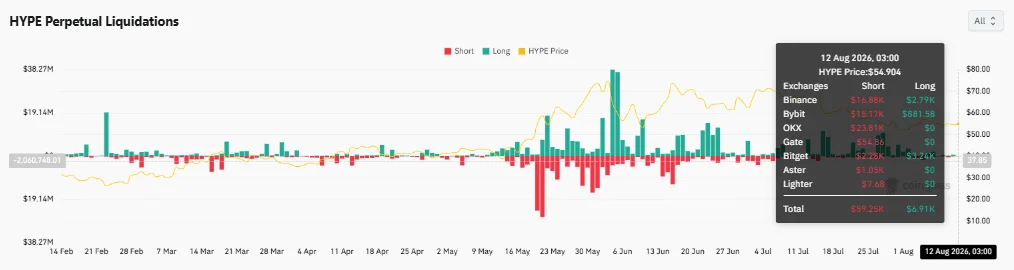
Derivatives positioning provided another layer of support, with short traders taking most of the liquidation losses.
At the time of writing, short liquidations stood around $59.25K, and long liquidations were at a mere $6.91K.
The short position imbalance has pushed the number of short liquidations to over 8 times the number on the long side. The sum for overall liquidation was, however, relatively small in comparison with the more substantial increases that were seen previously.
A move upside may push more bearish players out of the market and bring in more buying pressure.
Source: CoinGlass
Can key support launch the next recovery?
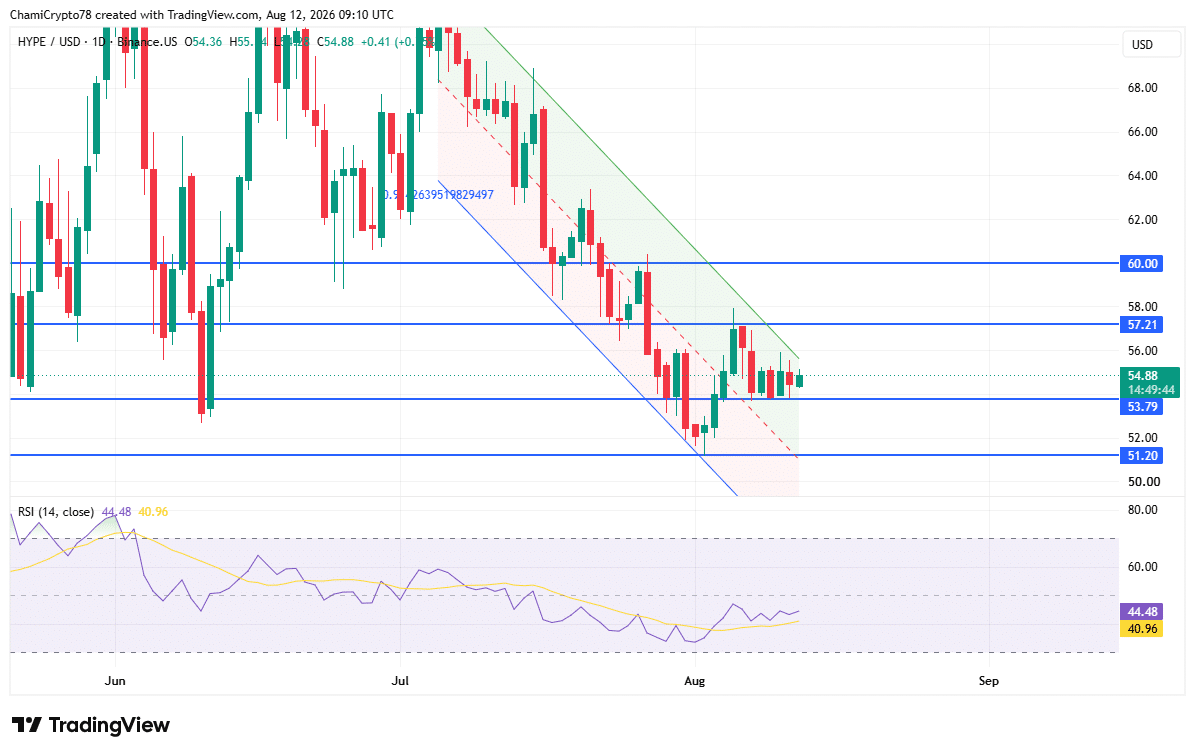
After a sharp move down from July’s highs, HYPE had to defend the $53.79 support.
At the time of writing, the token hovered around $54.88 throughout the day, challenging the descending trendline region while maintaining the support level.
The recent candles have been squashed around this zone, which means that there’s some kind of battle that’s going on between the recovery buyers and the sellers that are still around.
Meanwhile, RSI was at 44.48 and moved above its moving average at 40.96, having bounced back from lower levels.
That did not get buyers anymore directionally solid, as the indicator still was under 50.
However, the improving RSI supported the stabilization developing above $53.79 rather than signaling renewed deterioration.
The break of this trendline would give visibility to $57.21, a price point that historically saw sellers break recovery attempts. After that, the next big structural barrier would be $60.00.
If the trendline doesn’t hold, prices may resume downward pressure with $51.20 offering the longer-term level of support.
Source: TradingView
Final Summary
Bitwise accumulation and exchange outflows strengthened HYPE’s underlying supply-demand setup.
Holding $53.79 keeps HYPE positioned for another challenge toward $57.21.
Securitize (SECZ) shares plunged 20% in after-hours trading Wednesday after the tokenization firm fell short of Wall Street’s second-quarter expectations in its first earnings report since going public last month.
The company, best known for issuing and managing BlackRock’s BUIDL tokenized money-market fund, reported revenue of $14.4 million, down 5% from a year earlier and missing analyst estimates of $20.6 million.
Securitize posted a $2.37 per-share loss, compared with an expected loss of just $0.15 per share. Its net loss totaled $21.7 million, while adjusted EBITDA swung to a $5.5 million loss from a $1.8 million gain a year ago.
Wall Street has grown increasingly excited about tokenization, the effort to bring funds, equities and other financial assets onto blockchain rails. Securitize sits at the center of that push, but the growing interest has yet to materialize as sustained revenue growth.
CEO Carlos Domingo called the quarter “softer” when reporting earnings on Wednesday, while pointing to a stronger start to the year. First-half revenue remained 16% higher year-over-year, including a record $19.5 million in the first quarter.