Home Blog Page 371

Bitcoin underwater supply crosses 10mln – Is BTC near cycle bottom?

0
Bitcoin underwater supply crosses 10mln – Is BTC near cycle bottom?


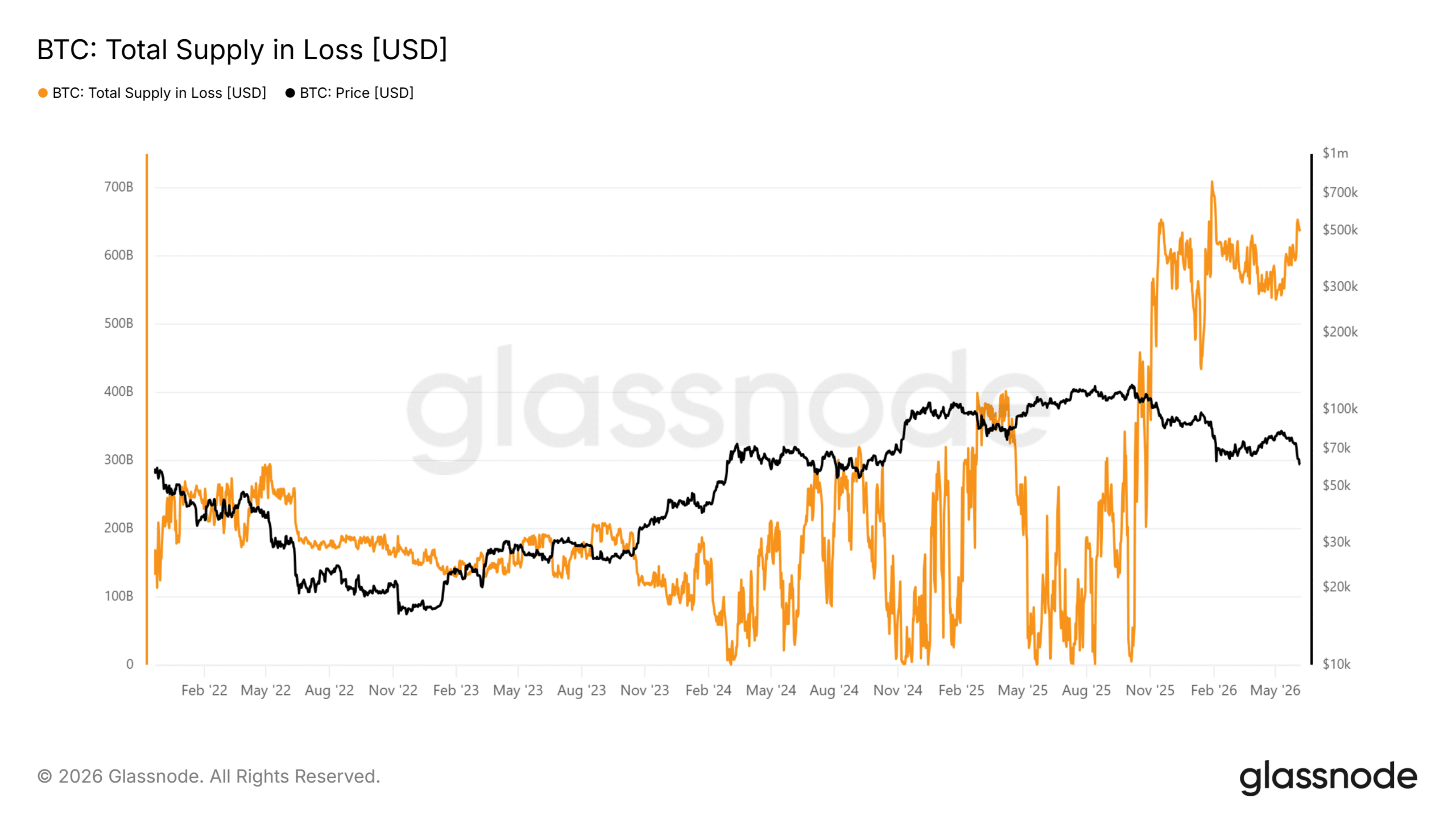
Bitcoin’s recent decline has pushed a growing share of holders underwater, increasing stress across the network. Supply in Loss has now climbed to 10.46 million BTC, marking the first time this cycle that underwater coins have exceeded Supply in Profit.
Source: Glassnode

As Bitcoin [BTC] fell toward the $60,000-$62,000 range, market profitability compressed sharply and unrealized losses expanded across multiple holder cohorts. Yet this is also where the signal becomes interesting.

Previous cycle bottoms formed when more than 10 million BTC sat at a loss. The reason is simple. Investors become less willing to sell after absorbing large drawdowns, causing sell-side pressure to gradually thin out.

If buyers begin absorbing that supply, Bitcoin could move closer to a bottoming phase. If not, deeper capitulation may still lie ahead.

Bitcoin’s MVRV signals a deep valuation reset

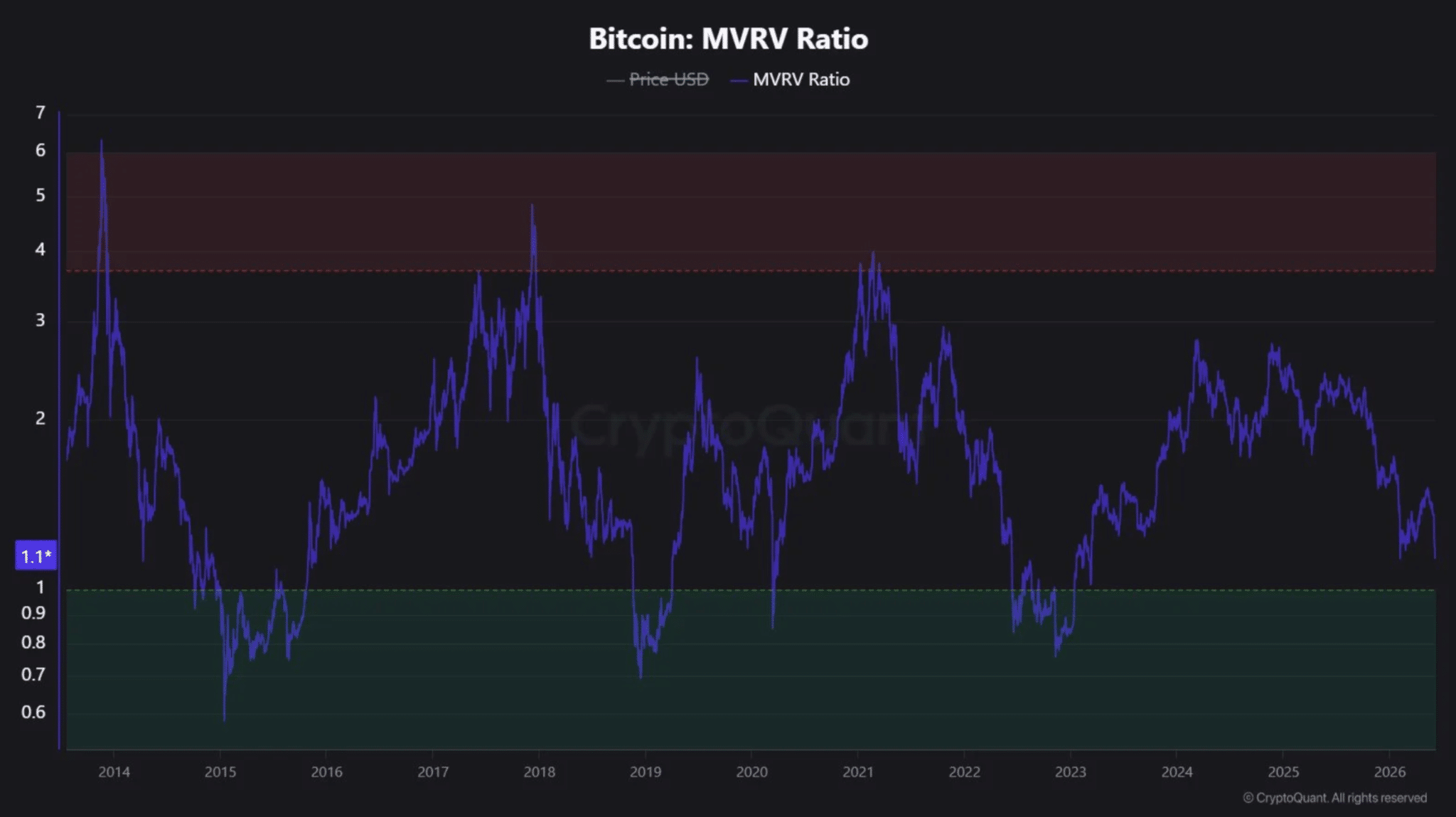
Bitcoin’s selloff has pushed the Market Value to Realized Value [MVRV] Ratio down to 1.1, leaving the market only slightly above its aggregate cost basis. In practical terms, most of the speculative premium that built up during the rally has already been erased.

As prices slipped toward the $60,000-$62,000 range, profitability across the network tightened and the market moved closer to levels that historically tested investor conviction. What’s notable is where this level sits in Bitcoin’s history.
Source: CryptoQuant

A further decline toward the low $50,000s would likely push MVRV toward 1.0, a level that has rarely appeared outside major cycle lows. In other words, Bitcoin is no longer expensive. The question remains whether buyers are ready to step in before full capitulation takes hold.

Long-Term Holders return to net accumulation

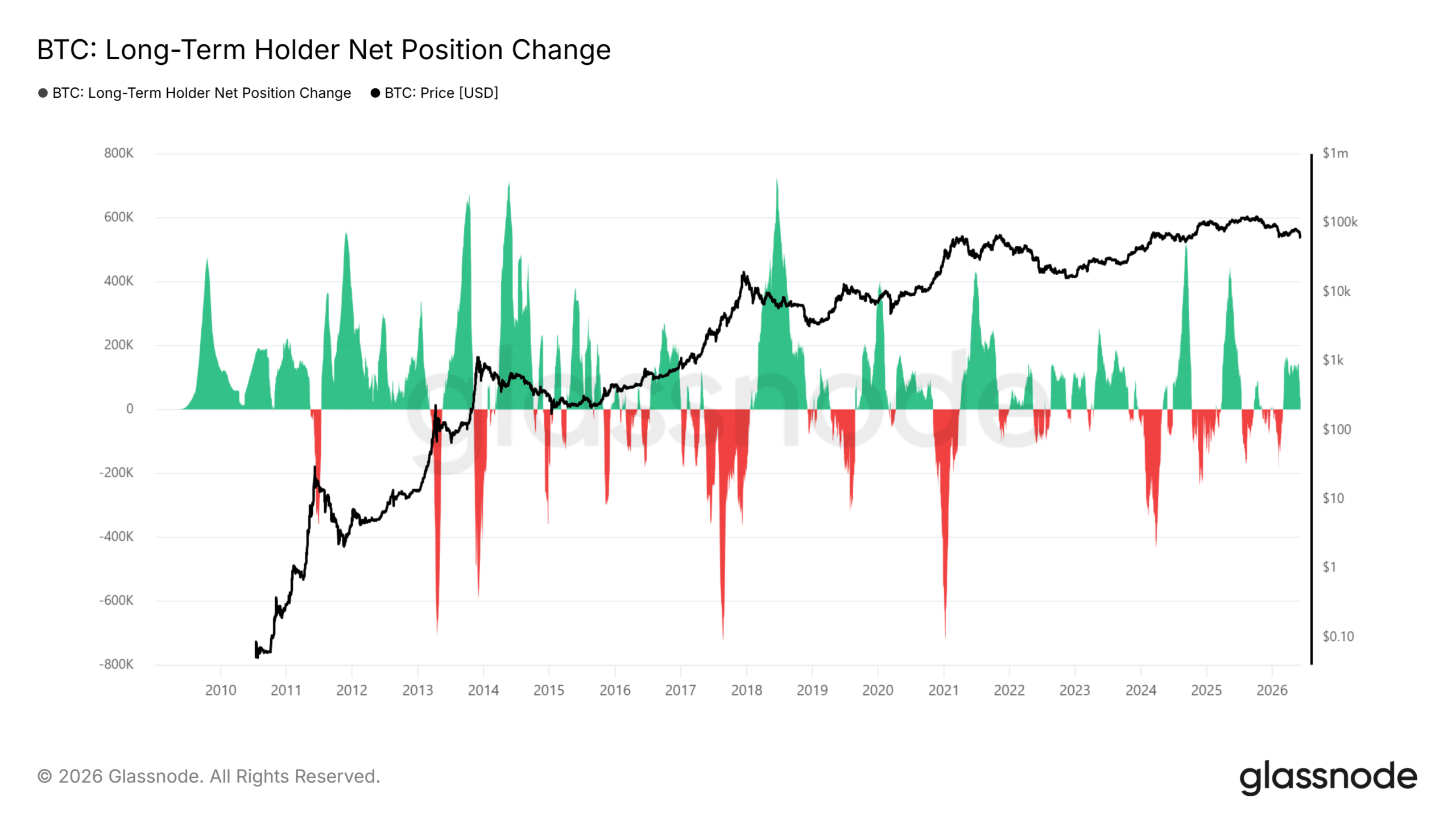
Long-Term Holder Net Position Change has recently turned positive, signaling a shift in Bitcoin’s ownership structure. Recent data shows this cohort absorbing roughly 30,000-35,000 BTC over a 30-day period after months of mixed positioning.
Source: Glassnode

The change suggests some investors are beginning to increase exposure despite continued market uncertainty.

Historically, sustained accumulation by long-term holders has often coincided with periods when supply gradually moved away from speculative participants.

However, the current pace remains measured rather than aggressive. For now, the data points to improving conviction beneath the surface, though broader market participation remains subdued.


Final Summary

  • Bitcoin [BTC] now has 10.46 million coins underwater, pushing valuation metrics toward levels historically associated with major cycle bottoms.
  • Bitcoin long-term holders are accumulating again, though stronger demand remains necessary to confirm a durable recovery.



Source link

Bitcoin near $60,000 today vs February: ETF flows tell a different story

0
Bitcoin near $60,000 today vs February: ETF flows tell a different story

Bitcoin is back to trading at levels seen in early February: near $60,000. But this time, the response from institutions is totally different.

Today, they are aggressively selling into the dip, ETF flows indicate, unlike in February, when selling slowed as prices dropped to near $60,000. That marks a fundamental shift in how institutions view bitcoin at this level.

The 11 U.S.-listed spot bitcoin ETFs saw net outflows of $1.72 billion last week. That’s the largest single-week redemption in over a year, according to data source SoSoValue. Back in the first week of February, when BTC crashed to nearly $60,000, the ETFs bled just $318 million.

The bearish contrast doesn’t end there.

Outflows have accelerated for four consecutive weeks, rising from $1 billion in the week ended May 15 to $1.26 billion, then $1.26 billion and $1.42 billion in the following two weeks, and most recently $1.72 billion.

In February it was different. The week BTC hit $60,000 saw $318 million leave. But the two weeks before that had seen $1.33 billion and $1.49 billion leave. In essence, as the price crashed, outflows slowed. Buyers showed up.

This time, the trend has reversed: As price fell, outflows accelerated. Week after week, faster redemptions and no institutional bid beneath them.

The pattern tells a bearish story and suggests the bulls may have tough time holding on to the $60,000 support. As of writing, bitcoin changed hands near $62,000.


Source link

Is AXT, Inc. (AXTI) A Good Stock To Buy Now?

0
Is AXT, Inc. (AXTI) A Good Stock To Buy Now?


Is AXTI a good stock to buy? We came across a bullish thesis on AXT, Inc. on Studio Innovation’s Substack by Studio. In this article, we will summarize the bulls’ thesis on AXTI. AXT, Inc.’s share was trading at $103.16 as of May 29th. AXTI’s forward P/E was 333.33 according to Yahoo Finance.

Deutsche Bank Raises its Price Target on Marvell (MRVL)

Photo by JESHOOTS.COM on Unsplash

AXT, Inc. designs, develops, manufactures, and distributes compound and single element semiconductor substrates. AXTI is emerging as one of the strongest beneficiaries of the accelerating demand for optical connectivity infrastructure supporting AI and hyperscale data centers. The company delivered an exceptionally strong first quarter of 2026, with revenue increasing 39% year-over-year and 17% sequentially to $26.9 million, driven primarily by surging demand for indium phosphide substrates used in high-speed optical transceivers.

Read More: 15 AI Stocks That Are Quietly Making Investors Rich

Read More: Undervalued AI Stock Poised For Massive Gains: 10000% Upside Potential

Indium phosphide revenue reached $13.6 million during the quarter, while non-GAAP gross margin improved dramatically to 29.9% from negative levels a year earlier, highlighting the operating leverage inherent in the business as volumes scale. The investment thesis is increasingly centered on AXT’s unique position within a rapidly expanding supply chain, where demand continues to outpace available capacity. Management reported that indium phosphide backlog exceeded $100 million for the first time in company history and expects the second quarter to set a new record for indium phosphide revenue.

To capitalize on this opportunity, AXT recently raised $632.5 million to aggressively expand production capacity, targeting a doubling of output by the end of 2026, another doubling by the end of 2027, and further meaningful expansion thereafter. Demand from China more than doubled in the first quarter and is expected to double again in the second quarter, while the company is pursuing long-term supply agreements with major customers, hyperscalers, and end users.

Management expects at least $34 million in second-quarter revenue with confidence and forecasts a return to both GAAP and non-GAAP profitability. With capacity expansion underway, growing customer commitments, six-inch product development progressing, and potential upside from export permit approvals, AXT appears positioned for sustained growth and continued rerating as one of the market’s standout AI infrastructure enablers.

Previously, we covered a bullish thesis on Lam Research Corporation (LRCX) by The Antifragile Investor in May 2025, which highlighted the company’s indispensable role in semiconductor manufacturing, its recurring high-margin services business, and durable competitive advantages stemming from deep customer integration and high switching costs. LRCX’s stock price has appreciated by approximately 284.32% since our coverage. Studio shares a similar view but emphasizes AXT, Inc.’s exposure to AI-driven optical networking demand, accelerating indium phosphide growth, and substantial capacity expansion opportunities.


Source link

What Solana’s $500mln USDC mint really means for SOL

0
What Solana’s $500mln USDC mint really means for SOL


For any Layer 1 network, stablecoins serve as a direct gateway to on-chain activity.

The logic is straightforward: The more liquidity a network attracts, the easier it becomes for users to trade, borrow, lend, and move capital across its ecosystem. In that sense, Solana’s growing stablecoin supply points to increasing demand for the network’s on-chain infrastructure. 

What does the latest USDC surge mean for SOL?

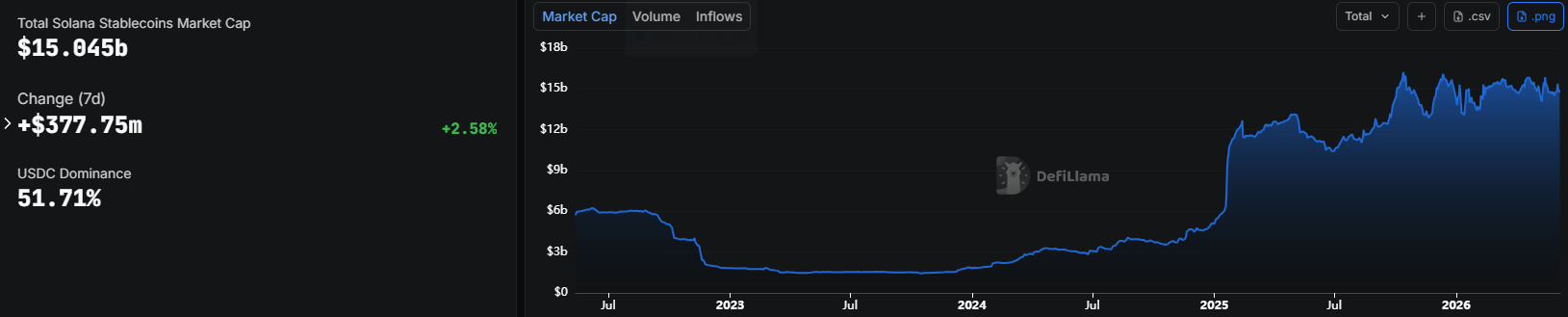
As the chart below shows, Solana’s stablecoin market cap is closing in on its all-time high of $16 billion, with more than $370 million flowing into the network over the past week alone.

USDC now accounts for over 51% of total stablecoin liquidity on Solana, making its recent wave of minting activity difficult to ignore. 

Solana
Source: DeFiLlama

Sure, Ethereum [ETH] still holds the lion’s share of USDC supply at roughly 64%, while Solana accounts for just 10.3%. But the more important metric is where new liquidity is flowing.

Circle recently minted another $500 million worth of USDC on Solana, marking nearly a 6% increase in supply on the network this week alone. In contrast, USDC supply on Ethereum shrank by 1.48% over the same period.

In other words, while Solana remains well behind Ethereum in absolute terms, the latest issuance data suggests fresh capital is choosing Solana as its entry point. That kind of liquidity expansion tends to be a tailwind for on-chain activity, especially when stablecoin growth is outpacing the broader market.

And yet, price action continues to tell a different story.

The SOL/ETH ratio was down nearly 3% this week, while SOL has dropped to multi-month lows, despite its RSI slipping into deeply oversold territory. That raises an important question: Is all this USDC minting actually bullish for Solana [SOL]?

USDC inflows are rising, but conviction in Solana is not 

This divergence between Solana’s technical setup and its on-chain liquidity is becoming difficult to ignore. 

Notably, the market has pointed to Solana’s reliance on memecoin-driven activity for revenue generation, with platforms like Pump.fun often cited as a key example of this speculative engine.

In that context, rising USDC supply may be reflecting more of this short-term trading activity rather than durable capital formation. 

Supporting this view further is Solana’s perpetual activity.

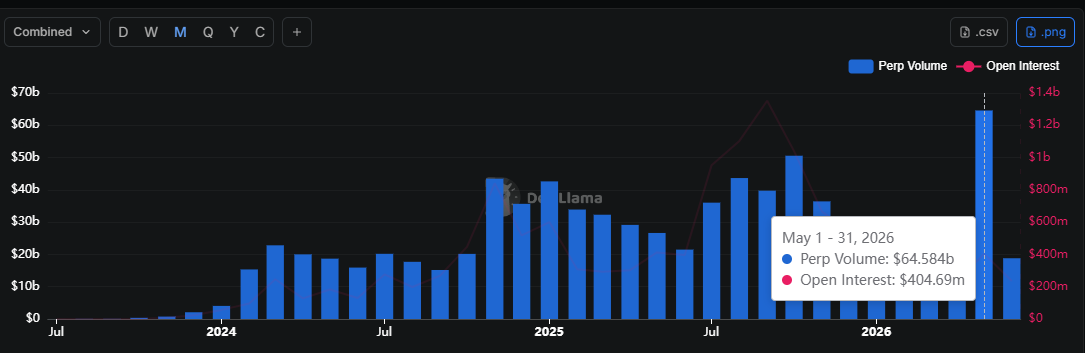
According to data from DeFiLlama, total perp DEX Volume on the network hit a record $64.5 billion in May alone, marking the strongest single-month performance in history. Elevated perp DEX Volumes like this typically point to heightened speculative engagement rather than long-term capital allocation.

SOLSOL
Source: DeFiLlama

Taken together, the mix of memecoin flows and record perp trading activity suggests that a significant portion of Solana’s current liquidity cycle is being driven by speculation rather than structural demand. 

This, in turn, helps explain why USDC inflows may not be as bullish for SOL as they first appear. Instead of signaling strong long-term conviction, the liquidity looks more tied to fast trading and leverage cycles that don’t necessarily translate into sustained price support for the token.


Final Summary

  • USDC is flowing into Solana, but it’s mostly used for trading, not long-term SOL buying.
  • So even with higher liquidity, SOL price strength is still weak, showing low conviction.


Source link

Abra CEO Bill Barhydt sees tokenization overtaking bitcoin price as crypto’s main story

0
Abra CEO Bill Barhydt sees tokenization overtaking bitcoin price as crypto’s main story

Bill Barhydt built Abra around a simple idea: Crypto should function like a bank.

In 2018, Abra became one of the first companies to offer what Barhydt describes as a full crypto banking service, allowing customers to trade, earn, borrow and make payments from a single platform.

Eight years later, as the company prepares to go public through a merger with SPAC New Providence Acquisition Corp. III, he said he believes the industry is entering an entirely new phase.

The deal, announced in March, values Abra at $750 million and will see the combined company renamed Abra Financial Inc., with plans to list on Nasdaq under the ticker ABRX, subject to regulatory approvals.

“The goal is to list this summer, pending SEC approval,” Barhydt told CoinDesk in an interview

Abra Financial

Today, Abra operates as an asset tokenization and distribution platform under its parent company, Abra Financial Holdings.

The distribution side centers on Abra Capital Management, an SEC-registered investment adviser that serves high-net-worth individuals, ultra-high-net-worth clients and institutions. Through the platform, clients can access digital asset investment strategies, yield products, staking and collateralized lending.

AbraFi, the tokenization arm, is focused on creating tokenized financial products on the Solana blockchain in partnership with a decentralized autonomous organization (DAO). Its flagship offering, USDAF, is a yield-bearing dollar-denominated asset that has attracted growing interest from institutions and wealthy investors, according to Barhydt.

The company plans to expand that lineup in coming months with BTCAF, a bitcoin-based yield product that will be available to advisory clients and, outside the U.S., retail investors. Barhydt says investors should expect a growing range of tokenized yield products built around digital assets.

Lending

Lending is a major growth area. Abra already allows clients to borrow against bitcoin , ether (ETH) and solana (SOL) holdings, and Barhydt says the company is investing heavily in expanding its lending capabilities with new products and services.

The broader ambition, he says, is to become the industry’s “killer crypto banking platform,” combining tokenization, custody, yield generation, staking and lending through both proprietary products and third-party offerings.

For Barhydt, however, the bigger opportunity extends beyond crypto-native investors.

Tokenization

Wall Street’s attention is increasingly shifting away from bitcoin price movements and toward the tokenization of real-world assets, according to Barhydt.

In his view, the ability to tokenize assets and make them liquid, transferable and usable as collateral through decentralized finance (DeFi) is a far more consequential development than debates over exchange-traded funds (ETFs) or short-term market cycles.

“Everything is becoming tokenized and liquid via DeFi,” Barhydt says.

That narrative, he says, is resonating with institutional investors because it connects crypto infrastructure to broader financial markets. Anything that can be pledged as collateral in traditional finance can eventually be represented onchain and used in decentralized lending markets.

As Abra works through the final stages of its public listing process, Barhydt sees the company positioned at the intersection of those trends: tokenization, yield generation and digital asset wealth management.

“The next generation of wealth management is onchain,” he says.

Read more: The institutional edge: moomoo targets Wall Street-grade trading tools for retail crypto investors


Source link

Is UWM Holdings Corporation (UWMC) A Good Stock To Buy Now?

0
Is UWM Holdings Corporation (UWMC) A Good Stock To Buy Now?


Is UWMC a good stock to buy? We came across a bearish thesis on UWM Holdings Corporation on Valueinvestorsclub.com by T0YPAJ182. In this article, we will summarize the bears’ thesis on UWMC. UWM Holdings Corporation’s share was trading at $2.9700 as of June 2nd. UWMC’s trailing and forward P/E were 10.03 and 7.00 respectively according to Yahoo Finance.

What Next For Armour Residential REIT (ARR) After Impressive Earnings?

11 Tips to Get Approved for a Mortgage

UWM Holdings Corporation engages in the origination, sale, and servicing residential mortgage lending in the United States. UWMC is portrayed as a mortgage originator increasingly exposed to governance risk, balance sheet strain, and founder-driven financial entanglements that may be impairing strategic decision-making.

Read More: 15 AI Stocks That Are Quietly Making Investors Rich

Read More: Undervalued AI Stock Poised For Massive Gains: 10000% Upside Potential

The investment narrative centers on CEO Mat Ishbia, whose concurrent ownership of the Phoenix Suns and reliance on JP Morgan margin loans collateralized by UWMC shares introduces persistent liquidity pressure that appears to be reflected in accelerating insider sales and constrained corporate flexibility.

Following the termination of the Two Harbors (TWO) acquisition, UWMC loses a potential deleveraging mechanism that would have reduced non-funding debt-to-equity from 2.69x toward covenant comfort levels near 2.0x, leaving the firm exposed to balance sheet volatility. The company’s $0.10 quarterly dividend, maintained despite weakening credit metrics and rising leverage, is increasingly viewed as structurally unsustainable and potentially financed through financial engineering rather than durable free cash flow.

Recent FCCR volatility, with multiple sub-3.0x breaches, underscores sensitivity to housing cycles and the risk that even modest industry downturns could trigger covenant stress. Additional concerns arise from allegations in minority shareholder litigation regarding self-dealing between UWMC and the Suns ecosystem, compounding reputational and governance overhangs.

While bullish scenarios include a housing recovery or mortgage refi cycle that could stabilize earnings, and a potential NBA expansion-related liquidity windfall for Ishbia estimated near $500 million per ownership group by 2027, these are distant and uncertain relative to near-term risks. Absent structural deleveraging or dividend reduction, UWMC appears positioned for continued multiple compression, heightened volatility, and downside skew driven by liquidity constraints.

Previously, we covered a bullish thesis on Rocket Companies, Inc. (RKT) by Unemployed Value Degen in December 2024, which highlighted Rocket’s mortgage FinTech positioning, refinancing optionality and market share expansion potential in the US housing market. RKT’s stock price has depreciated by approximately 1.05% since our coverage. T0YPAJ182 shares a contrarian view but emphasizes UWMC’s governance risk, leverage stress and dividend sustainability concerns versus RKT’s growth-driven setup in the US mortgage sector.

UWM Holdings Corporation is not on our list of the 40 Most Popular Stocks Among Hedge Funds. As per our database, 40 hedge fund portfolios held UWMC at the end of the first quarter which was 46 in the previous quarter. While we acknowledge the risk and potential of UWMC as an investment, our conviction lies in the belief that some AI stocks hold greater promise for delivering higher returns and doing so within a shorter time frame. If you are looking for an AI stock that is more promising than UWMC and that has 10,000% upside potential, check out our report about this cheapest AI stock.

Disclosure: None. 


Source link