Home Blog Page 406

Crypto and stocks go their separate ways as bitcoin’s failed breakout continues to weigh

0
Crypto and stocks go their separate ways as bitcoin's failed breakout continues to weigh

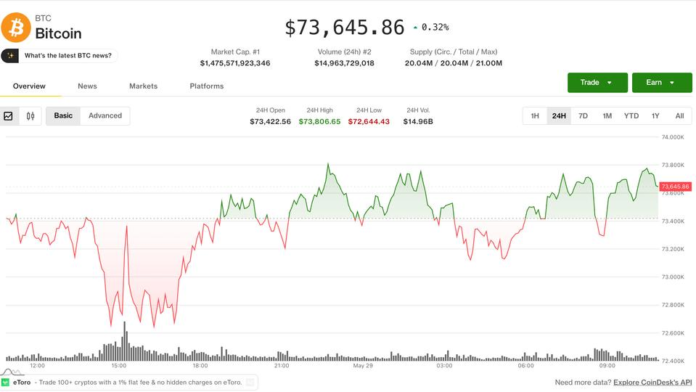
Bitcoin added as much as 0.4% since midnight UTC on Friday and was recently just 0.07% higher after slumping to its lowest level since early April the day before.

Thursday’s drop extended a decline that has emerged over the past three weeks after a failed attempt to climb above $83,000. There is now a chance that the rejection will have contributed to a series of lower highs dating back to October — a key characteristic of a bear market.

Ether (ETH) tracked bitcoin. It fell to $1,965 on Thursday before staging a recovery back above $2,000.

U.S stocks continued to outperform the crypto market on Friday, with S&P 500 and Nasdaq 100 index futures both posting 0.15% gains as the equity gauges approached fresh record highs.

There is no clear explanation why the crypto market is struggling against sectors it has historically been correlated with. The divergence since early October, however, aligns with a leverage wipeout that the market has failed to fully recover from.

Derivatives positioning

  • BTC open interest sits at $20.05 billion, up from $19.7 billion a week ago, with speculative positioning showing slight growth.
  • Funding rates remain positive across multiple venues at under 10% annualized. The exception is Deribit, where they spiked to 44%.
  • The three-month annualized basis pushed closer to 3%, led by Deribit, rising from 2.2% last week, pointing to a mild improvement in institutional risk appetite.
  • Options positioning shows mixed signals: one-week 25-delta skew ticked up to 12.85% from 12.4%, suggesting slightly higher demand for downside protection.
  • Front-end implied vol (DVOL) compressed to about 36 – the lowest since September — while the 1 month–6 month term structure slope sits at -6%, keeping the curve in contango. Markets are pricing near-term calm alongside longer-dated uncertainty.
  • Coinglass data shows $224 million in 24-hour liquidations, with a 54-46 split between longs and shorts. BTC ($46 million) and ETH ($43 million) were the leaders in terms of notional liquidations. The Binance liquidation heatmap indicates $72,280 as a core liquidation level to monitor, in case of a price drop.

Token talk

  • Stellar (XLM) was the top-performing altcoin on Friday, rising by 25% in the past 24 hours and 4.5% since midnight UTC after it was announced that The Depository Trust & Clearing Corporation (DTCC) is planning to connect its tokenized securities platform to the network.
  • There were also double-digit gains for ALGO, INJ, HBAR and HYPE over the past 24 hours as the altcoin market showed strength while the major cryptocurrencies showed weakness.
  • One asset that continued its woeful performance of late was . The token that spawned out of a Bitcoin fork in late 2017 lost 7.2% of its value in the past 24 hours and has now shed 20% in the past week alone.
  • DeFi tokens are also losing their luster, with ENA, JUP and UNI dropping as much as 18% over the past week.
  • CoinMarketCap’s “Altcoin Season” indicator reflected the weakness on Friday, falling to 34/100 from 37/100.



Source link

Super Micro Just Sent a Blunt Message to the AI Server Market

0
Super Micro Just Sent a Blunt Message to the AI Server Market


Super Micro Computer (SMCI) has spent much of 2026 in the penalty box, with investors weighing AI demand against export-control risk and a series of legal headlines. But now the good news just came when Super Micro said it was working with Taiwanese authorities to prevent the illicit diversion of server technology.

Investors liked the news, and shares jumped 8.14% in Thursday’s trading.

More News from Barchart

In its statement, the company said the cooperation led to the arrest of three suspects and the seizure of 50 servers that had been deceptively acquired after being sold to an authorized reseller. But the story is not just about enforcement. It is about Super Micro trying to show tighter control over its channel at a time when its brand has been bruised by smuggling allegations.

The backdrop is still uncomfortable. Reuters reported in May that Taiwanese prosecutors were investigating three people over the alleged illegal export of high-end AI servers made by Super Micro, equipped with Nvidia chips (NVDA), in a scheme that allegedly involved falsified export documents.

Reuters had previously reported in March that U.S. authorities charged three people tied to Super Micro in a smuggling case involving billions of dollars of AI chips.

For Super Micro, the upside of the Taiwan action is reputational as much as operational. If management can show it is actively helping authorities shut down gray-market diversion, that could support customer trust and reduce the chance that one bad channel story becomes a broader indictment of the business. That is an inference, but it is a reasonable one given the centrality supply-chain credibility for an AI server vendor.

The Stock Still Appears Cheap on Paper

SMCI has rallied 55.72% year-to-date (YTD), fueled by booming AI-server demand, strong revenue guidance, Blackwell GPU shipments, and optimism around liquid-cooled AI infrastructure despite compliance and smuggling-related concerns.

Even after the outperformance, SMCI still trades like a stock with plenty of skepticism built in, with a forward price-to-earnings ratio of 18.05 times and a price-to-sales ratio of 0.63 times. Those are low multiples for a company tied to one of the market’s most important growth themes, and they suggest investors are paying more attention to risk than to growth.


Source link

Bitcoin ETFs suffer record 9-day outflow streak as $2.8 billion exits funds

0
Bitcoin ETFs suffer record 9-day outflow streak as $2.8 billion exits funds

U.S. spot bitcoin ETFs have now recorded nine consecutive trading days of net outflows, marking the longest withdrawal streak since the products listed in January 2024. SoSoValue data

Over the nine-session run, investors pulled roughly $2.8 billion from the funds, surpassing any previous period of sustained selling pressure.

U.S. spot bitcoin ETFs have shed approximately $1.3 billion this week, extending a run of three consecutive weeks of net outflows, according to data tracked by SoSoValue. Monthly withdrawals now stand at roughly $2.3 billion.

The outflows have coincided with a sharp decline in bitcoin, which has fallen from roughly $80,000 to $73,000 over the period. However, the broader backdrop extends beyond bitcoin’s own price action. Since the start of the year, bitcoin has lagged many of the market’s best-performing assets, particularly AI-related equities, semiconductor and memory-chip stocks, which have continued to attract capital amid growing enthusiasm around AI infrastructure spending.

Signs of institutional selling have also emerged beneath the surface. BlackRock’s iShares Bitcoin Trust (IBIT) recorded its largest single-day outflow since launch earlier this week, driven largely by a sizeable dark pool transaction. While the precise motivation behind the trade is unknown, the scale of the redemption suggests some investors may be reallocating capital away from bitcoin exposure and toward sectors that have recently generated stronger returns.

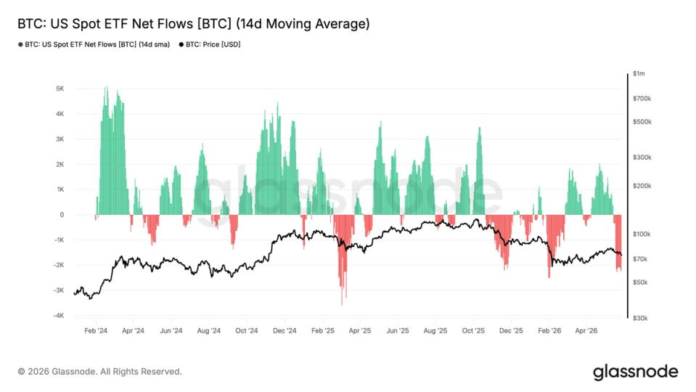
Sustained ETF outflows have often historically coincided with periods of market stress that later developed into local bottoms. Glassnode data shows that the 14-day moving average of ETF flows tends to trough near significant turning points. Similar patterns emerged during the correction in early February, when bitcoin briefly fell toward $60,000, and again in November, when ETF outflows accelerated around bitcoin’s post-all-time-high pullback and local low near $85,000.


Source link

ApeCoin up 11% as GameFi tokens awaken – Will APE hold above $0.13?

0
ApeCoin up 11% as GameFi tokens awaken - Will APE hold above $0.13?


ApeCoin [APE] is up by about 11% in the past 24 hours, outperforming a nearly flat broader crypto market. Different altcoin sectors are gradually returning to last week’s positive gains after retracing for the last three days.

However, the crypto market remains quiet, an alarming signal to the continuation of APE’s rally.

ApeCoin bounces off 80% Fib level

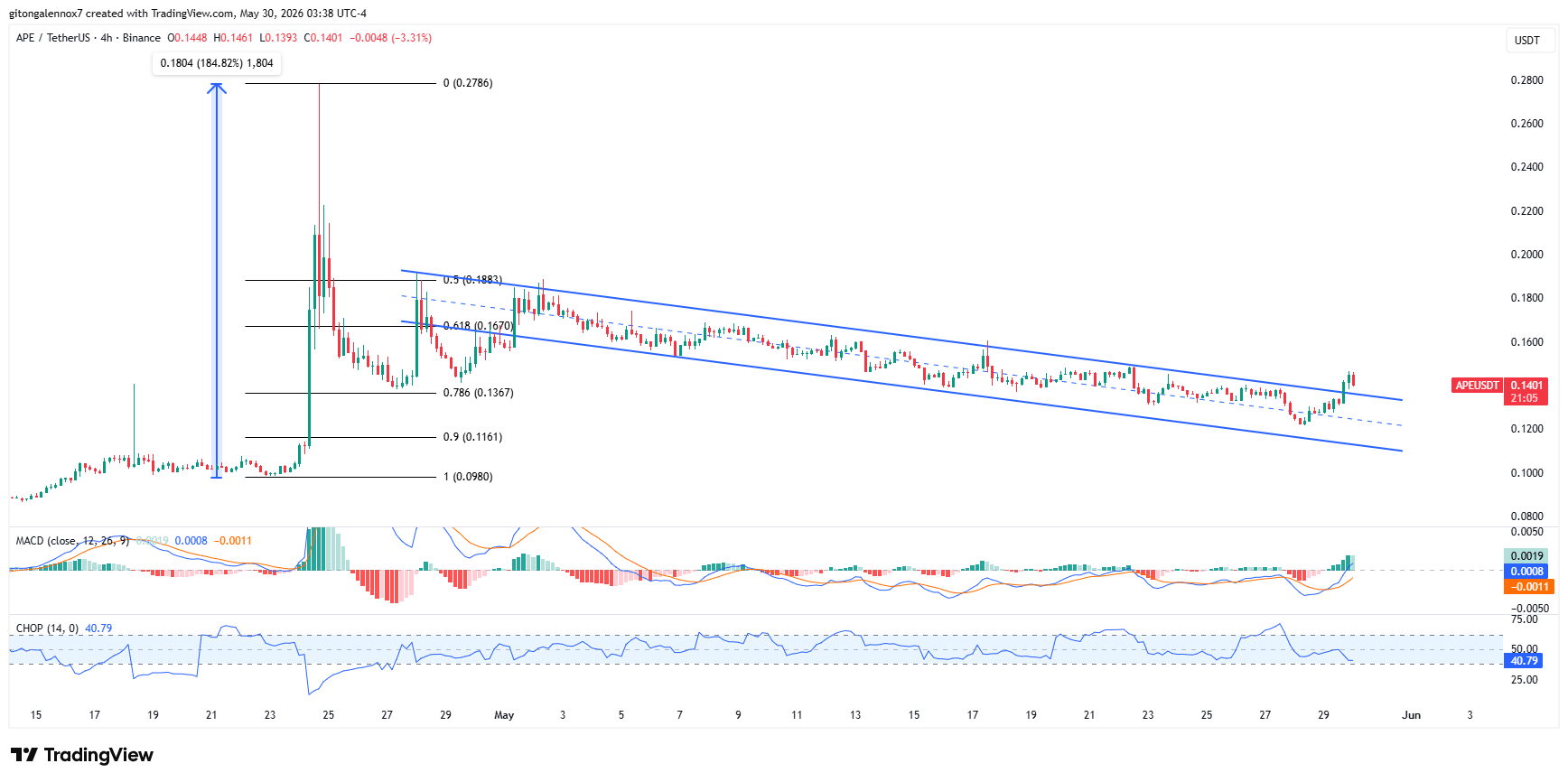
In the last two weeks of April, ApeCoin rallied by more than 184%, reaching a value of $0.2786. Consequently, a massive correction that lasted for more than a month followed. This correction pulled back about 80% of the aforementioned rally.

The MACD bars show that bulls’ strength is increasing, though in the current session it has slowed down. The Choppiness Index (CHOP) at 40 is supporting a potential uptrend.

The upper resistance of the descending channel runs from $0.1903 to $0.1300. To stay bullish, APE bulls need to keep the altcoin above $0.13, and it’s currently approaching it for a retest.

Apecoin APE
Source: APE/USDT on TradingView

Failure to do so may render the breakout invalid. That would see APE drop back to the channel. On the flip side, it may trade back to April highs of $0.2786 or higher.

Volume and transactions surge

Among the key drivers of this rally was the spike in speculative capital. GameFi tokens like Virtuals Protocol [VIRTUAL] recorded double-digit gains in the past two days, with APE among them.

In fact, the daily trading volume jumped by about 145%, reaching $51 million. Moreover, liquidity was present, evident from a turnover ratio of 36.94%.

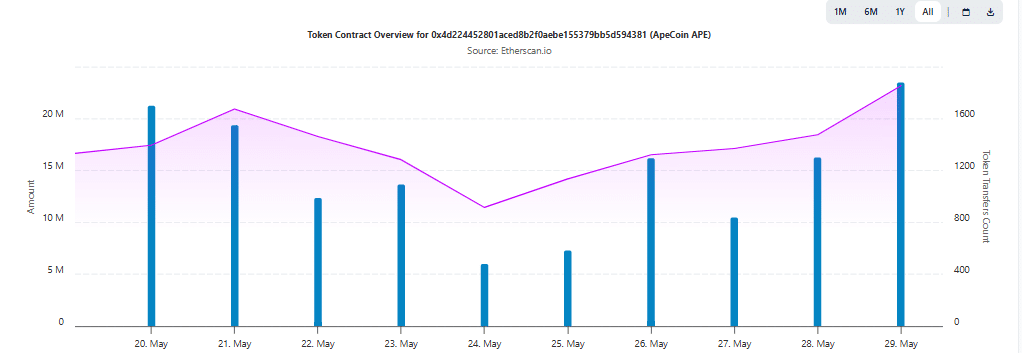
Moreover, the number of daily transfer amounts has been rising over the past five days. This means an increase from 6.027 million APE to 23.468 million tokens, with a total transfer count of 8,074 during this period.

ApecoinApecoin
Source: Etherscan

These factors show strength not only in Apecoin but also in the broader GameFi sector.

Impact of mixed trader activity

However, there is mixed trader activity from both retailers and whales, according to Nansen AI.

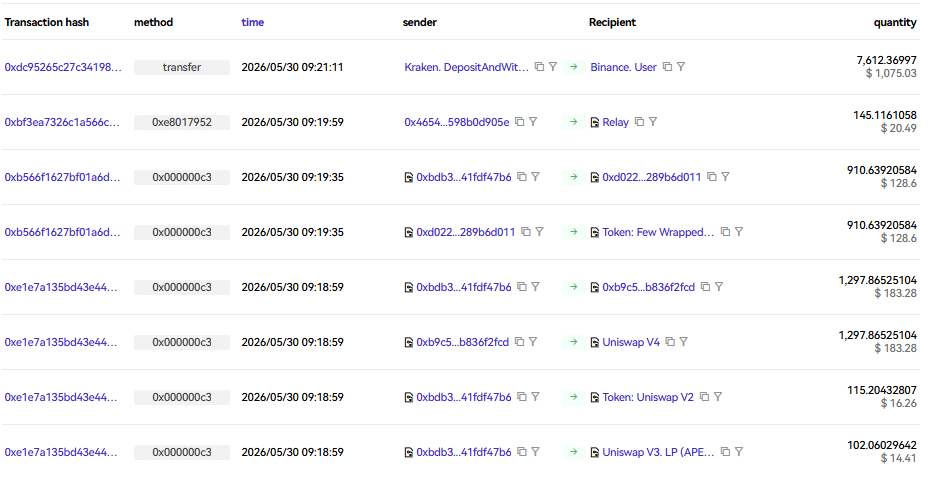
Thousands of APE tokens are being sold while others are being bought. For instance, two users moved 7,612 APE and 11,889 APE to Binance from Kraken.

Some APE tokens are being transferred to liquidity pools and staking, which is bullish for the coin.

APEAPE
Source: Ethereum Browser

Altogether, trader activity was mixed but leaning on the bullish side. Hence, watching how the altcoin’s price reacts around $0.13 would determine the next leg up or down.


Final Summary

  • ApeCoin surged 11% in the past 24 hours, driven by a revival in the GameFi sector over the last two days, along with a spike in trading volume and increased transactions. 
  • APE’s breakout would only hold if the altcoin stayed above $0.13; otherwise, it becomes invalid. 


Source link

Cathie Wood sells $12 million in surging stock

0
Cathie Wood sells $12 million in surging stock


Veteran investor Cathie Wood once again executed one of the hottest trades on Wall Street when she trimmed her holdings in a surging crypto stock to buy a top defense stock.

On May 29, Wood’s investment firm ARK Invest sold 144,218 shares of Robinhood Markets (Nasdaq: HOOD).

Related: Cathie Wood sends strong prediction on Bitcoin

Wood sells $12 million in Robinhood shares

Founded by Stanford classmates Vladimir Tenev and Baiju Bhatt in April 2013, Robinhood is an e-trading platform that has gained immense popularity due to its commission-free offerings of stocks, options, and cryptocurrencies.

The brokerage firm, which went public in July 2021, joined the S&P 500 index in September 2025.

The company’s stock surged more than 11% to hit the intraday high of $94.40 on May 29 after it launched trading-focused AI agents.

The same day, ARK Invest sold more than $12 million worth of HOOD shares.

The firm also sold Teradyne, Inc. (Nasdaq: TER) shares worth $8.88 million and Intercontinental Exchange, Inc. (NYSE: ICE) shares worth $66,000 on May 29.

While Teradyne is a technology company that designs and manufactures automated test equipment (ATE) and advanced robotics, the ICE is a financial services company that operates global trading exchanges such as the New York Stock Exchange (NYSE). Both stocks fell yesterday.

More News:

Wood buys major defense stock

On the other hand, the investment firm bought 252,064 shares of Kratos Defense & Security Solutions, Inc. (Nasdaq: KTOS) worth $16.16 million.

It is a weapons and military manufacturing company whose clients include the U.S. government. The company’s stock fell 1.63% to close at $64.13 on May 29.

Related: Robinhood CFO sells shares amid market downturn

This story was originally published by TheStreet on May 30, 2026, where it first appeared in the MARKETS section. Add TheStreet as a Preferred Source by clicking here.


Source link

SoftBank plans up to €75 billion investment in French AI centers

0
SoftBank plans up to €75 billion investment in French AI centers

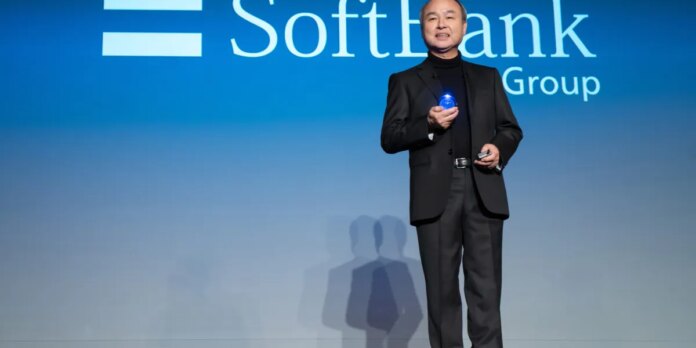
SoftBank Group Corp. plans to invest as much as €75 billion ($87 billion) to build 5 gigawatts of artificial intelligence data center capacity in France, saying the country is poised to become a top European hub for AI infrastructure.  

The first phase comprises an initial €45 billion investment to deliver 3.1 gigawatts of AI data center capacity in the Hauts-de-France region by 2031, SoftBank said Saturday in a statement. 

The commitment, which SoftBank called its biggest AI infrastructure investments in Europe, reflect personal diplomacy between Emmanuel Macron and SoftBank founder Masayoshi Son, who met during the French president’s visit to Japan this year.

Bloomberg has reported that Son floated the idea of SoftBank investing as much as $100 billion in France. The Japanese investor, who was used to fielding similar inquiries from company leaders, was intrigued by an approach made directly by a head of state and started reviewing the matter in earnest.

Read More: SoftBank in Talks for Major Data Center Project in France

“I was very impressed by the fact that Emmanuel Macron is so personally committed to ensuring France’s economic success, even though our investments have so far been concentrated mainly in the US, as well as in Japan and Asia,” French outlet La Tribune cited Son as saying in an interview.

SoftBank’s initial investment plans to deliver data centers in Dunkirk, Bosquel and Bouchain. SoftBank also plans to develop additional sites across France, “reinforcing the country’s role as a leading European hub for next-generation digital infrastructure,” according to the company statement.

Schneider Electric SE said it’s set to be a partner in Dunkirk, with a goal of creating a hub for AI infrastructure and robotics manufacturing at a site well located to serve customers in London, Brussels and Amsterdam,  

Macron and Son are expected to formally announce the investment during the Choose France Summit, an annual gathering of industry leaders to attract investment and promote France’s business appeal.  

The French plan follows SoftBank’s announcement in March to launch a large-scale data center project in Ohio, potentially channeling $500 billion to install 10 gigawatts of capacity. It would be an AI computing complex powered with roughly $33 billion worth of natural gas-fired electricity. 

These undertakings come on top of a $500 billion Stargate initiative that SoftBank is working on in partnership with OpenAI, Oracle Corp. and Abu Dhabi’s MGX to roll out data centers across the US. SoftBank has also committed to investing more than $60 billion in OpenAI for a stake of about 13%. 

The efforts highlight Son’s growing ambitions to secure data center bases in major locations across the globe as AI companies race to acquire sufficient computing power and meet rising demand for their services. For SoftBank, the new ventures may help broaden its sources of AI-related revenue beyond ChatGPT. 

There are questions about whether Son can tap enough financing to realize all of his AI ambitions. SoftBank scaled back plans for a $10 billion margin loan backed by the OpenAI stake after facing hesitation from some creditors, Bloomberg reported. The Japanese conglomerate and bankers helping it seek the loan have mentioned targeting an amount as low as $6 billion.

Macron has been an outspoken proponent of countries beyond the US and China building their own AI infrastructure, championing the idea of sovereign AI and investment in local players such as Mistral AI so nations can control their data and technology.


Source link

Binance aims for 3 billion users by 2030 amid a market it says is going through hard times

0
Binance aims for 3 billion users by 2030 amid a market it says is going through hard times

The crypto market is struggling, competitors are either passing through hard times or pivoting to other areas, while Binance is building with eyes on increasing its active user base ten-fold to 3 billion by 2030, Catherine Chen, the head of VIP and Institutional told CoinDesk in an interview.

“It is true, the market is going through a hard time,” Chen said. “There is still some regulatory development, we are seeing some of our competitors either struggling or perhaps shifting their focus.”

Coinbase, for example, recently reduced its workforce by 14% or nearly 700 staffers, citing negative market conditions as well as AI challenges, part of a wave of crypto employee layoffs this year.

As BTC faces resistance to reclaim the psychological six-figure mark over $100,000, a level it has not seen since mid-November, the broader market seeks sustainable growth drivers beyond retail speculation. The total crypto market capitalization was hovering around the $2.7 trillion mark, down by nearly 40% from its all-time-high of $4.38 trillion before the October Flash Crash, from which bitcoin has not recovered.

Chen said Binance’s position remains robust despite the market downturn, noting the exchange currently serves more than 310 million active users. She emphasized these are “actual active individual users,” verified through stringent KYC and corporate KYB protocols, not just “registered” accounts, she clarified. Binance is considered the largest crypto exchange in the world, dominating in the market in trading volume and registered users. Coingecko ranks Binance second with daily trading volume averaging roughly $7 billion.

Bridging the $2 billion institution spending gap

Chen speaks of a digital asset market that is growing so significantly and with such enormous potential, that only collaboration between traditional finance (TradFi) and native cryptocurrency will see both sides emerge winners in the future.

Binance is going after the massive spending disparity between traditional and digital asset desks, Chen said. She noted that TradFi spends north of $2 billion annually on advanced Order Management Systems (OMS). In crypto, infrastructure spend is less than a tenth of that, sitting at around $185 million.

Binance’s newOMS tool kit is designed to bridge this exact gap, partnering with industry mainstays like Coin Metrics, Talos and 3Commas to provide institutional-grade flow analytics, Chen said.

“Financial institutions are increasingly merging with crypto exchanges and blockchain infrastructure providers,” said Chen. “They don’t want to be building all that infrastructure themselves.”

Pledging Wall Street assets on crypto rails

This convergence has moved past theoretical trading and into the core plumbing of institutional custody. So, while the market watches retail trends, Chen noted, Binance has rolled out an institutional “triparty” banking framework designed to alleviate the ultimate TradFi pain point that is counterparty risk.

Institutional clients do not want to custody crypto directly nor do they want to leave their capital on an exchange, Chen added. Instead, they want to custody fiat or fiat-equivalents with their existing banking partners.

To solve this problem, Binance has silently integrated with sovereign-grade asset management, Chen stated, adding that the crypto exchange now accepts tokenized money market funds from institutional giants BlackRock and Franklin Templeton as eligible triparty ecosystems.

Instead of manually rolling Treasury futures and incurring heavy administrative fees, institutional traders can now pledge real-time, yield-bearing tokenized shares to back their trading operations.

“Whether it is equities, treasury, or debt, this is the way forward,” Chen notes, pointing to a 12-to-18-month horizon where real-world asset (RWA) tokenization matures rapidly. “People have finally figured out that you don’t magically change the fundamental characteristics or price of an asset by tokenizing it. It is fundamentally an improved form to ensure better accessibility.”

Binance also recently rolled out its Crypto-as-a-Service (CaaS) platform designed exclusively for financial institutions seeking to get involved in the digital asset sector in September of last year, Chen recalled. Since then, she added, over 15 major financial institutions have sought their services.

“Whenever the market is bad, it is always the best time for us to build,” Chen says. “We are building and positioning ourselves to 10x our user base when people aren’t noticing—and then, hopefully, we are already there.”


Source link