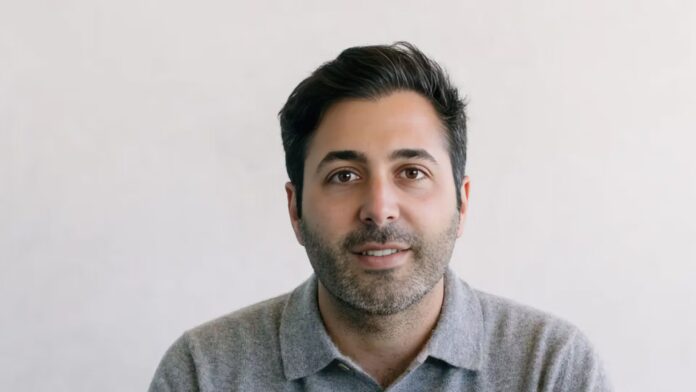
Justin Mateen, a director of the board at American Bitcoin (ABTC), the mining company backed by U.S. President Donald Trump’s family, purchased nearly $1.93 million worth of the company’s stock over two consecutive trading sessions this week, following the company’s latest earnings report.
According to regulatory filings, Mateen bought about 145,000 Class A shares on Aug. 5 for roughly $925,000 at an average price of $6.40 per share. He followed that with the purchase of about 162,000 shares on Aug. 6 for approximately $1 million at an average price of $6.19 per share.
Combined, the purchases amounted to 306,981 shares for approximately $1.93 million.
Following the transactions, Mateen beneficially owns 492,297 shares of American Bitcoin’s Class A common stock, reflecting adjustments made after the company’s recent reverse stock split.
Mateen is a co-founder of Tinder and an ABTC board member since March 2025.
Ondo Finance‘s derivatives platform has raced past $7 billion in cumulative trading volume, according to data from analytics site DefiLlama, a fast climb for a product that only recently opened to the public.
DefiLlama’s figures put Ondo Perps at about $7.03 billion in cumulative perpetuals volume, with roughly $200 million traded in the past 24 hours and around $69 million in open interest, the total value of positions currently held on the platform.
The platform’s volume has risen steeply since the spring, DefiLlama’s chart shows, with the sharpest gains coming in the weeks through early August.
According to Ondo, more than $5 billion of that total has been traded since public access went live, which the company says tops any other real-world-asset perps platform in its first month, citing the same DefiLlama data. Ondo called it the fastest start in the category’s history.
What Ondo Perps is
Ondo Finance is a tokenization company, taking traditional assets like stocks, indices, and commodities and issuing them as tokens that can be traded on a blockchain.
Most Popular on TheStreet Roundtable:
Ondo Perps, built for non-U.S. traders, is its platform for perpetual futures, crypto derivatives that let traders bet on an asset’s price with no expiry date, offering up to 20x leverage and 24/7 trading.
The feature behind the numbers
Much of Ondo’s pitch rests on how the platform handles collateral.
Rather than requiring cash or stablecoins to back positions, Ondo Perps lets traders post tokenized stocks and other assets directly as margin, keeping their holdings working instead of selling them or parking money elsewhere. Ondo calls this its “productive capital” approach.
The company said the milestones mark only the beginning, with more markets and features to come.
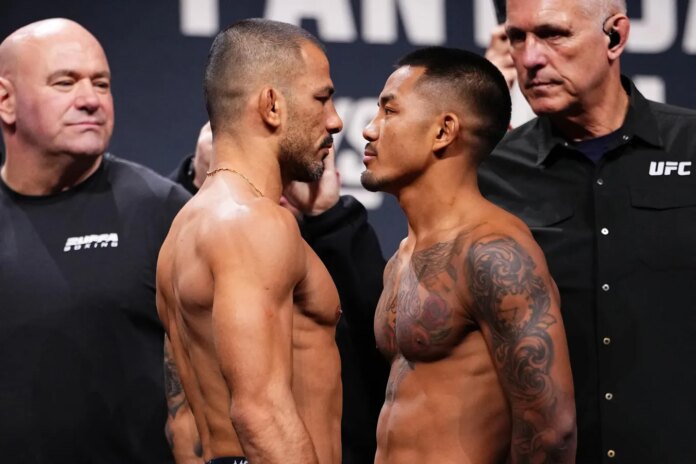
LAS VEGAS, NEVADA – DECEMBER 05: (L-R) Opponents Alexandre Pantoja of Brazil and Joshua Van of Myanmar face off during the UFC 323 ceremonial weigh-in at T-Mobile Arena on December 05, 2025 in Las Vegas, Nevada. (Photo by Jeff Bottari/Zuffa LLC)
Zuffa LLC
A title fight and a possible title eliminator headline the UFC 331 fight card. The UFC recently announced the full 13-fight bout list for the fight promotion’s return to Crypto.com Arena on Saturday, September 19.
In the UFC 331 main event, current flyweight champion Joshua Van puts his title on the line against the man he defeated for that crown, Alexandre Pantoja. Meanwhile, in the co-main event, Arman Tsarukyan meets Mauricio Ruffy in what could be a lightweight title eliminator, with the victor moving on to face champion Justin Gaethje.
UFC 331 Full Fight Card
UFC 331 Main Card
Joshua Van vs. Alexandre Pantoja Arman Tsarukyan vs. Maurício Ruffy Patrício Pitbull vs. Choi Doo-ho Renato Moicano vs. Brian Ortega Alonzo Menifield vs. Iwo Baraniewski
UFC 331 Preliminary Card
Gable Steveson vs. Sean Sharaf Marlon Vera vs. Charles Jourdain Tai Tuivasa vs. Robelis Despaigne Edmen Shahbazyan vs. Brunno Ferreira
UFC 331 Early Prelims Card
Giga Chikadze vs. Joanderson Brito Casey O’Neill vs. Eduarda Moura Ryan Gandra vs. Osman Diaz Michael Aswell Jr. vs. Yoo Joo-sang
*Fight card subject to change
UFC 331 Main Event: Joshua Van vs. Alexandre Pantoja 2
Van (17-2) and Pantoja (30-6) faced off at UFC 323 in December. The bout lasted just 26 seconds, as an injury to Pantoja’s left arm as he fell to the mat left him unable to continue. The TKO loss ended Pantoja’s title run after four successful defenses. He initially won the UFC’s 125-pound crown in July 2023 with a split-decision win over Brandon Moreno. Pantoja’s title defense wins came against Brandon Royval (decision), Kai Asakura (submission), and Kai Kara-France (submission).
Van is coming off a May title defense win over Tatsuro Taira. That fight ended via TKO in the fifth round.
UFC 331 Co-Main Event: Arman Tsarukyan vs. Maurício Ruffy
The co-main event of UFC 331 is scheduled for five rounds, which should give fight fans some indication that the promotion is treating the matchup between Tsarukyan (23-3) and Ruffy (14-2) as something special.
Tsarukyan was scheduled to face Islam Makhachev in a title fight at UFC 311 at Crypto.com Arena, but was forced from that event on weigh-in day. Tsarukyan has fought once since then, beating Dan Hooker via submission in November.
Ruffy is coming off a June TKO victory over Michael Chandler at the White House in June.
We will have more on UFC 331 as fight night approaches.
Trump Media (DJT) is unwinding parts of its crypto push, including scrapping plans to establish a publicly traded CRO token accumulation company, which it unveiled near the height of last year’s digital asset treasury boom.
Trump Media, Crypto.com and special purpose acquisition company Yorkville Acquisition mutually terminated plans for Trump Media Group CRO Strategy, the firms said Friday, citing “prevailing market conditions, and shifting business and stakeholder priorities.”
The proposed venture would have created a publicly traded company focused on accumulating the native token of Cronos CRO$0.05095 and earning additional returns by staking those holdings. Trump Media itself bought $105 million of CRO in September 2025 as part of a broader partnership with Crypto.com that included plans to integrate token rewards into its products.
CRO fell as much as 5% following the news.
The companies are also walking away from a separate partnership under which Crypto.com would have serviced certain planned exchange-traded funds (ETFs), from Yorkville America. Trump Media is also scaling back plans to build Crypto.com-powered prediction markets directly into Truth Social, Axios reported earlier.
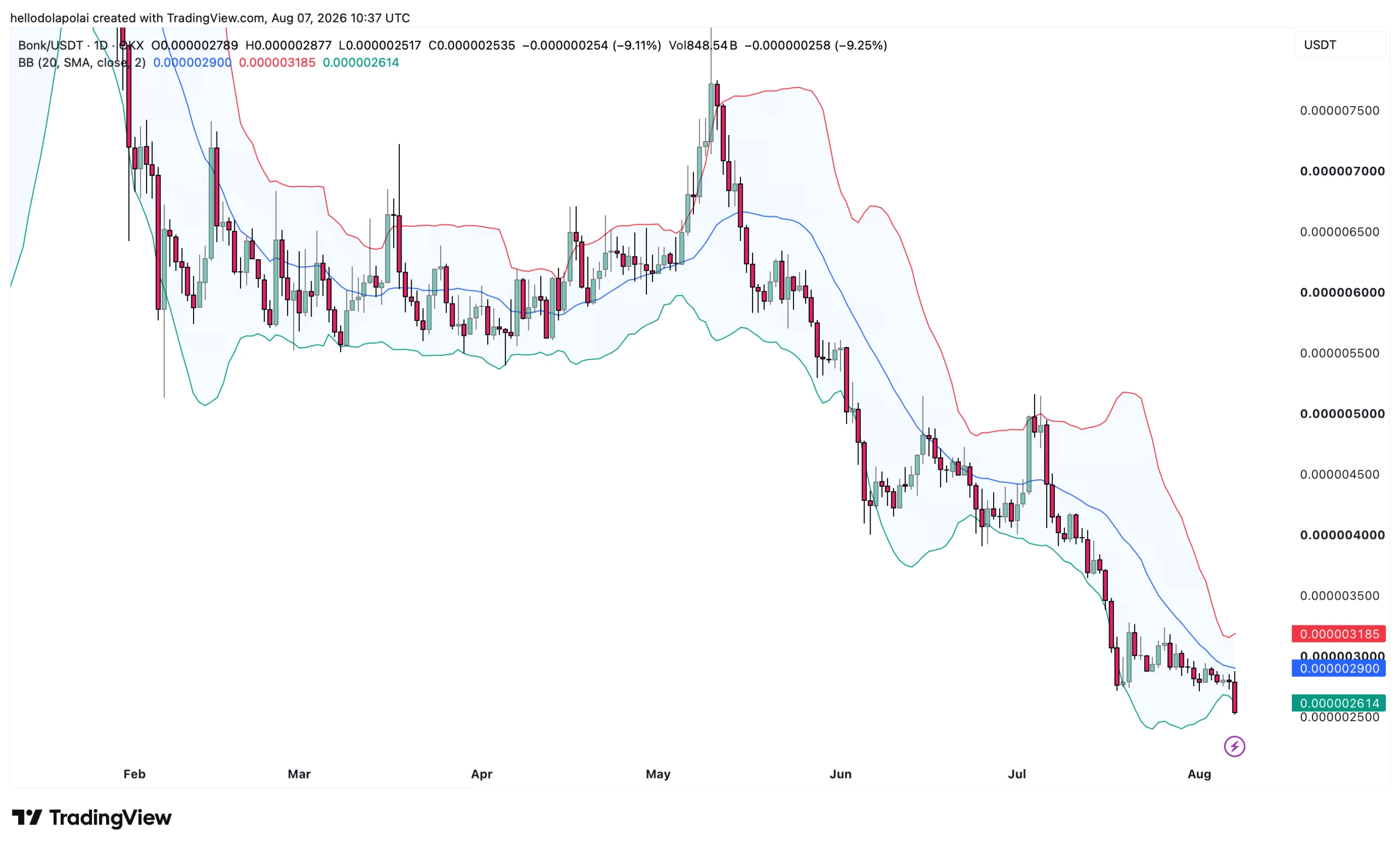
BONK remains the only memecoin among the top 10 losers within the top 150 cryptocurrencies by market capitalization.
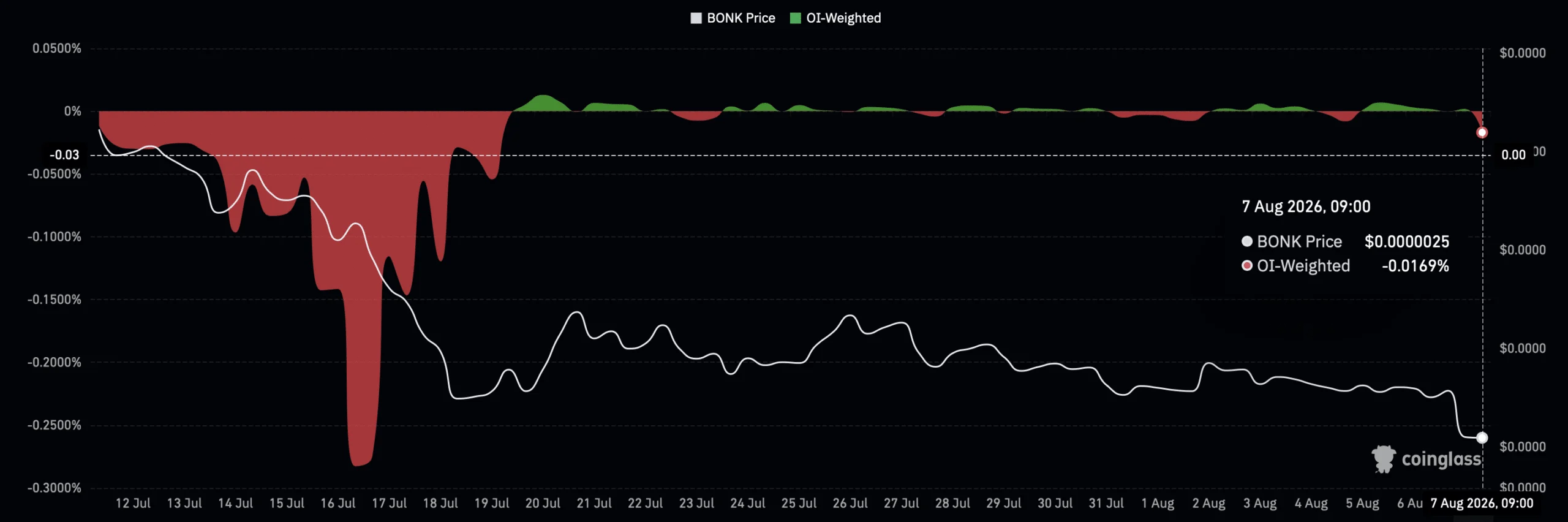
The token has fallen roughly 10% over the past 24 hours, hitting fresh all-time lows across major centralized exchanges, including Binance and OKX. Like most memecoins, BONK has struggled for much of the year.
The asset is down 66% on a year-to-date basis and has lost 39% over the past 30 days. With selling pressure continuing to build, those losses could deepen further if bearish momentum persists.
BONK perpetual traders lean into the fresh low
Perpetual traders sold into BONK’s fresh low, increasing their short exposure as the price declined.
The funding rate— which measures which side of an asset’s perpetual market dominates—confirmed the short control as it fell to a negative 0.0169%.
The reading marked a notable increase in short positioning, even as the capital in the perpetual market dropped to $5.3 million at the time of reporting.
Source: CoinGlass
Volume, meanwhile, continued to climb with CoinMarketCap reporting a surge of over 200% to $69.07 million across the market.
Rising volume alongside a falling price often signals growing momentum among sellers and points to the bearish trend extending along its current path.
Sellers may be nearing exhaustion
Technical analysis of BONK suggests sellers could soon exhaust their momentum.
The signal follows BONK’s price plunging to the lower green band of the Bollinger Bands. The indicator maps periods of overvaluation and undervaluation through its upper red band and lower green band respectively.
Source: TradingView
Trading at the lower Bollinger Band does not confirm an imminent rebound. However, it suggests that the BONK may be approaching oversold conditions, where selling pressure could begin to ease and buyers may step in.
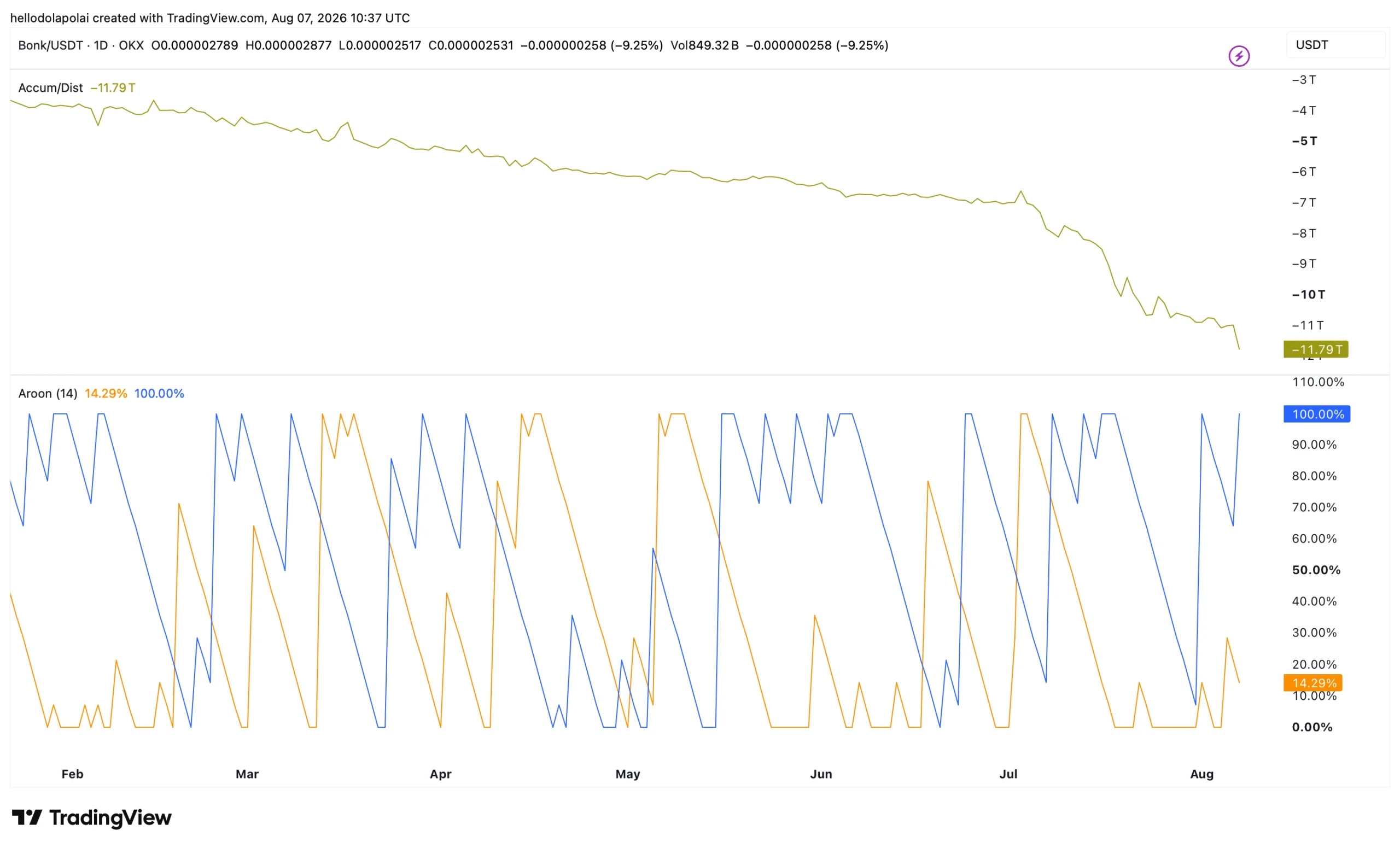
On the other hand, the Accumulation/Distribution (A/D) indicator, a volume-weighted metric, suggests that distribution of BONK continues. The indicator has fallen to -11 trillion BONK and remains on a downward trajectory, signaling sustained selling pressure and capital outflows from the market.
Source: TradingView
The Aroon indicator adds to the case, tying momentum to the bears as the Aroon Down line (blue) hit 100% while the Aroon Up line (orange) trended even lower to 14.29%.
BONK investor sentiment turns sharply bearish
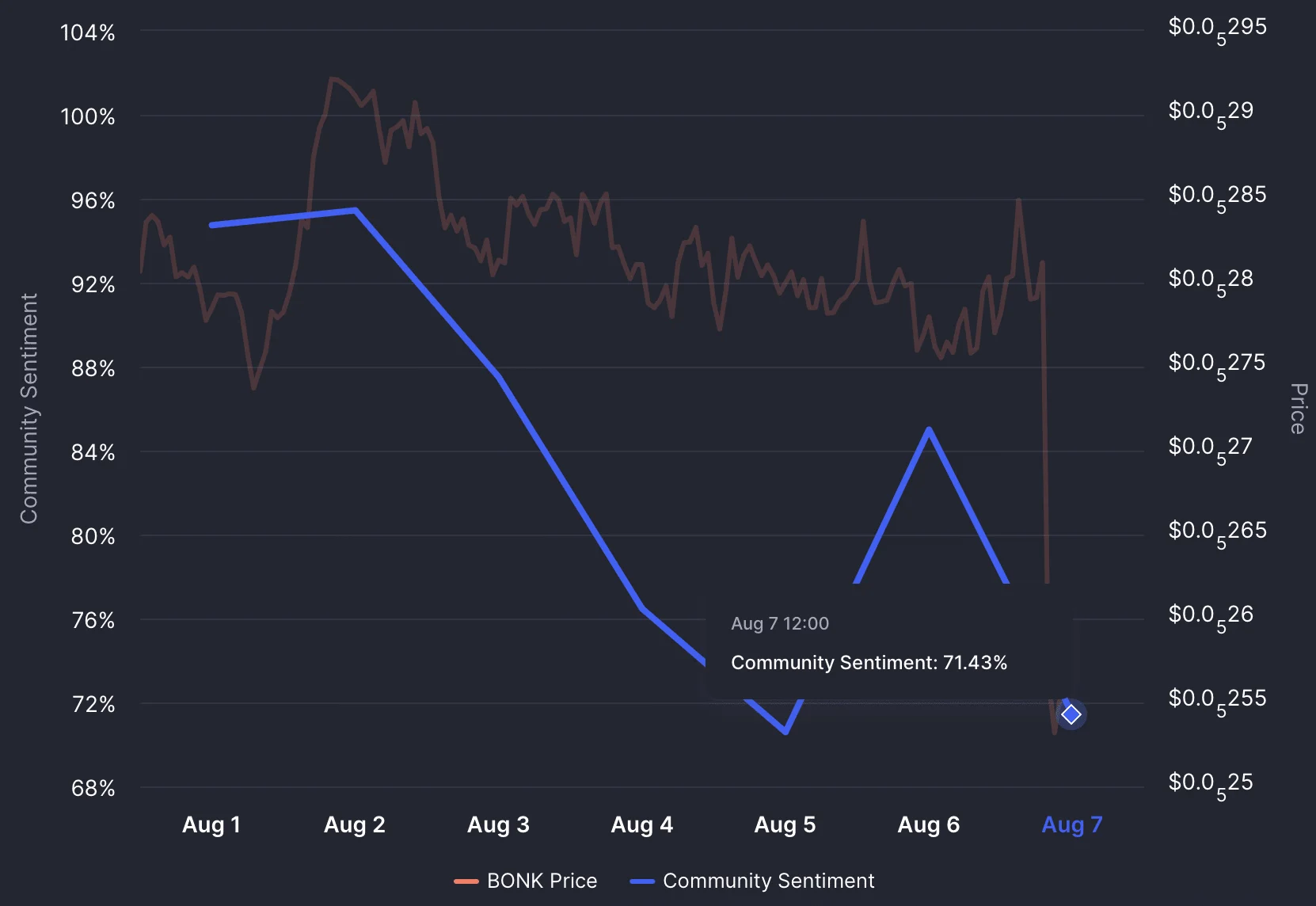
The community sentiment indicator for BONK points to a sharp rise in bearish perception around the token.
Consensus on whether BONK is bullish has weakened, with the reading falling to 71% from 85%. Sentiment itself dropped to a negative 3.33, while mindshare rose to 3,410 posts across social media.
Source: CoinMarketCap
Rising mindshare while the price stays firmly bearish can add fuel to the selling pressure already weighing on BONK.
Final Summary
BONK fell to fresh all-time lows across Binance and OKX, with a negative funding rate of -0.0169% and rising short exposure confirming seller control.
Volume surged over 200% to $69.07 million, coinciding with growing sell pressure as the Aroon and Accumulation/Distribution indicators point to more downside.
The S&P 500 has had a strong 2026. Most of the gains have come from the same group of technology and AI stocks that have been driving the market for two years. One portfolio manager just decided to look somewhere else.
Chris Versace, portfolio manager of the TheStreet Pro Portfolio, initiated two new positions on Aug. 5, adding the Health Care Select Sector SPDR ETF (XLV) and the Robo Global Robotics and Automation Index ETF (ROBO).
The moves follow the portfolio’s existing cybersecurity strategy and extend its exposure into two additional end markets Versace says he expects to grow over multiple years.
What Versace bought and how he sized the positions
The Pro Portfolio bought 395 shares of XLV at or near $164. That stake represents roughly 1% of total portfolio assets. It also bought 575 shares of ROBO at or near $84.50, coming in at about 0.75% of assets.
Versace gave both new positions an initial rating of Two. The market has had a strong run recently, and the Two ratings reflect that caution.
Versace said both positions will be built up over time, using pullbacks to add shares rather than buying everything at once.
He has done this before. The portfolio used the same approach to build its stake in the First Trust Nasdaq Cybersecurity ETF (CIBR). Start small, watch how things develop, and add more when the setup looks better.
Initial price targets are $180 for XLV and $95 for ROBO. From the entry prices, that is roughly 10% upside on XLV and about 12% on ROBO. The portfolio also set checkpoint levels at $144 for XLV and $70 for ROBO.
If either ETF falls to those levels, Versace will take another look at the position. Selling is not automatic at those prices, but a review is.
Why Versace is buying healthcare now through XLV
XLV tracks the Health Care Select Sector Index. It covers pharmaceuticals, biotechnology, medical devices, healthcare providers, and life sciences.
The fund manages more than $41 billion in assets across 63 companies. The top 10 positions make up about 62% of the fund. The biggest names inside it include Eli Lilly, Johnson & Johnson, AbbVie, Merck, and Amgen, per State Street.
In its Q3 2026 outlook, State Street upgraded healthcare from neutral to positive after nearly a year of caution, a signal that the fund’s own issuer sees improving conditions ahead.
Versace said the portfolio had already been looking at the healthcare sector before pulling the trigger on XLV. Going the ETF route rather than picking one stock gives the portfolio broad exposure without betting everything on one company’s drug pipeline, regulatory decision, or earnings report.
He said the portfolio may eventually mix XLV with an individual healthcare stock or just build the ETF position bigger, depending on how things develop.
The longer-term case for healthcare is not complicated. The U.S. population is getting older. Older people use more healthcare. That demand is not going away.
Healthcare has also lagged large-cap technology over the past two years, which is part of what makes the entry point interesting now.
The robotics and automation thesis behind ROBO
ROBO targets companies involved in robotics, automation, artificial intelligence applications, and the industrial technologies that support them.
Versace said the robotics market opportunity is becoming too big to ignore, and the portfolio is seeing a growing number of signals for automation investment across multiple industries. ROBO Global reports the ETF has delivered an annualized return of 8.64% since its launch in January 2014.
Robotics is not just a factory story anymore. Automation is expanding in logistics, healthcare, manufacturing, defense, and agriculture. A lot of those industries are dealing with labor shortages and pressure to cut costs.
Versace also cited the One Big Beautiful Bill’s depreciation provisions as a near-term boost. Companies that invest in automation and equipment can write off more of that spending under the new rules, which makes the investment more attractive.
ROBO also connects to themes already present in the portfolio. Versace said the markets ROBO covers will drive additional demand for compute and networking, similar to the demand the portfolio expects from autonomous vehicles.
That linkage extends the AI and technology thesis into industrial deployment rather than just infrastructure spending.
The robotics trade is more sensitive to valuation and capital spending cycles than the healthcare trade. Companies in ROBO can fall sharply when customers delay investment or investors rotate away from higher-growth themes.
That is part of why the initial position is smaller at 0.75% of assets compared with 1% for XLV.
Versace said both positions will be built up over time, using pullbacks to add shares rather than buying everything at once.Michael M. Santiago / Getty Images
What could move both positions from here
Versace said he plans to revisit both price targets as Wall Street analysts update their numbers on the major underlying holdings during earnings season.
A strong quarter from Eli Lilly or AbbVie could push the XLV target higher. Better capital spending data or more clarity on automation policy could do the same for ROBO.
Both positions could also get a boost if money starts rotating out of the biggest technology stocks and into healthcare and industrial names. Falling rates would help ROBO in particular, since lower borrowing costs tend to lift valuations on growth-oriented names.
The checkpoint levels are there if things go the other way. A drop toward $144 on XLV or $70 on ROBO would trigger a review. Versace would look at whether the reasons for buying still make sense. If they do, the lower price could be a chance to add more shares. If they do not, the portfolio walks away.
Versace was clear that these are not trading positions. The plan is to hold both over a longer time horizon and build exposure as the opportunities come.
At less than 2% of the portfolio combined, the initial bets are sized to leave plenty of room to be wrong and still adjust.
Additionally, the OFAC also sanctioned a network of foreign exchange houses, shell companies and individuals on Friday that it said helped Iran’s shadow banking system move hundreds of millions of dollars, including funds tied to overseas oil sales.
“The Iranian regime’s reliance on digital assets and shadow banking networks is further evidence that Economic Fury is working,” Treasury Secretary Scott Bessent said in a statement. “Whether in dollars, rials, or crypto, Treasury will hunt down and dismantle the illicit financial networks that keep the regime afloat.”
The designations came as the U.S.-Iran war has raised the stakes of Washington’s push to cut Tehran off from foreign currency and global financial markets. Cryptocurrencies may offer sanctioned entities another route to move funds when banks cut them off, but blockchain transactions can also leave a public trail that investigators and analytics firms can follow.
Friday’s action is the latest in a string of U.S. measures against Iran’s crypto finance network.
In January, the Treasury sanctioned Zedcex and Zedxion, the first crypto exchanges targeted under its Iran-specific financial sanctions. In June, the Treasury blacklisted Nobitex and several other Iranian crypto exchanges as part of its campaign against Tehran.
Last month, the U.S. sanctioned four crypto wallets linked to Iran’s central bank, after which Tether, issuer of the largest stablecoin USDT USDT$0.9993, froze about $131 million held in the wallets. It also sanctioned two Iranian maritime insurance entities over an alleged scheme that funneled funds to the IRGC.