Thursday, June 18, 2026
Home Blog Page 114

Time To Gauge Jump To MLB For Athletics’ Prospect Gage Jump

0
Time To Gauge Jump To MLB For Athletics’ Prospect Gage Jump


Gage Jump is scheduled to make the jump to an MLB mound tonight for the Athletics. The 23-year-old left-hander was called up from Triple-A Las Vegas to face the Seattle Mariners in Sacramento.

Here’s a suggestion for the rookie’s first pitch at Sutter Health Park: play Van Halen’s hit record “Jump”. Get all the fans singing, “Go ahead, Jump!”

The Athletics believe the hard thrower is ready for such a leap. He struck out 56 in 38 innings over nine starts for Las Vegas with a 4.50 ERA and 0-2 record.

What Athletics manager Mark Kotsay saw with his own eyes in spring training was more important than any numbers on a sheet of paper.

“Today, if you really dissect it and look at fastball command, the consistency of landing pitches in the zone, that’s the final touch,” Kotsay told Martin Gallegos of MLB.com in March after Jump had a good outing against the Cincinnati Reds. “He’s figuring that out, and we’re going to work on that. That’s kind of the last polish for him. He’s got the weapons to pitch in the big leagues. Really impressive. Hard not to like, right?”

A month earlier, in workouts prior to spring games, Kotsay told Gallegos’ that Jump’s preparation and eagerness to learn were impressive, too.

“He knows what he wants to do,” Kotsay said. “He’s very advanced in terms of preparation and knowledge of what he feels like he does well. It’s great to see a young pitcher have an understanding of his abilities.”

Why Is Jump Highly Ranked?

MLB Pipeline ranked Jump as the Athletics’ No. 3 prospect behind 19-year-old shortstop wonder Leo De Vries and 22-year-old lefty Jamie Arnold, picked No. 11 overall in 2024. Jump was No. 41 overall in MLB.com’s preseason rankings.

He pitched in the 2025 All-Stars Futures Game. The 6-foot, 200-pounder went 4-1 with a 2.32 ERA, 45 strikeouts and only 5 walks at High-A Lansing (MI) last year, then was promoted to Double-A Midland (TX). That was more challenging: 5-6, 3.64 ERA, 86 strikeouts, 29 walks.

Jump showcased his upper-90s fastball in 2026 spring training. The Athletics sent him to Las Vegas and basically said show us some other stuff. They wanted him to master a changeup that would make the heater even more devastating.

He hasn’t truly mastered any one pitch, but has utilized a nice mix thus far in 2026. His best outing came a week ago when he fanned nine without a walk over seven scoreless innings.

The fastball has averaged 96 mph and produced a 31% swing and-miss rate according to Synergy Sports Technology. He’s throwing more sliders and curves while mixing in the changeup and an occasional sweeper. They all come from a low arm angle, adding depth and deception.

Collegiate Rollercoaster

Jump was highly recruited in high school, where he was ranked the No. 1 left-hander and No. 5 prospect overall in pitching-rich California. That was at JSerra Catholic in San Juan Capistrano. Current big leaguers Royce Lewis of the Minnesota Twins and Austin Hedges of the Cleveland Guardians preceded him there.

The San Diego Padres picked him in the 18th round of the 2021 MLB Draft. Many teams were interested, but he dropped in the draft as they figured he would honor his collegiate commitment to UCLA. He did.

He had a lukewarm freshman year, pitching only 16 1/3 innings across seven outings, including three starts. He struck out 22 and had a 1-1 record and 3.86 ERA. Important to Jump was making the Director’s Academic Honor Roll for the fall, winter, and spring quarters.

Turns out, that was the best he could do on the mound for the Bruins. He missed the entire 2023 season after having Tommy John surgery and transferred to Louisiana State, where coach Jay Johnson had recruited him hard in high school.

“I just wanted to be in the SEC (Southeastern Conference),” Jump told reporters in January of 2024. He also said he was worried about the future of the PAC-12 Conference.

He was right. UCLA and three other schools soon bolted for the Big Ten; Arizona State and three others went to the Big 12; Stanford and California to the Atlantic Coast Conference.

Jump came back from the layoff better than ever, going 6-2 with a 3.47 ERA and fanning 101 over 83 innings, walking only 22.

The Athletics drafted him in the second round that summer, No. 73 overall, and signed him for $2 million. That was more than 14 of the 15 picks immediately ahead of him got.

In Good Company

When he throws his first pitch tonight against the Seattle Mariners, Jump will become the 77th of 239 players drafted from LSU to play MLB ball.

The list includes right-hander Paul Skenes of the Pittsburgh Pirates, picked No. 1 overall in 2023, former slugger Albert Belle and current Chicago Cubs third baseman Alex Bregman and right-handers Kevin Gausman of the Toronto Blue Jays and Aaron Nola of the Philadelphia Phillies.

LSU has had at least one former player make an MLB debut in of 32 of the past 36 seasons.

Overall, 103 MLB players went to LSU. Among stars at the school who found pro success before the MLB Draft began in 1965 were shortstop Alvin Dark (1946-60), first baseman Joe Adcock (1950-66) and right-hander Bill Lee (1934-47) whose 29 shutouts. 169 wins and 182 complete games are the most in MLB by a Tigers alum.

Gage Jump’s Future With Athletics

Jump has pitched only 150 2/3 innings in the minors and is hardly a finished product. This opportunity came up when veteran Aaron Civale went on the injured list with tendinitis in his right shoulder.

The organization is banking on Jump’s intellect as much as his physical ability, reasoning that he should not be overwhelmed. He’ll need to throw quality strikes, however, something that was a bit of a concern at Las Vegas.

In 38 innings, he walked 20. That’s way too many and dampens his 56 strikeouts and only 36 hits allowed.

Even the greatest leapers in sports from Michael Jordan, LeBron James and Olympian Bob Beamon will tell you that sometimes when you take a big jump, you fall – but it’s how you get up and proceed that gets you to your goal.

Gage Jump probably has jumped to the Athletics a little quicker than expected. Then again, maybe he’ll turn the decision into a slam dunk all the way.


Source link

Jim Cramer Can’t Help But Be Impressed By Target (TGT)

0
Jim Cramer Can’t Help But Be Impressed By Target (TGT)


We recently published

Jim Cramer Took A Side On Biggest AI Debate & Discussed These 13 Stocks. Target Corporation (NYSE:TGT) is one of the stocks discussed by Jim Cramer.

Merchandise retailer Target Corporation (NYSE:TGT)’s shares are up by 35% over the past year and by 25% year-to-date. Wells Fargo discussed the firm on May 12th as it raised the share price target to $140 from $135 and kept an Overweight rating on the stock. The bank commented that Target Corporation (NYSE:TGT) could post a strong set of first-quarter earnings results and provide investors with an upside surprise and a guidance raise. Barclays also raised the share price target to $115 from $108 on the back of an improving sales environment. Target Corporation (NYSE:TGT)’s earnings saw its $25.4 billion in revenue and $1.71 in earnings per share beat analyst estimates of $24.64 billion and $1.46. Cramer discussed the firm following the report:

“Great numbers. . .okay so they thought it was very important, I think, to give conservative guidance. . .last year was the Nintendo Switch launch, they had a fantastic Nintendo Switch launch, so it’s going to be very difficult. 4% net sales growth, guidance, reflects some moderation from Q1. . .but you gotta remember, two percentage points higher than our initial guide, which is what I care about. They just, they’re tamping down things. . .underpromise, overdeliver. I want to buy the weakness. I think Target is in a major turn. A lot of it has to do with a complete change in merchandise. . .this is a fabulous turn. . .my favorite thing, no buyback, pouring the money into stores, pouring, the stores look terrible. Some of them hadn’t been done in a decade. That’s no longer acceptable for management. And I like this management.

“I was going over fashion with them. . .they have just blown up the product line. It is so much better than even a year ago. So don’t lose faith on that conservative guidance. They have it now. Now are they the old target? I mean everyone thinks they’re a shadow of their former self. It doesn’t have to be like that.”

Jim Cramer Can’t Help But Be Impressed By Target (TGT)

While we acknowledge the potential of TGT as an investment, we believe certain AI stocks offer greater upside potential and carry less downside risk. If you’re looking for an extremely undervalued AI stock that also stands to benefit significantly from Trump-era tariffs and the onshoring trend, see our free report on the best short-term AI stock.

READ NEXT: 33 Stocks That Should Double in 3 Years and Cathie Wood 2026 Portfolio: 10 Best Stocks to Buy. 

Disclosure: None. Follow Insider Monkey on Google News.


Source link

RENDER rallies 17% to 5-month high as AI tokens heat up – More gains ahead IF…

0
RENDER rallies 17% to 5-month high as AI tokens heat up – More gains ahead IF…


RENDER continued with its bullish streak, jumping to a five-month high of $2.403, before slightly retracing. 

As of this writing, RENDER traded at $2.35, up 17.06% on the daily charts. Over the same period, the altcoin’s trading volume climbed 294% to $245 million, a clear sign of strong bullish pressure. 

The current price uptick was largely driven by the rising demand across the AI sector. According to Santiment Intelligence, RENDER’s momentum stems primarily from continued expansion in demand for AI infrastructure. 

Render Onchain activity
Source: Santiment Intelligence

Over the past year, Render Network has expanded its GPU capabilities and infrastructure. These developments have attracted many users to the ecosysem. 

Santiment noted that Render’s Active Addresses jumped to 394, while 118 new wallets were created. As a result, both reached a 12-week high, reflecting strong network usage. 

Speculative demand also hit the market

In addition to growing usage, traders took the opportunity to speculate. According to CoinGlass data, Open Interest jumped 62.7% to $125.2 million while the Derivatives Volume rose 166% to $364 million.

Render OI Render OI
Source: CoinGlass

Such a jump in both OI and Volume showed increased market activity, with new positions being opened either long or short.

Meanwhile, RENDER’s Long/Short Ratio rose to 1.8, with longs accounting for 64% of the total positions. This suggests that traders were bullish and opened long positions in anticipation of further gains.

Render long short ratioRender long short ratio
Source: Coinalyze

Profit taking surges, threatening the rally.

As RENDER jumped to a five-month high, investors, especially short-term holders, saw their profit margins expand. In fact, the MVRV Long/Short Difference metric dropped to a monthly low of -40%.

Render MVRV long differenceRender MVRV long difference
Source: Santiment

The metric is in negative territory, suggesting that recent buyers are currently enjoying higher profits. At the same time, long-term holders have yet to recover profitability.

This rising profit margin pushed some to cash out. CoinGlass data showed a positive Spot Netflow, which remained positive for over a week.

Render spot flowRender spot flow
Source: CoinGlass

At press time, Spot Netflow sat at around $2.3 million, with $30 million flowing out compared to $32 million flowing in. This suggests that sellers were active in the market; higher seller dominance often precedes a weakened market.

Can the upside hold?

With RENDER’s upside momentum remaining strong despite profit-taking, it is bolstered by high network usage and market-wide speculative demand.

The altcoin’s Relative Strength Index (RSI) jumped to 74, indicating strong upside with buyers enjoying total market control. At the same time, the Momentum Index rose to 0.5, further confirming the trend’s strength.

Render RSIRender RSI
Source: TradingView

Taken together, these two indicators suggest bulls have control of the market, a recipe for continued upside.

Thus, if the market conditions hold, RENDER will clear $2.7 resistance and eye $3. If the market faces rejection at the current level, a drop to $1.8 will follow.


Final Summary

  • Rising AI infrastructure demand pushed RENDER above $2.40 as network activity and Trading Volume accelerated sharply.
  • RENDER could target $3 if momentum continues, while rejection near current levels may send the price toward $1.8.


Source link

Ethereum news: Joe Lubin’s SharpLink (SBET) to join the Russel 2000, 3000 indexes

0
Ethereum news: Joe Lubin's SharpLink (SBET) to join the Russel 2000, 3000 indexes

SharpLink Gaming (SBET), the Ethereum treasury backed by Ethereum co-founder Joe Lubin, is joining the Russell 2000 and Russell 3000 indexes later this month, potentially opening the stock to fresh institutional demand from index-tracking funds.

The inclusion will take effect after markets close on June 29 as part of FTSE Russell’s annual index reconstitution, the company said Tuesday.

Russell indexes are widely followed benchmarks for U.S. equities, with roughly $12 trillion in assets tied to them through passive and active investment strategies, the press release said. Membership in the Russell 2000, the benchmark for small-cap U.S. stocks, could increase trading volumes and institutional ownership.

SharpLink has emerged as one of the largest public holders of ether (ETH), part of a wave of companies adopting crypto treasury strategies last year modeled after the bitcoin holder Strategy (MSTR). Since then, most digital asset treasuries halted or pivoted to selling their assets as their stock prices cratered and crypto markets pulled back.

The firm held 872,984 ETH in early May, according to its latest quarterly earnings report, making it the second-largest public ETH treasury, trailing Bitmine’s 5.4 million ETH stash. SharpLink’s holding is worth roughly $1.8 billion at current prices, and it hasn’t reported any ETH purchases since October.

The stock has fallen about 95% from its speculative frenzy peak last May, when investors piled into crypto treasury firms during a broader rally in digital assets. Even so, the shares remain more than double their level before SharpLink pivoted to an Ethereum treasury strategy. The stock is down about 2% on Tuesday, similar to ETH’s price.

The index inclusion validates the company’s “institutional-grade ETH treasury strategy,” SharpLink CEO Joseph Chalom said, adding that it can strengthen the firm’s “access to capital markets.”


Source link

Decoding OKB’s 20% surge – Why traders are betting on more upside

0
Decoding OKB's 20% surge - Why traders are betting on more upside


OKB [OKB] has emerged as one of the standout performers in the past 24 hours, surging as high as 12% at press time.

The rally marks a significant turnaround for an asset that remains 14% down on a year-to-date basis, with a major product announcement from OKX serving as the primary catalyst behind the move.

What fueled OKB’s surge?

OKX fueled OKB’s surge by announcing Exchange OS, a new product designed to expand the platform’s utility across developer and product integrations. Built on the X Layer, the upgrade is scheduled to launch in June.

The company cited on‑chain fragmentation as the main driver, noting that despite growth in on‑chain finance, significant barriers to interaction remain across the ecosystem.

As OKX stated directly,

“While blockchain enabled open asset issuance, the infrastructure for trading, settlement, margining, and liquidity remains siloed across disconnected venues and applications.”

Under the new structure, regulated institutions will manage the KYC-compliant side of operations while Exchange OS handles the back end, enabling throughput of up to 30,000 transactions per second, according to the report.

The perpetual market absorbed the news with immediate enthusiasm, with fresh capital flowing in at $36.1 million as Open Interest surged 66% within the period. Funding Rate data confirms that the majority of traders entering the market are positioning for further upside.

OKB crosses the upper Bollinger Band 

The price performance of OKB has pushed the asset into overvalued territory, with the price now trading well above its fair value according to technical indicators.

The Bollinger Band showed that OKB has crossed above the upper Bollinger Band line as of writing, the level that signals overvaluation.

When an asset trades above this level, it signals buyers are paying a premium over fair value. While this often precedes a price decline, overvaluation does not guarantee an immediate reversal, and OKB could still extend higher along this trajectory.

OKB Bollinger Band chart and Accumulation/ distribution indicator.
Source: TradingView

The Accumulation/Distribution indicator tells a different story, with ongoing accumulation building in the market despite the overvaluation signal.

This suggests investors are still adding to their positions at the current premium level, which could support price holding higher for longer than the Bollinger Band reading alone would imply.

Community sentiment holds a bullish narrative 

The broader narrative surrounding OKB remains firmly bullish on a long-term scale, with investor expectations for further upside staying elevated.

A slight decline in sentiment has emerged in the past day, with the reading ticking down to 92%, though over 38,000 investors have voted to maintain a bullish outlook within the past 24 hours.

OKB community sentimentOKB community sentiment
Source: CoinMarketCap

Community sentiment could play a decisive role in determining whether OKB holds its elevated level despite the overvaluation signals.

Regardless of near-term direction, the gap between current price and fair value is one that the market will eventually close.


Final Summary

  • OKX Exchange OS launch fueled OKB’s 12% surge, with liquidity and developer integration upgrades set for June rollout.
  • Despite overvaluation signals, accumulation and bullish community sentiment suggest OKB could hold elevated levels longer than technicals imply.


Source link

Largest study of AI hiring algorithms to date finds ‘clear racial disparities’

0
Largest study of AI hiring algorithms to date finds 'clear racial disparities'

The most comprehensive independent study of AI-powered hiring algorithms ever conducted has found stark racial disparities embedded in the tools used to screen millions of job applicants, with more than one in four applications submitted by Black job seekers directed to positions where the algorithm produces outcomes that trigger federal discrimination scrutiny.

The paper, “Algorithmic Monocultures in Hiring,” was authored by researchers at Stanford University, Chapman University, and Northeastern University, and will be presented at the ACM Conference on Fairness, Accountability, and Transparency in Montreal next month. It analyzed more than 4 million job applications submitted by 3 million applicants across 156 employers — mostly companies with $5 billion and up in annual revenue — all screened by algorithms built by the same vendor, a talent platform called Pymetrics.

“We find clear racial disparities in applicant outcomes,” the authors write.

“As a single vendor comes to dominate decision-making in a space, their quirks or shortfalls can be present across that entire sector in a way that wasn’t possible before,” Northeastern professor and research co-author Kathleen Creel told the Financial Times, which previously reported on the study.

Pymetrics’ owner, Harver, did not respond to a request for comment.

How the algorithm works—and where it breaks down

Pymetrics, which was acquired in 2022 and whose algorithms are used by major employers across finance, manufacturing, and technology, screens applicants not through resumes but through a battery of online games designed to measure cognitive traits like risk tolerance, processing speed, and altruism. The company has long marketed this approach as more objective than traditional resume screening, and, in its own prior analysis, found no disparities that rose to the level of legal scrutiny.

The new research challenges that conclusion — not by disputing Pymetrics’ math, but by arguing the company was asking the wrong question.

Pymetrics had measured bias by pooling all of its applicants and outcomes together, across all employers and positions. The Stanford-led team instead analyzed each of the 1,746 individual positions separately, which is how U.S. employment discrimination law — specifically the Equal Employment Opportunity Commission’s so-called “four-fifths rule” — is actually designed to be applied.

When analyzed position by position, 10.62% of jobs in the dataset showed an adverse impact on Black applicants, meaning the algorithm recommended Black candidates at a rate below the federal threshold relative to the most-selected racial group. Thirty percent of Black applicants applied to at least one such position. And 25.87% of all applications submitted by Black applicants — nearly 40,000 submissions — were for positions where the algorithm produced what federal guidelines define as discriminatory outcomes.

Asian applicants were also significantly affected: 14.74% of their applications went to positions with discriminatory outcomes.

“Aggregating from individual positions to occupation groups suffices to mask the per-position adverse impact,” the authors write, calling the practice of reporting only aggregate results an “improper, or at minimum an incomplete,” interpretation of federal guidance.

The ‘Algorithmic Blackball’ effect

The study’s second major finding may be even more consequential for job seekers: the same vendor’s algorithms are so highly correlated across employers that being rejected by one company meaningfully predicts rejection by the next.

Researchers call this “systemic rejection.” Among applicants who applied to 10 positions screened by Pymetrics, 4% were rejected from every single one — a rate statistically higher than what chance would predict if each employer were making independent decisions.

To put that in concrete terms: when an applicant plays Pymetrics’ assessment games, their scores are stored and reused for up to 330 days. If two different companies both use Pymetrics, an applicant isn’t really getting two separate evaluations — they’re getting the same score, twice. Some applicants are, in effect, algorithmically locked out of multiple companies at once without knowing it.

The researchers describe this as an “algorithmic blackball” — a term previously theorized in academic literature but never before documented at this scale in deployed real-world data.

To understand how deep the problem runs, the team ran a large-scale simulation, exploiting the fact that algorithms — unlike human reviewers — produce the same output for the same input every time. They asked Pymetrics to run its models on a sample of 1,000 applicants against every applicable position in the dataset. The good news: no applicant was rejected by all models. The bad news: to reduce the probability of being systemically shut out to below 0.1%, an applicant would need to apply to at least 25 different positions — more than double the 10 applications that would suffice if hiring decisions were made independently.

And, the authors note, a Pymetrics recommendation only gets an applicant into the pool of candidates reviewed by a human. It doesn’t guarantee an interview.

The concentration problem

The findings land at a moment when the AI hiring industry has become highly concentrated. As of May 2023, over 60% of the Fortune 100 and eight of the 10 largest U.S. federal agencies used HireVue’s algorithms, according to the paper. The authors warn that this concentration creates systemic risks beyond bias — if a single dominant vendor goes offline or is found to be producing discriminatory outcomes, hiring at thousands of employers could be disrupted simultaneously.

“By consolidating part of the hiring decision process across distinct employers, hiring algorithms impact collective adverse impact rates and patterns of systemic rejection,” the authors write.

Policy implications

The study arrives as regulators in both the U.S. and Europe are actively grappling with how to govern AI hiring tools. New York City passed Local Law 144 in 2021, the first legislation directly targeting algorithmic hiring — but the authors found that its existing government guidance appears to instruct auditors to pool data across positions and employers, exactly the aggregation method they argue masks disparities.

In Europe, the EU AI Act designates hiring algorithms as high-risk AI systems by default, with compliance requirements taking effect August 2, 2026 — just weeks away.

The authors make four policy recommendations: measure adverse impact at the position level; strengthen cross-employer market surveillance; monitor risks from algorithmic concentration; and create legal pathways for independent researchers to access hiring algorithm data, similar to provisions in the EU’s Digital Services Act that compel large platforms to share data with academics.

The last point carries an implicit warning. This study was only possible because Pymetrics voluntarily provided its data under an agreement that guaranteed the researchers’ independence. The authors acknowledge their findings could inadvertently discourage future data sharing by vendors who would prefer their algorithms remain opaque.

“Independent research is necessary to illuminate otherwise-opaque hiring algorithms,” they write. Without it, the racial disparities documented in this study — affecting tens of thousands of applicants across some of America’s largest companies — might never have come to light.

For this story, Fortune journalists used generative AI as a research tool. An editor verified the accuracy of the information before publishing.


Source link

Bitcoin and ethereum prices today, Tuesday, May 26, 2026: Prices hold despite U.S.-Israel airstrikes

0
Bitcoin and ethereum prices today, Tuesday, May 26, 2026: Prices hold despite U.S.-Israel airstrikes


Bitcoin (BTC-USD) opened at $77,267.39 today, up 0.4% from yesterday’s opening price. The price of bitcoin as of 9:16 a.m. was down to $76,971.78.

Ethereum (ETH-USD) opened at $2,110.91, 0.6% higher than yesterday’s opening price. The price of ethereum was up to $2,119.84 as of 9:16 a.m. ET.

Prices of bitcoin and ethereum have remained within a tight range in the past week. Crypto prices are reacting less and less to headlines out of the Middle East. Despite the U.S. reporting that it launched airstrikes along with Israel targeting missile sites and boats in the Strait of Hormuz, the prices of both bitcoin and ethereum opened higher compared to Monday’s open. Bitcoin’s opening price this morning was $315 higher than a week ago, and ethereum’s opening price was about $18 lower than last Tuesday.

Current price of bitcoin and ethereum

Bitcoin

The price of bitcoin was up 0.4% this morning from Monday’s open. Here’s a look at how the opening bitcoin price has changed versus last week, month, and year:

  • One week ago: +0.4%

  • One month ago: -0.4%

  • One year ago: -29.1%

The all-time high for bitcoin was $128,198.07 on Oct. 6, 2025. The all-time low value for bitcoin was $0.04865 on July 14, 2010.

Ethereum

The price of ethereum this morning was up 0.6% compared to Monday’s open. Here’s a look at how the opening ethereum price has changed versus last week, month, and year:

  • One week ago: -0.8%

  • One month ago: -9.0%

  • One year ago: -17.3%

The all-time high for ethereum was $4,953.73 on Aug. 24, 2025. The all-time low value for ethereum was $0.4209 on Oct. 21, 2015.

Bitcoin, ethereum, and other cryptocurrencies are rapidly evolving. Follow the latest developments from Yahoo Finance and others here.

What is Ethereum and how does it work?

Ethereum is the blockchain, while ether is the cryptocurrency that runs on it. When people say they’re “buying ethereum,” they’re usually buying ETH — the digital asset used to run applications and store value.

Some investors trade short-term, others accumulate their holdings slowly, and still others focus on earning a yield by locking up their ETH to help run the network — a process known as staking.

How to buy Ethereum

Ether, the native cryptocurrency used on the Ethereum platform, remains significantly more volatile than the S&P 500 for many investors. But it’s no longer a moonshot — it’s a foundational piece of a modern digital portfolio.

Here’s how to start investing in ethereum.

  • Step 1: Choose your Ethereum investment strategy

  • Step 2: Pick the right platform

  • Step 3: Complete identity verification (KYC)

  • Step 4: Fund your Ethereum purchase

  • Step 5: Execute the trade

  • Step 6: Securing your investment

Learn more: How to buy Ethereum and what to know before you do

Bitcoin and ethereum price charts

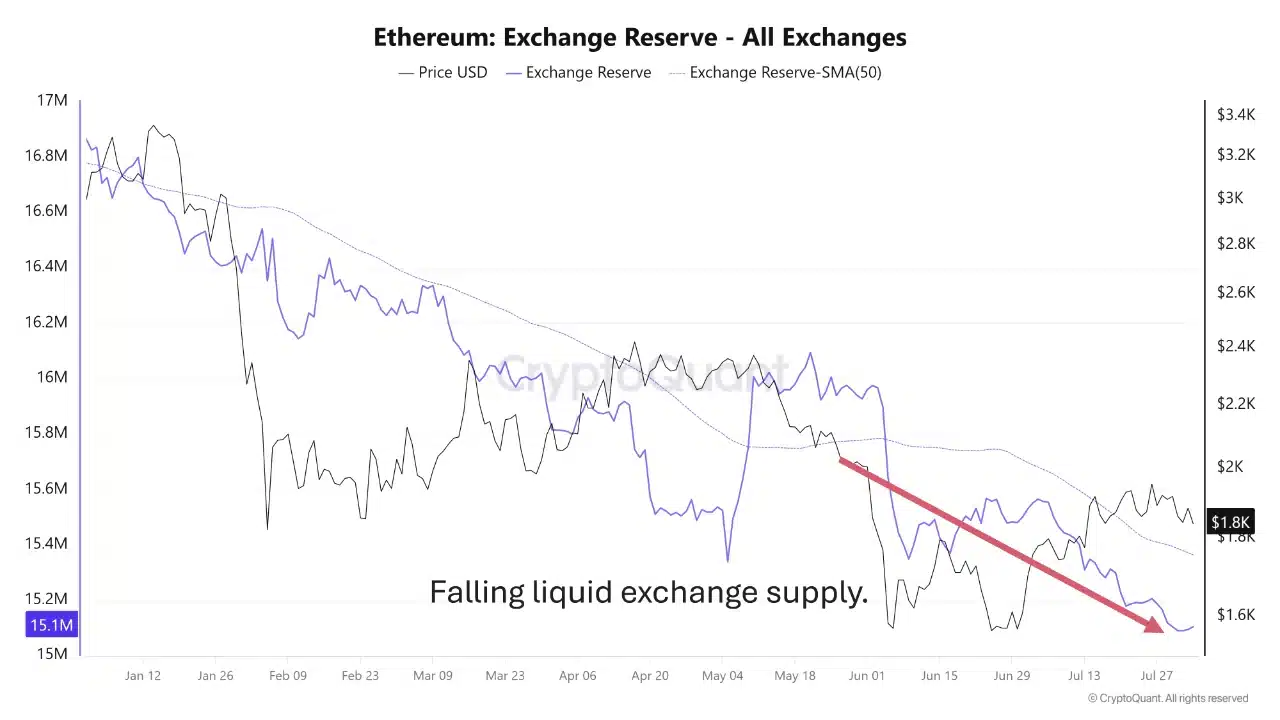
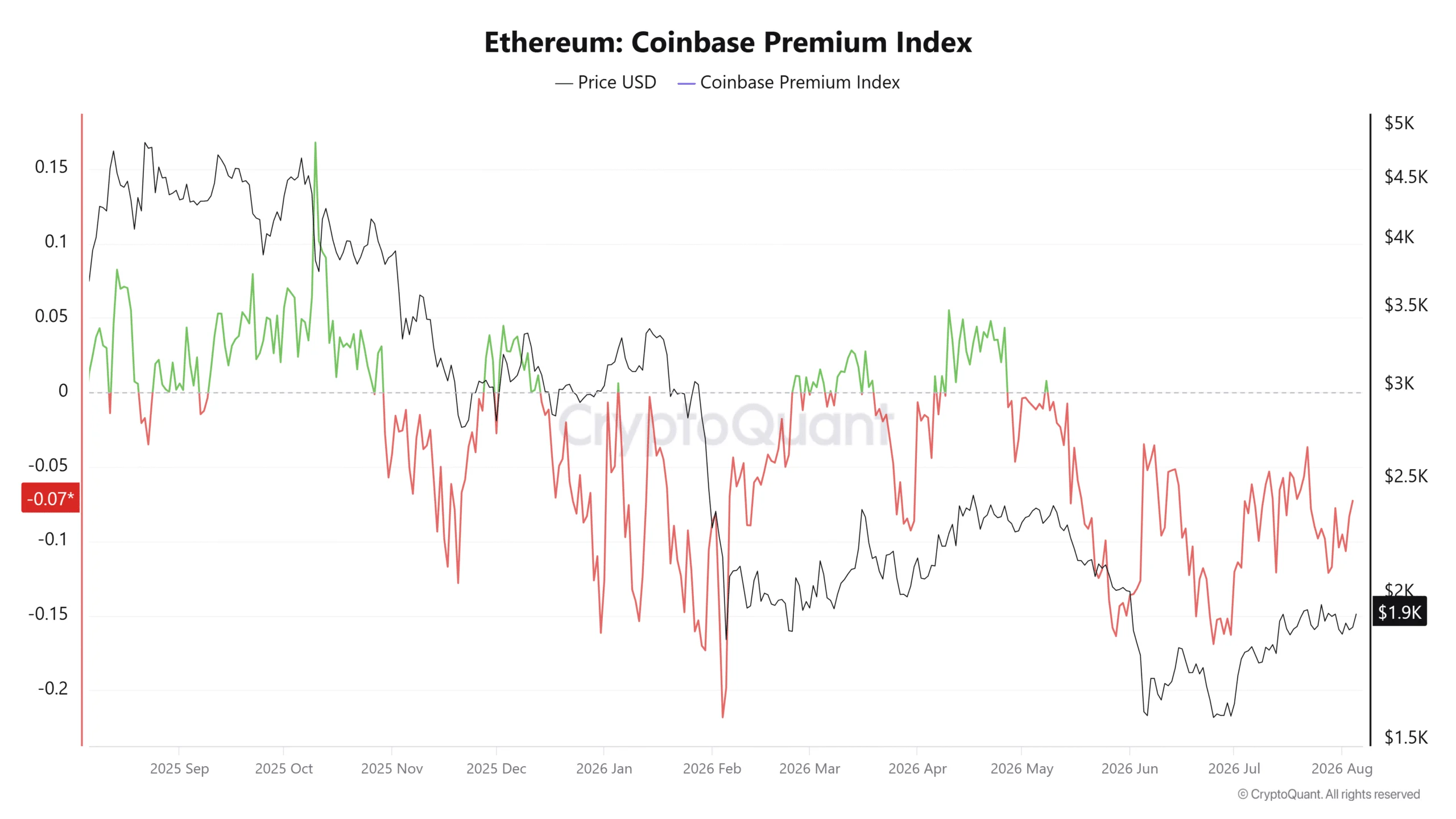
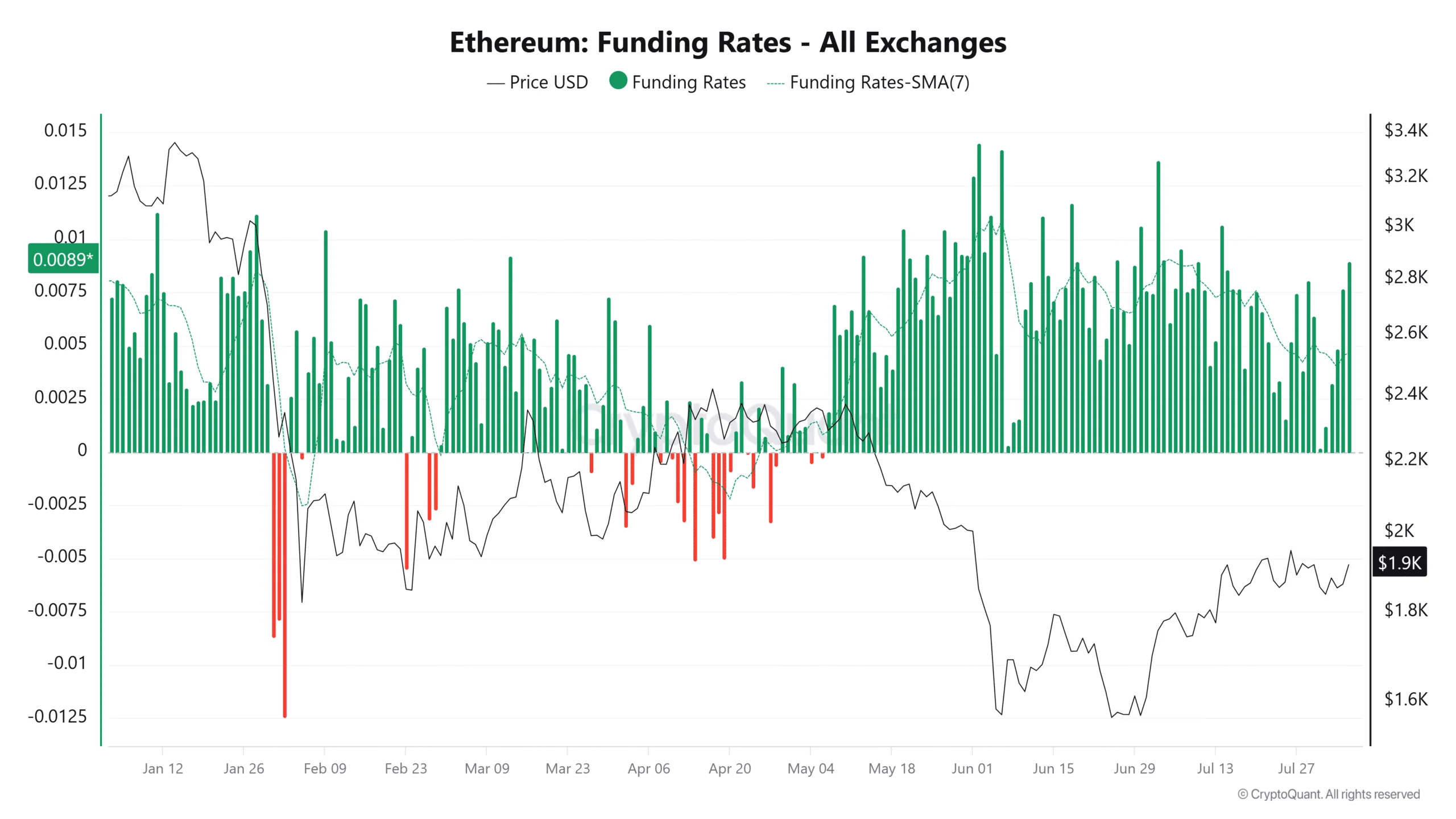
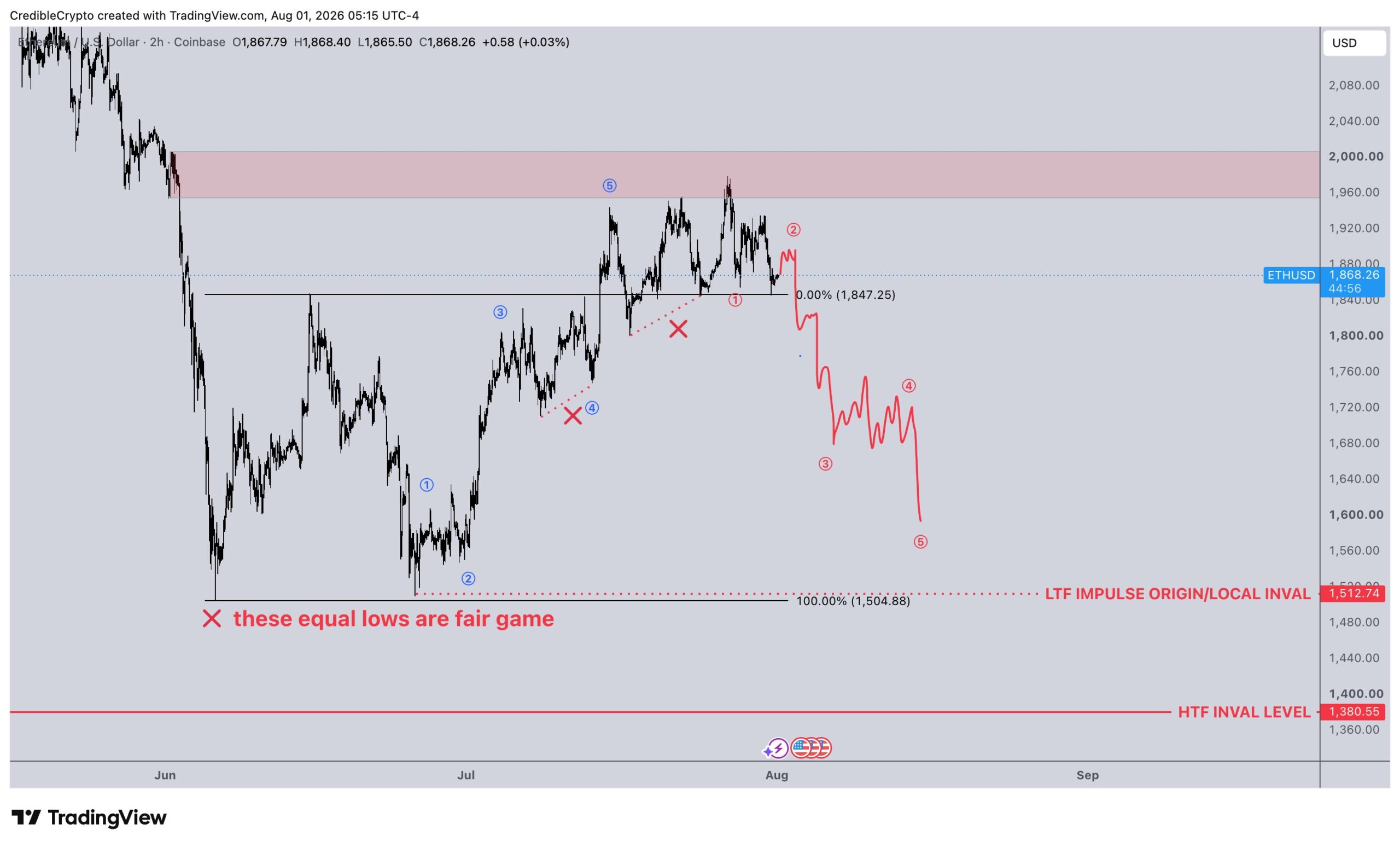
Whether you’re brand new to tracking the value of bitcoin and ethereum or a more seasoned crypto investor, Yahoo Finance’s price-of-ethereum chart below shows a visual history of how the currency’s value continues to move and evolve.

More on crypto from the Yahoo Finance team: 


Source link