Home Blog Page 72

‘Bitcoin isn’t dead’ – Novogratz weighs in as BTC rebounds to $62K

0
‘Bitcoin isn’t dead’ – Novogratz weighs in as BTC rebounds to $62K


The crypto market has seen a rough time in the past week after rallies that took the total market cap above $2.50 trillion. For Bitcoin, it rose from $67,000 to above $80,000 in early May. Other crypto followed up on it.

However, over the past two weeks, BTC has crashed from $77,000 to below $60,000 but has rebounded to $62,000. This shifting sentiment has raised talks around Bitcoin’s outlook.

Experts weigh in on Bitcoin’s thesis break

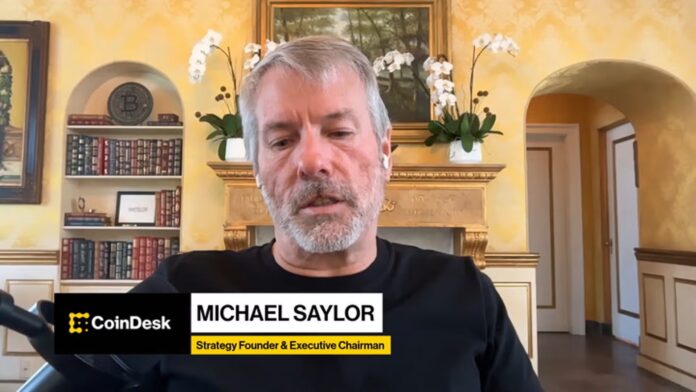
Recently, Anthony Scaramucci, the host of All Things Markets, asked the CEO of Galaxy, Michael Novogratz, if there was a thesis break on Bitcoin following the market breakdown.

According to Michael Novogratz,

Bitcoin isn’t dead.

This is despite some experts like Peter Schiff saying so. Peter Schiff predicted that Bitcoin might drop to $20K as he continues his strong criticism of the asset.

However, Novogratz said he never thought BTC should trade on a four-year cycle, despite everyone, especially those in China, believing so. These guys include Binance’s Richard Teng and CZ. He says sometimes the process becomes fulfilling, although its price drops during these periods.

Novogratz argues that as BTC matures, the 4-year cycle may no longer be the right framework to work with.

The CEO of Galaxy says the bullish outlook for Bitcoin is that it trades 4x above its 2022 lows, when it was trading around $15K. Gold is yet to replicate that, and BTC is above Michael Saylor’s predicted low of $45K.

Novogratz says there were people who went long on BTC at $8K and are still holding, believing it could go up to $300K or $400K. These investors still did not sell at $126K.

However, he noted that BTC is not trading so well currently, with volumes down 40% while other cryptos are way worse. He says the AI bubble was becoming a thing, and that’s how some great undertakings end.

Even with that, Bitcoin had won in resilience, but its structure was changing.

James Wynn closes shorts and opens max leverage longs

With that in mind, as Bitcoin and crypto saw a slow rebound to the upside, James Wynn flipped from shorting the market to long positions.

According to Lookonchain, the trader closed his Bitcoin and Solana [SOL] shorts for a profit of $6.4K. He then opened two long positions: one of BTC with 40x leverage worth $373K and Ethereum [ETH] with 25x leverage worth $8.50K.

Bitcoin BTCEthereum Crypto James Wynn

The positions were a reflection of how the two most-capped cryptos led the market rebound. Bitcoin was up 2.50% while ETH rose by 2.78%.


Final Summary

  • Mike Novogratz says Bitcoin isn’t dead but argues that the 4-year cycle may be broken as crypto matures. 
  • James Wynn closed his short positions on Bitcoin and Solana and went max-leverage long on BTC and ETH. 


Source link

Morgan Stanley Reiterates Buy Rating on Costco Wholesale (COST) Stock

0
Morgan Stanley Reiterates Buy Rating on Costco Wholesale (COST) Stock


Costco Wholesale Corporation (NASDAQ:COST) is one of the Best Big Company Stocks to Buy Right Now. On May 29, Simeon Gutman from Morgan Stanley reiterated a “Buy” rating on the company’s stock with a price objective of $1,130.00. The analyst’s rating is backed by several factors that are associated with Costco Wholesale Corporation (NASDAQ:COST)’s structural strengths and recent performance.

Morgan Stanley Reiterates Buy Rating on Costco Wholesale (COST) Stock

As per the analyst, Costco Wholesale Corporation (NASDAQ:COST) is one of the few US retailers that is well-placed to outperform in the present environment, thanks to its scale, efficient supply chain, and robust value proposition, which are tagged as critical drivers of continued market share gains and durable earnings growth.

Costco Wholesale Corporation (NASDAQ:COST) released its operating results for Q3 (twelve weeks) and the first 36 weeks of FY 2026, ended May 10, 2026. In Q3, net sales rose 11.6% to $69.15 billion from $61.96 billion in the last year.

Costco Wholesale Corporation (NASDAQ:COST) is engaged in the operation of membership warehouses.

While we acknowledge the potential of COST as an investment, we believe certain AI stocks offer greater upside potential and carry less downside risk. If you’re looking for an extremely undervalued AI stock that also stands to benefit significantly from Trump-era tariffs and the onshoring trend, see our free report on the best short-term AI stock.

READ NEXT: 10 Best FMCG Stocks to Invest In According to Analysts and 11 Best Long-Term Tech Stocks to Buy According to Analysts.

Disclosure: None. Follow Insider Monkey on Google News.


Source link

Kentucky Derby And Belmont Wins Have Golden Tempo As Top 3-Year-Old

0
Kentucky Derby And Belmont Wins Have Golden Tempo As Top 3-Year-Old


The thrilling Belmont Stakes win at Saratoga by Golden Tempo has placed the Kentucky Derby champion firmly atop Thoroughbred racing’s most publicized division. The Triple Crown series for three-year-olds garners more attention than other races, but as the sport builds towards the Breeders’ Cup in late October, there will be plenty of action throughout the summer as others look to take a shot at the horse that became the 13th runner to pull off the Derby-Belmont Double

Belmont Stakes Win Solidifies Golden Tempo As Tops In Division

Entering the Belmont Stakes, Golden Tempo had plenty of doubters. His dream worst-to-first trip in the Kentucky Derby at odds of 23-1 was thought to be a fluke that could not be duplicated against a smaller field. As a deep closer, trainer Cherie DeVaux’s darling was considered as too pace dependent to pull off another victory in a race that lacked early speed.

Breaking from his outside post, that was said to be an obstacle by some, jockey Jose Ortiz calmly guided his mount over to the rail for another ground-saving trip in this mile and a quarter journey. Chasing much softer early fractions (23.96 opening quarter, 48.29 half mile) than he did in the Kentucky Derby, this son of Curlin was at the back, but much closer to the leaders in this nine-horse field. Rolling through traffic into the far turn the pace up front was not factor for a horse and jockey that moved as one. Unleashing his powerful closing kick down the lane, the Tempo turned out to be quite Golden as he flexed to the finish a length and a quarter ahead of a hard-trying Commandment. Cherie Devaux became the second female trainer to win the Belmont Stakes (Jena Antonucci 2023 Arcangelo) as she guided Golden Tempo to his third win in five starts this year and fourth victory in six career outings.

The Belmont Stakes score proved Golden Tempo is anything but a one-hit wonder that needs special circumstances to win. Crossing the finish at odds of 6-1, the Derby champ was a somewhat disrespected fourth choice by the speculating public. After that powerful performance, it is a safe bet this Thoroughbred will not be going off at odds of 23-1 or perhaps even 6-1 ever again. Heading into the Summer races for three-year-olds, Golden Tempo is proven as best in the division right now.

Summer Races For Three-Year-Olds Run Across The Country

The Triple Crown series is the most publicized, but the races restricted to three-year-olds are quite numerous as the summer unfolds. The biggest and most prestigious target for three-year-old horses is the Travers Stakes at Saratoga on August 29. Carrying a purse of $1.25 million, the “Mid-Summer Derby” is the oldest Stakes race for three-year-olds in the United States as it was first run in 1864.

There are many races run prior to the Travers as “prep” events. The Haskell, the Jim Dandy and the “Dirt Road” Derbies (Ohio, Indiana, Iowa) come before and the Pennsylvania Derby is run after and carries a $1 million purse. These are just a sampling and as the summer unfolds there are plenty of races restricted to just three-year-olds and some of these horses will make the jump to open Stakes company races and take on older runners. The bottom line here is, the Kentucky Derby, Preakness, and Belmont Stakes are in the books, but there are plenty of races ahead to decide who is best in the three-year old division.

Who Can Challenge Golden Tempo For Three-Year-Old Honors

In winning both the Kentucky Derby and Belmont Stakes, Golden Tempo has placed himself firmly on the throne, for now. Commandment was very gallant in defeat for trainer Brad Cox and looks to be on the improve after his seventh-place finish in the Kentucky Derby. Another Brad Cox trainee, Further Ado, also looked good in winning the Matt Winn Stakes at Churchill Downs the day after the Belmont. Pat Day Mile winner Crude Velocity, trained by Bob Baffert, could be a challenger as he targets the Haskell after a second-place finish in the Woody Stephens Stakes on Belmont Day. Renegade, the Kentucky Derby runner-up and Belmont Stakes third place finisher is also one to be reckoned with.

The biggest challenger for superiority in the division may be a horse that has yet to race at three. Juvenile champion and unbeaten Ted Noffey had to be taken off the Triple Crown trail in February due to injury. On the mend and back in trainer Todd Pletcher’s barn, this very impressive son of Into Mischief has three grade 1 wins in four starts and should be racing at Saratoga with eyes on the Travers.


Source link

Greg Abel is Writing Checks for Berkshire Hathaway in a Hurry. You Should Write One for BRK.B Stock.

0
Greg Abel is Writing Checks for Berkshire Hathaway in a Hurry. You Should Write One for BRK.B Stock.


Image of Warren Buffett by Rokas Tenys via Shutterstock

It’s been less than six months since Greg Abel took over as Berkshire Hathaway’s (BRK.B) CEO, but it’s hard to miss the changes happening at the $1 trillion conglomerate. In Q1 2026, which was the first quarter under his leadership, Abel made several changes to the company’s portfolio of publicly traded securities.

First, Berkshire reduced its holdings of publicly traded stocks from 42 to 29, which, as I noted previously, was a smart move as these small holdings don’t move the needle for the company. Berkshire added a stake in Delta Airlines (DAL), a sector Warren Buffett burnt his fingers in and has long been talking down.

More News from Barchart

www.barchart.com

Greg Abel Is On a Check Writing Spree

Meanwhile, despite these changes, Berkshire was a net seller of stocks in Q1 for the 14th consecutive quarter. It is the longest such streak for the company, where it has sold more shares than it bought. However, things look set to change in the current quarter as, in a span of a few days, Berkshire has announced investments worth $16.8 billion.

The company has announced a deal to acquire Taylor Morrison Homes Corp (TMHC) for $6.8 billion and agreed to buy $10 billion worth of Alphabet (GOOG) (GOOGL) shares in a private placement. While we’ll get to know the official numbers later, in all probability Berkshire should be a net buyer of stocks in the current quarter unless, of course, Abel gets rid of a major holding.

Berkshire Repurchased Shares in Q1 After a Gap of Seven Quarters

Abel is not only writing checks to acquire stakes in other companies, but in Q1, the conglomerate repurchased its shares worth $235 million. While the amount is small by Berkshire’s standards, the pivot is noteworthy as the company did not repurchase any shares in the preceding seven quarters. The last couple of years were what Buffett described as his “nightmare” scenario in a 2019 interview with the Financial Times. The legendary investor joked that it would be a scenario wherein he finds stocks expensive, while Berkshire Hathaway shares are fairly valued.


Source link

Akash Network volume doubles – Can AKT’s 14% rally continue?

0
Akash Network volume doubles – Can AKT’s 14% rally continue?


Akash Network [AKT] gained more than 14% in the past 24 hours as altcoins attempted to recover from the week’s selling pressure.

The move came as Bitcoin [BTC] rose over 2.5%, lifting several higher-beta assets, including Ethereum [ETH], Ripple [XRP], Solana [SOL], and AKT.

Even so, several on-chain metrics remained mixed despite rising volume, development activity, and a technical breakout.

Can Akash Network build on this rebound?

Akash Network [AKT] rebounded from a former resistance zone that had acted as a support area after May’s breakout.

AKT traded between $0.436 and $0.526 for more than a month before breaking higher and rallying toward $0.960. The $0.526 level later flipped into support and emerged as a key buying area.

The Cumulative Volume Delta (CVD) improved from negative 1.74 million to a daily peak of 337,000 AKT. That shift suggested buyers regained control after a period of sustained selling pressure.

On top of that, momentum indicators showed early signs of improvement.

AKT
Source: AKT/USD on TradingView

The MACD turned positive for the first time in June on the 4-hour chart. Its signal line also crossed higher, pointing to strengthening momentum.

However, AKT still needed to reclaim the $0.70-$0.75 zone to strengthen the bullish case.

Until then, the broader short-term structure remained weak, leaving the latest move vulnerable to a pullback.

Is network activity improving again?

On-chain activity painted a mixed picture, though several key metrics showed renewed growth.

Token trading volume doubled over the past two days, rising from $8.38 million to $16.25 million. Monthly trading volume also climbed 54% to $414 million.

AKTAkash NetworkAKTAkash Network
Source: Token Terminal

Development activity improved as well.

Code commits increased 20% over the past month, reaching roughly 269. That move aligned with stronger network usage.

According to DeFiLlama, fee revenue continued rising through mid-May. Peak fees reached $7,858, while daily revenue climbed to $5,186.

AKTAKT
Source: DeFiLlama

Higher fees typically reflect greater network activity, suggesting usage remained healthy during the rebound. Taken together, these metrics pointed to improving engagement across the network. Even so, sustained growth may be needed before a broader bullish trend can take shape.


Final Summary

  • AKT recovered 14% after rebounding from a former resistance zone that has now turned into support.
  • The $0.70-$0.75 zone remains the key area AKT must reclaim before a broader trend recovery can be considered.


Source link

Why bitcoin (BTC) is falling: AI, tech IPOs, quantum, Strategy sale fears all converge, NYDIG says

0
Why bitcoin (BTC) is falling: AI, tech IPOs, quantum, Strategy sale fears all converge, NYDIG says


Bitcoin dropping below $60,000 to a fresh cycle low has left investors searching for a culprit. According to Greg Cipolaro, global head of research at NYDIG, there probably isn’t only one.

In a report last week, he argued that bitcoin and the broader crypto market is facing several overlapping headwinds that have been weighing on prices.

The AI trade sits near the top of his list as bitcoin is increasingly competing for capital with a sector that has become the market’s dominant growth story.

The overlap between AI and crypto investors is larger than many assume, he argued. Both attract investors seeking exposure to emerging technologies and outsized returns. As AI-related stocks continue to outperform, capital followed and rotated from crypto, he wrote.

Investors are also preparing for what could be the largest tech IPO cycle in years. Companies such as SpaceX, OpenAI, Anthropic are widely expected to eventually go public, with SpaceX already deep into the process of making its debut. Large IPOs often prompt institutions to raise cash and reduce existing positions ahead of new offerings, creating a potential headwind for crypto demand, he wrote.

Crypto has also been grappling with a series of industry-specific concerns.

Treasury Secretary Scott Bessent’s claim that U.S. authorities seized roughly $1 billion of Iranian-linked crypto assets raised questions about government reach into digital asset markets. Details remain limited, but the episode challenged one of crypto’s core narratives for some investors, Cipolaro said.

Threat of quantum computing also returned to the conversation after researchers published new work showing that the computational resources required to attack widely used cryptographic systems may be falling faster than previously thought.

Then there is Strategy (MSTR) selling bitcoin.

The sale of 32 BTC, worth $2.5 million at the time, was insignificant from a supply perspective but carried more weight psychologically. Strategy has spent years acting as one of the market’s most consistent buyers, Cipolaro said. Any suggestion that it could become a source of supply, he argued, forces investors to rethink an important pillar of the bull case.

Taken together, those developments could explain why bitcoin has struggled despite no obvious deterioration in underlying network activity or adoption trends.

“Viewed independently, none of these developments appears sufficient to drive a major correction in bitcoin,” Cipolaro wrote. “Viewed collectively, they help explain why price action has weakened despite the absence of a clear deterioration in underlying adoption metrics.”

Has bitcoin found a bottom?

Cipolaro’s onchain analysis offers a mixed answer.

Several indicators are approaching levels that have historically coincided with major bottoms, he noted. Bitcoin’s MVRV ratio has fallen to 1.2, close to the level where market value converges with investors’ aggregate cost basis. The percentage of supply held in profit recently slipped below 50%, another metric often associated with capitulation.

Yet the drawdown itself remains relatively modest by historical standards.

Bitcoin fell down roughly 53% from its peak ($126,000 in October), a much shallower decline than the 75%-90% drawdowns seen in prior cycles, he pointed out.

There’s also a time element: the previous three bitcoin bear markets lasted more or less a year from peak to trough, with the exception of its first-ever bear market ending in 163 days in 2011.

Friday’s sub-$60,000 plunge came only 242 days after the peak.

That means either institutional adoption has fundamentally changed bitcoin’s cycle behavior — or that the market simply hasn’t reached a true capitulation phase yet.

“The onchain data suggests the market has undergone a meaningful reset,” Cipolaro wrote.

But whether the low is already in place “likely depends on whether institutional demand has structurally altered the cycle or merely delayed a deeper reset,” he added.


Source link