Blast once attracted more than $2 billion in assets, partly through rewards offered to users depositing funds. That figure had fallen to approximately $32 million when developers announced the closure, saying the network cost more to operate than it generated in revenue.
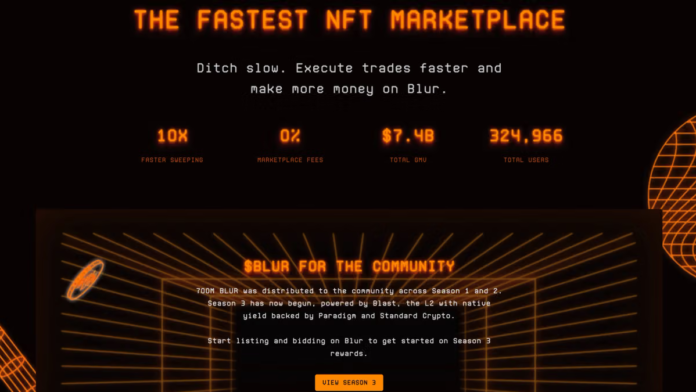
Blur’s rise was just as dramatic.
Launched in 2022, it challenged the-then leader OpenSea by offering professional traders faster transactions, low fees and token rewards.
The strategy helped Blur capture more than 70% of Ethereum NFT trading volume in March 2023, when activity on the platform reached approximately $1.43 billion, DefiLlama data shows
By March 2026, that monthly volume had fallen below $7 million, a decline of more than 99.5%.
But Blur’s marketplace generated no revenue from transaction fees for all that trading activity. The platform charged traders nothing, and Token Terminal records $0 in protocol revenue over the past three years, despite billions of dollars in NFT trades. However, the figure does not establish whether Blur earned money from its lending service or other activities.
Blur’s aggressive incentive programs had attracted criticism for encouraging speculative trading and putting pressure on royalties paid to NFT creators. The trading figures alone do not establish how much activity came from genuine buyers rather than traders seeking rewards.
Solana’s latest announcement comes at a key moment for the market.
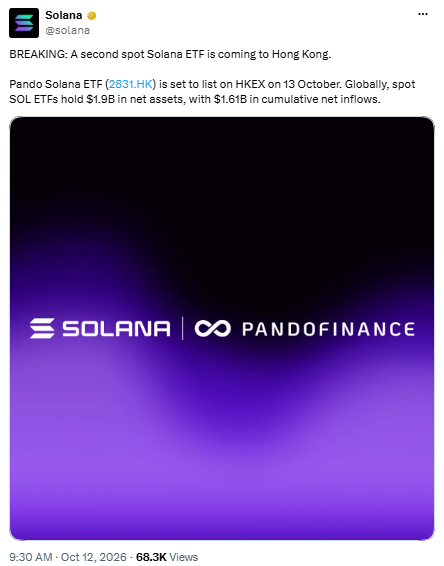
In its official announcement, Solana noted that Pando Finance will list its Solana ETF on the Hong Kong Stock Exchange on the 13th of October. With an estimated expense ratio of 1.6% annually, the ETF will hold SOL through HashKey, with no staking, leverage or dividend payouts, per the key facts statement. This will make it Hong Kong’s second Solana ETF, after the ChinaAMC Solana ETF.
Viewing from a broad perspective, the timing is when institutional flows are becoming weak. Despite the strong start to the fourth quarter, SOL ETFs turned bearish again, with more than $30 million in outflows this month. In this context, Hong Kong’s new listing could attract new inflows and help curb this downtrend.
Source: X
On the technical side too, the announcement comes at a key moment.
SOL is down over 5% this month, not able to move above $120 before pulling back toward the $95 support zone. Positioning also suggests that bears are taking control, with Solana long/short ratio slipping back into negative territory, suggesting growing bearish sentiment among traders. However, SOL’s 5% drop is still relatively small compared to other large-cap cryptos, suggesting bulls may still be holding their ground.
Naturally, investors are now looking at the listing of Solana’s ETF in Hong Kong. Spot SOL ETFs worldwide have a combined net inflow of $1.9 billion in net assets, with $1.61 billion. Despite the recent outflows, institutional demand remains strong. The question now is whether the newest listing in Hong Kong can set Solana [SOL] up for a bear trap.
Solana’s ETF launch tests the bears
Solana’s Hong Kong ETF launch comes amid bearish positioning and rising liquidity.
According to SolanaFloor, Circle has minted $3.5 billion in USDC on Solana over the past seven days, keeping the network’s stablecoin market cap above $16 billion. This stands out as stablecoin market cap on other blockchains have fallen below critical levels, suggesting that Solana is continuing to attract liquidity.
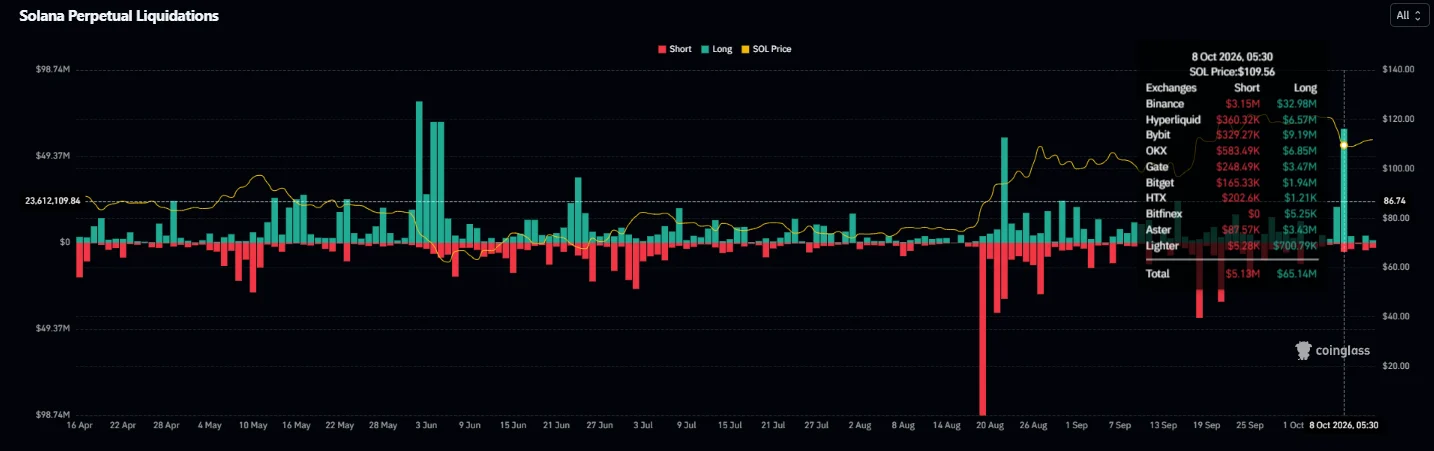
Meanwhile, one analyst pointed out that much of the downside liquidity has already been washed out, with SOL closing the week down over 8%. As the chart below shows, over $65 million in long liquidations have occurred on the 8th of October, the biggest single-day flush since early June. With many long positions unwound, focus is now on short-liquidity clusters that could spark a potential short squeeze.
Source: Coinglass
That brings the focus back to Solana’s upcoming Hong Kong ETF launch.
With institutional interest being supported, SOL demonstrating relative strength, long positions being unwound, bulls making a comeback, the launch can ignite a short squeeze and rally, and most importantly, can contribute to Solana’s rising ETF trend.
Considering that Q4 started bullishly, a breakout above $125 could become the start of a larger SOL rally.
Final Summary
Hong Kong’s Solana ETF could bring fresh money into SOL.
With liquidity building, SOL could break above $125 and start a bigger rally.
Jeonbuk Bank has started offering bitcoin-backed loans to corporate clients, becoming the country’s first bank to let firms borrow cash against their crypto holdings.
The South Korean bank, a unit of JB Financial Group, will issue loans in the country’s fiat currency, the Korean won, with proceeds limited to business operating costs, according to local news outlet Edaily.
A Jeonbuk Bank official confirmed to local outlet Jaekyung Ilbo that a loan has already been executed, but declined to name the borrower.
Only bitcoin BTC$82,985.30 can be used as collateral for these loans for the time being. Jeonbuk Bank will not hold the BTC itself and instead, a registered crypto service provider will keep the assets in custody while the bank issues the loan.
If a borrower fails to repay, the bank would move to recover its money through a court-ordered sale of the bitcoin.
The process draws on revised Civil Enforcement Rules that took effect Oct. 1, per the local news outlet. These changes set out legal steps for seizing and selling rights tied to digital assets.
Filecoin [FIL] is on a strong bullish run. Since it successfully defended the $1 support level four days ago, the altcoin has closed with higher highs.
Over the past 24 hours, the altcoin flipped the $1.2 resistance and touched a five-month high of $1.27.
As of this writing, Filecoin was trading around $1.24, marking a 14% surge on the daily charts. Over the same period, its trading volume climbed 150% to $269 million, highlighting elevated market participation.
Filecoin’s vesting schedule to end
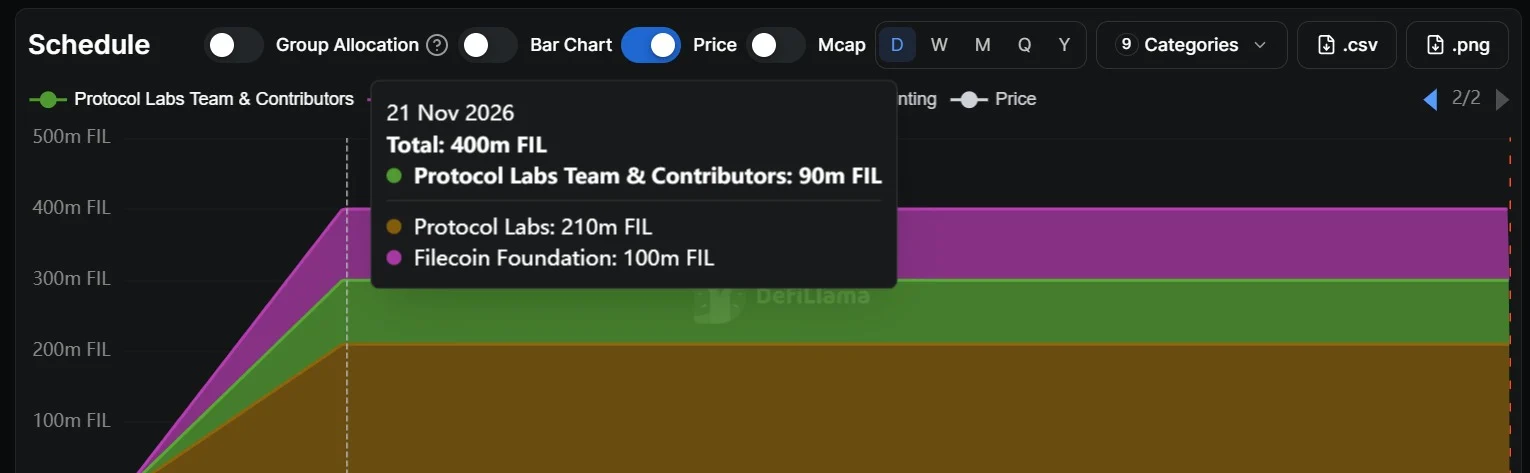
Filecoin is rallying amid rising optimism over the concluding vesting schedule. On the 15th of October, the six-year vesting schedule for Protocol Labs and the Filecoin Foundation will come to an end.
The termination will result in annual FIL emissions dropping by a staggering 75%. With the expected supply entering the market falling to 22 million FIL from 89 million, marking over a 67 million drop in releases.
Source: DefiLlama
This change in supply dynamics marks the largest shift in the token supply since its mainnet launch.
Usually, reduced supply in the market increases scarcity, thus reducing market pressure, which helps in strengthening upside momentum.
The derivatives market turns overly bullish
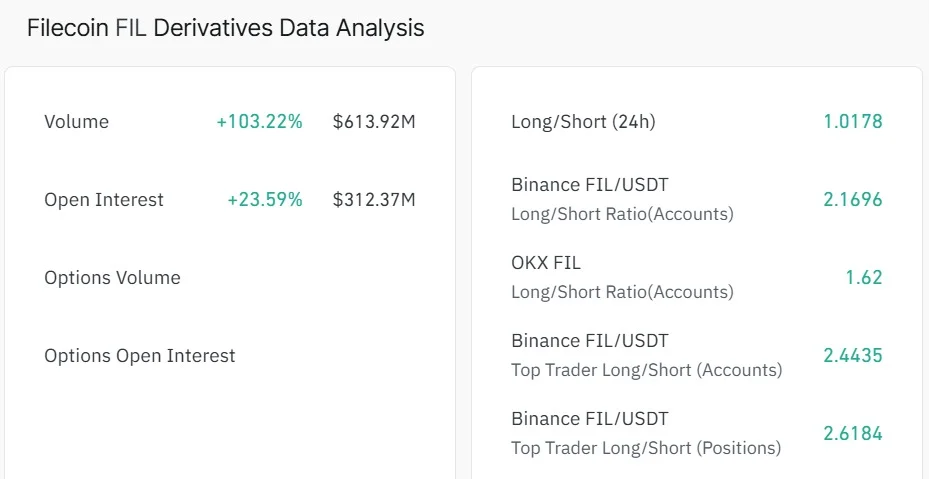
With the market in anticipation mode, speculative demand returned to the market. According to CoinGlass, Filecoin’s Open Interest (OI) climbed 23% to $312 million while the Derivatives volume rose 103% to $613 million.
The rising OI and volume indicated higher participation and capital flows as traders opened new positions, either shorts or longs.
Source: CoinGlass
Meanwhile, the Long/Short Ratio climbed 1 across major tracked exchanges, with the ratio on Binance holding above. Such elevated levels suggest that traders were bullish and mostly took leveraged longs.
Could profit takers derail the momentum?
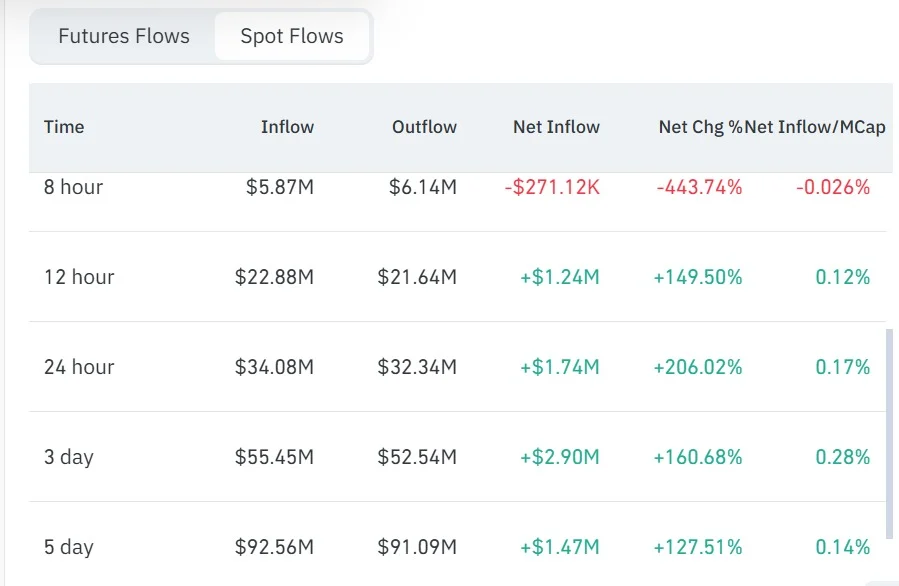
As expected, the recent price hike attracted profit-taking. Over the past three days, Filecoin Spot netflow has remained positive for three consecutive days.
After FIL rose above $1.2, the altcoin’s netflow rose to $2.5 million on the 11th of October. Over the past 24 hours, the netflow was around $1.74 million.
Source: CoinGlass
A positive netflow for a prolonged period suggested more sales than buys. Historically, higher inflows have increased supply, thus weakening the upside structure.
What’s next?
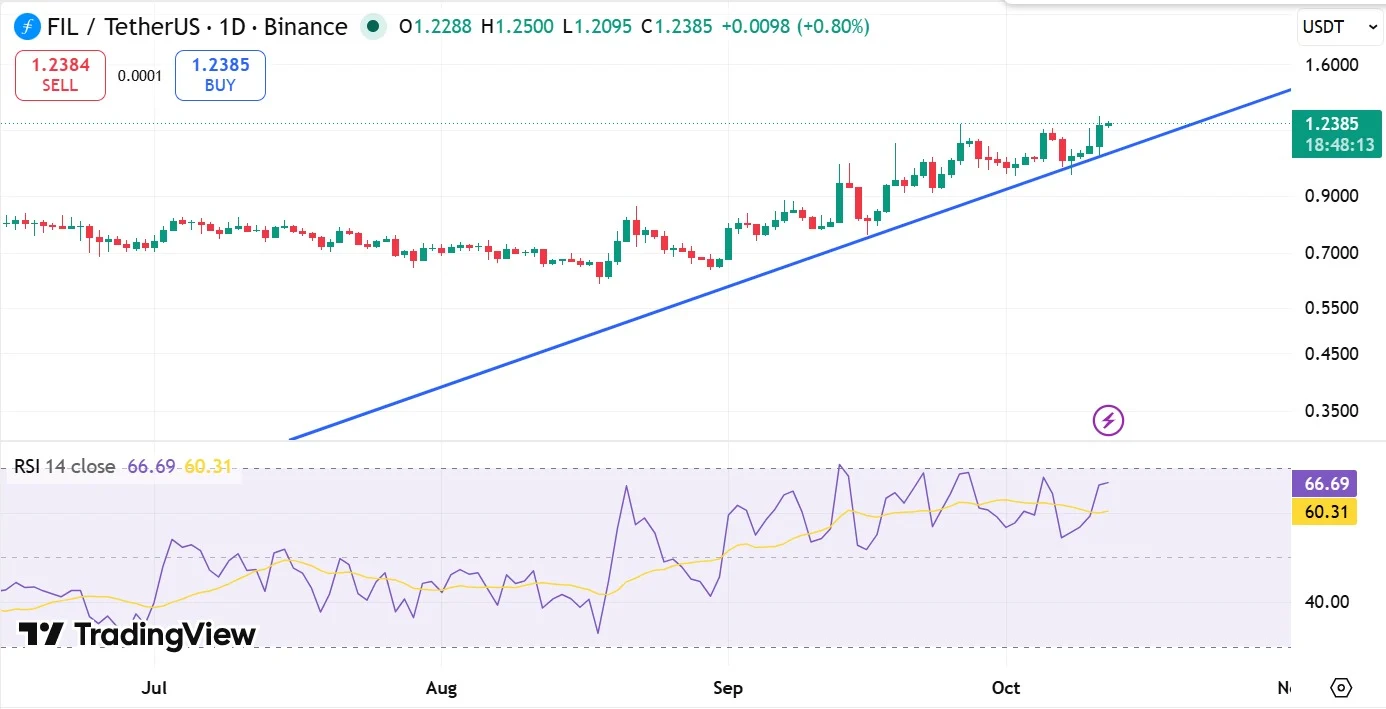
Filecoin upside pressure momentum currently holds strong despite the profit realization, as the RSI shows.
The altcoin’s Relative Strength Index (RSI) sits deeply within the bullish zone, holding around 66. Here, the indicator suggests a strong bullish pressure and signals that the trend is likely to hold.
Source: TradingView
Therefore, if the positive sentiment around the vesting schedule holds, and bulls take in profit takers, the altcoin could clear $1.3 resistance and eye a close above $1.32.
However, the risk arising from profit takers is an important note, and if it persists, Filecoin will struggle to hold $1 and potentially revisit $0.93.
Final Summary
Filecoin’s vesting schedule for Protocol Labs and the Filecoin Foundation will come to an end on October 15.
Filecoin extended its bullish streak, surging 14% to a five-month high.
The report points to higher risks in so-called multi-issuer structures. Affiliated companies can issue the same stablecoin and share liability for it while keeping reserve assets in separate jurisdictions.
If holders can redeem with any issuer in the group, demand could pile up on a single entity, while the needed assets sit elsewhere. Moving those reserves may become harder during a crisis, the FSB warned. Legal claims could also become unclear if an issuer fails, as it It may be difficult to determine which country’s insolvency rules would apply.
Stablecoins can trade around the clock, while the markets for assets backing them have set operating hours. That mismatch could matter during a run because if redemptions cannot keep pace with selling, a token may lose its peg, the report added.
However, the FSB noted that deep, liquid secondary markets could also help pull a token back toward its peg through arbitrage.
Forced reserve sales and bank deposit withdrawals could then spread the shock into traditional financial markets as investors scramble for liquidity.
The FSB also pointed to weak data as a problem, as the pseudonymous nature of cryptocurrency transactions can make it hard to tell where holders are based and which jurisdiction applies.
The landscape for money is shifting, and top executives say that the Great Wealth Transfer, the new generation of entrepreneurs, and veterans are paving the way.
At Fortune’s 26th annual Most Powerful Women conference in Santa Barbara, Deloitte U.S. federal health sector leader Beth Meagher said that women are poised to play a huge role in shaping how wealth is invested and deployed. It’s estimated that around $124 trillion in wealth will be passed down by 2048, according to Cerulli Associates, with $54 trillion going to women, $52 trillion to children, and $18 trillion charity. On top of that, women entrepreneurs are on the come-up—Meagher said that they’re one of the fastest growing sources of wealth concentration, up over 125% over the past decade. And women who have served our country are also building momentum, reaching roughly 300% growth over the past couple of years, the Deloitte exec pointed out.
“These trends are changing everything,” Meagher told Fortune executive editorial director Diane Brady onstage. “I think we spend a lot of time on frontier models, and we probably spend a lot of time on geopolitical [issues]. And this shift is something that I think we have a tremendous opportunity to lead from the front of.”
Seema Hingorani, managing director and senior client advisor at Morgan Stanley, caught wind of this trend more than a decade ago. When she was working at the New York City Pension Fund in the early 2010s, she noticed something worrying. Every asset manager in the world was coming to meet with her, yet each had few to no women on their investment teams, Hingorani said. They wrote it off as a “pipeline issue”—but Hingorani didn’t buy it. So she started a nonprofit called Girls Who Invest to get more women into the industry, with 5,000 college women having gone through the program since 2011. Every year they receive around 4,000 applications, and support 700 women annually.
Hingorani also pointed out that for the past seven years, Morgan Stanley has run an incubator helping to invest in more women starting tech businesses. And when they scale billion-dollar companies and take their successes to the bank, they’ll be looking for women to help guide their decisions.
“[Women are] going to have all the wealth,” Hingorani said. “[For] those women—you guys—do you want to have a male financial advisor? If you had a choice, would you want to have a woman financial advisor? A lot of firms out there are hiring all my women, because they get it.”
Beyond how they manage their wealth, women are also setting new expectations about spending it. Carmen James Randolph, founding president and CEO of the Women’s Foundation of the South, is seeing a major shift in her own backyard. Randolph said that the South is one of the fastest-growing regions in the country, and with 41.5% of America’s women of color as the area’s constituents, there’s a new frontier for wealth creation and investment. She’s already seeing that the old-school models of philanthropy are being rewritten to prioritize tangible impact.
“I’ve worked in philanthropy now for about 28 years, and I understand that at its best, philanthropy can be a catalyst for what’s possible. Old models see philanthropy as charity, and new wealth recipients do not see philanthropy as charity,” Randolph explained onstage. “They want to understand and see firsthand the impact that their dollars can have.”
The Deloitte and Morgan Stanley execs agree that the way women want to invest is different from previous generations, by prioritizing social impact in tandem with financial returns. Meagher said that women poised to inherit substantial wealth are focused on three key areas of investment: health, education, and justice. She’s picked up on a trend where wealth advisors are also specifically offering health services; and Randolph says that her foundation is making a big bet on improving maternal healthcare in southern states with difficult access to emergency and routine medical care. Hingorani also noted that every trustee has an interest in affordable housing—even if it means a smaller return than what they could earn at a venture fund.
“Women are looking to pull their investments so that they can have an outsized impact,” Meagher said.
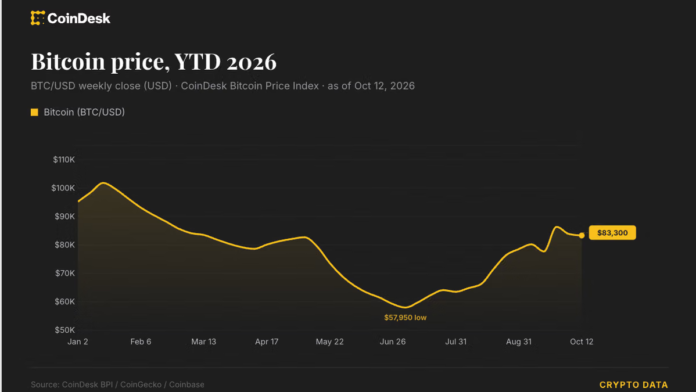
Markets are making a cautious start to the week, with bitcoin trading just above $83,000 and gold around $4,180 an ounce, both down roughly -0.5%. Tech futures are slightly lower, while WTI crude is edging higher above $92 a barrel. Bond yields are also ticking up as bond prices fall, following a brief recovery in the second half of last week that saw TLT, the long-dated U.S. Treasury ETF, gain more than 2%. The dollar remains firm, with the DXY index above 102.4.
Wednesday’s U.S. inflation report is the week’s key macroeconomic event. Annual core inflation is expected to come in at 2.5%, while headline inflation is forecast at 3.7%, which would mark a reacceleration from the previous month.
IRENIREN$34.83·Market Closed, which has repurposed from bitcoin mining into AI infrastructure, has secured a multiyear cloud services agreement with artificial intelligence firm Anthropic, according to The Information. IREN shares are up 4% pre-market.