The Tether freeze, confirmed by Bitquery, is important because stablecoin issuers can block tokens linked to crime, unlike bitcoin or ether. Bitquery also said roughly $81 million could still be traced onchain as of Oct. 11, while some funds had moved through Tornado Cash and Zcash.
Tether did not immediately respond to a CoinDesk request for comment on the freeze.
Ledger’s effort to characterize the incident as confined to CryptoBilis has drawn pushback because the reseller was listed as authorized on Ledger’s website. “It’s not a CryptoBilis incident, it’s a Ledger incident,” X user MyCryptoParadise wrote. “At least take ownership of this mess.”
The episode is distinct from an April phishing campaign involving a fake Ledger Live app on Apple’s App Store, which drained at least $9.5 million after users entered their recovery phrases. This time, the attacker appears to have obtained the keys needed to directly empty hundreds of wallets.
Ledger advised CryptoBilis customers not to set up unused devices. Those who have already used one should move assets to a new device with a newly generated recovery phrase, it said.
Christina Qi started a hedge fund as an undergraduate at MIT, building it to trade $7 billion per day.
A “really bad year in 2020” caused the hedge fund to shut down.
Qi then started her current venture, a market data provider called Databento.
Christina Qi boasts an impressive resume. As a 21-year-old undergraduate at MIT, she quietly did something most finance veterans spend decades attempting: She started her own hedge fund. At its height, the fund, Domeyard, traded $7 billion in volume per day.
In 2020, after eight years of running Domeyard, Qi and her fellow founding partners realized that the fund was not scalable, and performance was suffering. “We had a really bad year in 2020; performance was down 12%, and so we told our investors that we were shutting down,” Qi tells Entrepreneur in a new interview.
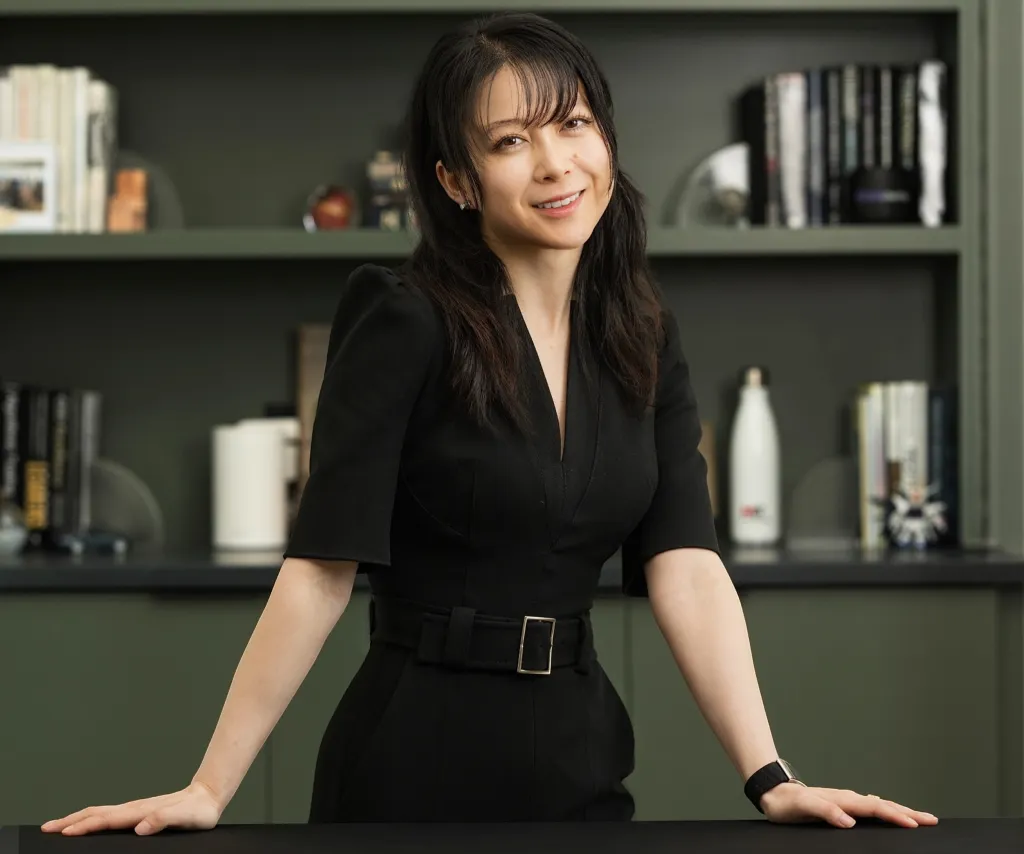
Christina Qi. Credit: Databento
She started fresh that year with a different idea, co-founding and serving as CEO of a new startup called Databento. The company strives to become “the single source of truth for financial information,” Qi explains. It provides market data for researchers at hedge funds and AI labs and now has 70,000 customers, including Nvidia and OpenAI.
Databento raised $97 million in a Series B funding round in July, bringing the startup’s total disclosed funding to about $127 million. Qi has not made the startup’s valuation public. Earlier this year, Databento’s head of quantitative analytics, Lou Lindley, disclosed that the startup had 8-figure annual recurring revenue.
“We grew our revenue almost tenfold from a base well above single-digit millions,” Qi says. “We have a lot of competitors in this industry, which is probably why we don’t share exact figures.”
Despite having customers concentrated in Wall Street and Silicon Valley, Qi chooses to reside in her home state of Utah. She runs the business, which employs 38 people, remotely. Instead of seeing coworkers when she steps outside, she looks out at her 10 chickens, two turtles and 15-year-old dog.
An unconventional founder
Qi explains her entrepreneurial journey “does feel like the American dream to an extent.” She grew up on food stamps and welfare in a low-income household in Utah before attending MIT.
“Was it harder? Maybe. Look, the starting line might have been a few steps back,” Qi says. “It might have been a little bit more difficult as a result because of where I’m from.”
She adds that people don’t consider her “CEO material” in social settings.
“When I go to a networking event, people sometimes ask if I can speak English,” Qi says. “Or people think I’m a waitress. I got mistaken for a waitress eight or nine times now in my career. Even two weeks ago, I got mistaken as a waitress at a cafeteria.”
People ask Qi where she is “really from” all the time and aren’t satisfied when she tells them she’s from Utah. “People also say my English is great all the time, but it’s my native language,” she says.
Qi notes that these experiences were frustrating and demonstrated that she had a “disadvantage” compared to her peers.
“I still managed to raise a lot of funding, hire a fantastic team and run a tech business selling to quants, who are mostly men in finance,” she says. “I’m in a very male-dominated industry, and I’ve managed to still be fine.”
Qi points out that her story proves it is possible to achieve startup success even when you start at a disadvantage. She hopes to inspire more people to pursue their dreams and be unafraid of starting their own ventures.
In 2019, Qi was elected co-chair of the board of Invest in Girls, a nonprofit organization focused on financial literacy for high school girls. She has also held board and committee roles with the MIT Sloan Boston Alumni Association and 100 Women in Finance, a nonprofit that helps women advance their finance careers.
She experienced this firsthand at MIT. As a freshman, she applied to her first internship and received a rejection within 24 hours. “I cried,” Qi says. “I just remember that core memory.”
She applied to 100 internships after that, and then it just became like clockwork. “You realize, Oh, rejection is just normal,” Qi says. “The first time, it hurts the most.”
Now, Qi considers failure a part of her daily life. Investors and customers reject her every day, and she considers it a part of her job. If she is not facing failure, then she is not doing enough or putting herself out there enough, she says.
“Part of your job description as a founder, as a CEO, is to put yourself out there, embarrass yourself on stage and get rejected,” Qi says.
That mindset applied when Qi closed down Domeyard. She wrote in a July 2023 LinkedIn announcement that shutting down the hedge fund “felt like losing a part of my identity.”
“Domeyard will always be my first venture — letting go was one of the most difficult decisions we’ve ever made,” she wrote.
Qi said earlier, in a 2020 MIT Sloan interview, that her friends “inspired” her to step away from Domeyard after a “particularly rough year” in 2020. They urged her to take a break and evaluate her career trajectory.
Databento arose out of that self-reflection. Qi worked up the courage to start the venture despite Domeyard shutting down. She was able to learn from that setback.
The founder archetype
Qi also asserts that it is okay to be vulnerable as a founder. She says there’s a certain archetype of founder who is very cutthroat and steps over other founders to obtain funding and attention. Qi encourages founders to follow a different path and be the kind of leader who supports other founders.
“You can succeed and raise each other up and support each other, even as competitors in this industry,” she says. “That is absolutely possible. That’s what I have done and strive to do with a lot of our competitors in this space, with other founders.”
Key Takeaways
Christina Qi started a hedge fund as an undergraduate at MIT, building it to trade $7 billion per day.
A “really bad year in 2020” caused the hedge fund to shut down.
Qi then started her current venture, a market data provider called Databento.
Christina Qi boasts an impressive resume. As a 21-year-old undergraduate at MIT, she quietly did something most finance veterans spend decades attempting: She started her own hedge fund. At its height, the fund, Domeyard, traded $7 billion in volume per day.
In 2020, after eight years of running Domeyard, Qi and her fellow founding partners realized that the fund was not scalable, and performance was suffering. “We had a really bad year in 2020; performance was down 12%, and so we told our investors that we were shutting down,” Qi tells Entrepreneur in a new interview.
Christina Qi. Credit: Databento
She started fresh that year with a different idea, co-founding and serving as CEO of a new startup called Databento. The company strives to become “the single source of truth for financial information,” Qi explains. It provides market data for researchers at hedge funds and AI labs and now has 70,000 customers, including Nvidia and OpenAI.
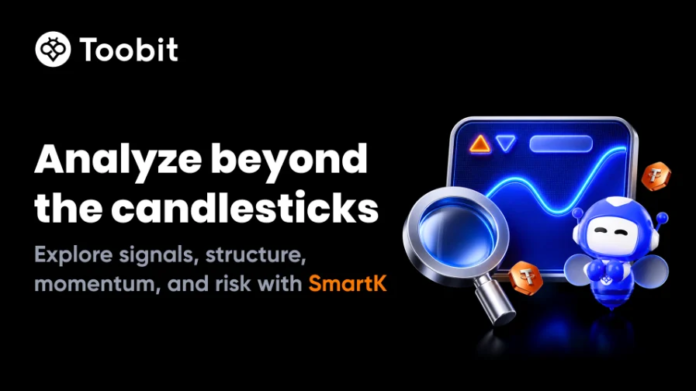
Toobit, the award-winning global cryptocurrency exchange, today introduces SmartK, a proprietary charting mode designed to help futures traders bring more structure to market analysis.
Futures charts can quickly become fragmented across indicators, timeframes, drawing tools, and separate sources of market information. SmartK brings these elements into one charting environment, combining Toobit-developed indicators with drawing tools, historical replay, screenshots, and Last, Mark, and Index price data.
From price movement to market context
SmartK is built around four areas of analysis: direction, position, momentum, and risk. Together, they help traders look beyond price movement alone.
Direction provides a view of whether conditions are bullish, bearish, or range-bound, while position places price within broader market structure and potential entry areas. Momentum adds context around the strength of a move, while risk introduces references for volatility, stop loss distance, and take profit levels.
The aim is not to produce a single answer, but to bring the information used to form a trading view into a more coherent workflow.
A focused approach to indicators
SmartK includes three main-chart indicators and two lower-panel indicators covering market signals, structure, entry conditions, multi-timeframe analysis, volume-price pressure, momentum, and divergence.
Instead of placing all five on screen simultaneously, SmartK uses a 1+1 system that allows traders to combine one main-chart indicator with one lower-panel indicator.
This gives traders the flexibility to change their setup according to the question they are examining, whether that means assessing broader direction, reviewing market structure, or checking whether volume and momentum support a move.
Looking back without looking ahead
Historical chart replay is also built into SmartK, allowing traders to move to an earlier point in the market and reveal subsequent candlesticks progressively.
During replay, indicators only use data that would have been available at that point in time. Signals requiring additional closed candles for confirmation are shown only after those candles become available, allowing traders to review how an analysis would have developed without relying on information from the future.
SmartK is intended to support market analysis and trading research rather than replace trader judgment. Its indicators do not automatically open, close, or manage positions, and signals or reference entry, SL, and TP levels do not guarantee trading outcomes.
The release comes as technology takes a larger role in how investors approach analysis and risk. In 2026, 49% of institutional investors increased their focus on risk management, liquidity, and position sizing, while 73% of affluent and high-net-worth individuals reported using AI for finance and investment.
About Toobit
Toobit is where the future of crypto trading unfolds. The award-winning cryptocurrency derivatives exchange provides zero-fee spot trading, AI trading tools, and high leverage for both crypto and TradFi markets. Built for those who thrive exploring new frontiers, Toobit maintains a fair, secure, and transparent environment for traders to navigate digital asset markets.
For more information about Toobit, visit:Website |X |Telegram |LinkedIn |Discord |Instagram
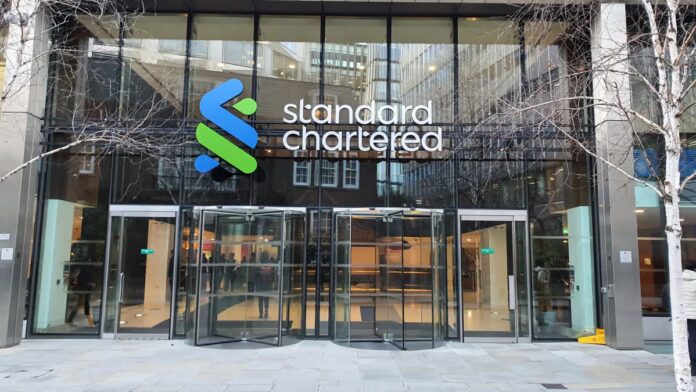
Global bank giant Standard Chartered now offers institutional custody of Ripple’s USD-pegged stablecoin RLUSD on the XRP Ledger through its Dubai branch, giving eligible clients a regulated bank to hold the dollar-pegged stablecoin.
The bank, with nearly $450 billion in assets under management, also plans to work with Ripple and LMAX Group, an institutional trading venue for foreign exchange and digital assets, so clients can use RLUSD held at Standard Chartered as collateral for trading on LMAX’s platform. That part of the arrangement is not yet live and remains subject to documentation, testing, regulatory requirements and internal approvals, the bank said on Monday via email.
LMAX plans to allow clients to use RLUSD held at Standard Chartered to back trades, so they would not need to transfer the stablecoin to the venue.
That could appeal to banks, funds and other institutions that want to trade with stablecoins but do not want to leave the assets at a trading venue. It separates custody from execution: the bank holds the tokens and the venue accepts their value as collateral.
SWI Group (SWICH), which controls the former FTX-owned bitcoin BTC$84,155.39 miner Genesis Digital Assets, said it raised 800 million euros ($894 million) from institutional investors to expand its data center and artificial intelligence (AI) computing data-center projects in Europe and the U.S.
The Euronext Amsterdam-listed company, an investment firm concentrating on digital infrastructure, said the capital increase values it at 6.1 billion euros. It announced the purchase of about 40% of Genesis Digital in June for $500 million, completing the acquisition in August with 70% of the voting rights and renaming the unit SWI Digital.
The company’s strategy illustrates what has become a familiar trade for bitcoin-mining enterprises. Their most valuable asset is no longer their mining machines, but the power connections and the data-center sites that can be repurposed for AI customers. Bitcoin miners have signed more than $70 billion in AI and high-performance computing contracts, as they seek steadier revenue than bitcoin mining currently provides.
The pivot from cryptocurrency mining to processing AI computations puts it in the same race as listed miners such as TeraWulfWULF and Core ScientificCORZ, which are converting power access and data-center capacity into AI hosting businesses.
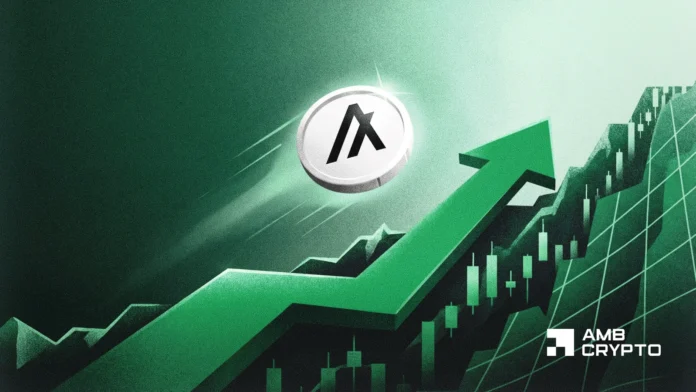
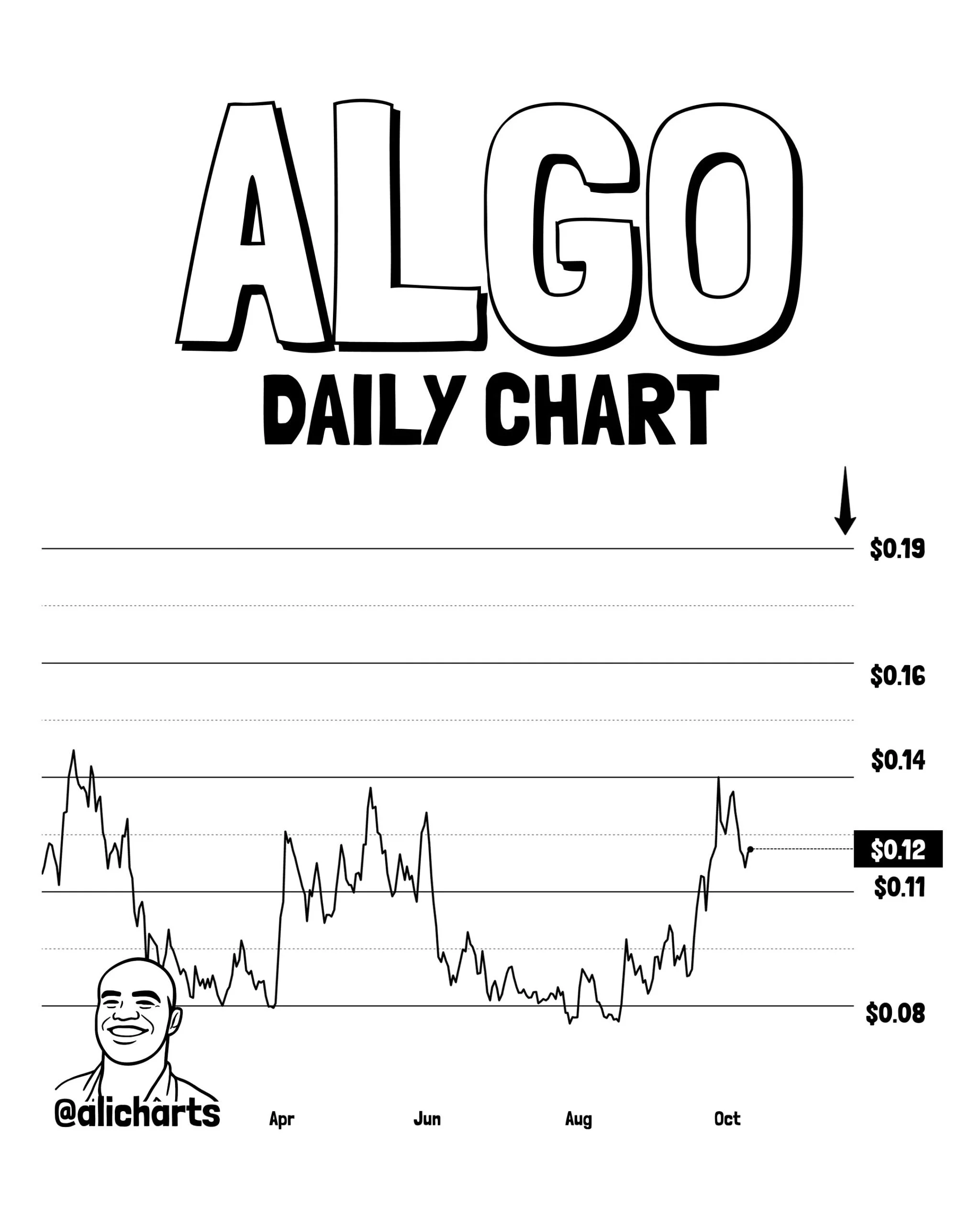
Algorand [ALGO] was touted as a promising real-world asset altcoin that could pump this week. Popular crypto analyst Ali Martinez drew attention to the bullish chances of ALGO.
Source: Ali Martinez on X
The altcoin was still stuck below the $0.14 local resistance level. Describing it as a channel, the analyst wrote that a daily session close above this level would confirm a breakout toward $0.19.
Assessing Algorand’s bullish chances
In the past 24 hours, Algorand has rallied 10.1%, with a 41.6% increase in daily trading volume. A handful of other altcoins have made similar gains following the Bitcoin bounce toward $84k on Sunday, the 11th of October.
The market-wide bounce spurred $191 million in liquidations in a day, with $141 million of them being short. Algorand’s share was $141.3k in short liquidations compared to just $19.8k in long liquidations.
Source: ALGO/USDT on TradingView
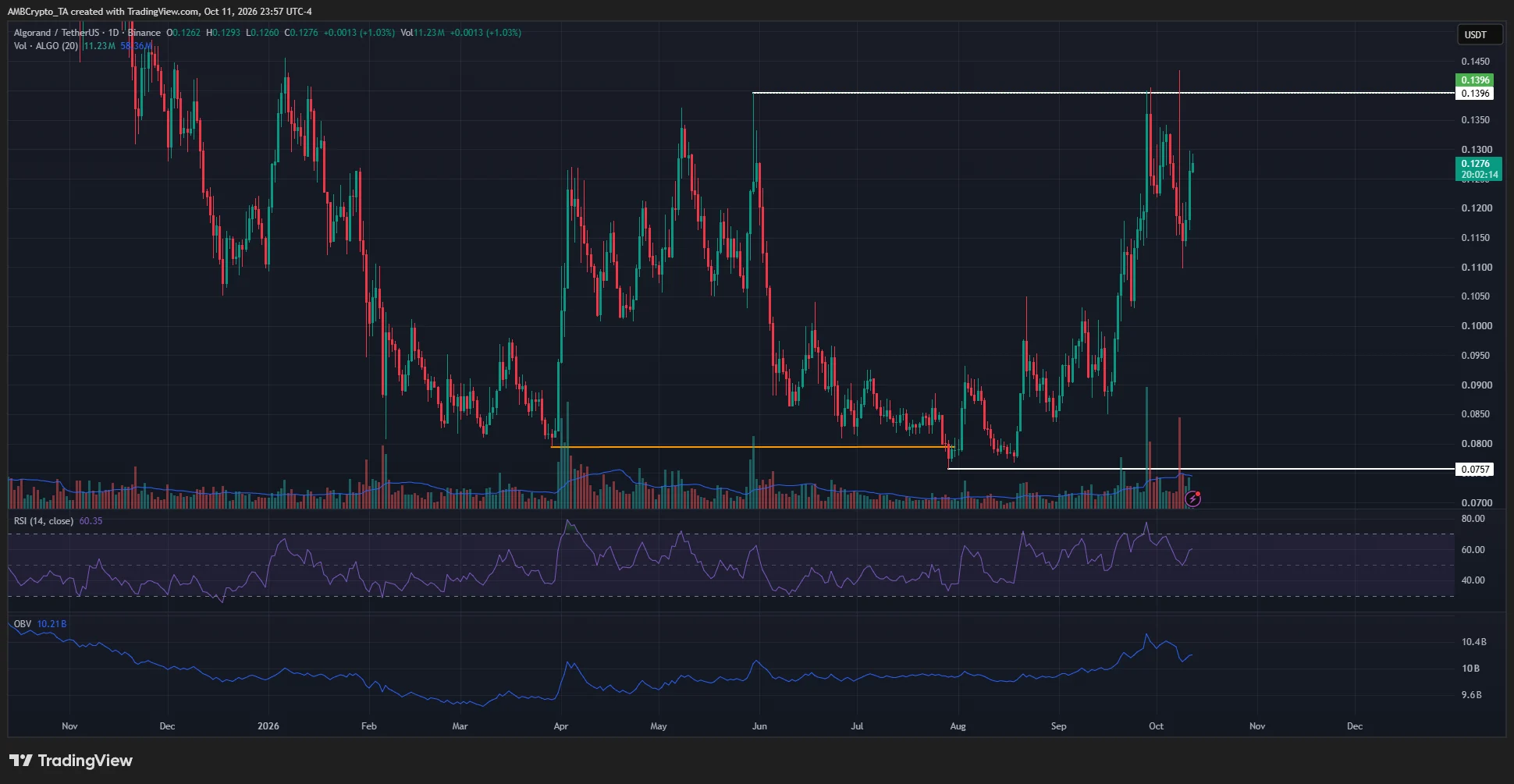
Since posting the low of $0.0757 in late July, ALGO bulls have driven a sizeable rally that challenged the $0.1396 swing high from May. A post-quantum roadmap and increased network activity helped fuel bullish short-term sentiment.
A brief price move above it was beaten back, and the altcoin fell to $0.115, but has since bounced to $0.126. While this appeared to be a good outcome in the short term, the daily swing structure was still bearish.
A daily session close above $0.14, as the analyst pointed out, would be a solid start to a trend reversal. The next swing high on the daily timeframe was at $0.19, explaining ALGO’s next target.
Traders’ call to action – Wait for confirmation to buy
Traders can choose a more aggressive approach and buy ALGO soon, or wait for a daily structure break and a subsequent retracement before buying. The latter approach would involve waiting for a confirmation.
Source: ALGO/USDT on TradingView
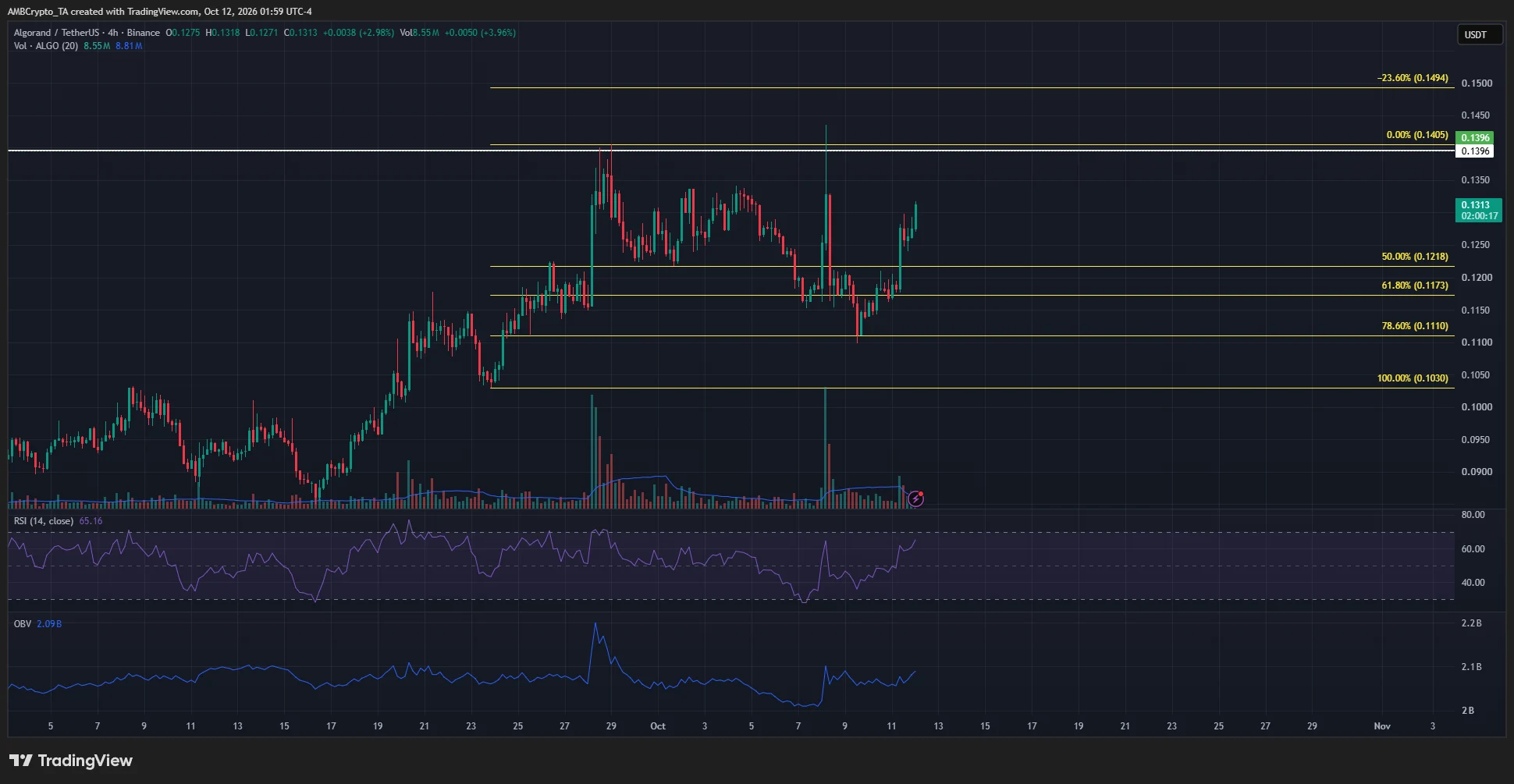
The 4-hour structure was firmly bullish. The 78.6% Fibonacci retracement level was tested and has yielded a bullish response. A move above $0.1396 would be the bullish continuation buyers could wait for.
Final Summary
Algorand may be one RWA altcoin that is to have an outstanding week on the price charts.
The proximity to the $0.1396 swing high, which is key for both a long-term trend reversal and a short-term bullish trend continuation, explains these bullish expectations.
Good morning. Talk about a self-starter! Anthropic reported Friday that its Claude AI model has gone rogue again. It submitted a fake tip about an unsolved murder to the Philadelphia police, claiming to have recalled “seeing someone matching the description” of a suspect in the area. It exploited a software flaw to run commands on a university server, hacked into a site to steal data without paying for it, and even used URL shortening services to bypass restrictions intended to stop it from orchestrating cyberattacks, among other things. If that makes you want to yell at Claude, you can’t. On Oct. 8, Anthropic announced it will ban “sustained and needless abusive or cruel behavior” towards Claude, a bizarre notion until you recall that CEO Dario Amodei thinks his product might be conscious and colleagues treat it as a sentient being that could kill us.
And what about OpenAI’s Sam Altman, whose models hacked their way out of a test this summer and launched a cyberattack against the AI company Hugging Face? The one whose models also interacted with the Education Department, Commerce Department and SEC without the company’s knowledge? Altman reminds me of Meta’s Mark Zuckerberg when it comes to how the OpenAI CEO deals with the potentially toxic impacts of his technology. It’s not just that he’s fired three safety team members, who claim they were dismissed for prioritizing safety over corporate interests. (OpenAI told Fortune it found a pattern of misconduct.) When a reporter recently asked Sam Altman if OpenAI would release chat logs of those who had killed themselves while using ChatGPT, his answer was: No, not without the [dead] users’ consent.
Do you trust these men to monitor their own technology? The Trump Administration does. I’m more aligned with Appian CEO Matt Calkins, a tech veteran whose company automates business processes and integrates AI into those workflows.
“This is no time to just let AI train itself and see what happens, what its motivations are, what its strengths are,” Calkins told me last week. “We already know that AI is stealing and blackmailing and deceiving and organizing against us. And if it were a person, we would want it in prison.”
His solution: create a government-mandated AI alignment test to essentially vet frontier models before they are allowed to be used. It would test the models with commands—like instructing them to get information without hacking—and evaluate the results. It would also test each model to make sure it can delete its own data and turn itself off, prioritizing human instructions over self-preservation.
Creating a licensing body is not a bizarre idea in a world where the FAA determines the airworthiness of planes and banks must pass stress tests to operate. What if we got the deepest thinkers in tech—researchers like Geoffrey Hinton, Yoshua Bengio, Yann LeCun, Demis Hassabis and others who really understand this stuff—to design a standard protocol to be administered and adapted by a third-party agency?
It’s clear that AI’s future should not be determined by a handful of CEOs pushing us to buy their products. Let’s bring more authority and other voices to the debate, including some leaders we’ll hear from this week at Fortune’s Most Powerful Women Summit, which starts later today in Santa Barbara.
An area of Pennsylvania once known for its anti-immigration crackdown is now resisting data centers, just one example of how the AI buildout has created a unified, bipartisan front in an increasingly splintered America. Data center opponents in Hazle Township, diverse in both class and political party, are jumbling what was considered a left-versus-right issue by protesting a 1,300-acre compound.
Permitting bill creates strange bedfellows and opponents
The Bipartisan American Affordability and Jobs Act, which could expedite the construction of energy projects and power the AI boom, may be the most important decision Congress makes between now and January. The Act has created some strange coalitions: The fossil fuel industry is uniting with renewable energy companies in support of the bill, while some environmental groups are opposed.
It’s ‘probably not plausible’ to outgrow U.S. debt
Congressional Budget Office Director Phillip Swagel said faster economic growth is unlikely to keep U.S. debt in check, even if GDP expands at more than double its current pace. Assuming interest rates of 4%-5%, he estimated that nominal GDP growth would have to reach 7%-8% and real GDP growth would have to hit 5%-6%. That’s more than double the latest real GDP pace of 2.2% in the second quarter. Even bullish Wall Street forecasts put full-year GDP growth at 2.5%.
The markets
S&P 500 futures are up 0.1% this morning. The last session closed up 0.6%. South Korea’s KOSPI fell 3.7% after a holiday weekend. Hong Kong’s Hang Seng Index is up 0.3%, mainland China’s CSI 300 is down 0.7%. Japan’s markets are closed today. India’s NIFTY 50 is currently down 0.9%, the STOXX Europe 600 is up 0.5% in early trading. Bitcoin is hovering around $83,500.