Home Blog Page 131

Is Bloom Energy in Its Nvidia Moment?

0
Is Bloom Energy in Its Nvidia Moment?


Bloom Energy (NYSE: BE) just reported monster earnings on July 28 for the second quarter of 2026, but the stock price has still been wobbly.

  • July 24 opening price: $214.19

  • July 28 opening price: $175.30

  • July 29 opening price: $183.50

As of this writing, the stock price is trading at around $218 in the early morning of July 31, roughly where it was on July 24. Some of the choppiness in the recent trading activity could simply be due to Bloom’s success over the last several years. And just as with Nvidia (NASDAQ: NVDA), when a company becomes so successful, expectations become that much harder to meet.

Missed Nvidia in 2009? This Rare Signal Is Flashing Again. In 2009, a “Double Down” signal flashed for a little-known chipmaker called Nvidia. For the first time in years, that same “Total Conviction” signal is flashing for a company 1/100th the size of Nvidia. Continue »

Image source: The Motley Fool.

A dominant quarter

The energy technology company reported revenue of more than $1 billion in its 2026 second-quarter earnings report, an increase of 165.5%, and the first time Bloom surpassed $1 billion in a quarter.

Even more impressive was that Bloom reported a generally accepted accounting principles (GAAP) net profit of $196.3 million compared to a net loss of $42.6 million in the second quarter of 2025. It also showed it’s improving its operational efficiency with GAAP gross margin improving from 26.7% to 33.4%.

That report shows that demand for Bloom Energy’s technology, which provides on-site power generation, continues to grow. That should help allay some fears about slowdowns in artificial intelligence (AI) infrastructure spending, as Bloom’s sales are a sign there is still robustness out there. And with the increases in both revenue and profitability, one might think the stock price would rise after earnings. That, however, is not what happened.

The difficulty of impressing the market now

As of this writing, there are three numbers worth noting. The first is Bloom’s return so far in 2026, which is nearly 140%. The second is its return over the last 12 months, which is 453%. And the final one is 850%, which is the Bloom stock price return over the last five years.

It’s simply a stock that has delivered significant gains to its shareholders in a relatively short time. That will make it more difficult for the energy technology company to surpass earnings expectations, as it has already set the bar so high.

It’s something Nvidia has experienced itself. It was the poster child of the AI trade with its advanced chips, and in 2023 and 2024, the Nvidia stock price climbed nearly 240% and over 170%, respectively. But in 2025, it finished the year up 38.9%. So far in 2026, it’s up 4.5%, trailing the S&P 500‘s return of 8.6%.

That comparison doesn’t make Bloom a poor investment choice, nor Nvidia itself, as both companies can continue to reward long-term investors. But the point of the comparison is that it may start getting more difficult to impress the markets, and a blowout quarter may not carry the same weight for Bloom as in the past.

Should you buy stock in Bloom Energy right now?

Before you buy stock in Bloom Energy, consider this:

The Motley Fool Stock Advisor analyst team just identified what they believe are the 10 best stocks for investors to buy now… and Bloom Energy wasn’t one of them. The 10 stocks that made the cut could produce monster returns in the coming years.

Consider when Netflix made this list on December 17, 2004… if you invested $1,000 at the time of our recommendation, you’d have $386,727!* Or when Nvidia made this list on April 15, 2005… if you invested $1,000 at the time of our recommendation, you’d have $1,232,139!*

Now, it’s worth noting Stock Advisor’s total average return is 906% — a market-crushing outperformance compared to 208% for the S&P 500. Don’t miss the latest top 10 list, available with Stock Advisor, and join an investing community built by individual investors for individual investors.

See the 10 stocks »

*Stock Advisor returns as of August 1, 2026.

Jack Delaney has no position in any of the stocks mentioned. The Motley Fool has positions in and recommends Bloom Energy and Nvidia. The Motley Fool has a disclosure policy.

Is Bloom Energy in Its Nvidia Moment? was originally published by The Motley Fool


Source link

Tagger [TAG] surges 14%, hits 2 month high after whale accumulation – What’s next?

0
Tagger [TAG] surges 14%, hits 2 month high after whale accumulation – What’s next?


Tagger [TAG] reversed sharply after losing the $0.0011 support four days ago.

The altcoin fell to $0.00102 before buyers returned and pushed it to a two-month high of $0.00149. TAG later retraced to $0.00134 but remained up 13.98% on the daily chart.

Meanwhile, Trading Volume surged 141% to $11.75 million, reflecting stronger market participation.

Why is Tagger price rising?

Tagger [TAG] rebounded as whales deployed capital following the recent decline. Four days earlier, TAG faced rejection near $0.00144 as whales booked profits.

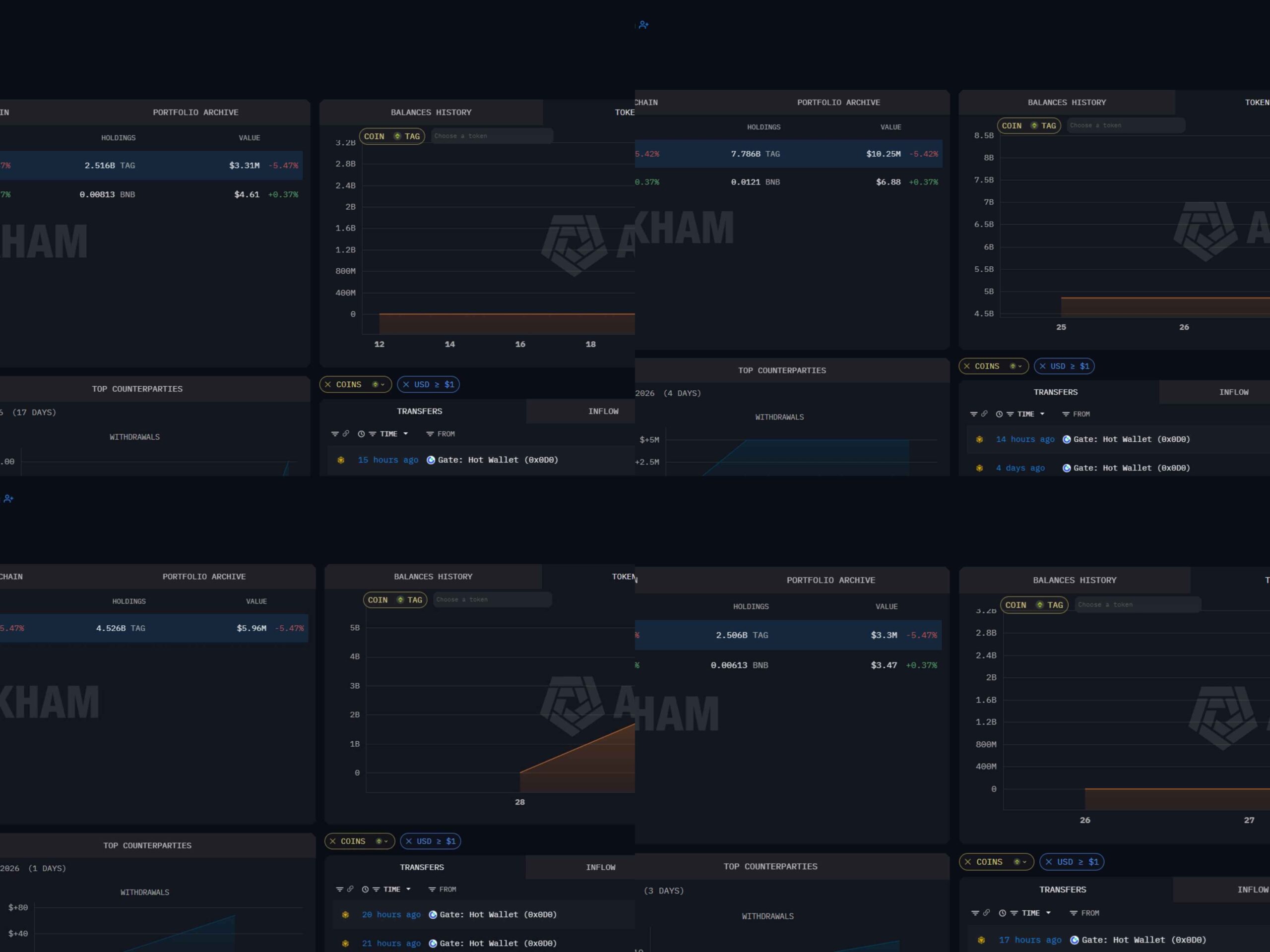
However, whale sentiment shifted from the 29th of July as large holders resumed accumulation. Eveningtrader reported that four whales accumulated more than 15 billion TAG.

Tagger whale transfers
Source: Arkham

In addition, Addliquidity observed that over $7.2 million in TAG left exchanges between the 27th and 31st of July.

Consequently, TAG’s exchange supply dropped 77%, reducing the amount immediately available for trading. That decline could ease near-term selling pressure if whale demand persists.

Are traders betting on TAG?

Speculative traders returned after Tagger recovered from its recent decline.

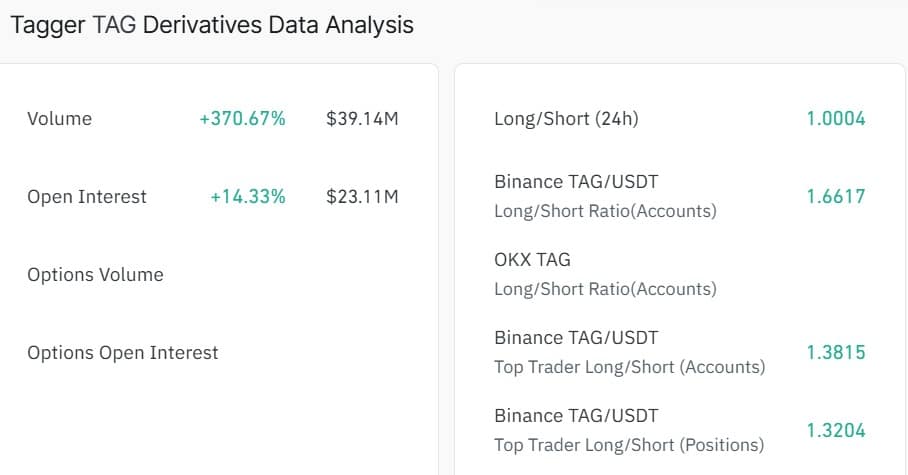
According to CoinGlass, Derivatives Volume jumped 370% to $39 million. Open Interest also increased 14.3% to $23 million.

Rising Open Interest and Derivatives Volume showed that traders were opening new positions during the rally.

Tagger open interestTagger open interest
Source: CoinGlass

Tagger’s Long/Short Ratio climbed above 1 on Binance and OKX, while the overall ratio reached 1.004. The reading showed a slight preference for long positions rather than overwhelming bullish conviction.

Leveraged demand could extend TAG’s rally. However, it could also deepen losses if traders begin closing crowded positions.

Can Tagger reclaim $0.0014?

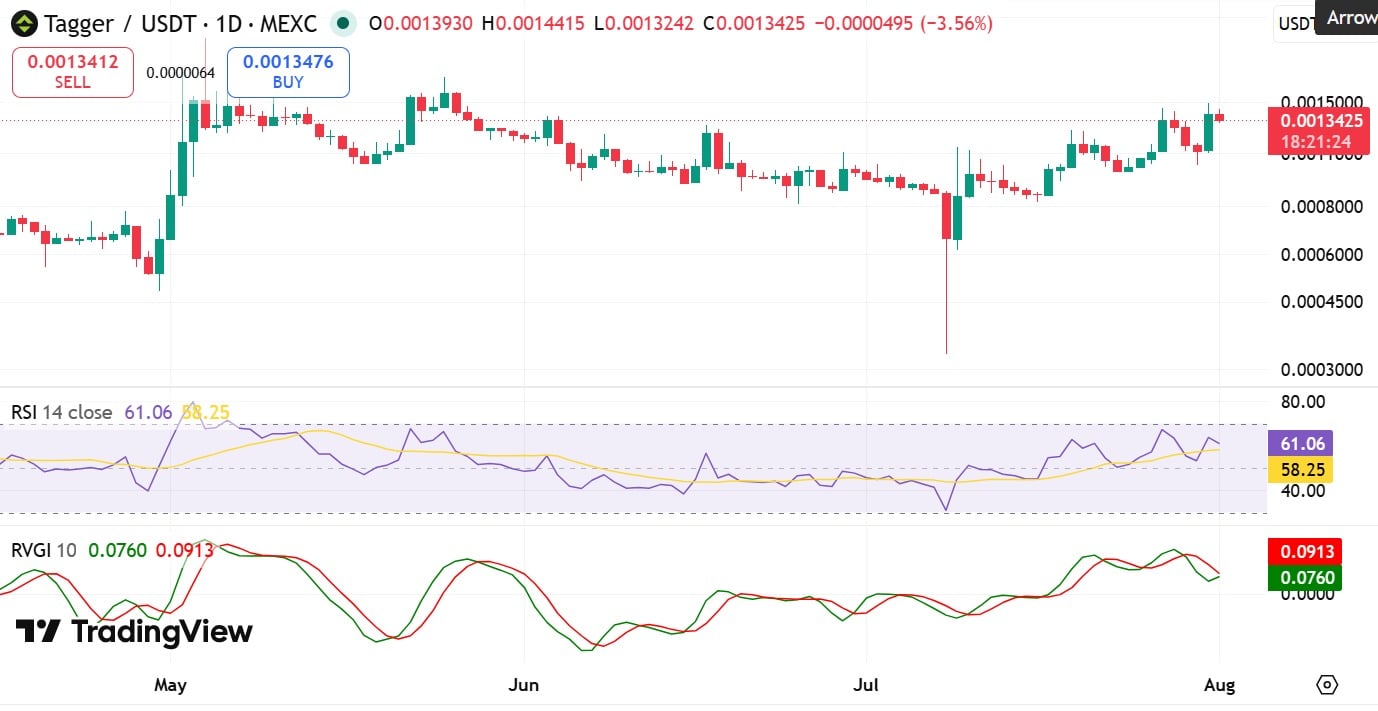
Tagger’s Relative Strength Index [RSI] formed a bullish crossover and climbed to 63 before easing to 62. At 62, the RSI reflected strong upside momentum without entering overbought territory.

Likewise, the Relative Vigor Index [RVGI] reversed from 0.05 to 0.07, supporting the improving momentum.

Tagger RSITagger RSI
Source: Tradingview

A bullish Relative Vigor Index crossover could provide stronger confirmation of the current trend.

Under that scenario, TAG could reclaim $0.0014 before targeting the $0.00158 resistance. However, fading speculation and profit-taking could push TAG below $0.0013, exposing the $0.0011 support again.


Final Summary

  • TAG surged to a two-month high after four whales accumulated over 15 billion tokens.
  • Exchange supply dropped 77% as Derivatives Volume and Open Interest increased.


Source link

Tokenized stock trading surged 288% in July, but one QQQ token drove most of it

0
Tokenized stock trading surged 288% in July, but one QQQ token drove most of it


Trading volume for tokenized stocks and ETFs surged 288% to a record $11.3 billion in July, though most of the increase came from a single Binance-linked token.

Binance bStocks accounted for $9.41 billion, or 83.3% of the total, according to CoinDesk Data’s latest Stablecoins & Tokenized Assets report. A bStocks token, QQQB, tracking Invesco’s QQQ ETF, generated $9.27 billion alone, equivalent to roughly 82% of all tokenized-equity volume.

Excluding QQQB, July volume was roughly $2.03 billion, about 30% below the market’s implied June total of $2.91 billion. xStocks volume dropped to $335 million from $1.55 billion, while Ondo recorded $792 million and Backpack $479 million, the report details.

QQQB began trading on Binance on June 30 with zero maker fees through Aug. 31. Binance also began counting stocks and bStocks volume at three times its traded value for some users seeking higher VIP tiers on July 23, though the multiplier does not alter actual trading volume.


Source link

Here’s What Morgan Stanley Says About Buying the AI Infrastructure Dip

0
Here's What Morgan Stanley Says About Buying the AI Infrastructure Dip


The rout in artificial intelligence (AI)-related stocks is ongoing.

Stocks of companies that provide major inputs into AI data centers have all fallen far from recent highs. That includes memory chip stocks such as Micron Technology and Intel, copper stocks such as Global X Copper Miners ETF, silver stocks such as iShares Silver Trust, and construction stocks such as Caterpillar.

Missed Nvidia in 2009? This Rare Signal Is Flashing Again. In 2009, a “Double Down” signal flashed for a little-known chipmaker called Nvidia. For the first time in years, that same “Total Conviction” signal is flashing for a company 1/100th the size of Nvidia. Continue »

In recent months, investors have been dumping those stocks and many others like them as they began to question the unprecedented AI spending by companies like Meta Platforms and Alphabet and the potential returns.

Shares of companies involved in AI infrastructure fell by an average of nearly 7% in July.

Image source: Getty Images.

Morgan Stanley (NYSE: MS) says to buy the dip.

In a July 28 note, analysts at the investment bank said they believe AI infrastructure will eventually become an “intelligence superhighway” that provides significant net benefits to economies worldwide. The analysts are bullish on that highway, despite the likelihood of speed bumps ahead, such as companies limiting their AI use due to cost concerns, and lower-priced competition from Chinese AI models.

Yet the analysts still like the rate of improvement in AI capabilities and the benefits of AI adoption, as well as the associated capital expenditures. As a result, given the pullback in associated AI stocks, their report said: “This point in time represents an unusually attractive buying opportunity.”

In other words, buy the dip.

Should you buy stock in Morgan Stanley right now?

Before you buy stock in Morgan Stanley, consider this:

The Motley Fool Stock Advisor analyst team just identified what they believe are the 10 best stocks for investors to buy now… and Morgan Stanley wasn’t one of them. The 10 stocks that made the cut are built for long-term growth and could produce monster returns in the coming years.

Consider when Netflix made this list on December 17, 2004… if you invested $1,000 at the time of our recommendation, you’d have $386,727!* Or when Nvidia made this list on April 15, 2005… if you invested $1,000 at the time of our recommendation, you’d have $1,232,139!*

That performance is why people listen. With a track record of beating the S&P 500 by 4xStock Advisor offers a distinct advantage. Don’t miss the latest top 10 list, available with Stock Advisor, and join an investing community built for the long haul.


Source link

Elon Musk’s fortune slumps to pre-SpaceX IPO levels after rout

0
Elon Musk’s fortune slumps to pre-SpaceX IPO levels after rout

SpaceX pulled off a successful launch last Friday evening at its Starbase facility in South Texas, sending its Starship rocket into orbit. It hasn’t stopped Elon Musk’s fortune from falling back to Earth. 

The world’s first trillionaire is now poorer than he was before SpaceX’s initial public offering priced last month, according to the Bloomberg Billionaires Index.

Musk’s wealth, which peaked at about $1.33 trillion on June 16, now stands at $684 billion. The $600 billion-plus decline in just over a month exceeds the net worth of any other person who has ever been on Bloomberg’s list of the world’s 500 richest people, other than Musk himself.

Shares of Space Exploration Technologies Corp., as the company is formally known, hit a closing high of $201.80 on June 16, but have since tumbled 46% to a record low of $108.37. Next month as many as 911.5 million shares belonging to insiders and early backers will be unlocked, potentially putting more downward pressure on the price. 

Short interest in the company rose to 219.3 million shares as of July 29, according to S3 Partners, up from 23.3 million on June 16. That’s more than one-third of those available for public trading. Next week SpaceX reports its quarterly earnings for the first time as a public company.   

Another recent catalyst for the drop in Musk’s wealth comes from Tesla Inc.  

Shares of the electric carmaker have fallen 17% since it released second-quarter results on July 22. The company reported $5.8 billion of capital expenditures, with Musk calling it “a massive capex year.” Tesla recorded its first cash negative quarter in two years, overshadowing higher revenues on better-than-expected car deliveries.  

Read More: Tesla Plunges Most in a Year on Investor Angst Over AI Spending

Tesla plans to introduce a host of new products in the near future, including Optimus humanoid robots, autonomous Cybercabs and AI initiatives. It said it expected to spend more than $25 billion this year on capital expenditures.  

Shares in the Austin-based carmaker are down 36% from a December high. Musk owns Tesla stock worth $129 billion, according to Bloomberg’s wealth index, while his SpaceX position is worth more than $550 billion. 

Subscribe to Fortune Gulf Brief. Every Tuesday, this new newsletter delivers clear-eyed, authoritative intelligence on the deals, decisions, policies, and power shifts shaping one of the world’s most consequential regions, written for the people who need to act on it. Sign up here.


Source link

Tether posts $1.5B net profits in Q2 as USDT users hit record high: Details

0
Tether posts $1.5B net profits in Q2 as USDT users hit record high: Details


World’s largest stablecoin issuer, Tether, reported a $1.5B net profit in Q2 and a whopping $4.1B reserve buffer to handle any unforeseen USDT redemption emergencies. 

This was a 44% increase from the Q1 2026 profit of $1.04B, mainly driven by U.S Treasury bonds and repos (repurchase agreements). Similarly, the stablecoin issuer increased its physical gold holdings from 132.2 tons to 146 tons – A 10.5% increase from the past quarter. 

Reacting to the Q2 performance, Tether CEO Paolo Ardoino said, 

Tether had a great second quarter of 2026, with ~1.5B in net operating profit, despite highly volatile global markets.

He reiterated the firm’s focus on the developing world and added, 

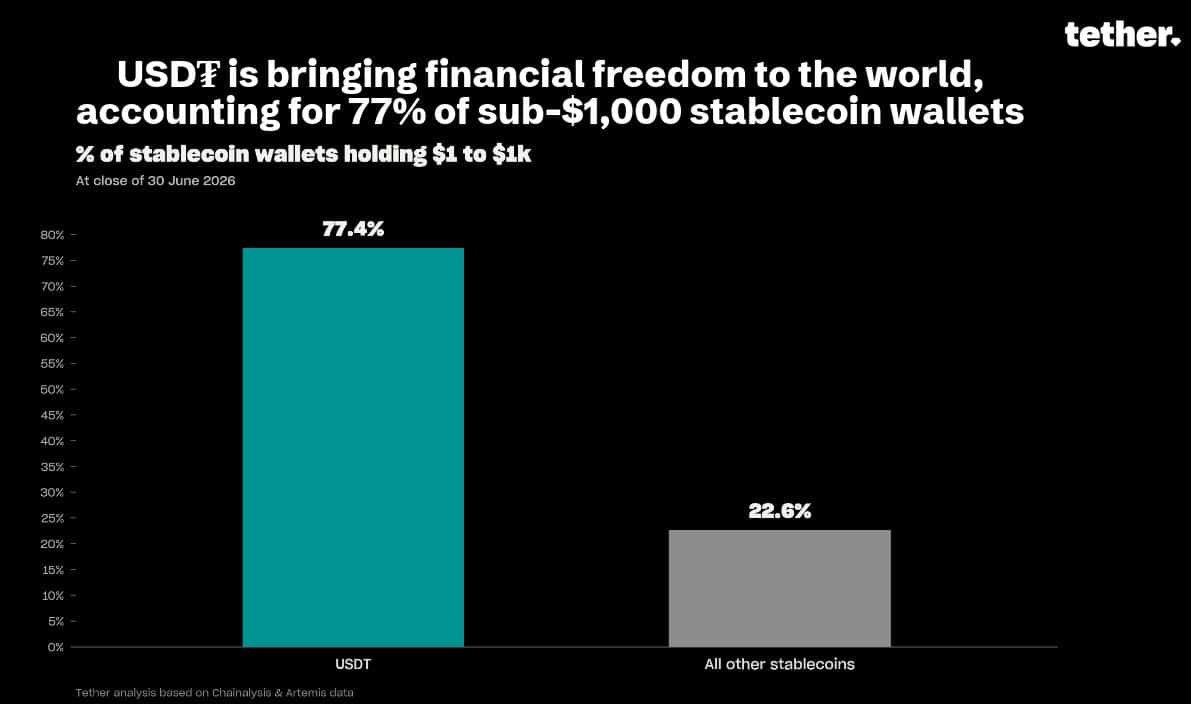
USDT user base continued to grow, reaching the new all-time-high of 650M+, with the widest surge across all emerging markets, fueled by the continued period of geopolitical uncertainty. Tether continues to deliver financial inclusion in the developing world like no other company ever has in the history of humanity.

Tether USDT
Source: Tether 

Tether expands in LATAM and Africa

AMBCrypto had earlier reported massive USDT usage in Venezuela, Bolivia, and the larger LATAM region during the ongoing West Asis crisis.

In particular, Venezuela’s USDT trading on Binance hit $1.4B, rivaling the country’s oil exports and central bank foreign exchange reserves.

Similarly, the growing demand for US dollars in Bolivia has made USDT a de facto alternative. In fact, the government of Bolivia is mulling making it a legal tender as banks and businesses are already actively using it.

How is Tether expanding across Africa?

Across Africa, USDT has largely been used for global remittance and to hedge local currency inflation. But Tether is deepening its integration with a little twist: tokenization. 

Earlier this week, the firm announced a plan with Kenya’s study of tokenization of local stocks and to enable settlements in USDT.

If the concept is proven, Tether may expand its tokenization plan to other African countries. But whether regulatory friction and bureaucracy across Africa will see that plan to fruition remains unclear.

Why did USDT’s market cap fall by $7B?

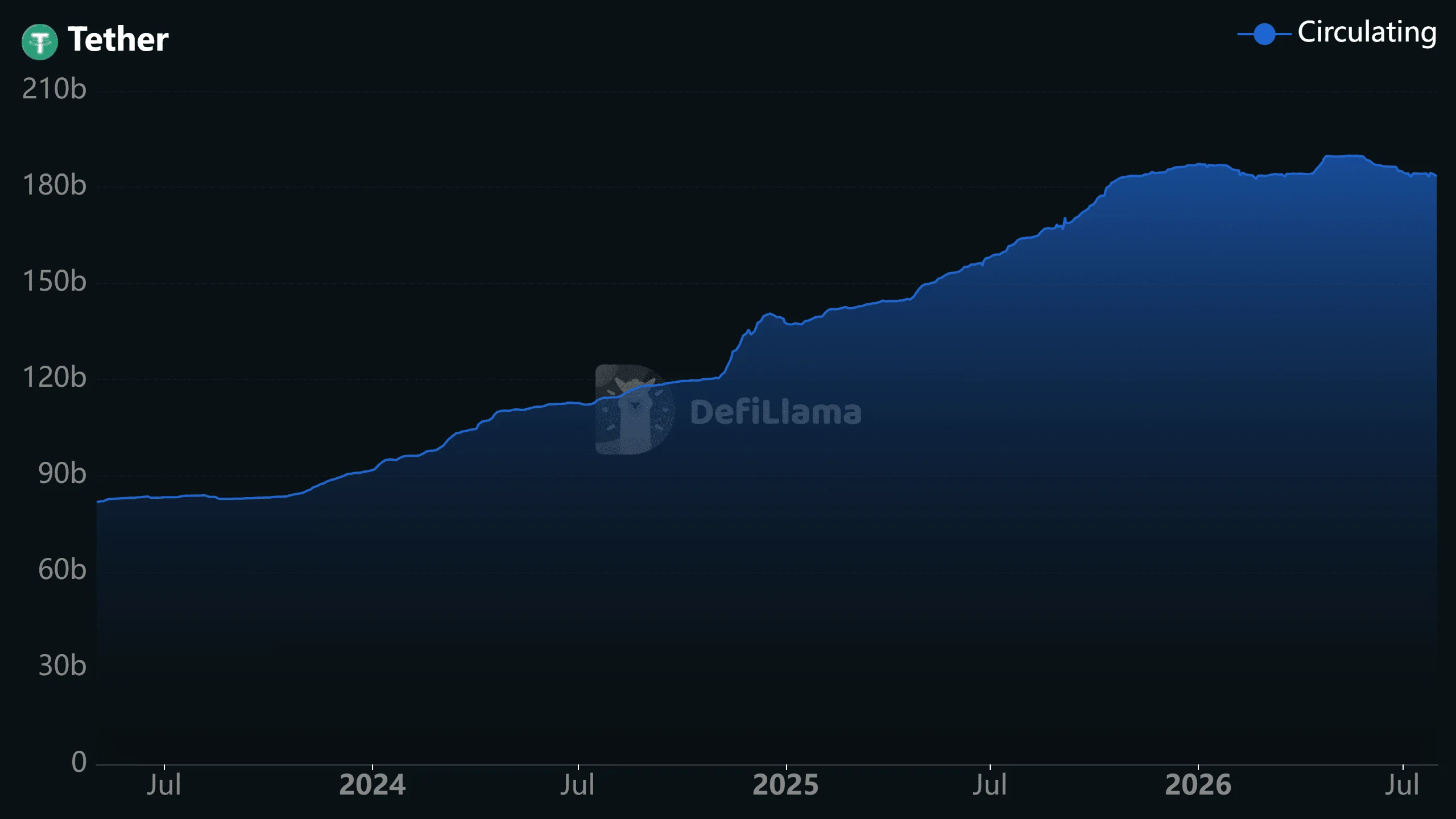
That said, the USDT market cap has dropped by nearly $7B from May’s peak of $190B to $183.5B.

Tether’s US-focused stablecoin, USAT, has seen slow growth and has a market cap of $185M. The overall stablecoin market has also declined from $322B to $307.6B. That’s a 5% drop in Q2 amid an extended crypto winter. 

Tether Tether
Source: DeFiLlama

Final Summary

  • Tether CEO Paolo Ardoino billed the $1.5B net profit as a ‘great’ quarterly performance, pledging to focus on the developing world. 
  • Despite record USDT users, its market cap has dropped by nearly $7B amid a broader 5% contraction in the stablecoin sector. 


Source link

Solana (SOL) news: Foundation’s new CISO warns AI is making crypto scams more convincing

0
Solana (SOL) news: Foundation's new CISO warns AI is making crypto scams more convincing

While exploits in crypto often grab headlines because of the sheer amount of money that gets stolen, Coates emphasized that many of these hacks actually originate outside of blockchain compromises themselves. “In many cases, it is an operational security issue or a Web2 issue that led to a key compromise,” he said.

This will only prove to be more difficult as artificial intelligence advances gives attackers better tools to exploit security practices.

“The social engineering piece is going to get a lot worse because of the power of AI and deepfakes,” Coates said. “We should expect full spoofed phone calls with voices of people that we know… there’s really no reason this won’t hyperscale.

To prevent that, Coates thinks crypto needs to come up with better systems that remain secure and work when people fall for these scams.

“You cannot fully prevent anyone from falling victim,” he said. “Eventually, you will be fooled because the cons are that good.” Organizations should thus have multiple layers of various degrees of security controls, so “when someone gets fooled, the other things take over to protect you.”

For the longer-term, the question of quantum computing largely looms on various crypto ecosystem’s futures, including that of Solana.


Source link